Artwork
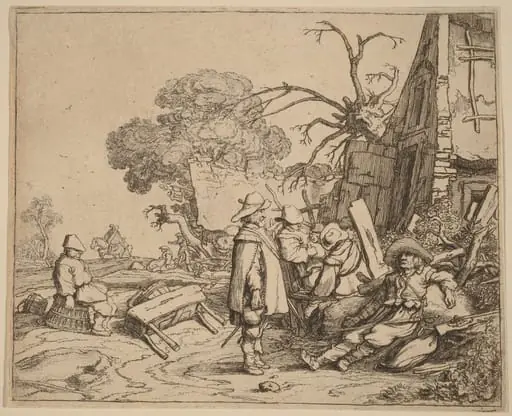
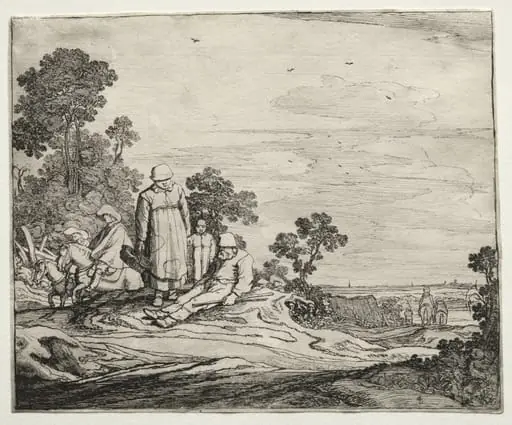
Woman and Child Standing near a Seated Peasant
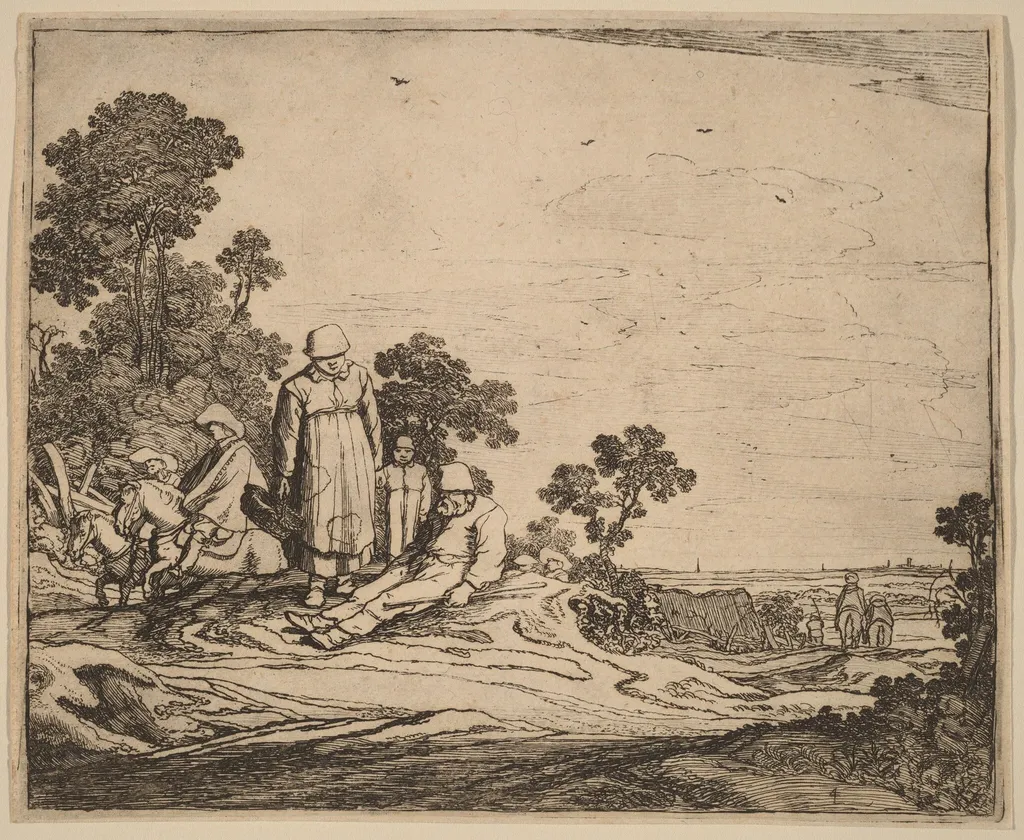
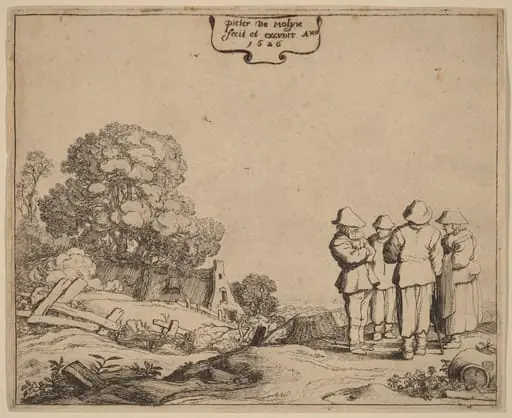
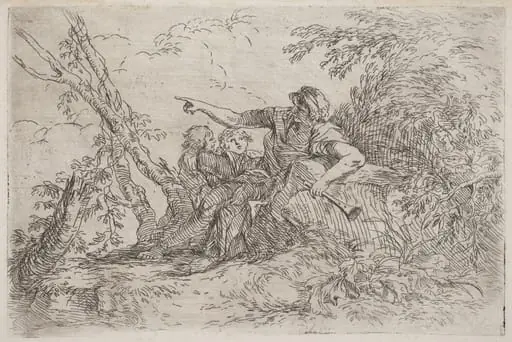
Woman and Child Standing near a Seated Peasant is an ink print by the Baroque artist Pieter Molijn. It dates from 1626 and is held in the collection of the National Gallery of Art.
About this work
Overview
Created around 1626, this etching by Pieter Molijn depicts a quiet rural scene featuring a woman and two children near a seated peasant. Rendered in monochrome on laid paper, the composition captures a moment of stillness amid a natural setting. The artist’s use of fine, controlled lines conveys texture and spatial depth, characteristic of early 17th-century Dutch printmaking.
Subject & Meaning
The figures—two children, a woman, and a seated peasant—suggest everyday rural life, possibly indicating labor, rest, or familial bonds. The absence of overt narrative or symbolism points to a documentary intent, valuing ordinary moments over dramatic or religious themes. The distant horse and rider add a subtle sense of movement, contrasting with the stillness of the foreground group.
Technique & Style
The resulting print reveals delicate textures: the folds of fabric, the gnarled roots of trees, and the layered foliage.
Molijn employed etching to achieve fine linear detail, using acid to bite into a metal plate coated with wax. The resulting print reveals delicate textures: the folds of fabric, the gnarled roots of trees, and the layered foliage. The composition balances dense foreground elements with a receding landscape, demonstrating a refined command of tonal gradation and spatial recession typical of Dutch graphic art of the period.
History & Provenance
The work originates from Molijn’s active years in the Dutch Republic, where he produced numerous landscapes and genre scenes in print. While specific early ownership records are sparse, the piece aligns with the broader circulation of etchings among collectors and artisans in the 1620s–1630s. Its survival in institutional collections reflects its status as a representative example of his graphic output.
Context
In early 17th-century Holland, etching emerged as a respected medium for depicting everyday life and natural landscapes. Artists like Molijn responded to growing urban interest in rural themes, translating observed scenes into intimate prints. This work reflects a shift away from grand historical subjects toward modest, grounded observations of the countryside and its inhabitants.
Legacy
Though Molijn is less widely known than contemporaries like Rembrandt, his etchings contributed to the development of Dutch landscape printmaking. This work exemplifies the quiet, observational approach that influenced later generations of printmakers. Its preservation in museum collections underscores its role as a document of daily life and technical skill in early modern Dutch art.
Artist & collection