Artwork
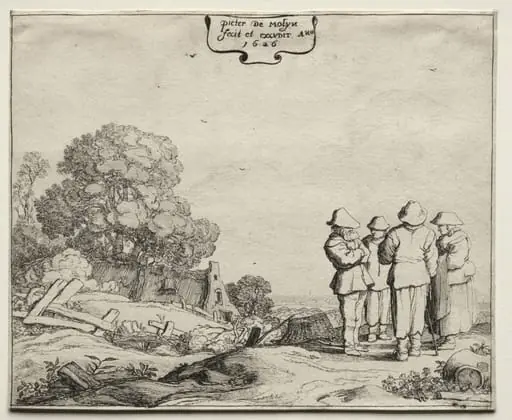
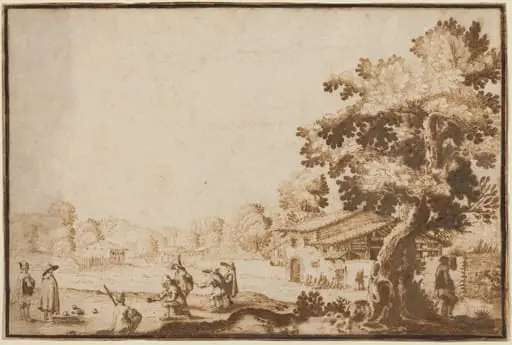
Three Peasants and a Woman
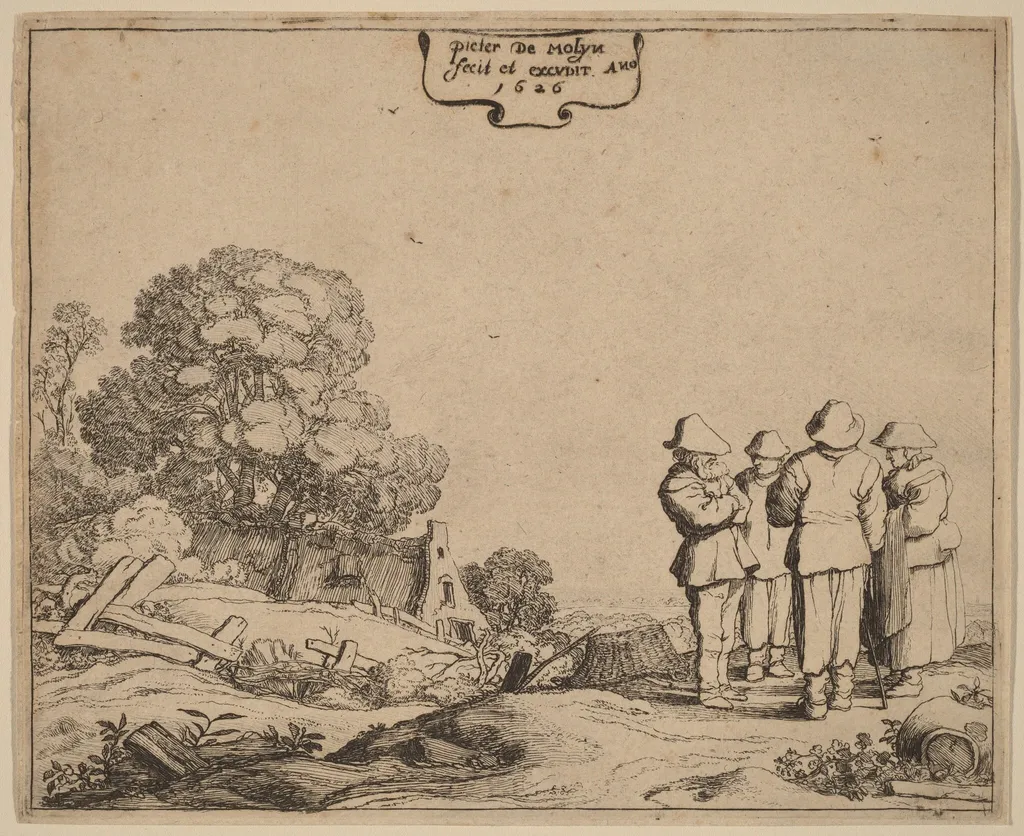
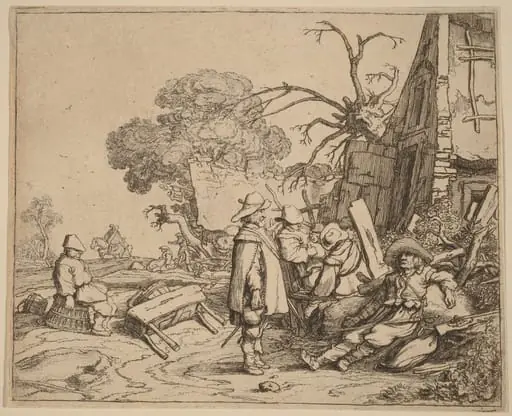
Three Peasants and a Woman is an ink print by the Baroque artist Pieter Molijn. It dates from 1626 and is held in the collection of the National Gallery of Art.
About this work
The painting is done in a style that is characteristic of the Baroque period, with bold lines and expressive brushstrokes.
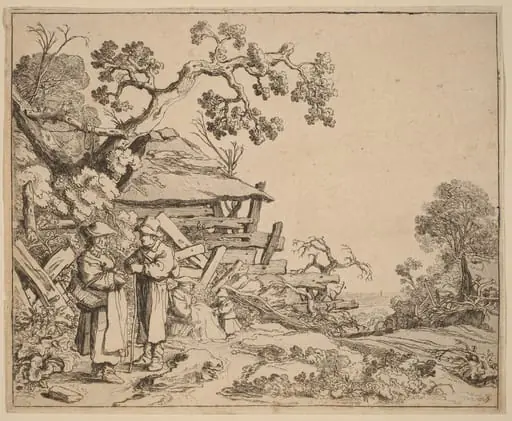
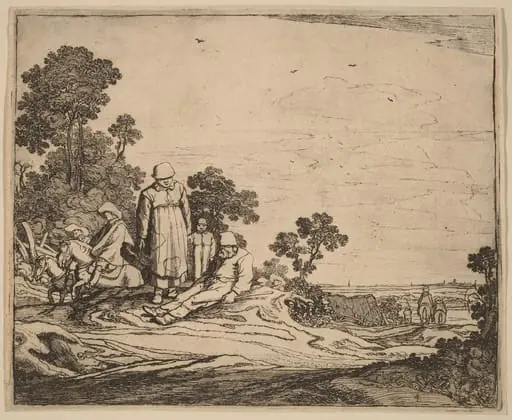
This painting depicts a scene of three peasants and a woman in a rural setting. The peasants are dressed in simple clothing, with one of them holding a staff. The woman is standing to the side, looking on. The background is a landscape with trees and hills.
The painting is done in a style that is characteristic of the Baroque period, with bold lines and expressive brushstrokes. The use of chiaroscuro creates a sense of depth and volume in the figures.
The painting is a good example of the work of Pieter Molijn, a Dutch painter who was active in the early 17th century. To learn more about the artist and his work, you can look up Pieter Molijn.
Overview
Three Peasants and a Woman is an etching by Pieter Molijn, dated 1626. Executed on laid paper, it belongs to the Dutch printmaking tradition of the early 17th century. Unlike oil paintings, this work relies on incised lines to define form and atmosphere, capturing a quiet rural moment with precision and restraint. The composition centers on four figures in a modest landscape, rendered without theatricality.
Subject & Meaning
The scene portrays four rural figures: three men and one woman, engaged in an unremarkable, contemplative moment. One man holds a staff, suggesting a traveler or laborer; the others stand or sit nearby. The woman, positioned slightly apart, observes without direct interaction. The image conveys no narrative climax, instead emphasizing the dignity of ordinary life in the Dutch countryside during a time of economic and social change.
Technique & Style
Molijn employed etching to achieve fine, controlled lines that define texture and volume. The figures are modeled through varying line density rather than chiaroscuro, a technique more typical of painting. The background features sparse, suggestive trees and rolling hills, rendered with minimal strokes. The style reflects the Northern European preference for observational realism over dramatic contrast, aligning with contemporary print practices in the Dutch Republic.
History & Provenance
Created in 1626, the etching emerged during Molijn’s active years in the Netherlands, when printmaking was a vital medium for disseminating images beyond elite circles. While specific early ownership records are scarce, the work survives in institutional collections, indicating its recognition among collectors of Dutch prints. Its survival reflects the broader circulation of such works in 17th-century Europe.
Context
In the 1620s, Dutch artists increasingly turned to scenes of everyday life, moving away from religious or mythological themes. Molijn, though trained as a landscape painter, contributed to this shift through prints that documented rural labor and quiet social interactions. This etching aligns with a growing interest in the lives of common people, a trend supported by the rising urban middle class and their appetite for relatable imagery.
Legacy
Though not among Molijn’s most widely known works, Three Peasants and a Woman exemplifies his skill in translating observational detail into the medium of print. It contributes to the broader understanding of early 17th-century Dutch print culture, where simplicity and sincerity replaced grandeur. The piece remains a quiet testament to the artistic value placed on unadorned rural existence during the Dutch Golden Age.
Artist & collection