Artwork
Soldier Receiving an Order from a Sitting Officer
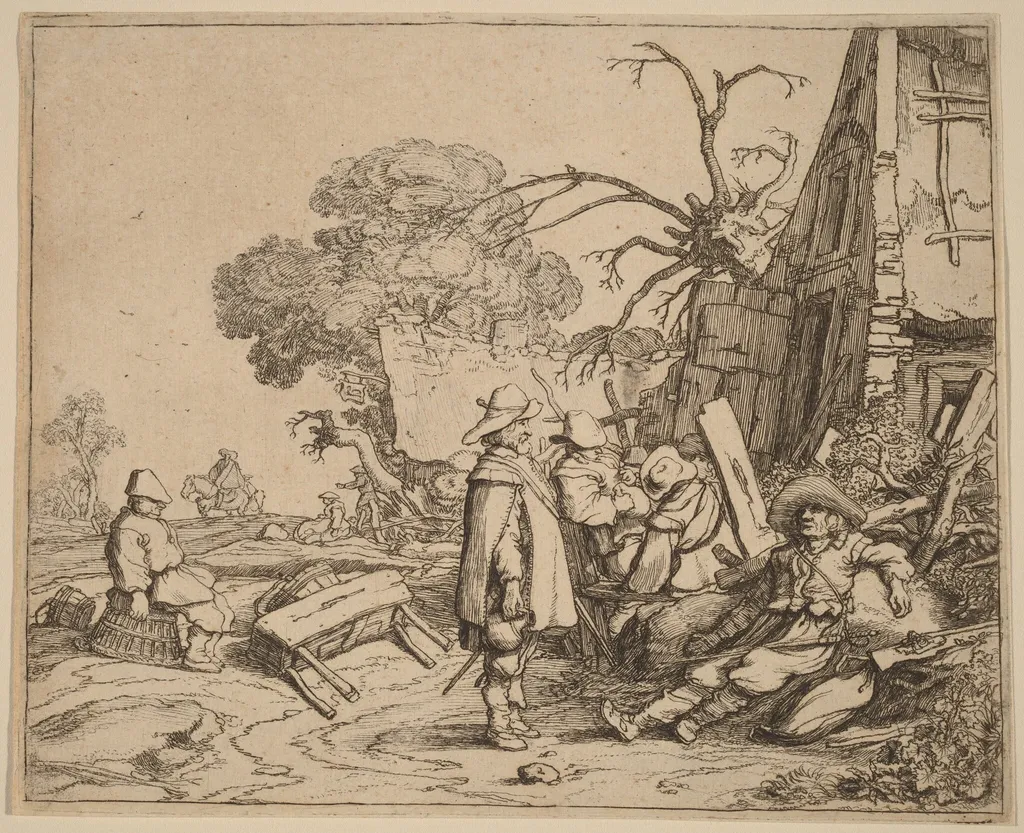
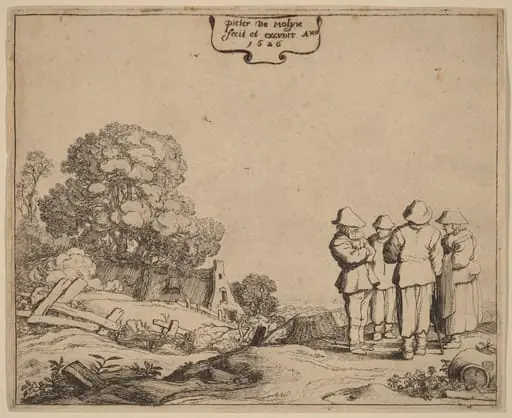
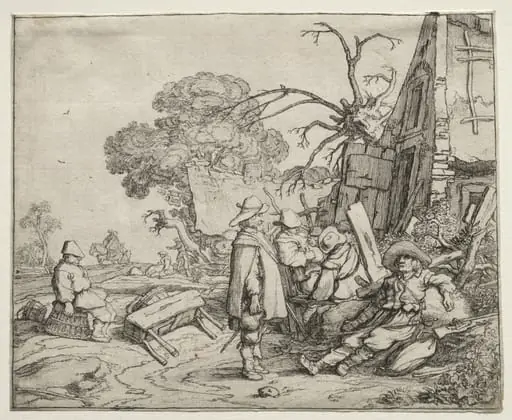
Soldier Receiving an Order from a Sitting Officer is an ink print by the Baroque artist Pieter Molijn. It dates from 1626 and is held in the collection of the National Gallery of Art.
About this work
Overview
Created around 1626, this etching by Pieter Molijn depicts a quiet, tense exchange between a standing soldier and a seated officer in a desolate landscape.
Created around 1626, this etching by Pieter Molijn depicts a quiet, tense exchange between a standing soldier and a seated officer in a desolate landscape. Rendered on laid paper, the work captures a suspended moment in military life, where authority and obedience are conveyed through posture and environment rather than action. The scene lacks grandeur, focusing instead on the subdued reality of war’s aftermath.
Subject & Meaning
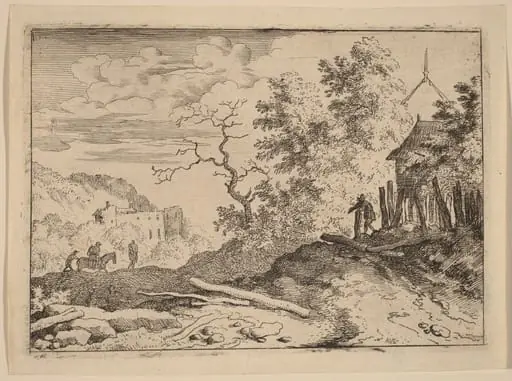
The composition centers on a soldier receiving a rolled order, his stance attentive, while the officer leans forward with deliberate gesture. Behind them, a second soldier lingers near a broken fence and a small group gathers by a crumbling wall, suggesting a community disrupted by conflict. The bare tree and scattered debris reinforce a sense of abandonment, framing the interaction as one of routine duty amid ruin.
Technique & Style
Molijn employed sharp, incised lines typical of etching to render textures—rough woolen uniforms, splintered wood, and uneven ground—with precision. The contrast between the dense, angular marks of clothing and the looser, atmospheric background creates depth and mood. The composition avoids dramatic lighting, relying instead on line and spatial arrangement to convey tension and stillness.
History & Provenance
The print originates from the early 17th century Dutch Republic, a period when etching flourished as a medium for both artistic expression and documentary observation. While specific early ownership records are unconfirmed, the work aligns with Molijn’s known interest in genre scenes and military subjects, likely produced for a private collector interested in contemporary life rather than heroic narrative.
Context
Painted during the Eighty Years’ War, the image reflects the lived experience of soldiers and civilians in war-torn regions of the Low Countries. Unlike grand battle scenes, Molijn’s focus on a mundane exchange highlights the quiet endurance of daily life under occupation. The ruined architecture and sparse vegetation mirror the broader devastation affecting Dutch villages during prolonged conflict.
Legacy
Molijn’s etching contributes to a broader tradition of Dutch printmaking that prioritized observation over spectacle. While not widely reproduced or celebrated in his lifetime, the work exemplifies how artists used intimate, grounded scenes to document the human dimension of war. Its restrained tone influenced later generations interested in realism over heroism in military imagery.
Own this work as a print
Artist & collection