Artwork
Chene (Oak Tree)
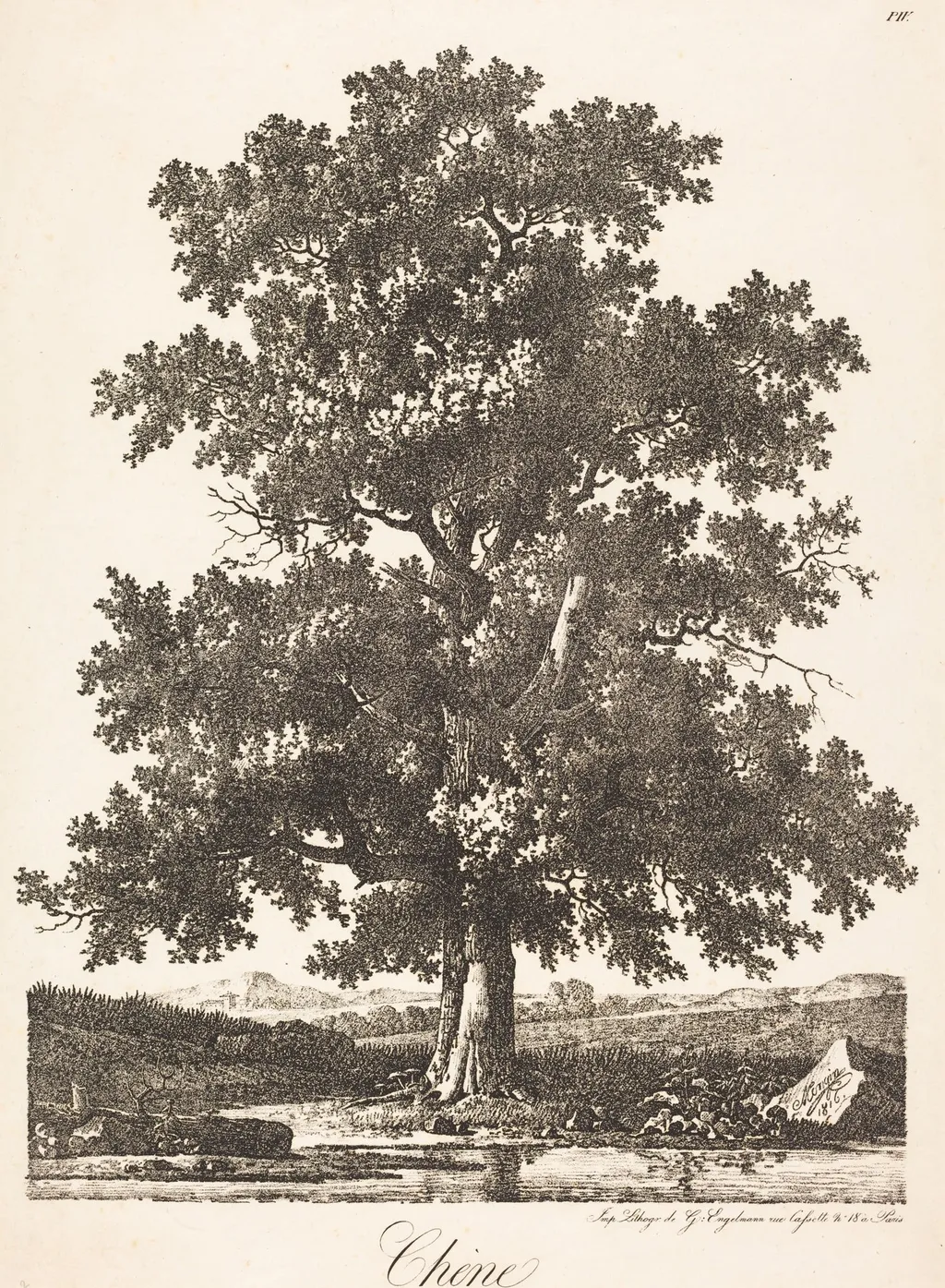
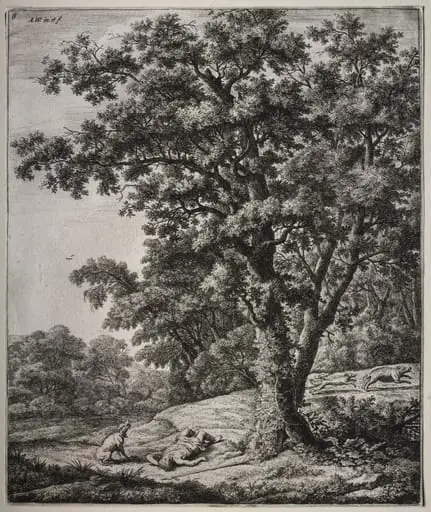
Chene (Oak Tree) is an ink print by the Romanticist artist Antoine-Pierre Mongin. It dates from 1816 and is held in the collection of the National Gallery of Art.
About this work
You see a single oak tree standing in a field. Its thick trunk curves near the base. The branches stretch wide, covered in small, detailed leaves.
This is a lithograph from 1816. Lithography was new then. It uses greasy ink on stone to make prints.
Look at the texture of the bark. It feels almost real.
Check out Mongin, Antoine-Pierre next.
Overview
Lithography, newly adopted for artistic use, allowed for nuanced tonal variation, which Mongin employed to suggest depth and texture without linearity.
Chene (Oak Tree) is a lithograph produced in 1816 by Antoine-Pierre Mongin. As one of the early examples of the medium, it reflects the technical experimentation of the period. The print captures a solitary oak in a sparse landscape, rendered with careful attention to natural form. Lithography, newly adopted for artistic use, allowed for nuanced tonal variation, which Mongin employed to suggest depth and texture without linearity.
Subject & Meaning
The subject is a single, mature oak tree, isolated in an open field. Its gnarled trunk and expansive canopy suggest resilience and endurance. There is no human presence or narrative context, focusing attention solely on the tree’s physical presence. The image evokes quiet contemplation rather than symbolism, aligning with early 19th-century interests in natural observation over allegory.
Technique & Style
Mongin used lithography, a process involving greasy ink on limestone, to achieve subtle gradations of tone. The bark is rendered with stippled and hatched marks that mimic the roughness of wood, while the foliage consists of fine, densely packed dots suggesting leaf clusters. The absence of strong outlines creates a soft, atmospheric effect, characteristic of early lithographic attempts to emulate drawing rather than engraving.
History & Provenance
Created in 1816, the work emerged during a period when lithography was transitioning from commercial use to fine art. Mongin, a lesser-known figure, contributed to this shift through botanical subjects. The print’s survival suggests it was likely produced in a small edition, possibly for scientific or educational audiences interested in natural forms, though its specific early ownership remains undocumented.
Context
In early 19th-century France, interest in natural history and landscape observation grew alongside scientific illustration. Lithography offered artists a means to reproduce detailed botanical studies with greater fidelity than traditional engraving. Mongin’s oak tree fits within this trend, reflecting a broader cultural shift toward direct engagement with nature, independent of romanticized or mythological framing.
Legacy
Chene (Oak Tree) stands as an early example of lithography’s potential for botanical precision and tonal subtlety. Though Mongin did not achieve widespread fame, his work contributed to the medium’s acceptance among artists seeking alternatives to metal engraving. The print illustrates how emerging technologies enabled new ways of seeing and recording the natural world in the decades before photography.
Artist & collection


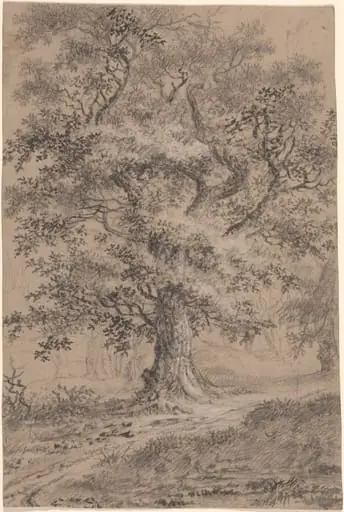
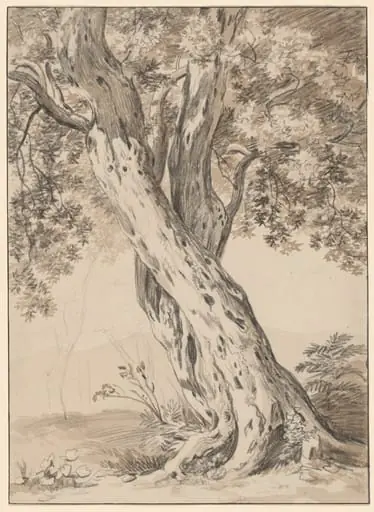
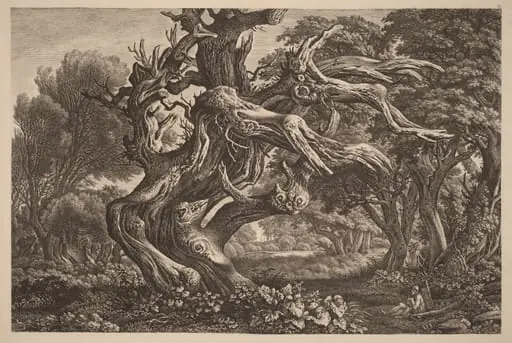
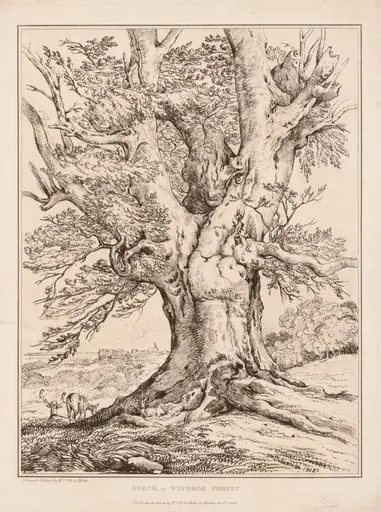 Beech in Windsor Forest
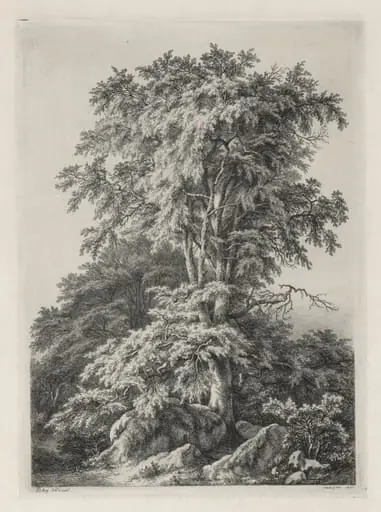 Studies Drawn and Engraved after Nature: The Beach, Fontainebleau (Études dessinées et Gravées D'après nature: Le hêtre, Fontainebleau)
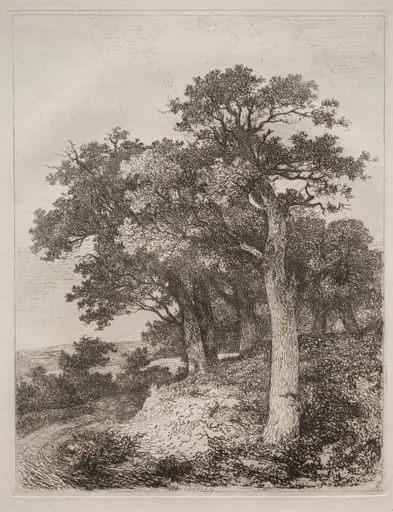 At Colney
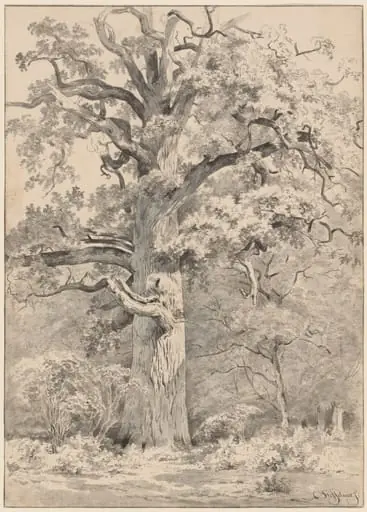 A Giant Oak at the Edge of a Forest
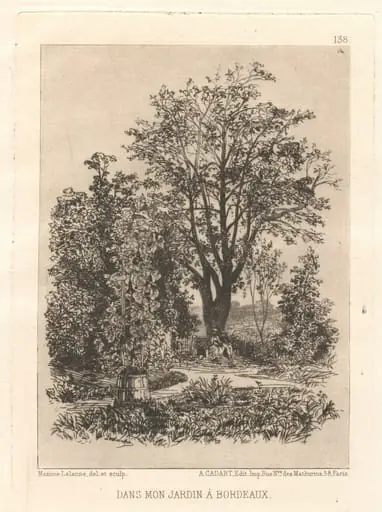 Dans Mon Jardin à Bordeaux
 Six large upright landscapes with scenes from Ovid's Metamorphoses: The Death of Adonis