Artwork
Six large upright landscapes with scenes from Ovid's Metamorphoses: The Death of Adonis
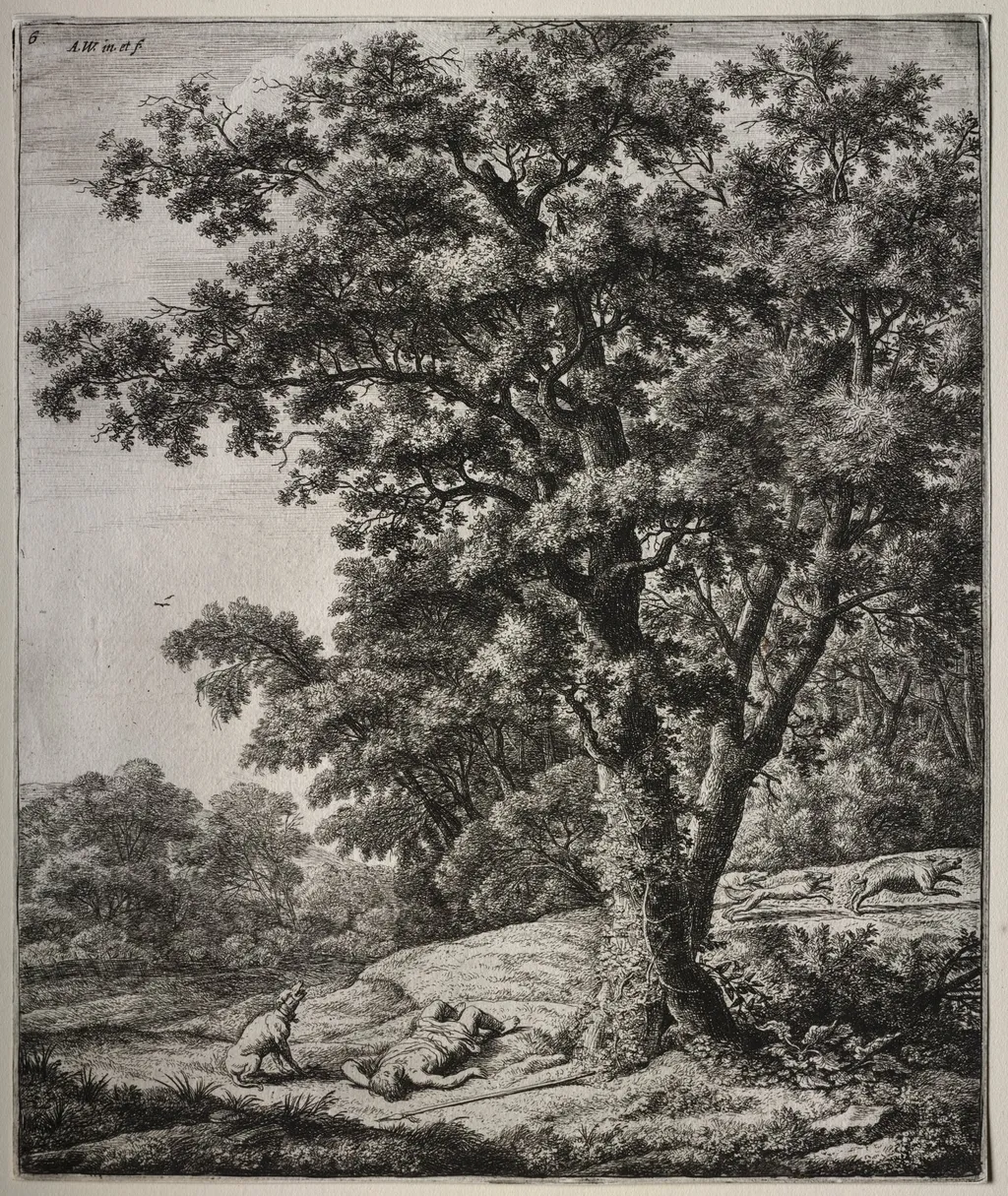
Six large upright landscapes with scenes from Ovid's Metamorphoses: The Death of Adonis is a print by the Baroque artist Antonie Waterloo. It dates from 1665 and is held in the collection of the Cleveland Museum of Art. Created in 1665 by Anthonie Waterloo, this print is one of six large vertical compositions illustrating episodes from Ovid’s Metamorphoses.
About this work
Overview
Created in 1665 by Anthonie Waterloo, this print is one of six large vertical compositions illustrating episodes from Ovid’s Metamorphoses.
Created in 1665 by Anthonie Waterloo, this print is one of six large vertical compositions illustrating episodes from Ovid’s Metamorphoses. It depicts the death of Adonis, a mythological figure whose tragic end is rendered not as a violent spectacle but as a quiet, contemplative moment within a natural setting. The work is part of a series that blends classical narrative with landscape tradition, and it is currently held in the collection of The Cleveland Museum of Art.
Subject & Meaning
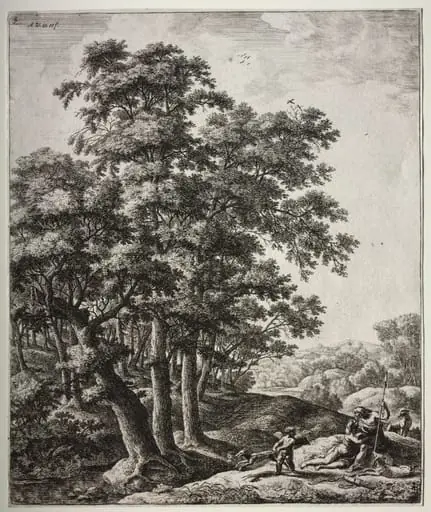
The scene portrays Adonis, mortally wounded, reclining beneath a large tree, surrounded by stillness rather than chaos. His body is integrated into the landscape, suggesting harmony between human fate and nature. The absence of overt drama aligns with a 17th-century Dutch tendency to interpret myth through introspective, pastoral imagery. Animals nearby—possibly hounds or deer—add to the sense of a world continuing undisturbed, underscoring the inevitability of mortality.
Technique & Style
Waterloo employs subtle chiaroscuro to model form and create spatial depth, using soft gradations of tone rather than stark contrasts. The dense foliage is rendered with delicate linear detail, while the tree’s branches frame the figure without dominating the composition. The print’s horizontal bands of earth, vegetation, and sky establish a calm rhythm, reflecting the influence of Dutch landscape painting and the artist’s experience in the Low Countries.
History & Provenance
The print was produced in 1665 during Waterloo’s later years, after his time in Italy and his return to the Netherlands. It was likely made as part of a thematic series intended for collectors interested in classical literature and refined landscape aesthetics. The work entered The Cleveland Museum of Art’s collection in the 20th century, where it remains as a rare example of narrative printmaking in the Dutch tradition.
Context
In mid-17th-century Northern Europe, mythological subjects were often adapted to suit domestic and intellectual tastes, favoring quietude over grandeur. Waterloo’s series responded to this trend, positioning Ovid’s tales within familiar, serene environments. The emphasis on landscape over human drama reflects broader artistic shifts, where nature itself became a vessel for moral and poetic reflection, distinct from Italianate theatricality.
Legacy
Waterloo’s series of Ovidian landscapes contributed to the evolving genre of narrative printmaking in the Dutch Republic. While not widely replicated, these works influenced later artists who sought to merge classical themes with naturalistic settings. The Death of Adonis stands as a quiet testament to the period’s preference for understated emotion and the symbolic power of the natural world in conveying human stories.
Artist & collection

 Six large upright landscapes with scenes from Ovid's Metamorphoses: Venus and Adonis
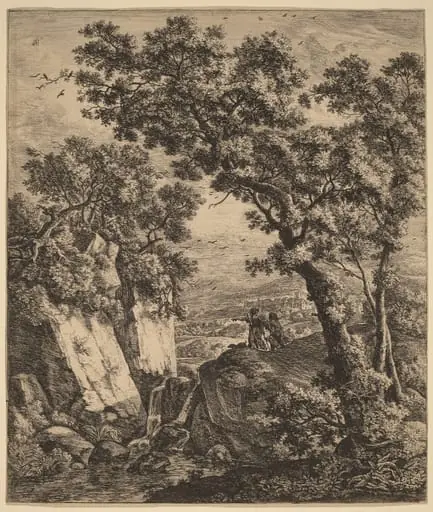
 Six large upright landscapes with scenes from Ovid's Metamorphoses
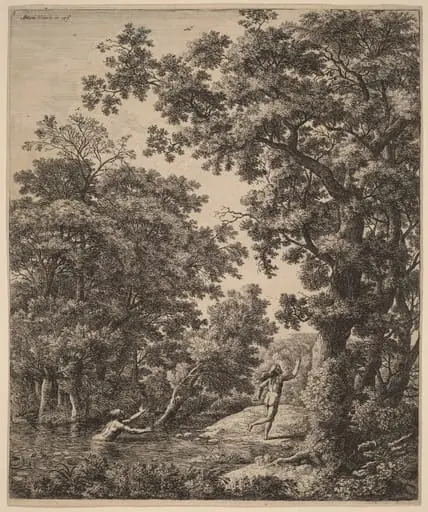
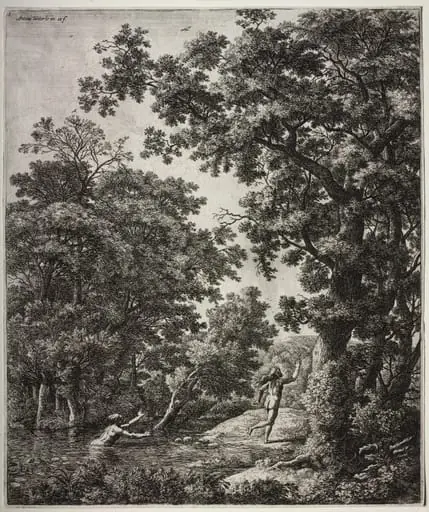
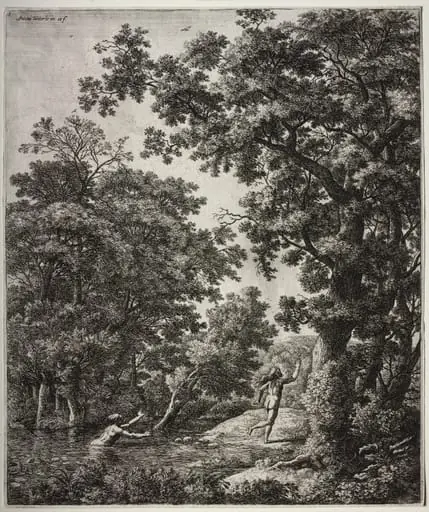 Six large upright landscapes with scenes from Ovid's Metamorphoses: Alpheus and Arethusa
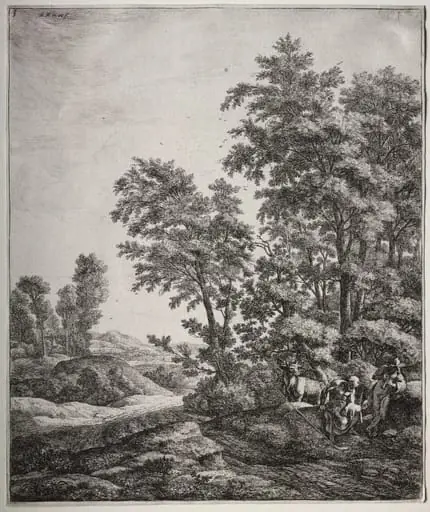 Six large upright landscapes with scenes from Ovid's Metamorphoses: Mercury and Argus
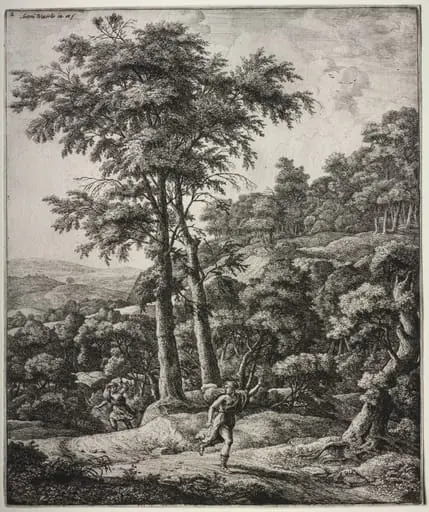 Six large upright landscapes with scenes from Ovid's Metamorphoses: Apollo and Daphne
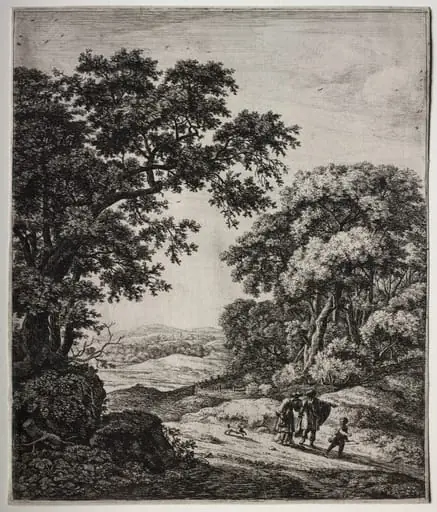 Six large upright landscapes with scenes from the Old Testament