Artwork
Perseus Turning Phinneas to Stone with the Head of Medusa
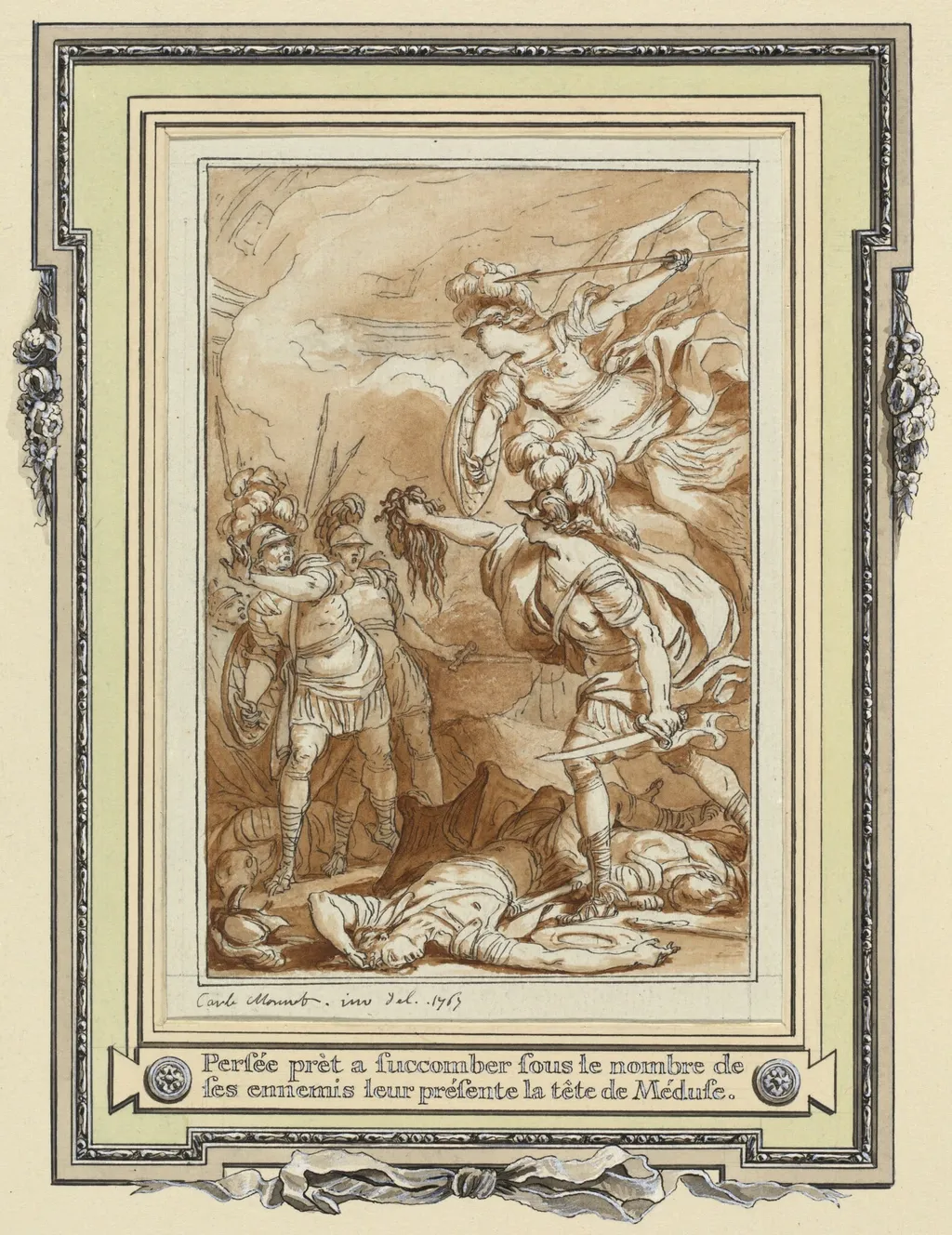
Perseus Turning Phinneas to Stone with the Head of Medusa is an ink drawing by the Romanticist artist Charles Monnet. It dates from 1767 and is held in the collection of the National Gallery of Art.
About this work
The painting is called Perseus Turning Phinneas to Stone with the Head of Medusa.
It was made by Charles Monnet in 1767. This work is interesting because it shows a scene from mythology, which was a common theme in art at the time. The use of pen and ink with wash gives the work a sense of detail and texture.
You can learn more about this style by looking into the movement: Romanticism.
Overview
Charles Monnet’s 1767 drawing depicts the mythic moment when Perseus uses Medusa’s severed head to petrify Phineas. Executed on laid paper, the composition combines precise pen work with ink washes, creating a stark yet textured visual narrative of the ancient tale.
Subject & Meaning
The scene draws from Greek mythology, illustrating Perseus’s triumph over Phineas, who had slain his mother. By employing Medusa’s lethal gaze, the image underscores themes of vengeance and the power of heroic cunning within the classical tradition.
Technique & Style
Monnet employed pen and black ink complemented by brown and gray washes over initial graphite sketches. The layered washes add depth and tonal variation, while a double border rendered in pen and gray ink frames the image, emphasizing its draftsmanship and the period’s interest in detailed illustrative rendering.
Context
Created in the late eighteenth century, the drawing reflects the era’s fascination with antiquity and mythological subjects, a hallmark of the burgeoning Romantic sensibility that prized dramatic narratives and emotional intensity in visual art.
History & Provenance
The work remains attributed to Monnet, dated 1767, and is catalogued as a drawing rather than a painted work. Its documented existence rests on the artist’s signature and the paper’s laid texture, typical of the period’s drawing materials.
Artist & collection

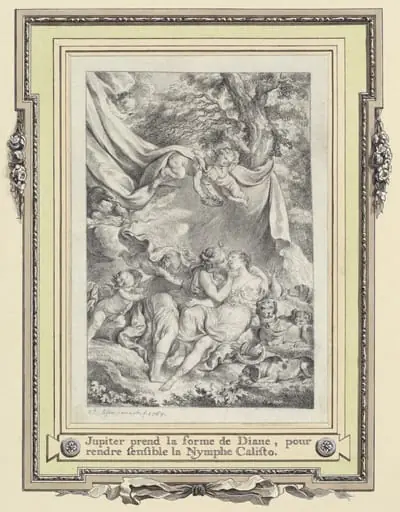 Jupiter and Callisto
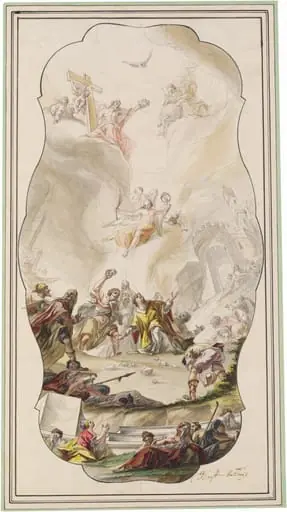 The Stoning of Saint Stephen
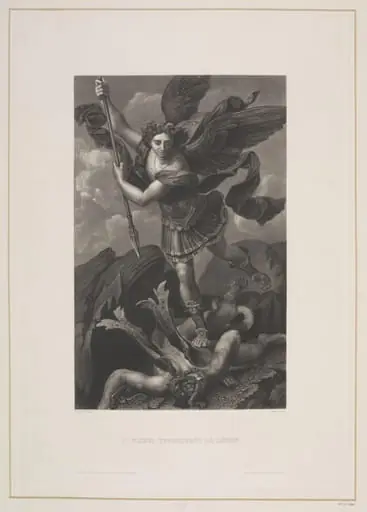 St. Michael
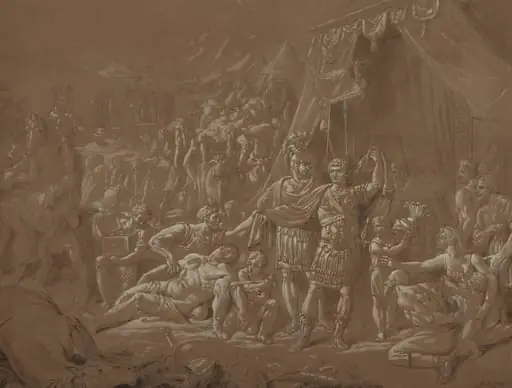 A Scene from the Life of Trajan
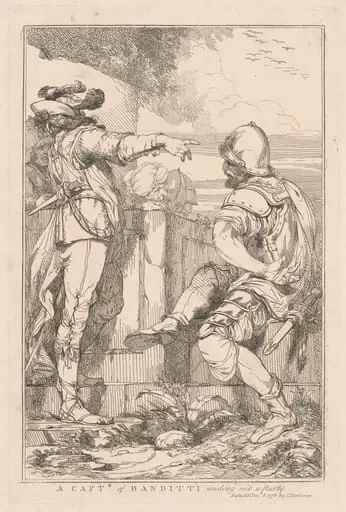 A Captain of Banditti
![The Martyrdom of Saints Peter and Paul [recto], by Antonio da Trento](https://artifactworldgallery.com/img/antonio-da-trento--the-martyrdom-of-saints-peter-and-paul-recto--a51e90060085a207-w320.webp) The Martyrdom of Saints Peter and Paul [recto]
The Martyrdom of Saints Peter and Paul [recto]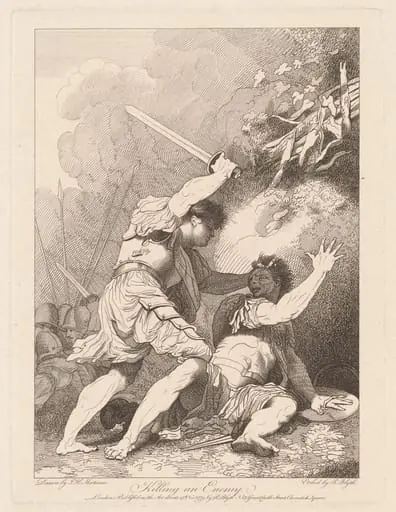 Killing an Enemy
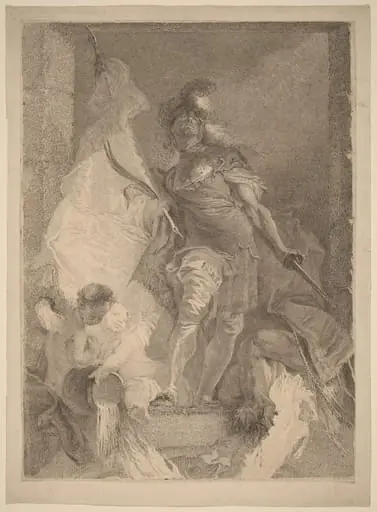 Saint Florian
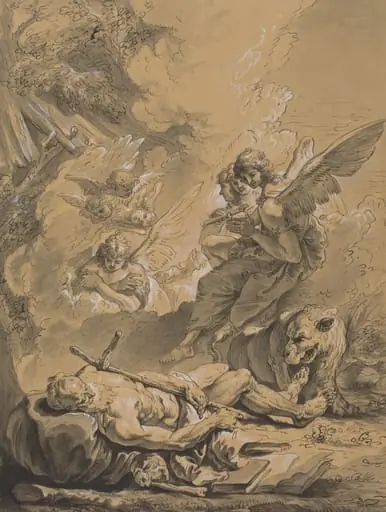 Death of Saint Jerome
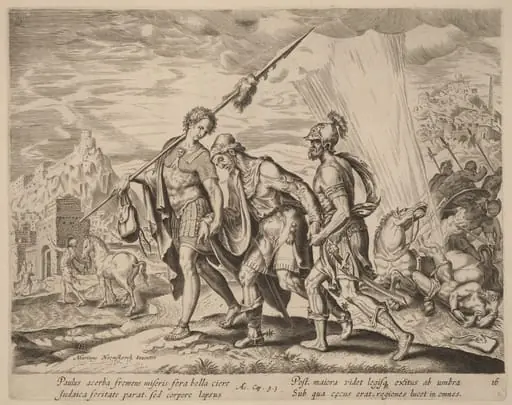 The Conversion of Saint Paul
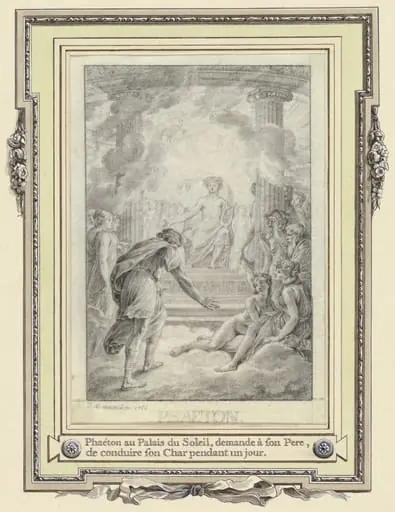 Phaeton au Palais du Soleil ...
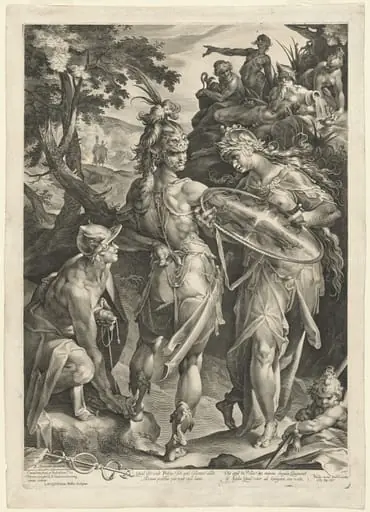 Minerva and Mercury Arming Perseus