Artwork
Killing an Enemy
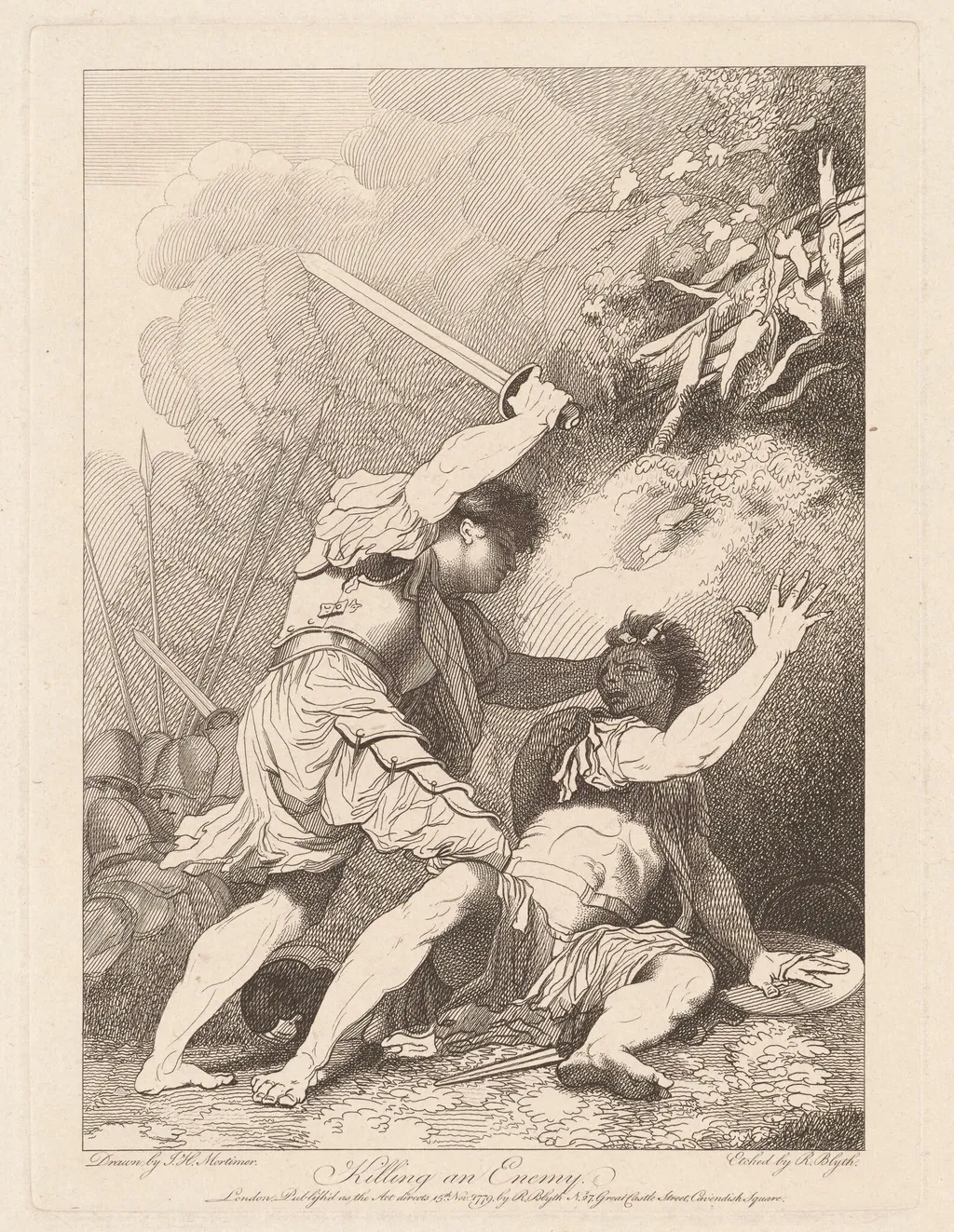
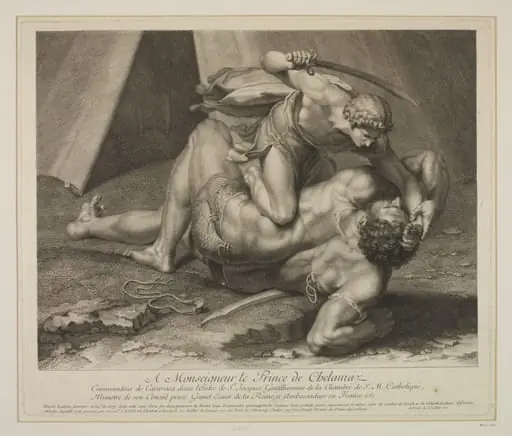
Killing an Enemy is an ink print by the Romanticist artist Robert Blyth. It dates from 1779 and is held in the collection of the National Gallery of Art.
About this work
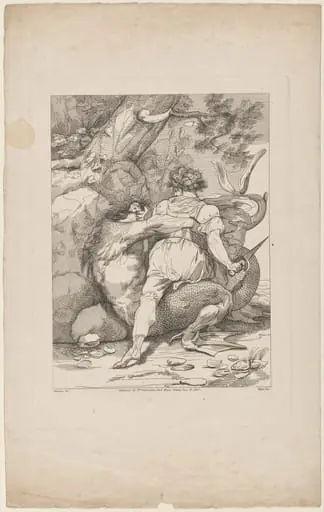
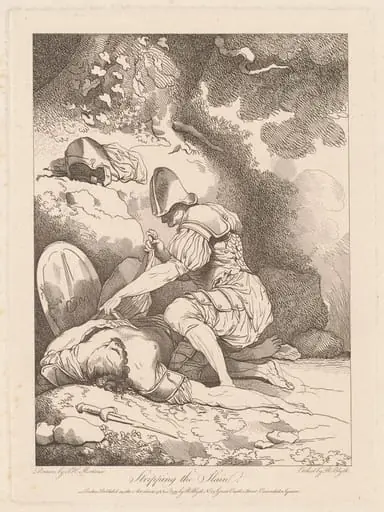
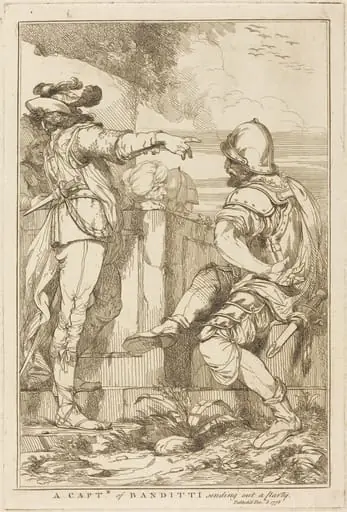
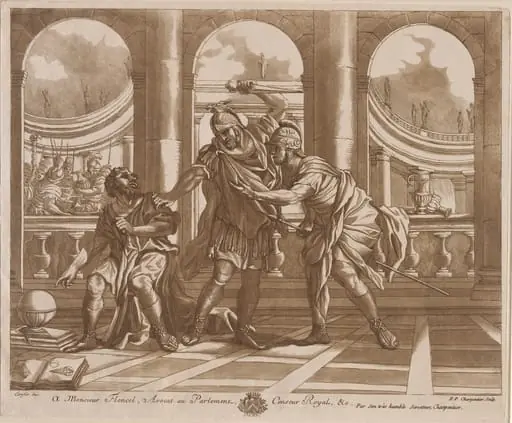
This print shows a man in a coat stabbing another man on the ground. The attacker holds a knife low, near the victim’s stomach. The victim’s arms are up, but he can’t fight back.
The artist, Robert Blyth, made this in 1779. It’s an etching, a kind of print where lines cut into a metal plate hold ink. This method lets the artist shade areas with tiny dots called aquatint.
Look up etching next.
Overview
Killing an Enemy is an 1779 etching on laid paper by the British printmaker Robert Blyth. Executed as a single‑plate print, the work measures roughly 30 × 20 cm and is catalogued among Blythe’s later graphic output. The composition depicts a violent encounter between two men, rendered in stark monochrome tones.
Subject & Meaning
The scene shows a clothed figure lunging with a knife toward a prone opponent whose arms are raised in a defensive gesture, suggesting an act of sudden aggression or retribution. The positioning of the weapon near the victim’s abdomen emphasizes vulnerability, while the raised arms convey a futile attempt at resistance, inviting contemplation of power dynamics and mortal conflict.
Technique & Style
Blyth employed traditional intaglio etching, incising lines into a copper plate that retain ink during printing. He supplemented the line work with aquatint, a stipple technique that creates tonal gradations through fine dots, allowing subtle shading of flesh and fabric. The overall style is linear yet atmospheric, characteristic of late‑18th‑century British narrative prints.
History & Provenance
Created in 1779, the print was likely issued by a London print seller as part of a series illustrating violent or moralizing subjects popular at the time. Surviving copies appear in several public collections, including the British Museum and the Victoria and Albert Museum, where they are documented in mid‑19th‑century auction records.
Context
The work emerges from a period when British printmakers frequently explored themes of crime, justice, and personal conflict, often for didactic or sensational purposes. Blyth’s choice of a solitary, violent episode aligns with contemporary interests in moralizing narratives and the visual culture of public executions and street violence.
Artist & collection