Artwork
The Conversion of Saint Paul
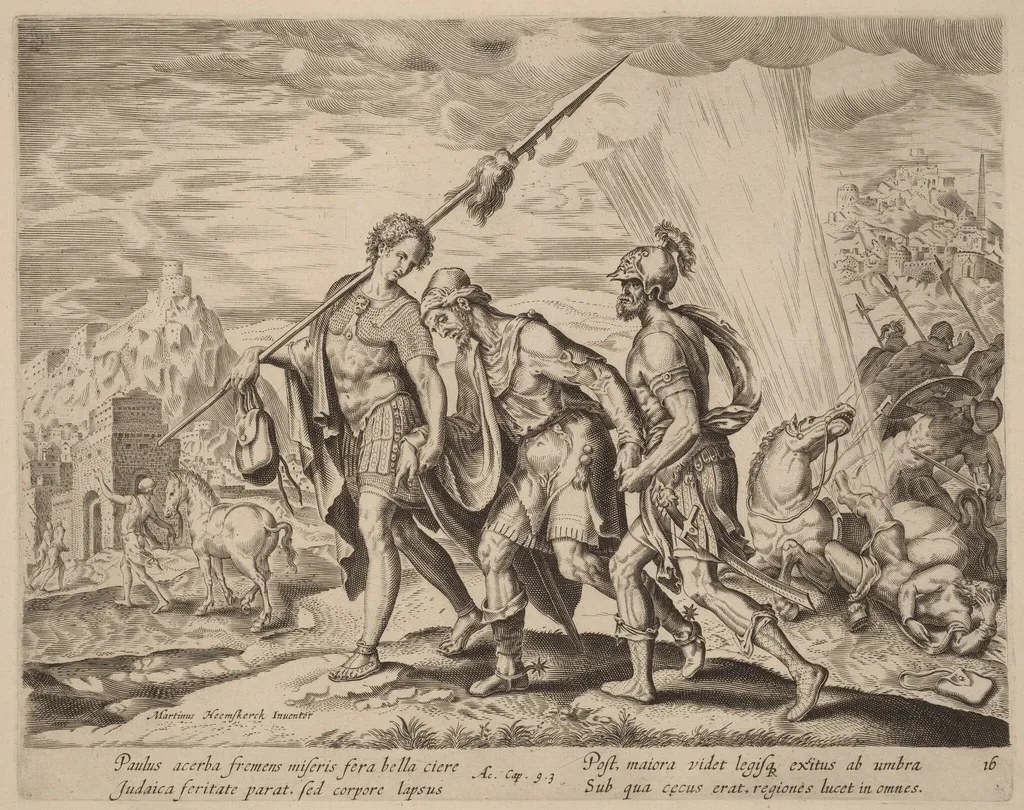
The Conversion of Saint Paul is an ink print by the Renaissance artist Philip Galle. It dates from 1574 and is held in the collection of the National Gallery of Art.
About this work
Overview
Philip Galle’s 1574 engraving illustrates the biblical moment when Saul of Tarsus is struck down by divine light on the road to Damascus.
Philip Galle’s 1574 engraving illustrates the biblical moment when Saul of Tarsus is struck down by divine light on the road to Damascus. Created as a reproductive print, it translates a painted composition into fine-line etching, reflecting Galle’s role in disseminating religious imagery across Europe. His work as both publisher and engraver positioned him at the center of the Northern Renaissance print trade, where accuracy and narrative clarity were paramount.
Subject & Meaning
The scene captures Saul’s sudden transformation into Paul, the apostle to the Gentiles, as he falls from his horse beneath a radiant beam of heavenly light. Surrounding figures — soldiers, animals, and onlookers — react with shock and confusion, emphasizing the supernatural disruption of the moment. The composition underscores the theological theme of divine intervention, turning persecution into devotion through a single, dramatic encounter.
Technique & Style
Galle employed fine, controlled lines to render intricate details in clothing, horse anatomy, and landscape elements. The engraving’s dense cross-hatching creates depth and texture, while the arrangement of figures conveys kinetic energy. His technique reflects the Northern European tradition of meticulous draftsmanship, prioritizing clarity and narrative legibility over emotional abstraction, typical of reproductive prints of the period.
History & Provenance
Produced in Haarlem during the height of the Dutch print industry, this engraving was likely made after a now-lost painting, possibly by a Flemish master. Galle’s workshop specialized in reproducing works by established artists for wide distribution, making such prints accessible to private collectors and religious institutions. The plate’s survival and multiple impressions attest to its popularity in late 16th-century devotional markets.
Context
In the wake of the Reformation, printed images served as tools for religious instruction and moral reflection across confessional lines. Galle’s engravings, though Catholic in subject, circulated among Protestant audiences, demonstrating the transnational reach of print culture. His work bridged artistic traditions of the Low Countries and the broader European visual discourse, where biblical narratives remained central to public and private devotion.
Legacy
Galle’s engraving contributed to the standardization of biblical iconography in print form, influencing later artists and publishers. While not original in composition, its technical precision and narrative coherence ensured its longevity in collections and educational use. His role as a publisher helped preserve and propagate visual traditions that might otherwise have been lost, embedding such scenes into the collective religious imagination of early modern Europe.
Artist & collection
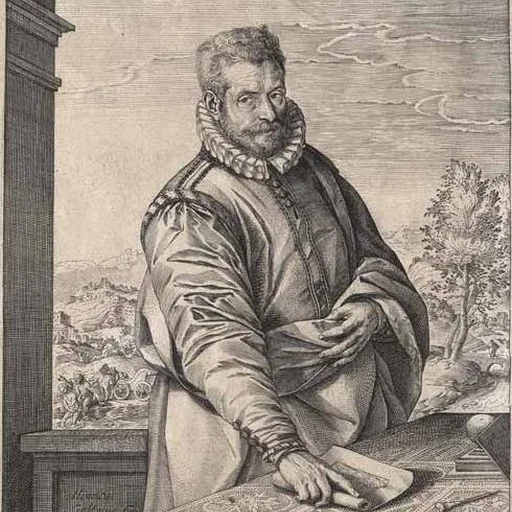
Artist
Philip (or Philips) Galle (1537 – March 1612) was a Dutch publisher, best known for publishing old master prints, which he also produced as designer and engraver. He is especially known for his reproductive engravings of paintings.

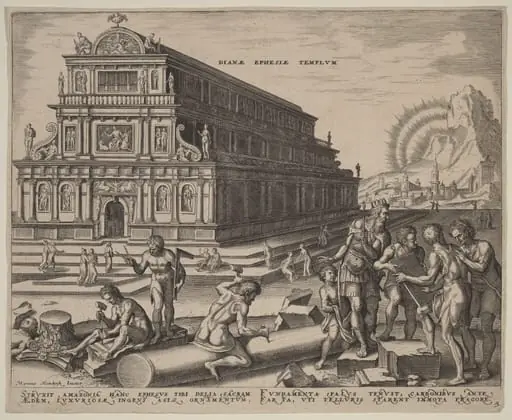 Dianae Ephesiae Templum (The Temple of Diana at Ephesus)
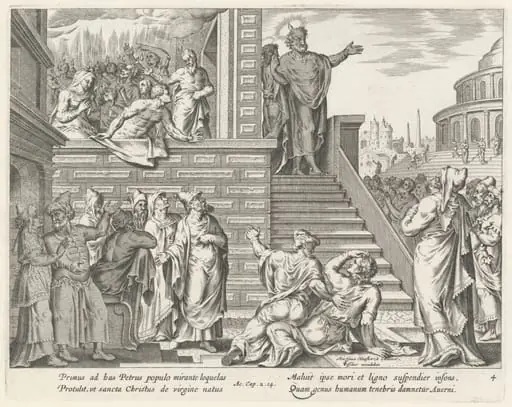 Saint Peter Speaks to the People about Christ
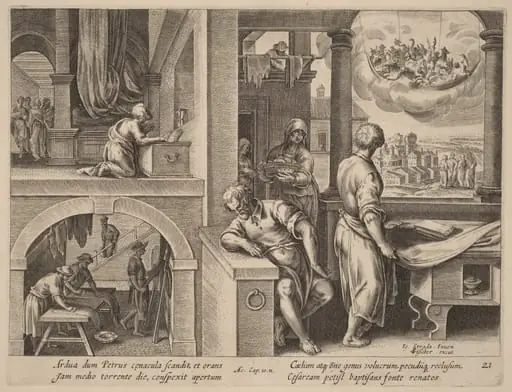 The Vision of Saint Peter
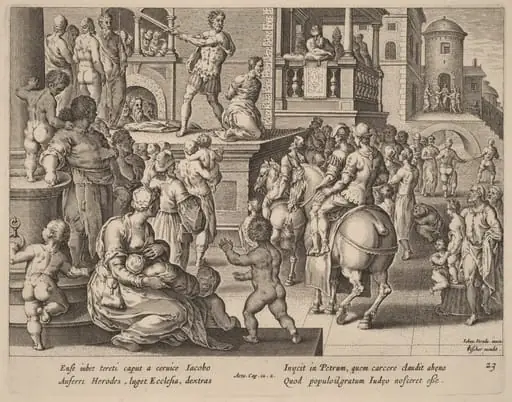 Beheading of Saint James
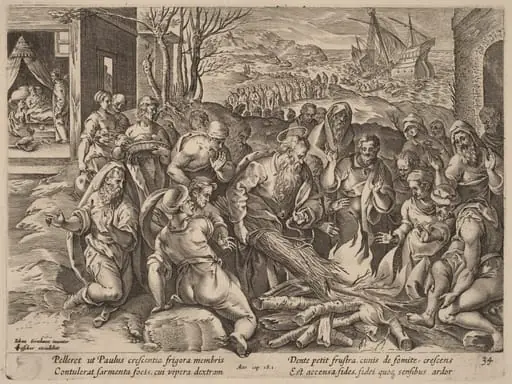 Saint Paul Shipwrecked on the Island of Melita
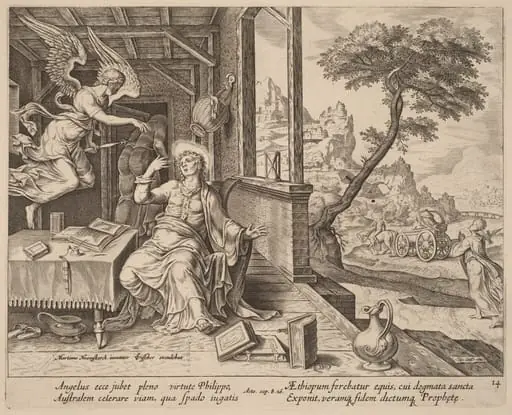 The Angel Orders Saint Philip to Accompany the Ethiopian Eunuch
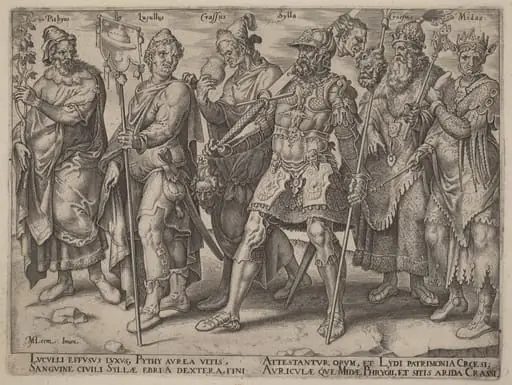 Notorious Examples of Wealth from Antiquity
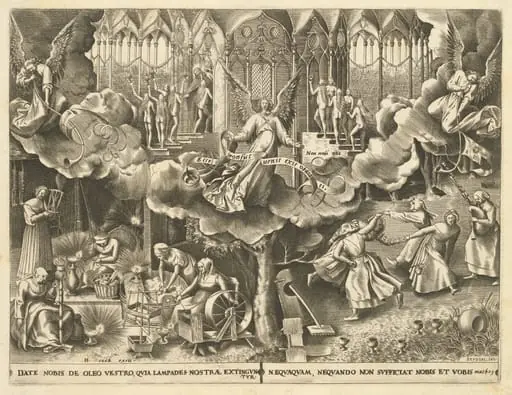 The Parable of the Wise and Foolish Virgins