Artwork
Allegory Celebrating the Birth of the Duc d’Enghien
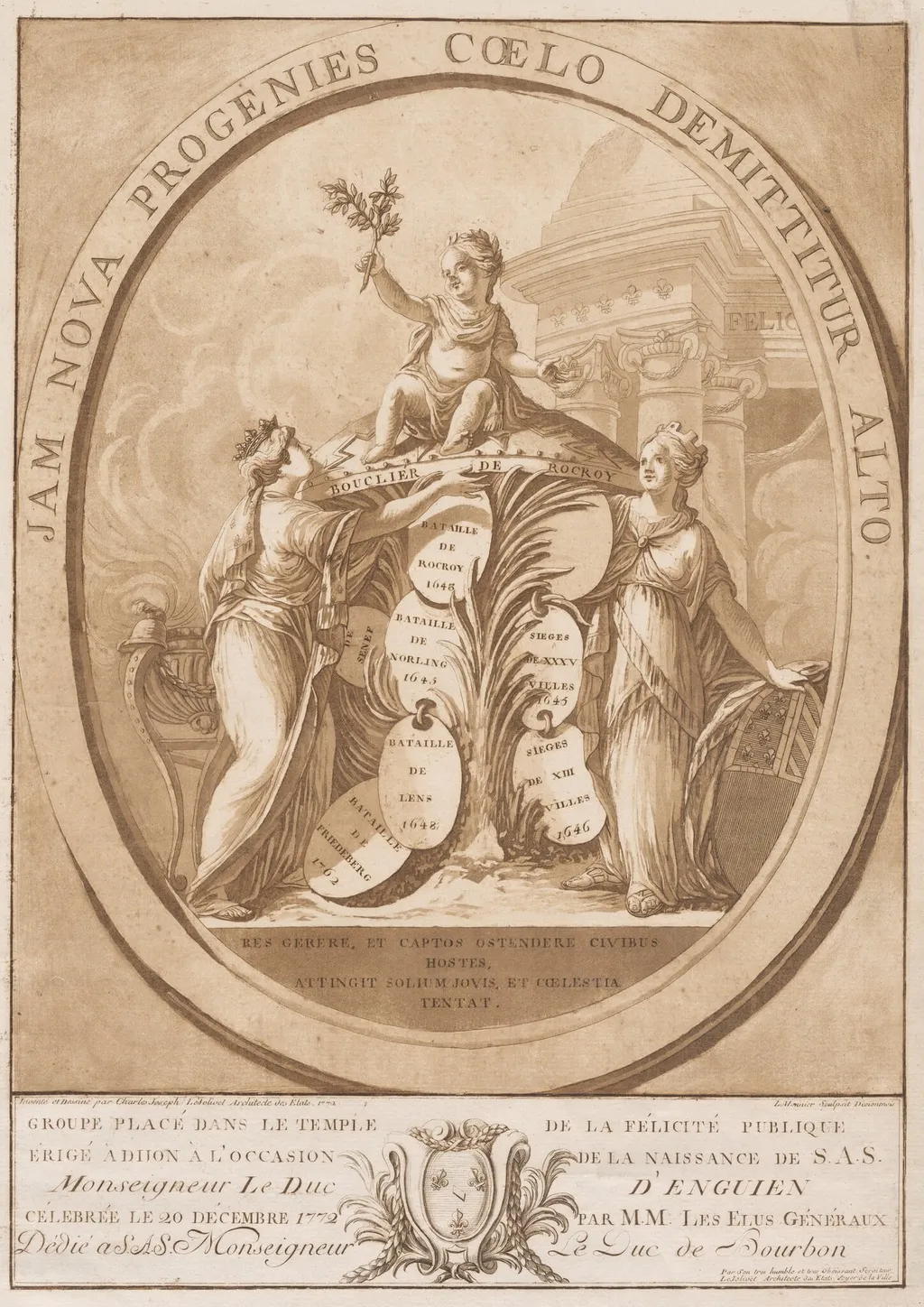
Allegory Celebrating the Birth of the Duc d’Enghien is an ink print by the Romanticist artist Louis-Gabriel Monnier. It dates from 1772 and is held in the collection of the National Gallery of Art.
About this work
This print shows a woman in fancy clothes holding a shield with dates and battle names like "Rocroy" and "Lens.
This print shows a woman in fancy clothes holding a shield with dates and battle names like "Rocroy" and "Lens." Above her, a small figure holds a palm branch while standing on a cloud. To the right, another woman in a long dress stands near a building. The background has Latin words and a crown-like shape.
The text at the bottom says this was made for the birth of a nobleman in 1772. The artist used a mix of lines and shading to create depth.
Look up etching, drypoint, aquatint to see how prints like this were made.
Overview
Allegory Celebrating the Birth of the Duc d’Enghien is a 1772 etching and aquatint print by Louis-Gabriel Monnier, housed at the National Gallery of Art in Washington. The work commemorates the birth of the Duc d’Enghien through allegorical imagery.
Subject & Meaning
The print depicts a central female figure in ornate attire holding a shield inscribed with significant dates and battle names (Rocroy, Lens), symbolizing military heritage. A smaller figure above, on a cloud, holds a palm branch (emblem of victory or honor), while another woman stands near a building to the right, set against a background with Latin text and a crown-like motif. Together, these elements celebrate the noble birth and foretell a distinguished future.
Technique & Style
Monnier employed a combination of etching and aquatint techniques in brown ink to achieve depth and shading. The interplay of lines and tonal variations enhances the visual complexity of the allegorical scene.
History & Provenance
Created in 1772 to mark the birth of the Duc d’Enghien, the print is now part of the collection at the National Gallery of Art in Washington, D.C.
Context
Commissioned to celebrate the birth of a noble, the work reflects 18th-century European traditions of creating allegorical artworks for significant aristocratic events, blending heraldic symbols with classical motifs.
Legacy
While specific lasting impacts of this piece on broader art historical movements are not prominently documented, it remains a notable example of late 18th-century allegorical printmaking for noble commemorations.
Artist & collection

 Dedication Plate
 Collection of Various Caprices and New Designs of Cartouches and Ornaments: No 11
 Title Page
 Frontispiece for "The Combat at the Barrier"
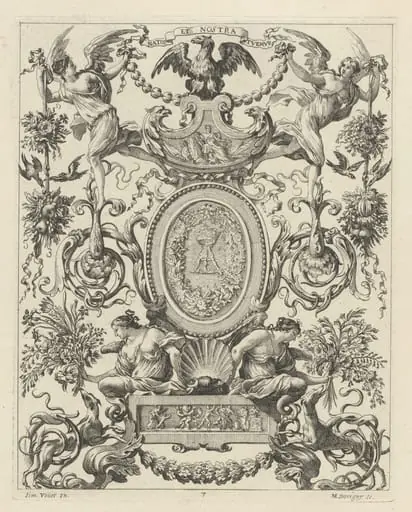 Ornamental Panel Surmounted by an Eagle and the Motto NATOS ET NOSTRA TUEMUR
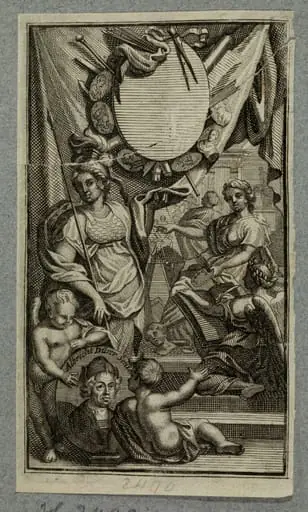 Frontispiece with portrait of Albrecht Dürer d.Ä.
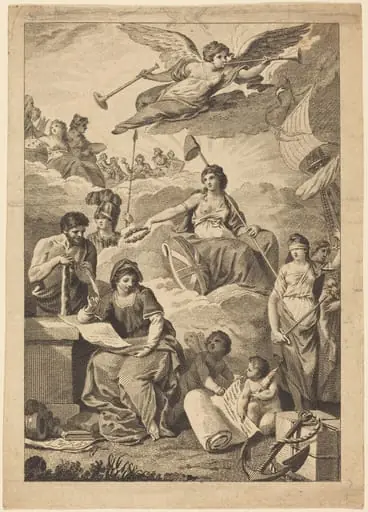 Britannia Crowning History
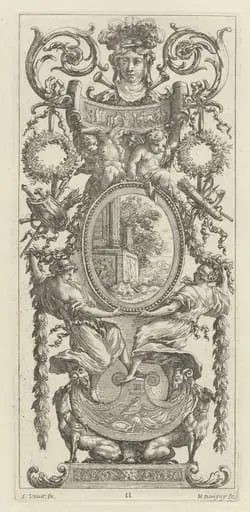 Ornamental Panel Surmounted with a Head Flanked by Foliage
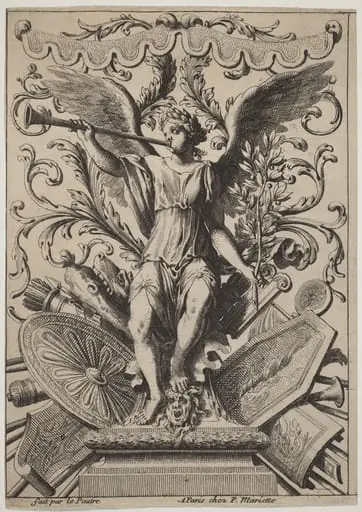 Fame on a Trophy of Arms