Artwork
Traveler Pointing the Way
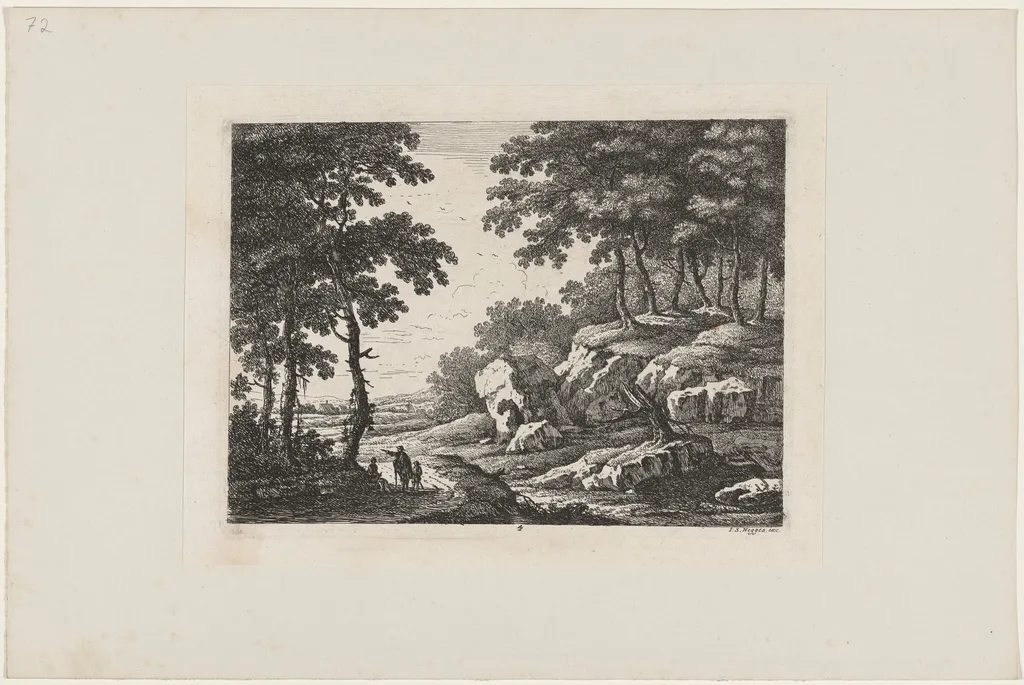
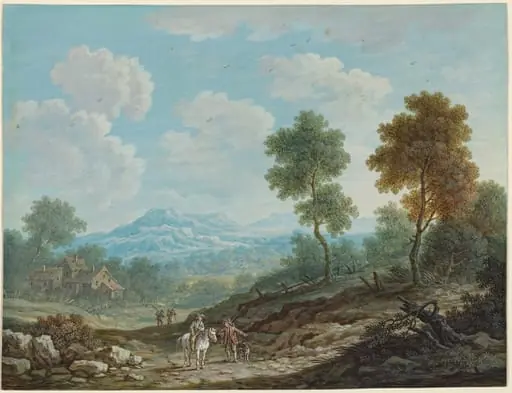
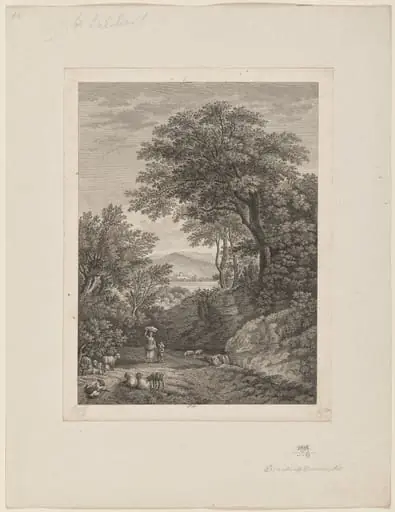
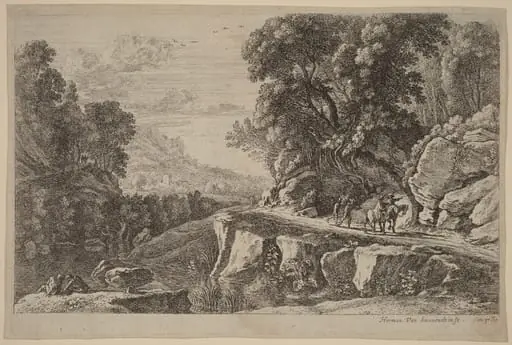
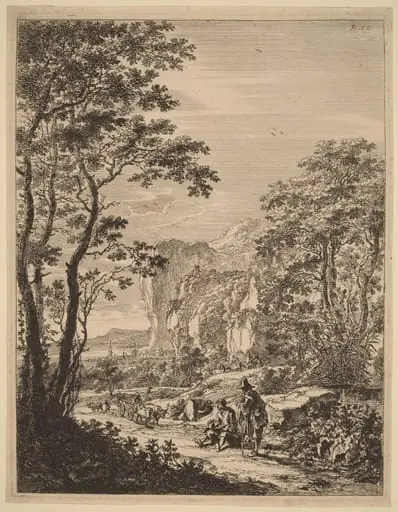
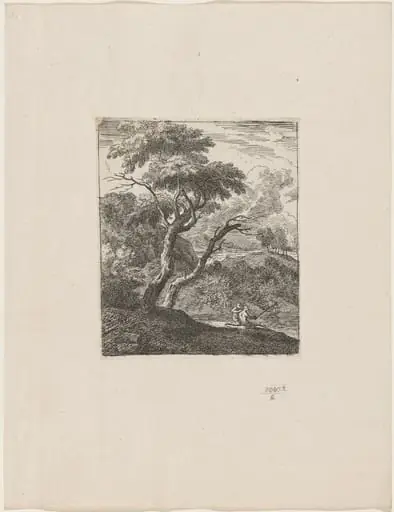
Traveler Pointing the Way is an ink print by the Baroque artist Johann Christoph Dietzsch. It dates from 1734 and is held in the collection of the National Gallery of Art.
About this work
Overview
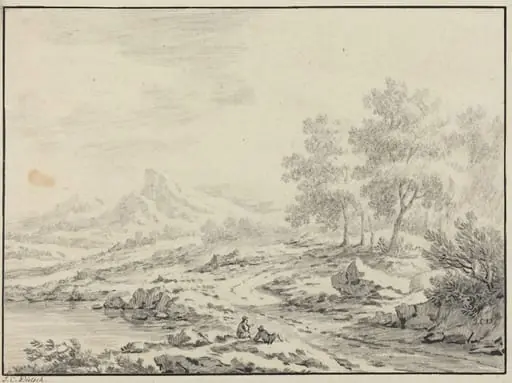
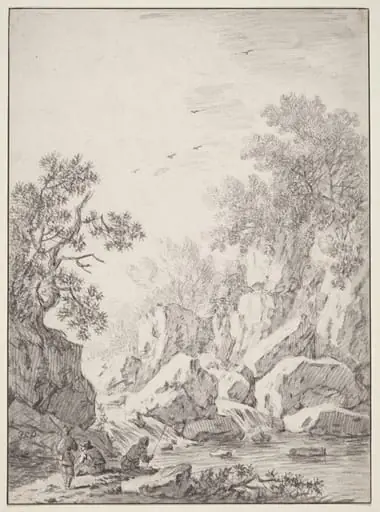
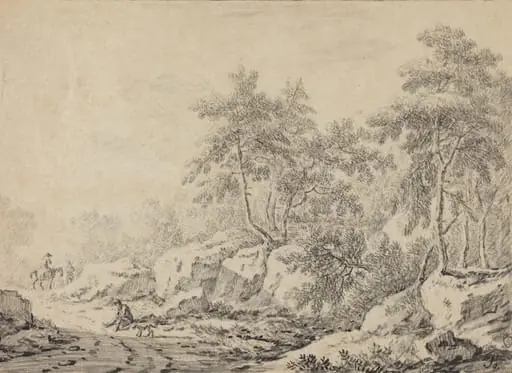
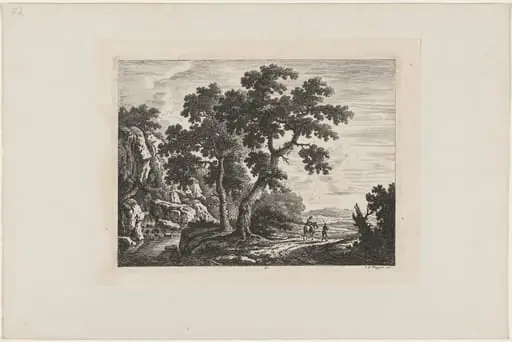
Created in 1734 by Johann Christoph Dietzsch, this etching depicts a tranquil riverside scene with two figures walking near the water.
Created in 1734 by Johann Christoph Dietzsch, this etching depicts a tranquil riverside scene with two figures walking near the water. Rendered in monochrome on laid paper, the composition emphasizes quiet movement and spatial depth. The figures are diminutive against a broad landscape, suggesting harmony between human presence and the natural world. The work belongs to a tradition of topographical prints that valued observation over dramatic narrative.
Subject & Meaning
Two travelers move along a riverbank, one gesturing toward the horizon, possibly indicating direction or contemplation. A flock of sheep grazes on a gentle slope behind them, and a solitary tree anchors the left side of the scene. The absence of architectural or symbolic elements invites interpretation as a moment of stillness rather than a story. The gesture of the traveler may imply guidance, but its meaning remains open, reinforcing the scene’s meditative tone.
Technique & Style
Dietzsch employed fine, controlled etching lines to model light and texture across the landscape. The delicate cross-hatching suggests grass, water ripples, and foliage without color, relying on tonal variation for depth. The background recedes through lighter, sparser lines, enhancing spatial illusion. The precision of the lines reflects the influence of Northern European printmaking traditions, where clarity and restraint defined aesthetic values.
History & Provenance
The print was produced in 1734 during Dietzsch’s active period in Germany, likely as part of a series of landscape studies. Few records of its early ownership exist, but its survival in institutional collections suggests it was valued for its technical skill rather than its rarity. It was not widely reproduced or circulated, indicating it may have served private or academic audiences rather than the commercial print market.
Context
In early 18th-century Germany, landscape etchings often served as records of place or exercises in draftsmanship. Dietzsch’s work aligns with a growing interest in naturalistic observation, distinct from idealized pastoral scenes common in Italy. His focus on quiet, unadorned scenery reflects regional tastes and the influence of Dutch and Flemish printmakers who prioritized authenticity over ornamentation.
Legacy
Though Dietzsch is not widely known today, this etching exemplifies the quiet precision of German printmaking in the Baroque era. It contributes to the historical record of how landscape was perceived as a subject worthy of careful study. The work remains a reference for understanding the evolution of topographical art and the role of print in documenting everyday natural environments.
Own this work as a print
Artist & collection