Artwork
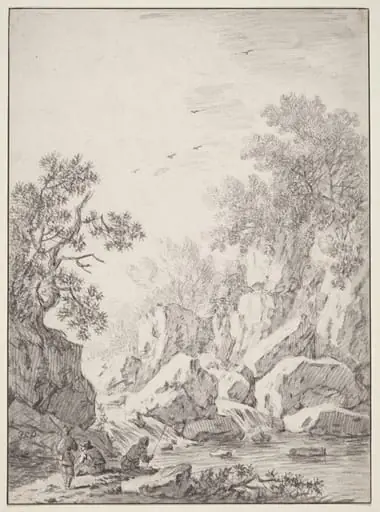
Traveler by a Waterfall
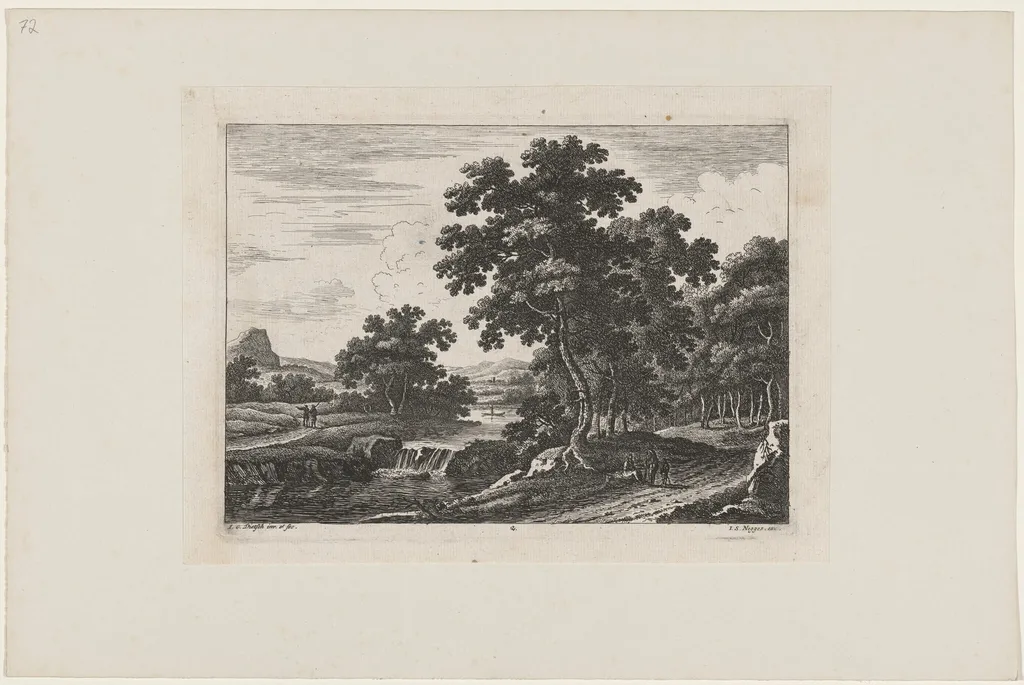
Traveler by a Waterfall is an ink print by the Baroque artist Johann Christoph Dietzsch. It dates from 1734 and is held in the collection of the National Gallery of Art.
About this work
Overview
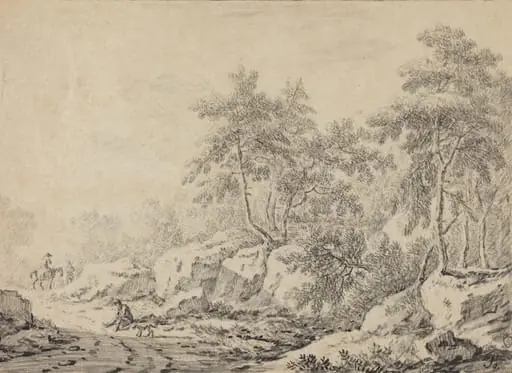
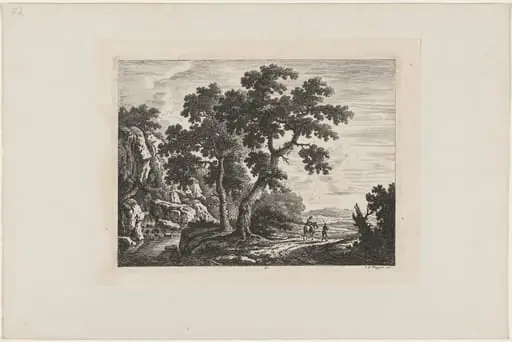
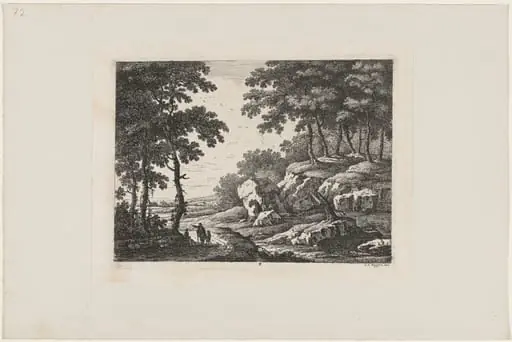
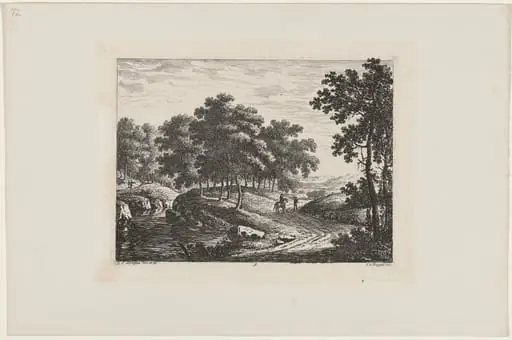
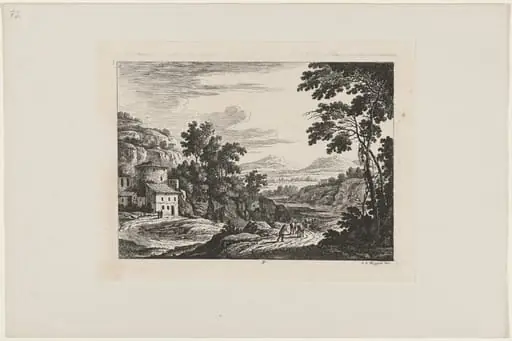
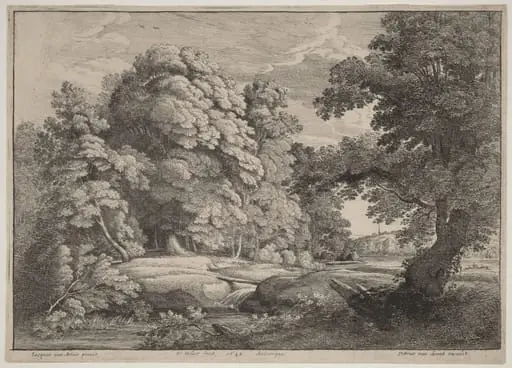
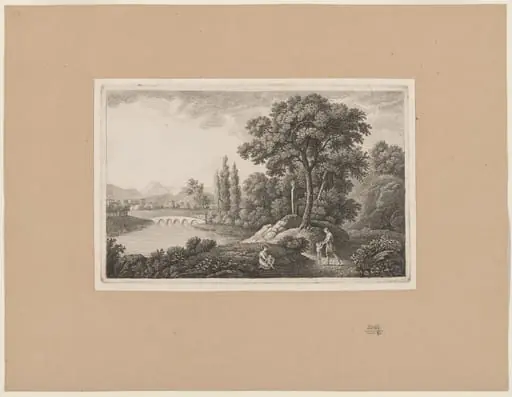
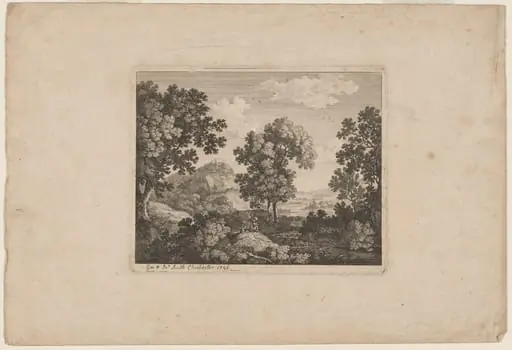
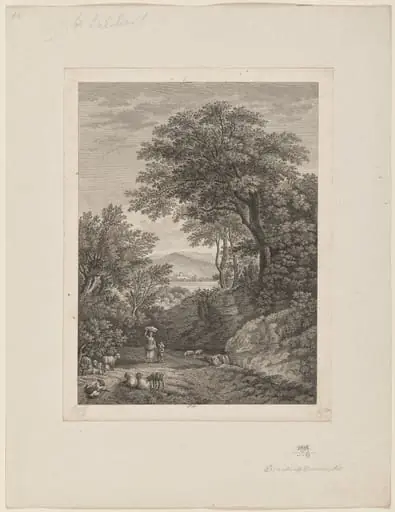
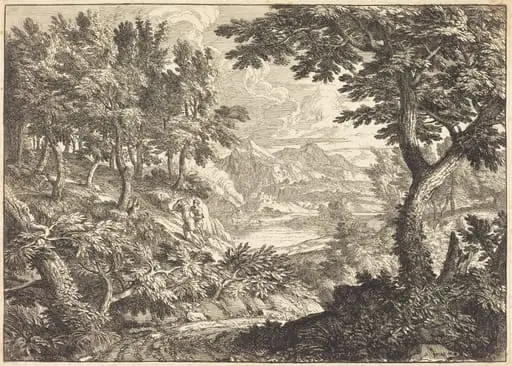
Johann Christoph Dietzsch’s print Traveler by a Waterfall, executed in 1734, is an etching on laid paper. The composition presents a tranquil woodland setting dominated by a modest cascade at its centre, framed by trees and distant hills beneath a cloud‑filled sky. Two figures stand close to the water, gazing into its flow, lending a narrative element to the otherwise natural scene.
Subject & Meaning
The work depicts a serene forest landscape where human presence is minimal yet purposeful. The two travelers, positioned near the falls, suggest contemplation or a pause in a journey, inviting viewers to consider the relationship between humanity and the natural world. The gentle waterfall and surrounding foliage evoke a sense of calm and the timeless allure of untouched scenery.
Technique & Style
This meticulous line work reflects the 18th‑century European printmaking aesthetic, which prized precision and atmospheric depth in landscape imagery.
Dietzsch employed the etching process, incising fine lines into a metal plate before transferring the image onto laid paper. His delicate hatching creates subtle gradations of light and shadow, giving the trees and water a quasi‑three‑dimensional quality. This meticulous line work reflects the 18th‑century European printmaking aesthetic, which prized precision and atmospheric depth in landscape imagery.
Context
Created in the early Enlightenment period, the print aligns with a broader European fascination with pastoral and picturesque subjects. Etching, a favored medium for disseminating landscape views, allowed artists like Dietzsch to reach a wider audience. The work exemplifies the era’s interest in documenting natural scenery with an eye toward both scientific observation and artistic appreciation.
Artist & collection