Artwork
The Standard Bearer
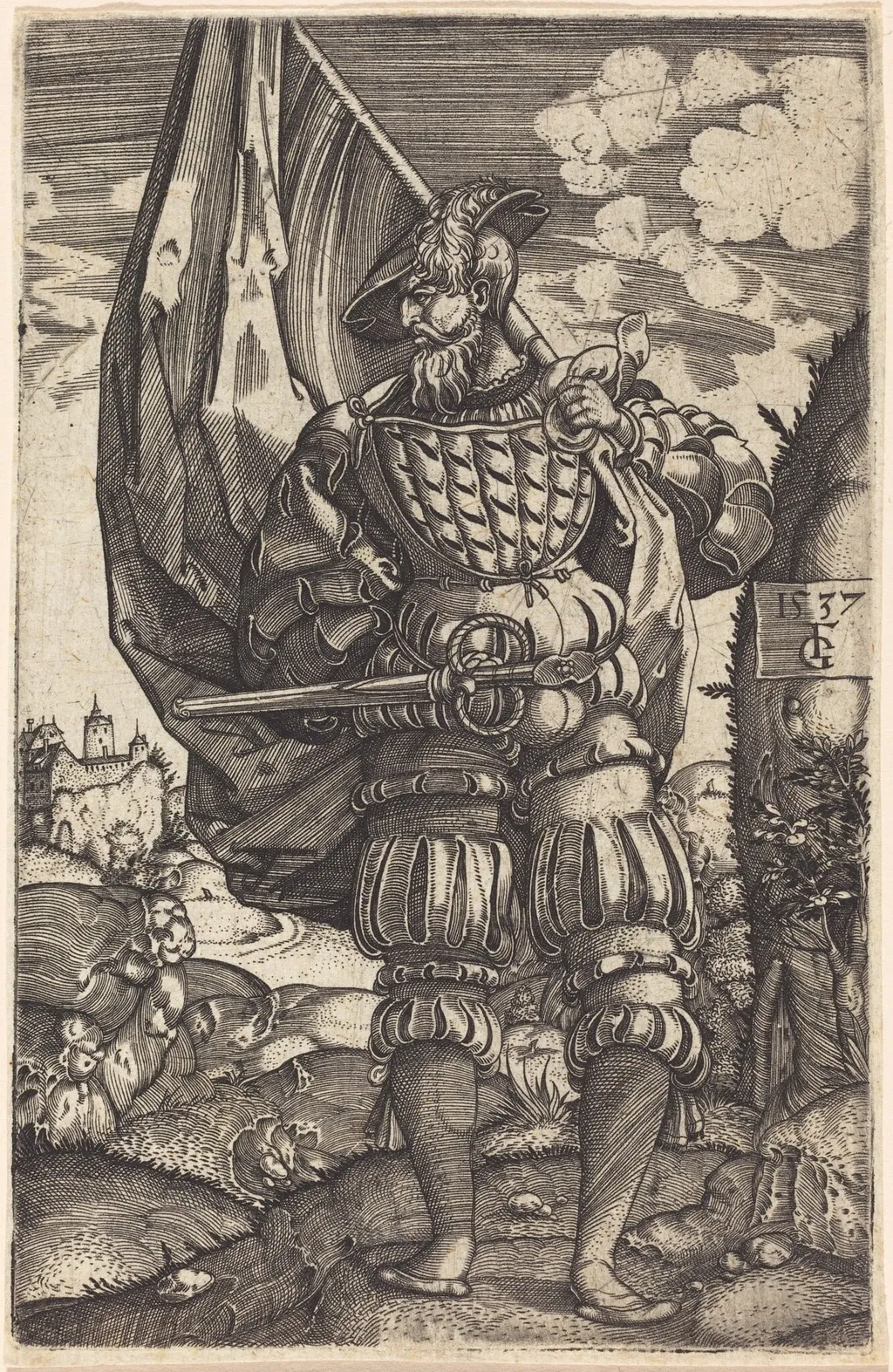
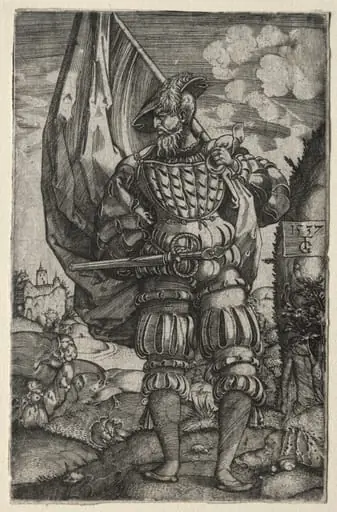
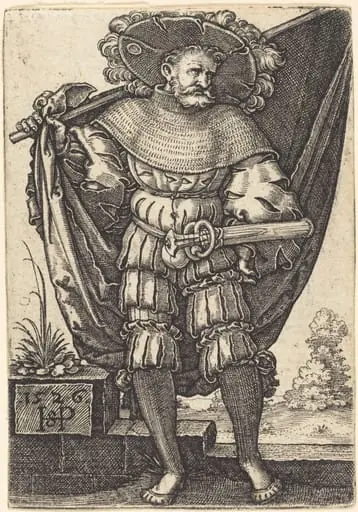
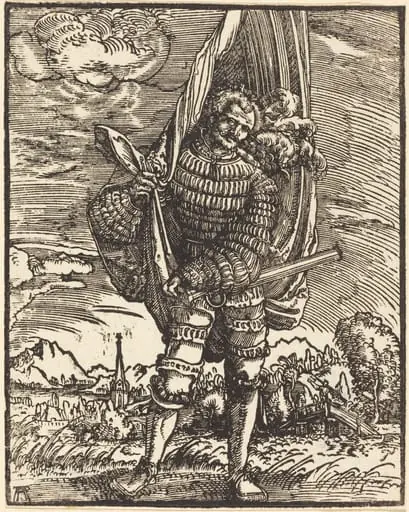
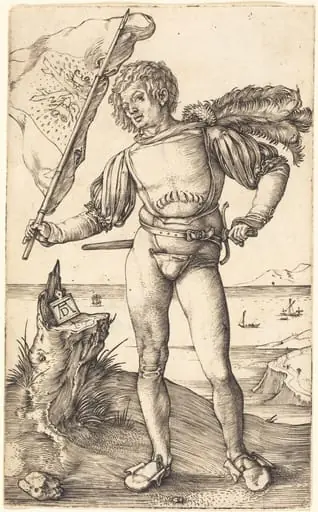
The Standard Bearer is an ink print by the Renaissance artist Monogrammist FG. It dates from 1526 and is held in the collection of the National Gallery of Art.
About this work
Overview
Created in 1526, this engraving by Monogrammist FG depicts a solitary figure in elaborate armor, standing prominently against a rugged landscape.
Created in 1526, this engraving by Monogrammist FG depicts a solitary figure in elaborate armor, standing prominently against a rugged landscape. The work is rendered in fine linear detail using cross-hatching to model form and shadow. The subject holds a banner and sword, positioned as if in ceremonial readiness. The composition emphasizes stillness and dignity rather than action, suggesting a symbolic rather than narrative intent.
Subject & Meaning
The figure, clad in ornate armor and crowned with a plumed hat, likely represents an idealized knight or noble steward, not a specific historical person. The banner and sword imply duty and authority, while the distant castle anchors the figure within a feudal world. The stillness of the pose and the absence of conflict suggest a contemplative emblem of chivalric virtue, possibly commissioned to convey loyalty or status.
Technique & Style
The engraving employs meticulous cross-hatching to render the texture of armor, fabric, and terrain. Fine lines build volume and contrast, especially on the shield and feathered headpiece, where light catches raised surfaces. The background is simplified into rolling hills and a distant fortress, directing focus to the central figure. The precision of the lines reflects the technical mastery typical of early 16th-century Northern European printmaking.
History & Provenance
The work is attributed to Monogrammist FG, an anonymous artist active in the Low Countries during the 1520s. Few works by this hand survive, and none are signed with a full name. The engraving was likely produced for a private collector or civic patron, given its refined execution and lack of overt religious or political messaging. Its early date places it within the transition from medieval to Renaissance visual culture.
Context
In the early 1520s, engraved prints of armored figures were popular among elite audiences in the Rhineland and Low Countries, serving as both decorative objects and symbols of martial identity. While religious imagery dominated print production, secular portraits of knights reflected enduring aristocratic ideals. This work aligns with a trend of idealized, non-narrative figures that emphasized status over story.
Legacy
Though not widely reproduced or copied, the engraving exemplifies the quiet sophistication of Northern European printmaking before the rise of Dürer’s influence became dominant. Its restrained heroism and technical precision influenced later artists who sought to convey nobility through form rather than drama. Today, it remains a rare example of anonymous craftsmanship in the service of aristocratic symbolism.
Artist & collection