Artwork
Mutius Scaevola
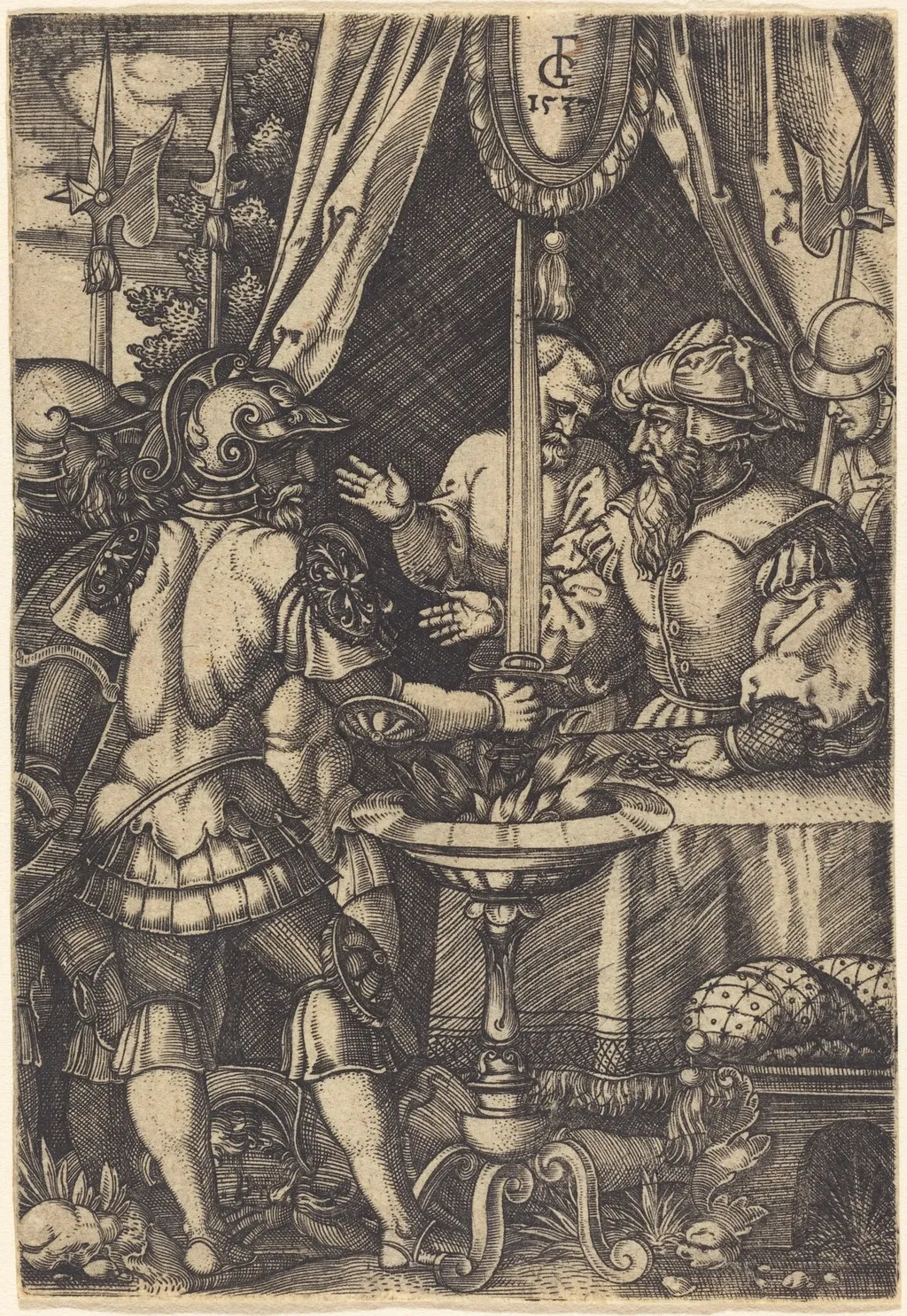
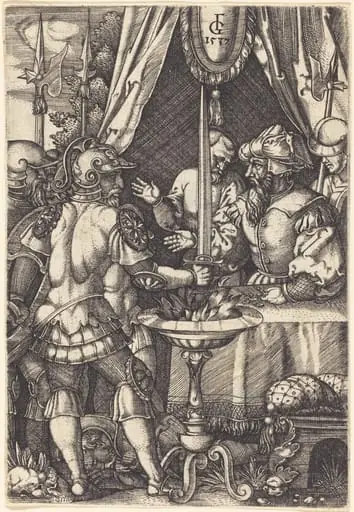
Mutius Scaevola is an ink print by the Renaissance artist Monogrammist FG. It dates from 1537 and is held in the collection of the National Gallery of Art.
About this work
The background is packed with swirling patterns, a crown, and a globe, making the scene feel busy and full of meaning.
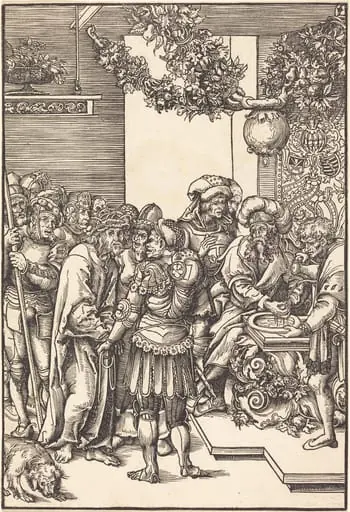
This black-and-white print shows a dramatic scene with two men in armor. One man is holding a sword while the other reaches toward him, both looking intense. The background is packed with swirling patterns, a crown, and a globe, making the scene feel busy and full of meaning.
The artist used tiny lines to create shadows and texture, giving the image depth. The date "1537" is carved into the top, showing when this was made.
Next, look up engraving to see how artists like this one used metal plates to make prints.
Overview
Mutius Scaevola is a black‑and‑white engraving executed in 1537 by the anonymous artist known only by the monogram FG. The print presents a compact, densely arranged composition that centers on two armored figures locked in a tense encounter, surrounded by ornamental motifs that include a crown and a globe.
Subject & Meaning
The focal figures are two men in full armor; one grips a sword while the other extends a hand toward him, their expressions conveying confrontation or negotiation. The surrounding symbols—a regal crown and a terrestrial globe—suggest themes of authority, power, and perhaps a narrative drawn from classical or historical sources, though the exact story remains unidentified.
Technique & Style
FG achieved depth and texture through fine cross‑hatching and delicate line work, allowing subtle gradations of shadow across the metal plate. The intricate background patterns swirl around the central action, creating a sense of movement and complexity typical of mid‑16th‑century Northern European printmaking.
History & Provenance
The engraving bears the date 1537 incised at the top of the plate, confirming its production year. Beyond the monogram, little is known about the artist’s identity or the work’s early ownership, and it has circulated primarily among collections of early modern prints.
Context
Created during a period when engravers increasingly explored historical and mythological subjects, this work reflects the era’s fascination with heroic narratives and the use of emblematic objects—such as crowns and globes—to convey allegorical meaning. Its dense decorative framing aligns with contemporary trends in print design that emphasized visual richness.
Artist & collection