Artwork
Mutius Scaevola
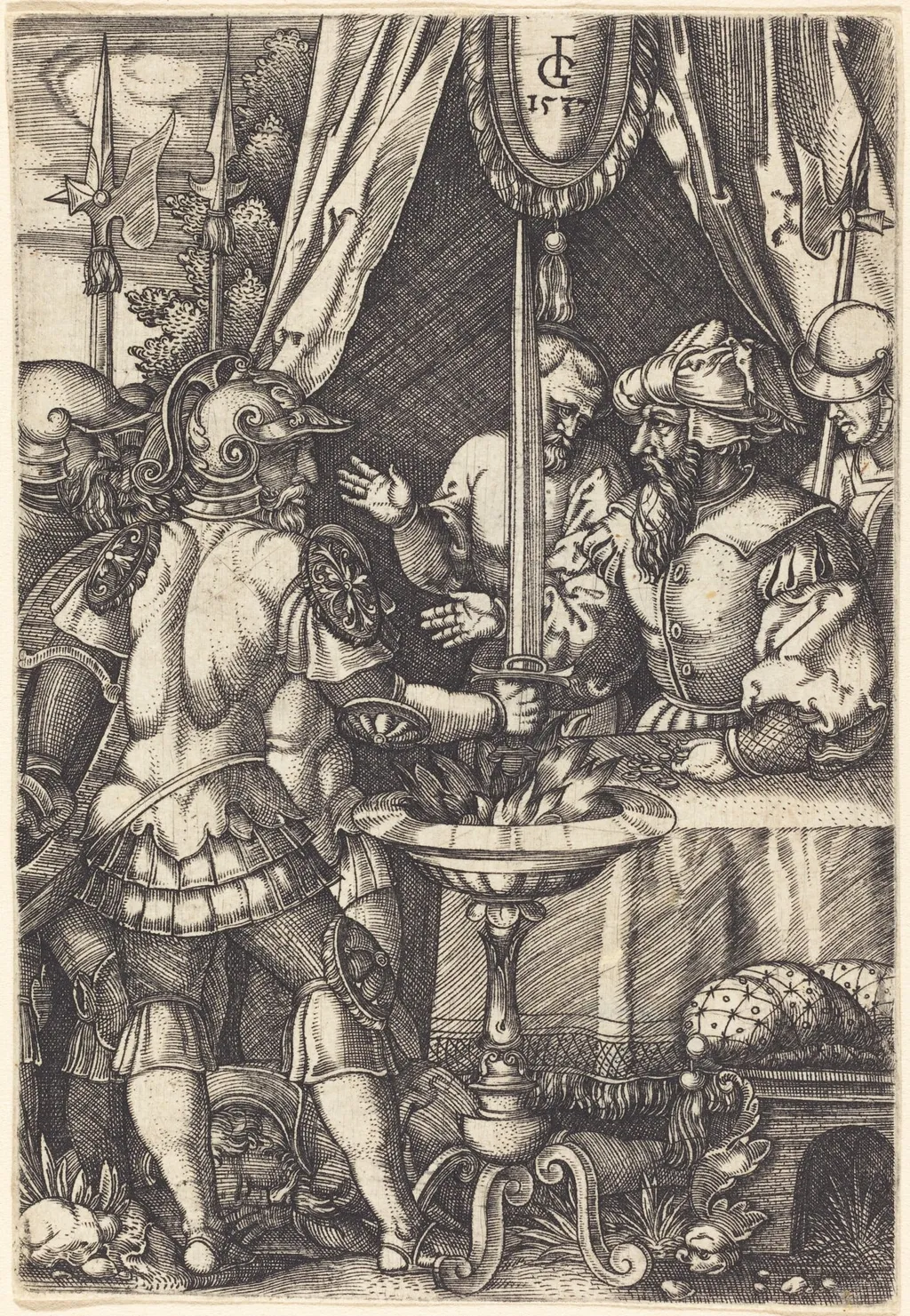
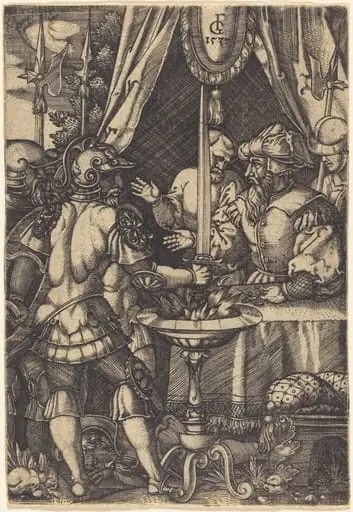
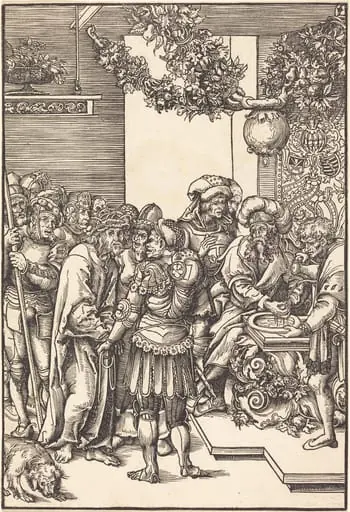
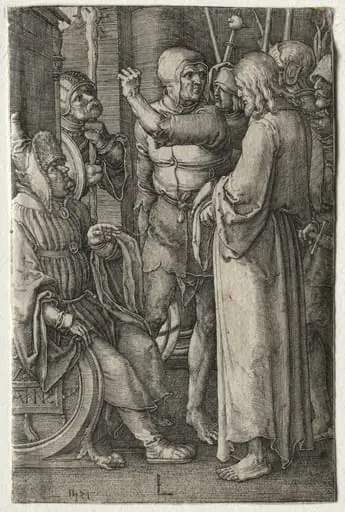
Mutius Scaevola is an ink print by the Renaissance artist Monogrammist FG. It dates from 1537 and is held in the collection of the National Gallery of Art. The print, an engraving dated 1537 and signed with the monogram FG, portrays a moment from Roman legend.
About this work
Overview
The print, an engraving dated 1537 and signed with the monogram FG, portrays a moment from Roman legend. Central to the composition is Mutius Scaevola, who holds his right hand within a fire, while three armored figures converse nearby. A draped curtain forms the background and a table bearing a bowl completes the setting, all rendered with fine line work.
Subject & Meaning
The work illustrates the ancient tale of Mutius Scaevola, famed for demonstrating his resolve by placing his hand in flames. The calm demeanor of the hero amid the surrounding soldiers underscores themes of stoic bravery and civic virtue, reflecting the moral exemplars prized in Roman historiography and revived during the Renaissance.
Technique & Style
Executed in copper engraving, the image relies on dense cross‑hatching to model forms and suggest depth. The intricate line work creates varied textures—from the sheen of armor to the soft folds of the curtain—while the precise detailing aligns with the period’s emphasis on realistic representation and anatomical accuracy.
History & Provenance
The print bears the enigmatic monogram FG, a designation used for an unidentified artist active in the early sixteenth century. Produced in 1537, the work entered collections of Northern European print dealers before appearing in later museum holdings, where it has been catalogued as an example of mid‑Renaissance printmaking.
Context
During the Renaissance, artists frequently turned to classical antiquity for subject matter, using print media to disseminate these narratives widely. This engraving reflects that trend, merging a historic Roman episode with contemporary artistic conventions, and illustrates how the medium of engraving served both educational and decorative purposes in the period.
Artist & collection