Artwork
Standard Bearer
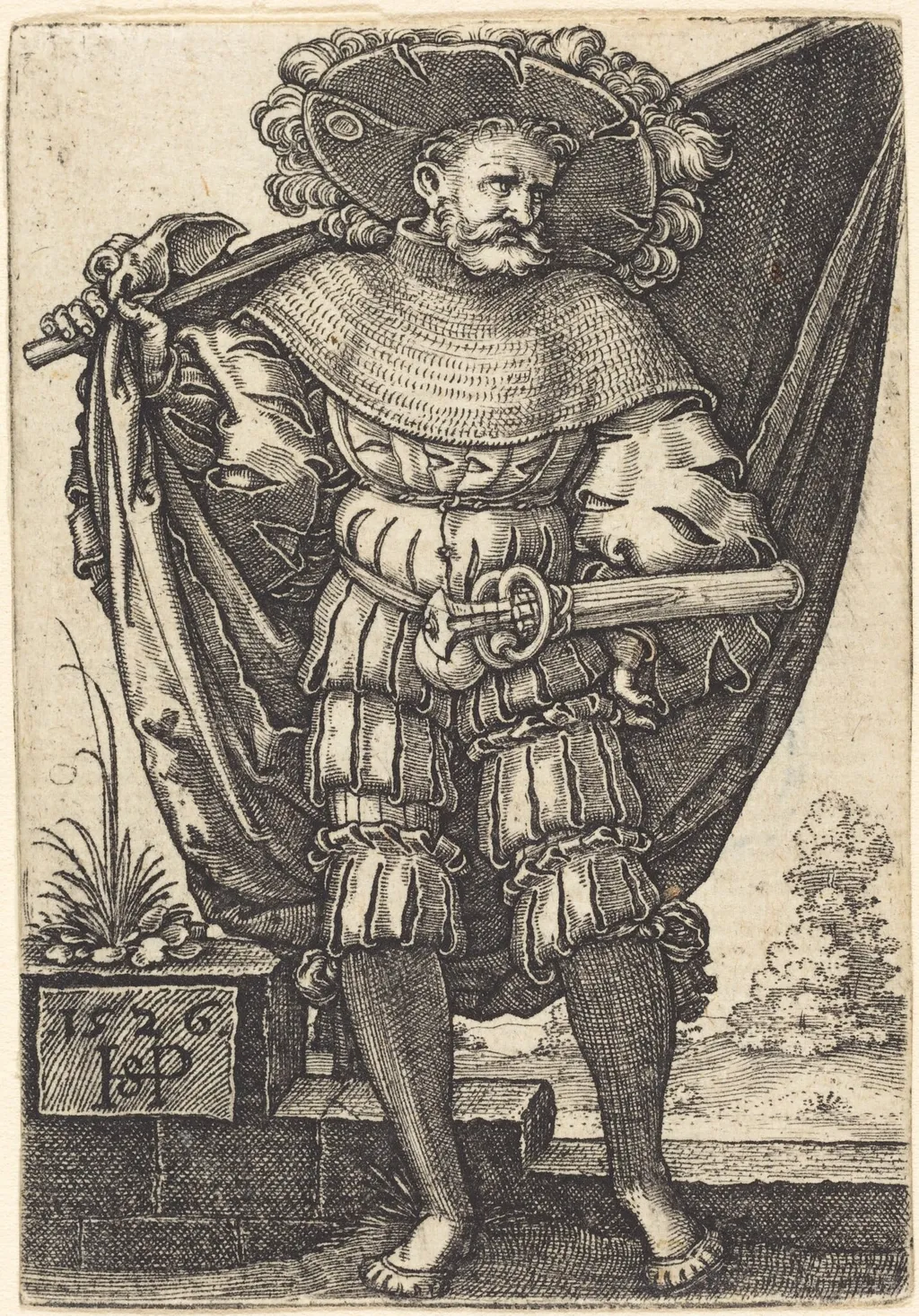
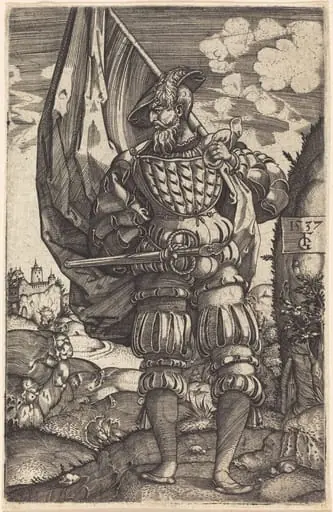
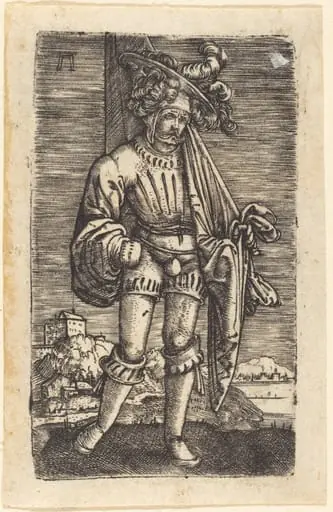
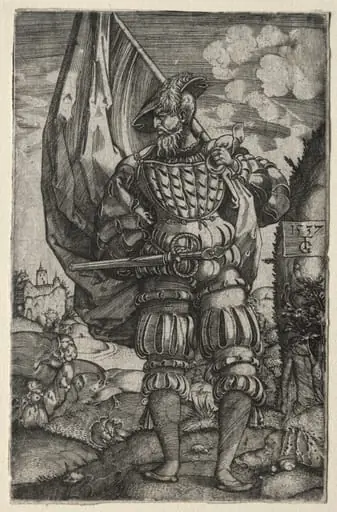
Standard Bearer is an ink print by the Renaissance artist Sebald Beham. It dates from 1526 and is held in the collection of the National Gallery of Art.
About this work
Overview
Sebald Beham’s 1526 engraving *Standard Bearer* presents a solitary figure clad in full plate armor, grasping a spear and a shield. The composition is rendered in black‑and‑white, emphasizing the meticulous line work that defines the subject’s stern expression, beard, and the intricate folds of his garments. A modest plant rests on a ledge behind him, providing a subtle contextual element.
Subject & Meaning
The print depicts a heavily armored standard‑bearer, a role traditionally associated with military or ceremonial duties. The figure’s serious demeanor and the presence of both weapon and emblem suggest a focus on martial authority and civic pride, common themes in early‑Renaissance German visual culture.
Technique & Style
Executed as an engraving, Beham incised fine lines into a copper plate, allowing for precise rendering of armor plates, fabric texture, and facial details. The sharp, controlled hatching creates a sense of depth and materiality, characteristic of the “Little Masters” who specialized in compact, highly detailed prints.
History & Provenance
Created while Beham was active in Nuremberg, the work reflects his early period before relocating to Frankfurt. As part of his prolific output of small-scale prints, the piece circulated among collectors of the time, contributing to his reputation as a leading practitioner of the German engraving tradition.
Context
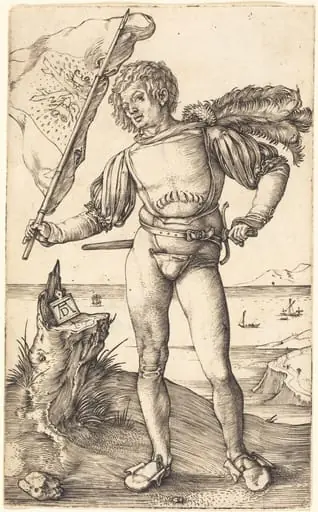
*Standard Bearer* follows the legacy of Albrecht Dürer, whose innovations in printmaking set standards for precision and compositional balance. Beham’s focus on miniature detail aligns with the broader 16th‑century German interest in reproducing complex imagery for a growing market of educated patrons.
Artist & collection
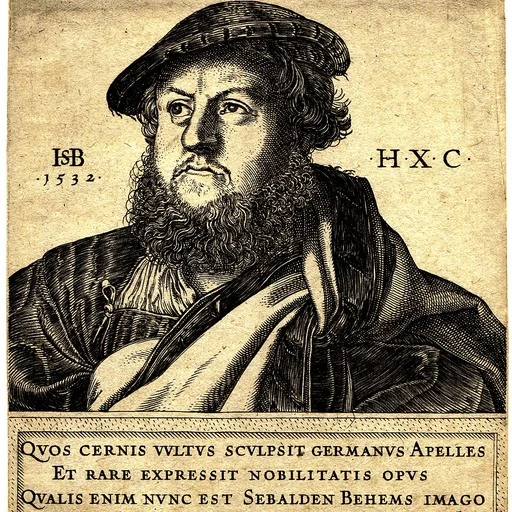
Artist
Sebald Beham (1500–1550) was a German painter and printmaker, mainly known for his very small engravings.