Artwork
Marie-Louise, Empress of the French
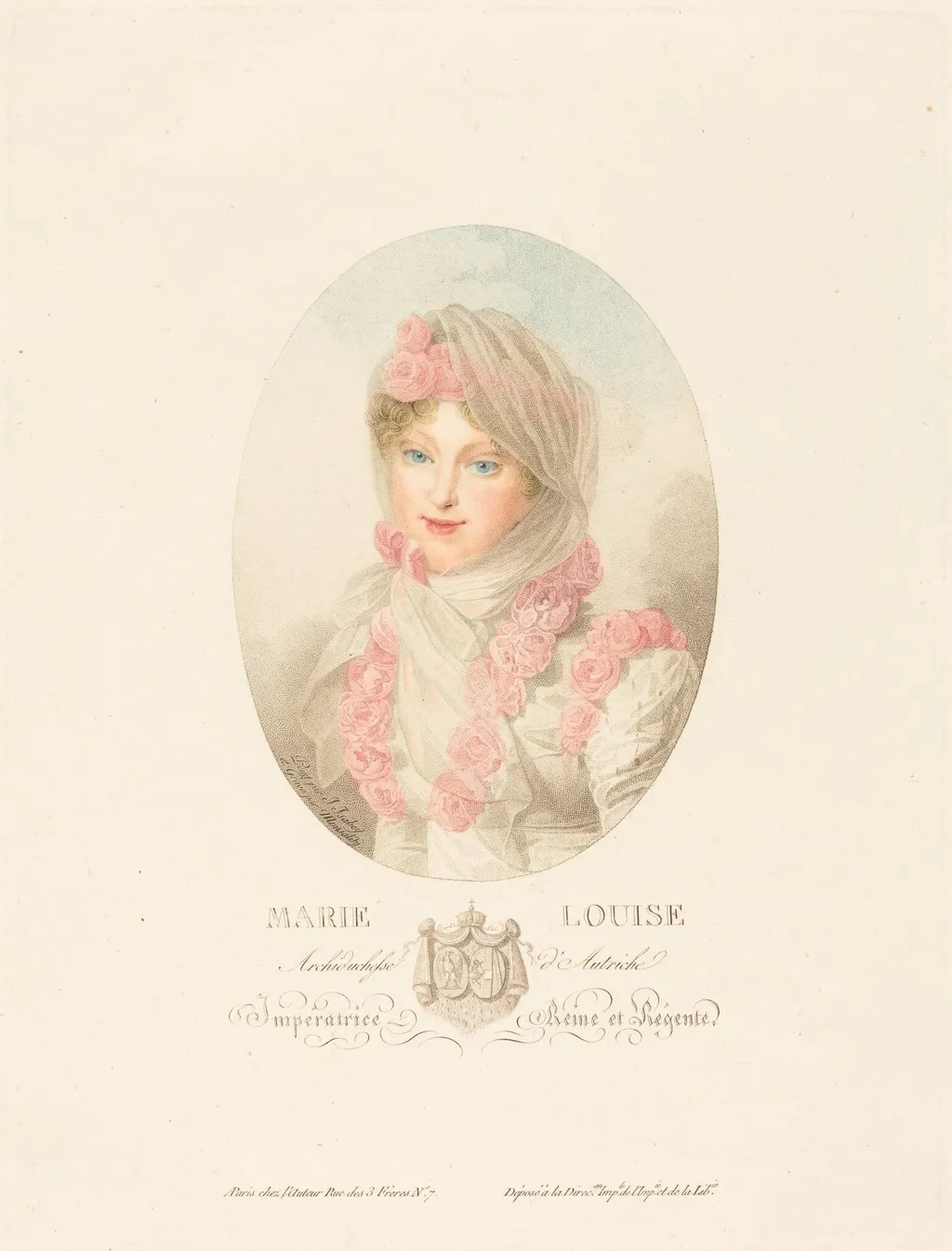
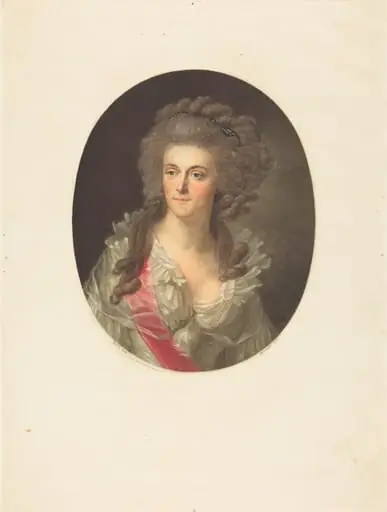
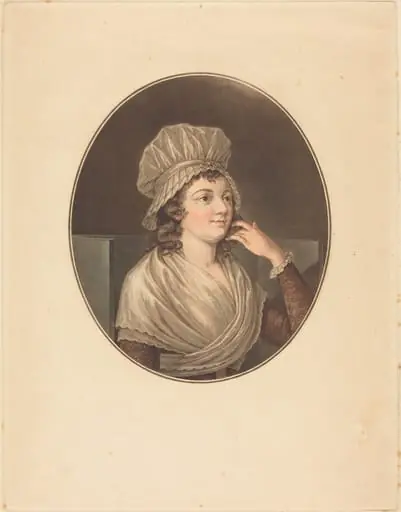
Marie-Louise, Empress of the French is an ink print by the Romanticist artist Antoine Maxime Monsaldy. It dates from 1814 and is held in the collection of the National Gallery of Art.
About this work
Overview
Its intimate scale and refined technique reflect the demand for portable, elegant portraits of imperial figures during the final years of Napoleon’s reign.
Created in 1814 by Antoine Maxime Monsaldy, this print depicts Marie-Louise, Empress of the French, in a delicate oval composition. Executed in color stipple etching with ink applied by hand using a dauber (à la poupée), the work was printed on wove paper. Its intimate scale and refined technique reflect the demand for portable, elegant portraits of imperial figures during the final years of Napoleon’s reign.
Subject & Meaning
The portrait presents Marie-Louise in quiet dignity, her light hair loosely arranged and her pale dress softened by a translucent shawl. Clusters of pink roses adorn her collar, symbolizing both femininity and imperial status. The inscription identifying her as 'Empress of the French' anchors the image in the political context of 1814, a year marked by the collapse of Napoleon’s empire and her transition from empress to dowager.
Technique & Style
Monsaldy employed stipple etching, a method using tiny dots to build tone and texture, enhanced by hand-coloring with a dauber to apply ink selectively. The soft green background frames the figure without distraction, while the delicate gradations in skin and fabric suggest volume without heavy modeling. This technique favored subtlety over boldness, aligning with the refined aesthetic of post-Revolutionary French portraiture.
History & Provenance
Produced in 1814, the print emerged during a period of political upheaval as Napoleon abdicated and Marie-Louise retreated to Austria with her son. Such portraits were circulated to maintain imperial imagery amid shifting loyalties. Though few signed impressions survive, this work likely originated from a Parisian print shop catering to aristocratic and bourgeois collectors seeking tangible connections to the fallen regime.
Context
In early 19th-century France, printed portraits of royalty served as both propaganda and mementos. Stipple etching, popularized by artists like Jean-Charles François, allowed for mass reproduction with artistic nuance. Marie-Louise’s image, rendered with restrained elegance, contrasts with earlier, more ornate royal portraits, reflecting a shift toward private, intimate representations in the wake of revolutionary ideals.
Legacy
This print stands as a quiet artifact of imperial transition, preserving Marie-Louise’s likeness at the moment her public role ended. While not widely exhibited today, it remains a representative example of how printmaking sustained visual memory of political figures after their fall. Its technical precision and subdued palette influenced later portrait prints in Europe, particularly in the documentation of female royalty.
Artist & collection
Artist
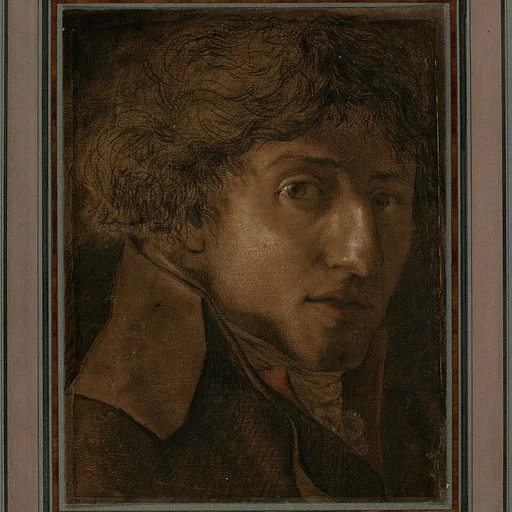
Antoine Maxime Monsaldy (1768–1816) was a French artist, born in Paris.