Artwork
Description of Egypt: Thebes Byban el Molouk, Vol. II, Pl. 91
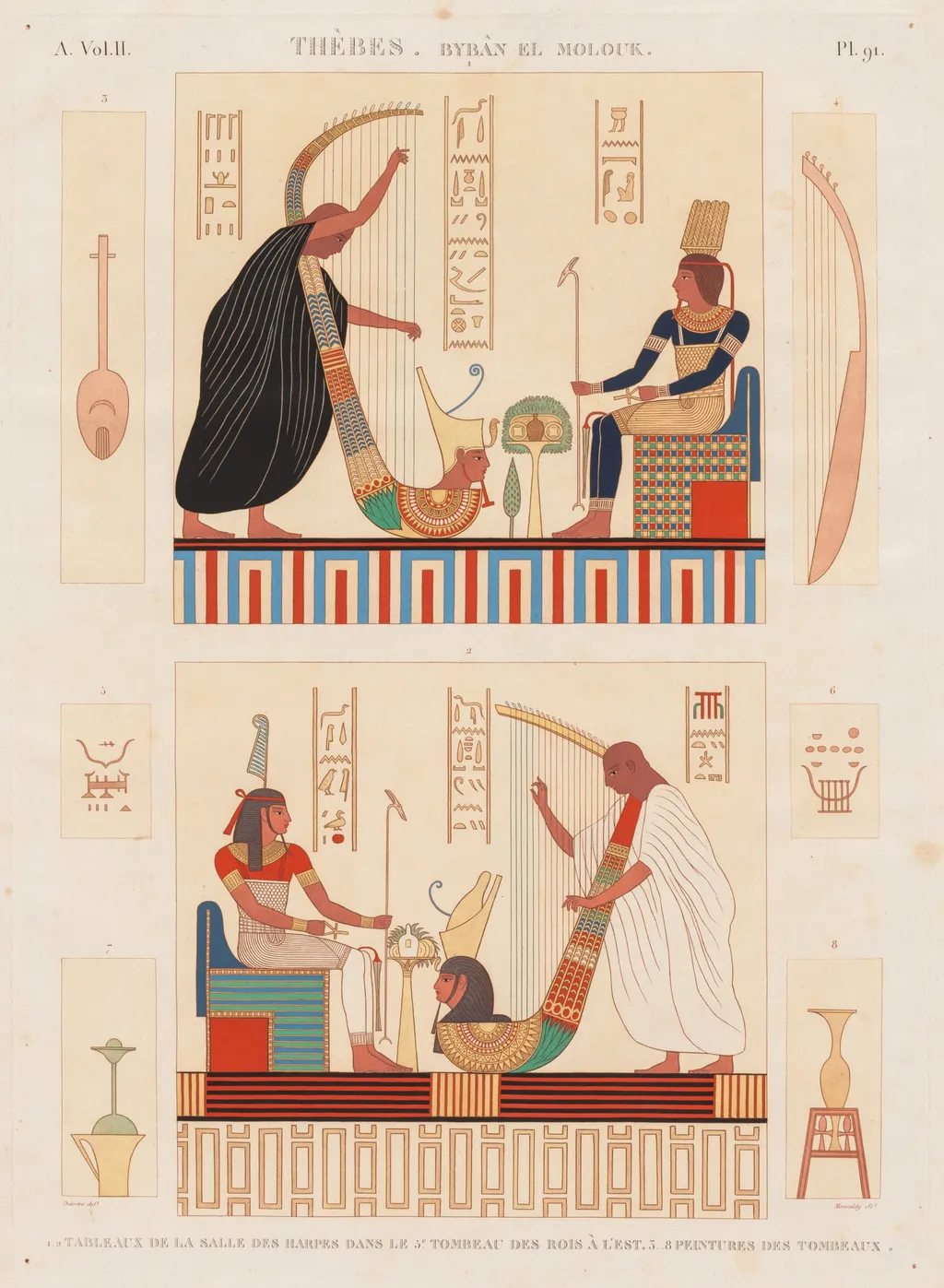
Description of Egypt: Thebes Byban el Molouk, Vol. II, Pl. 91 is a print by the Romanticist artist Antoine Maxime Monsaldy. It dates from 1812 and is held in the collection of the Cleveland Museum of Art.
About this work
Overview
This print, created by Antoine Maxime Monsaldy in 1812, is part of a larger documentation project focused on Theban tombs.
This print, created by Antoine Maxime Monsaldy in 1812, is part of a larger documentation project focused on Theban tombs. It appears in Volume II of 'Description de l'Égypte,' a comprehensive survey commissioned by Napoleon’s expedition. The plate reproduces scenes from the tomb of Userhat (TT56) in the Valley of the Kings, rendered with careful attention to architectural and figural detail as recorded by early 19th-century scholars.
Subject & Meaning
The two registers depict ritual scenes of musical offering. In each, a harpist performs before a seated official, likely a noble or priest, who holds a staff of authority. These images reflect funerary practices meant to sustain the deceased in the afterlife through song and ceremony. The repetition of similar figures suggests a standardized iconography for elite burial rites, emphasizing continuity and order in the spiritual realm.
Technique & Style
Monsaldy employed precise line engraving to translate wall paintings into monochrome print, preserving hieroglyphic inscriptions and symbolic motifs with fidelity. The palette, though muted in reproduction, reflects the original pigments—ochres, blues, and reds—applied in flat, unmodulated planes. The composition is structured with geometric clarity, typical of scholarly documentation rather than imaginative interpretation.
History & Provenance
The print originates from the French scientific expedition to Egypt (1798–1801), which produced the monumental 'Description de l'Égypte.' Monsaldy, a draftsman attached to the team, recorded tomb interiors under challenging conditions. The Cleveland Museum of Art acquired the print as part of its broader collection of early Egyptological materials, preserving it as a primary record of pre-modern excavation practices.
Context
Created during the rise of Egyptomania in Europe, this print served both scholarly and public interests. Unlike Romanticized depictions of Egypt, Monsaldy’s work prioritized accuracy over drama, aligning with Enlightenment ideals of empirical observation. The inclusion of hieroglyphs and architectural context reflects an emerging effort to decode ancient Egyptian culture through systematic recording rather than myth-making.
Legacy
This plate contributed to the foundation of Egyptology as a discipline, providing visual references for later scholars studying tomb iconography. Its restrained aesthetic influenced early archaeological illustration, setting a standard for fidelity over embellishment. Though overshadowed by more dramatic artworks of the period, it remains a vital document of how Western Europe first engaged with Egypt’s material past.
Artist & collection
Artist
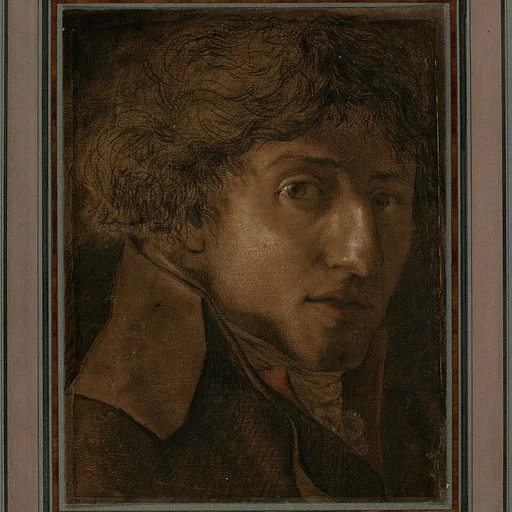
Antoine Maxime Monsaldy (1768–1816) was a French artist, born in Paris.

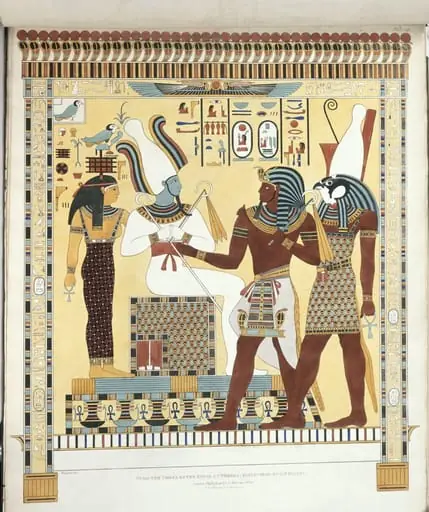 Plates Illustrative Of The Researches And Operations Of G. Belzoni In Egypt And Nubia
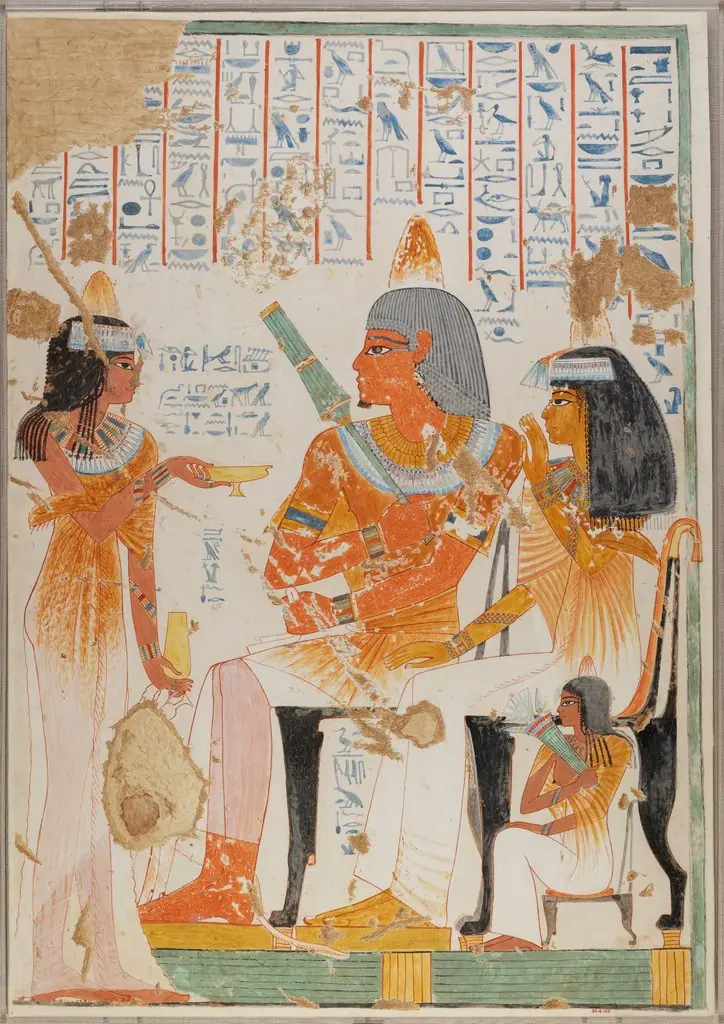 Nebamun Receiving Wine
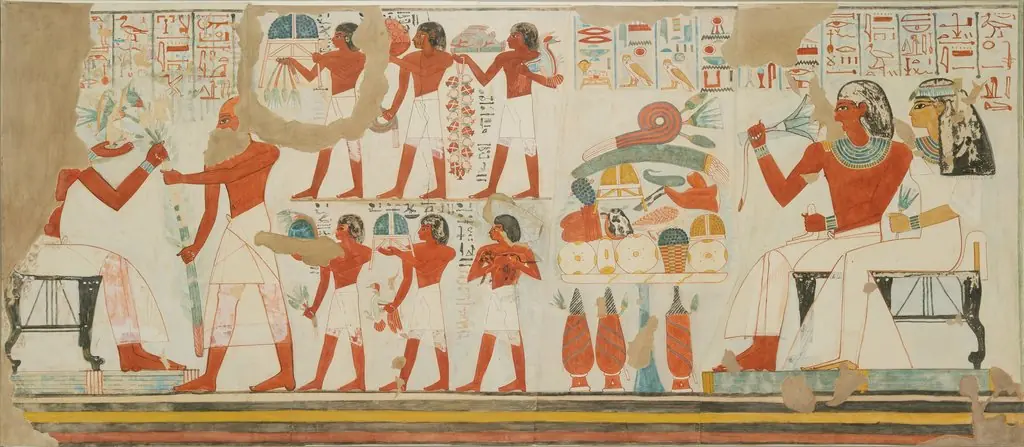 Offerings Made to the Deceased and his Wife, Tomb of Djehutyemheb
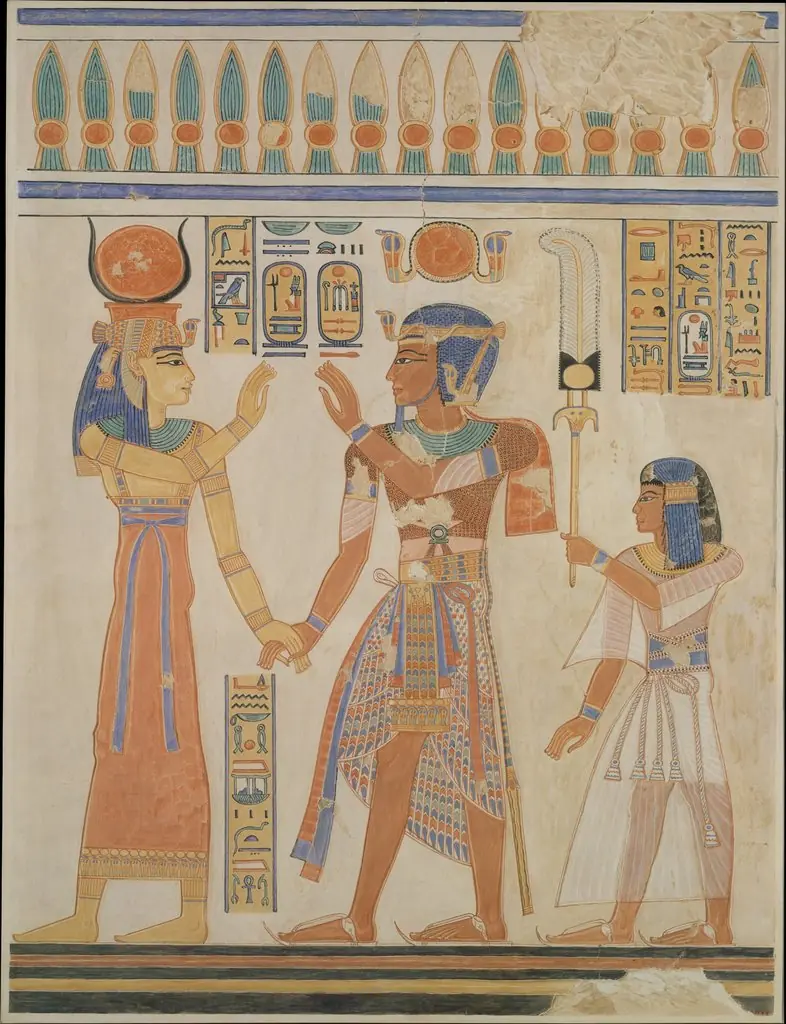 Ramesses III and Prince Amenherkhepeshef before Hathor
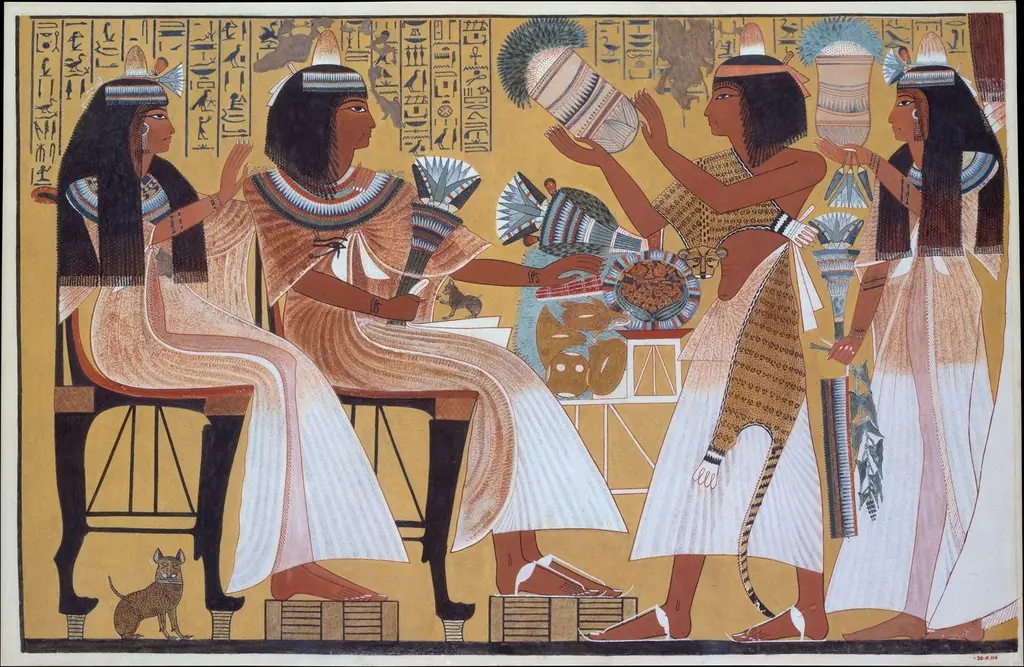 Ipuy and Wife Receive Offerings from Their Children (substantially restored)
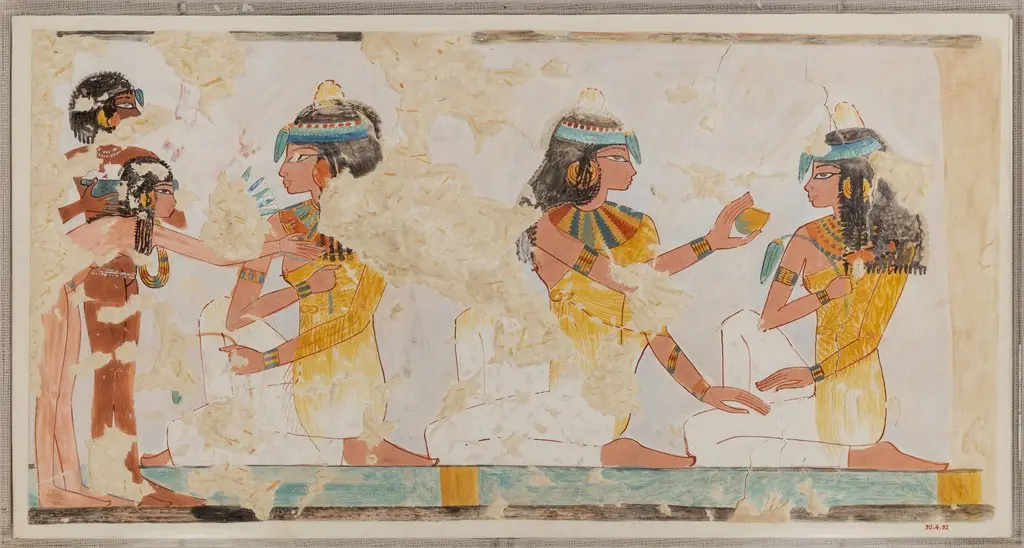 Women at a Banquet
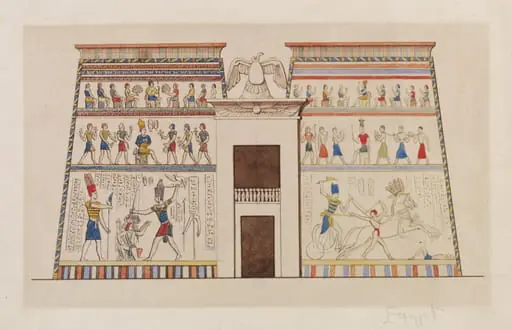 Architectural drawing of an entrance pylon to an Egyptian temple
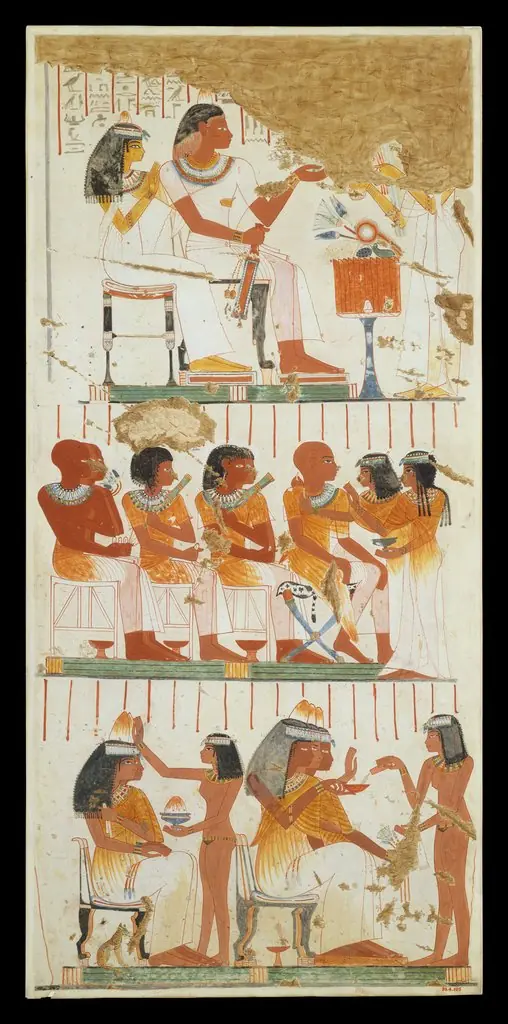 Guests at a Banquet
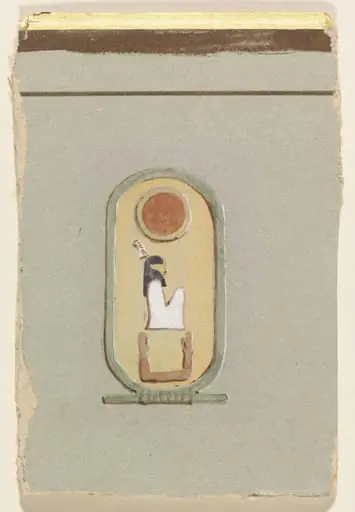 Royal Cartouche of Queen Makare Hatshepsut
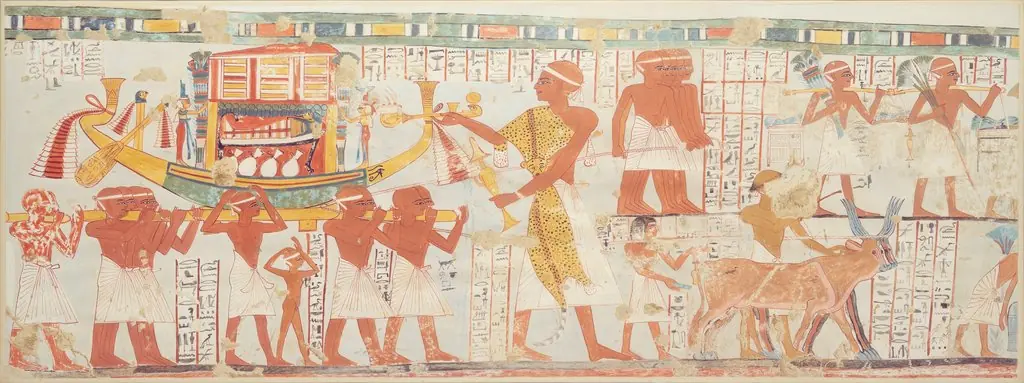 Nakhtamun's Funeral Procession, Tomb of Nakhtamun
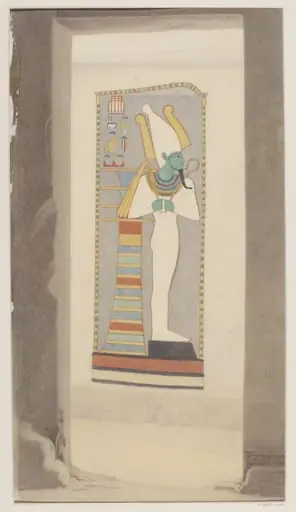 Osiris carrying a flail and crook
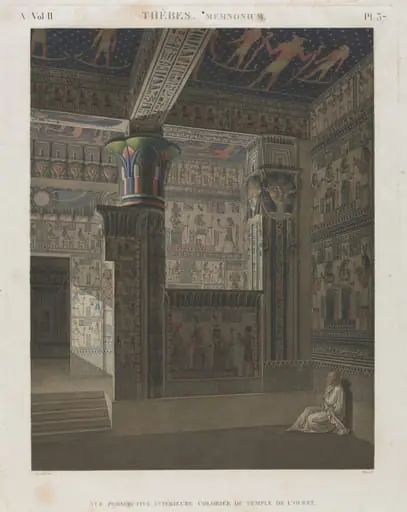 Description of Egypt: Thebes. Memnonium, Vol. II, Pl. 37