Artwork
A City Farm—New York
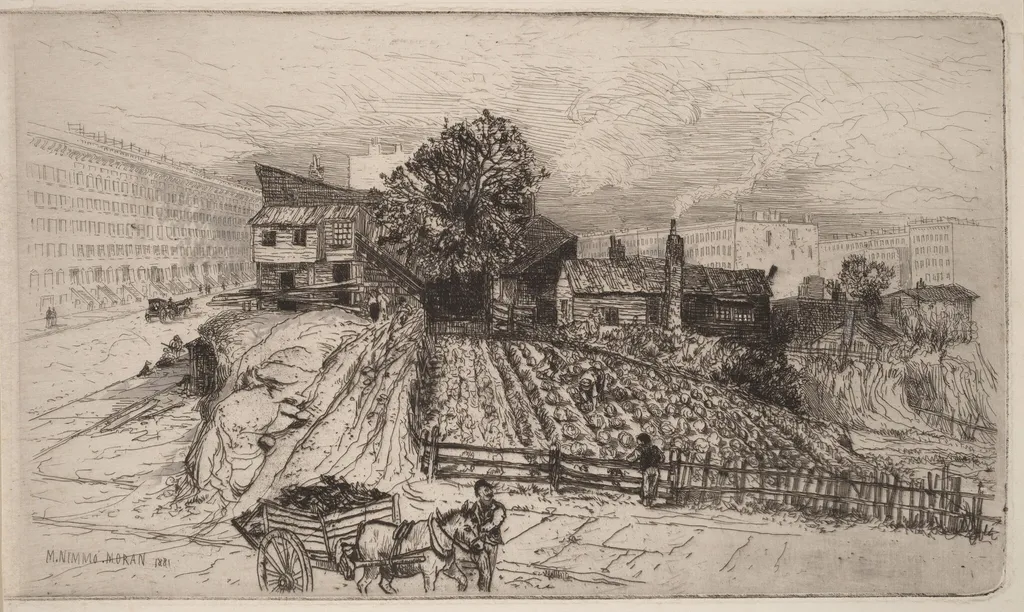
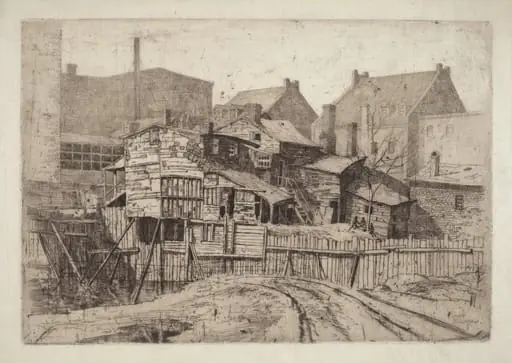
A City Farm—New York is an ink print by the Impressionist artist Mary Nimmo Moran. It dates from 1881 and is held in the collection of the National Gallery of Art.
About this work
Overview
A City Farm—New York is an 1881 etching in black by Mary Nimmo Moran, depicting a serene blend of urban and rural elements within a cityscape.
Subject & Meaning
The etching captures a tranquil city scene, juxtaposing natural terrain—a rocky hillside with scattered trees and a fence—with built environments, including simple houses and a prominent, detailed structure possibly serving as a farmhouse or estate. A horse-drawn wagon on a dirt road adds a sense of everyday activity.
Technique & Style
Moran employed fine etching lines to convey texture, evident in the detailed rendering of tree bark and the horse’s coat. The overall execution balances precision with a slightly sketchy quality, suggesting careful yet rapid drawing.
History & Provenance
Created in 1881, the same year Moran became the first female fellow of the Royal Society of Painter-Etchers in London, this work reflects her contribution to landscape etching, a field where she was a pioneering American woman.
Context
Part of Moran’s broader output of around 70 etchings focusing on rural and urban landscapes across the U.S. and Europe, A City Farm—New York highlights her interest in capturing diverse environments, including those in Long Island and New Jersey.
Artist & collection
Artist
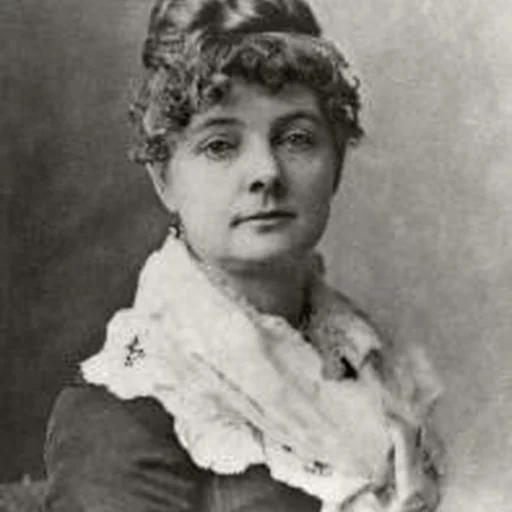
Mary Nimmo Moran (May 16, 1842 – September 25, 1899) was an American landscape printmaker, specializing in etchings.

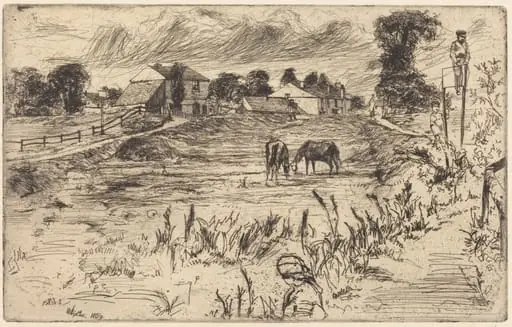 Landscape with Horses
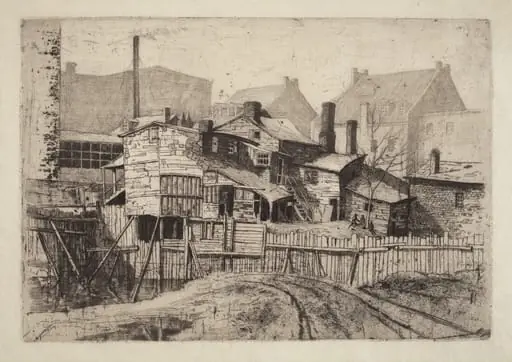 Untitled (Wooden House in City)
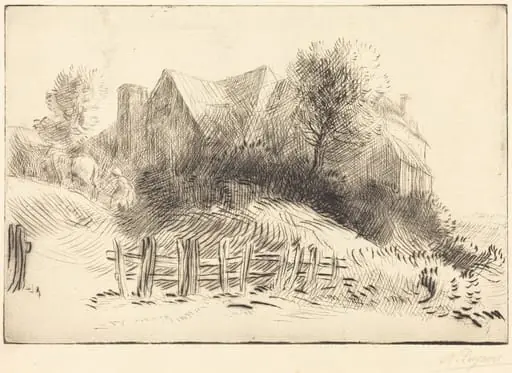 Old Inn (Une ancienne auberge)
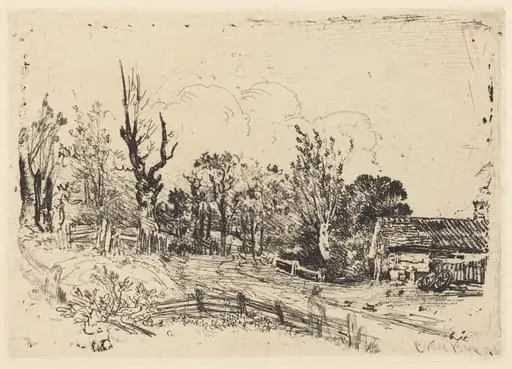 Road with a Farmhouse on the Right
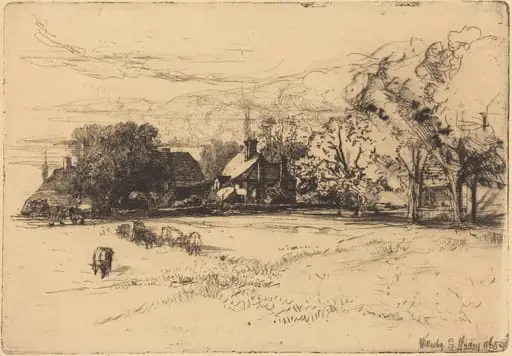 Old Willesley House
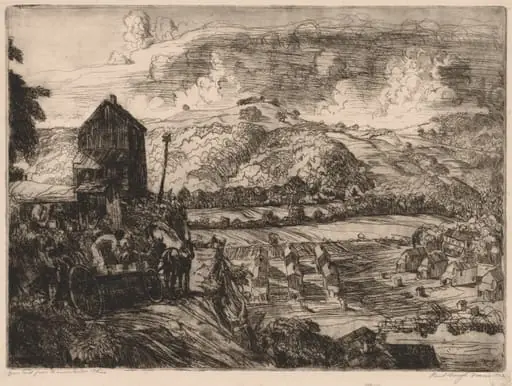 Our Hill from Dumstown, Ohio
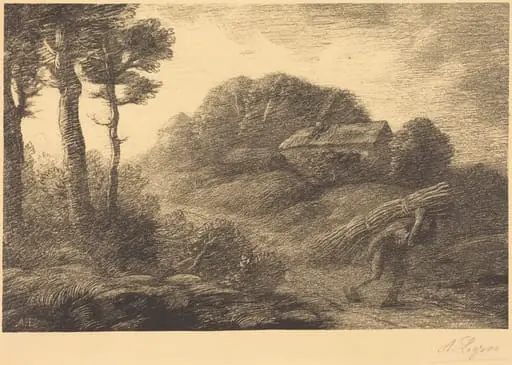 Return of the Fagot-gatherer, 2nd plate (Le retour du fagotier)
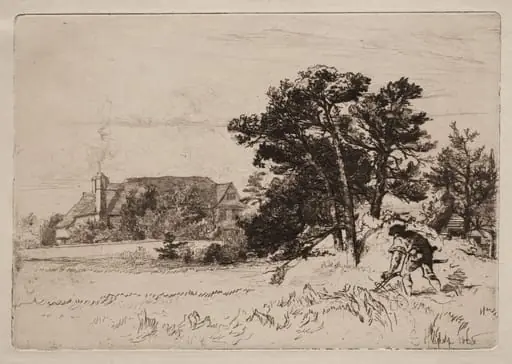 Old Willesley House
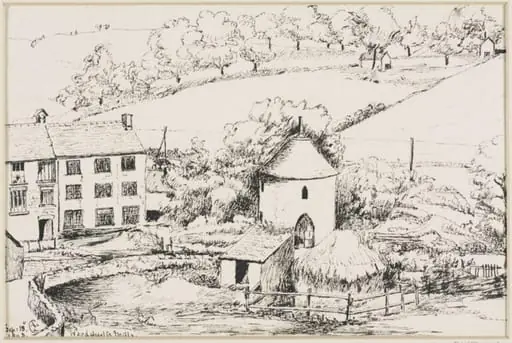 Woodchester Mills
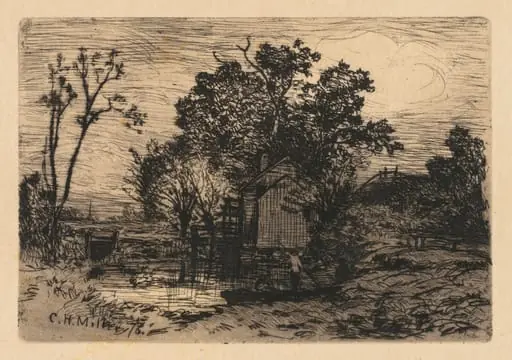 Cottage and Two Figures in a Boat
 Untitled (Wooden House in City)