Artwork
Untitled (Wooden House in City)
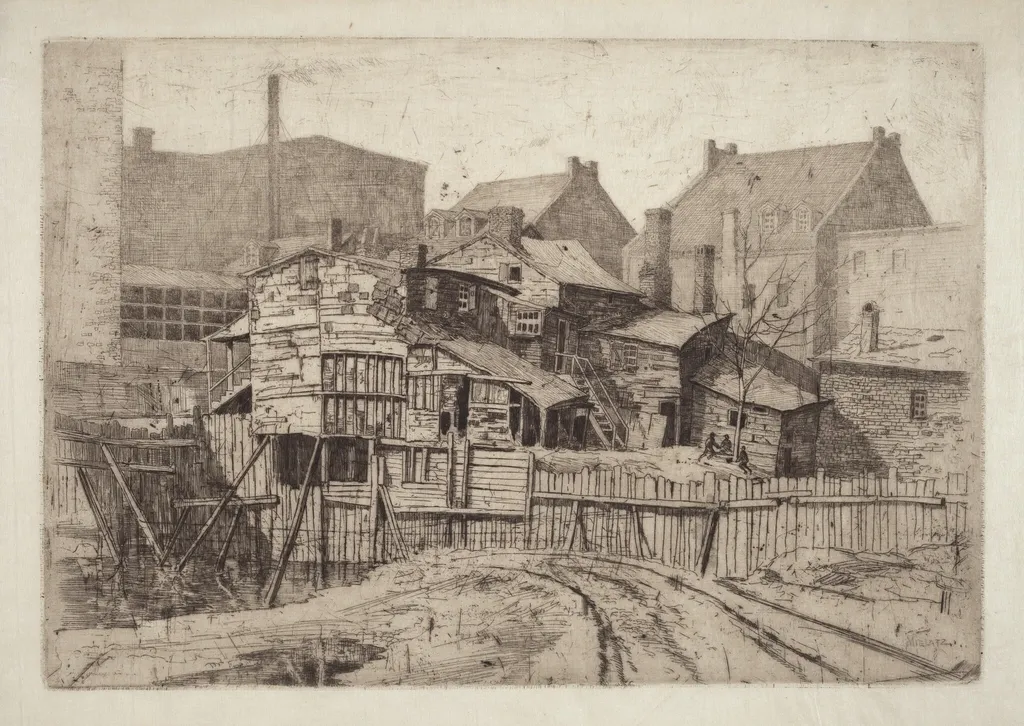
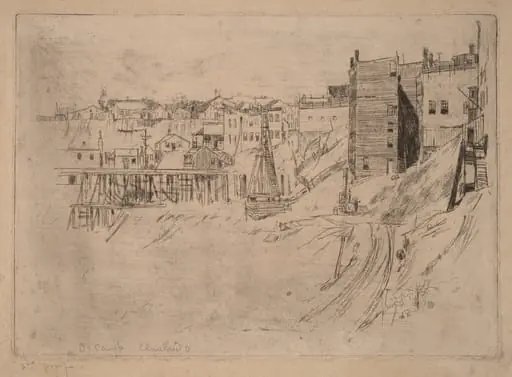
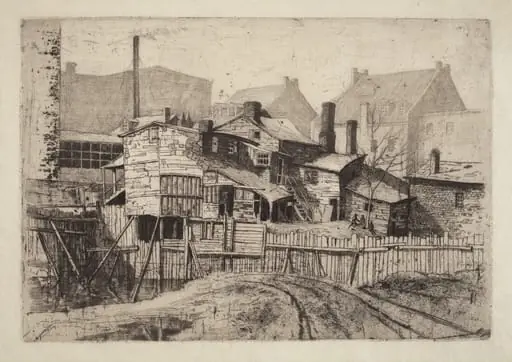
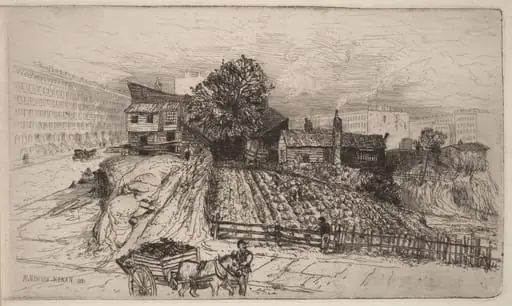
Untitled (Wooden House in City) is an ink print by the Impressionist artist Charles Frederick William Mielatz. It dates from 1884 and is held in the collection of the National Gallery of Art. Created circa 1884, this etching portrays a modest wooden dwelling set against a bustling urban backdrop.
About this work
The etching process has allowed for intricate details, such as the wood grain on the house and the roughness of the road.
This etching depicts a wooden house situated in the midst of a cityscape. The house appears to be in a state of disrepair, with a fence surrounding it and a dirt road leading up to the entrance. In the background, several other buildings are visible, including what appears to be a factory or warehouse.
The artist has used a range of techniques to create a sense of texture and depth in the image. The etching process has allowed for intricate details, such as the wood grain on the house and the roughness of the road.
The image presents a vivid portrayal of urban life in the late 19th century. For more information on the technique used to create this image, look up the term "etching".
Overview
Created circa 1884, this etching portrays a modest wooden dwelling set against a bustling urban backdrop. The composition juxtaposes the modest, weather‑worn house with surrounding industrial structures, offering a snapshot of city life in the late nineteenth century.
Subject & Meaning
The central figure is a deteriorating wooden house, fenced and accessed by a gritty lane, suggesting neglect amid rapid urban expansion. The presence of nearby factories underscores the tension between residential modesty and the encroaching industrial environment.
Technique & Style
Mielatz employed the intaglio etching process, exploiting its capacity for fine line work to render wood grain, fence slats, and the uneven texture of the road. The contrast of deep shadows and delicate hatching creates a layered sense of depth and materiality.
History & Provenance
German‑born Charles Frederick William Mielatz, who settled in the United States, produced this print during a period when he specialized in architectural subjects. The work reflects his broader interest in documenting the built environment of American cities in the 1880s.
Context
The image aligns with a broader nineteenth‑century artistic focus on urbanization, documenting how industrial growth reshaped everyday neighborhoods. By highlighting a humble wooden house amid larger structures, the print comments on the displacement and adaptation experienced by city dwellers.
Artist & collection

Artist
Charles Frederick William Mielatz
Charles Frederick William Mielatz (né Karl Friedrich Wilhelm Mielatz; May 24, 1864 – July 2, 1919) was a Prussian-born American etcher, graphic artist, painter, lithographer, and educator.

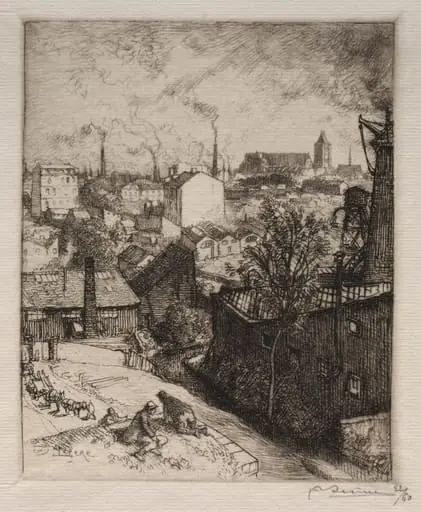 Souvenir de St. Denis
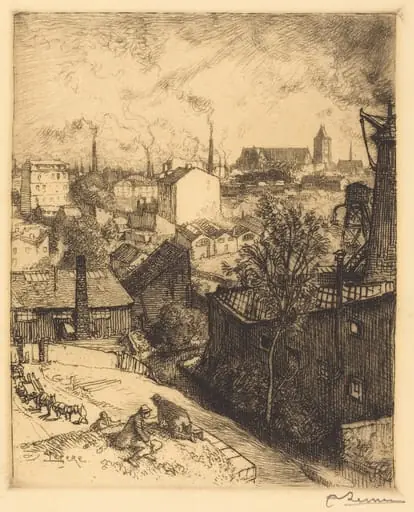 Souvenir of St. Denis (Souvenir de Saint-Denis)
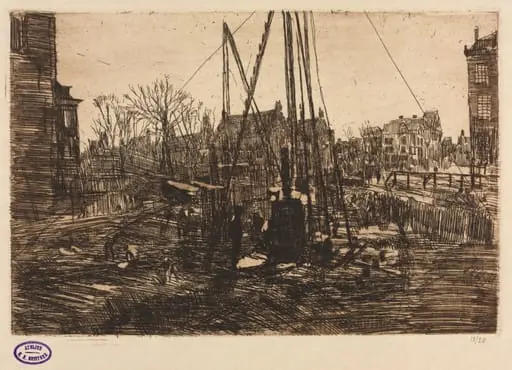 Building Site, Amsterdam
 Cleveland, Ohio
 Leeds Warehouses
 Sir Richard Steele's Cottages
 English War Work: Munition Works
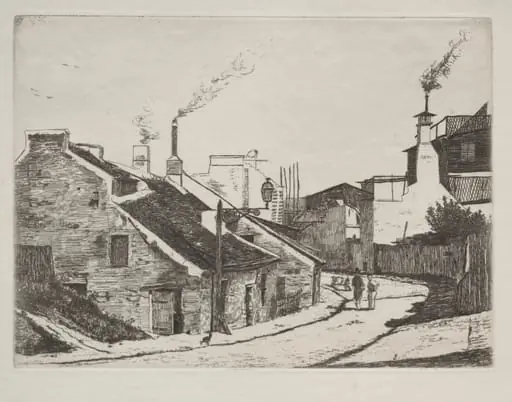 Country Street in Alouette
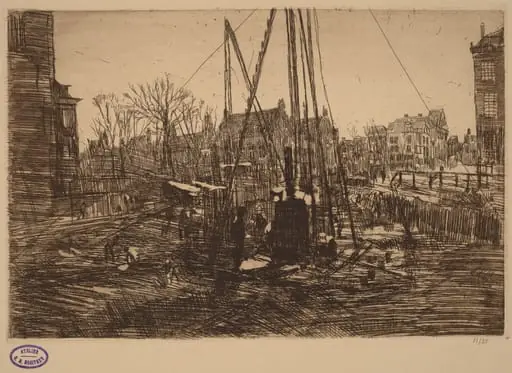 Scene in a Dutch City with Pile Driver in Foreground
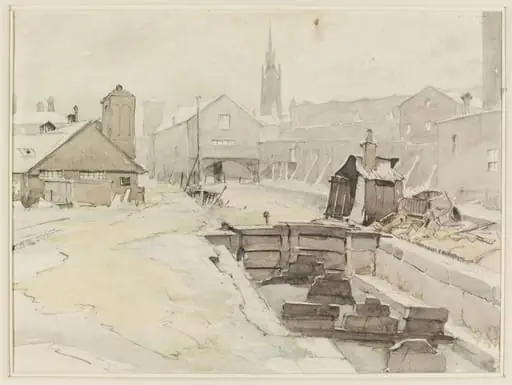 Manchester Ship Canal, Quay Street, Manchester
 Untitled (Wooden House in City)
 A City Farm—New York