Artwork
In the Newark Meadows
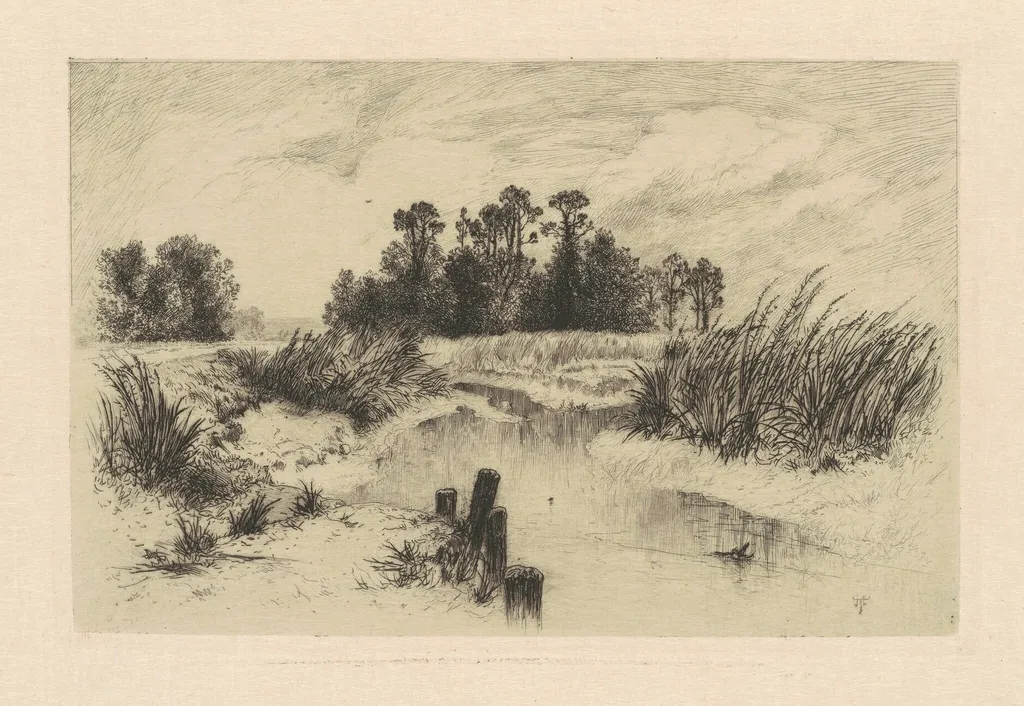
In the Newark Meadows is an ink print by the Impressionist artist Thomas Moran. It dates from 1879 and is held in the collection of the National Gallery of Art.
About this work
Overview
Thomas Moran’s 1879 work *In the Newark Meadows* is an etching executed in black on laid paper. The print captures a mist‑shrouded wetland at daybreak, where slender reeds rise from shallow water and broken wooden posts emerge from the center, while distant trees dissolve into a pale sky.
Subject & Meaning
The composition presents a tranquil, early‑morning landscape that emphasizes the subtle interplay of light and atmosphere. By focusing on the delicate reeds, the fragmented posts, and the hazy horizon, Moran conveys a sense of quiet abandonment and the fleeting beauty of a marsh environment.
Technique & Style
Moran employed traditional etching methods, drawing the image onto a metal plate and using acid to incise the lines. The resulting print features rapid, scratchy strokes that suggest flickering light on water, while the laid‑paper surface adds a textured, almost tactile quality to the scene.
History & Provenance
A member of the Hudson River School, Moran was known primarily for his dramatic mountain vistas, yet he also produced intimate prints such as this one while living in New York with his wife, fellow printmaker Mary Nimmo Moran, and their daughter Ruth. The work reflects his early career as an illustrator, a role that informed his precise draftsmanship and attention to detail.
Artist & collection
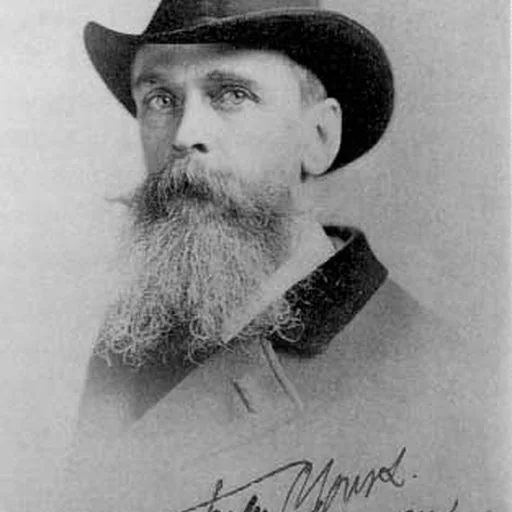
Artist
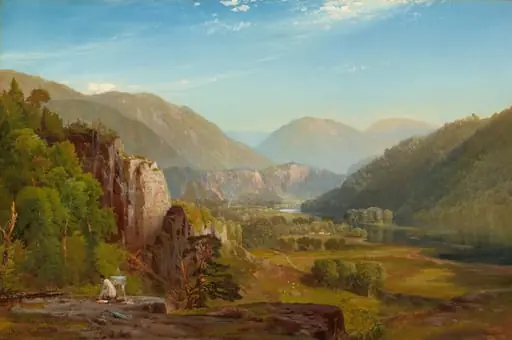
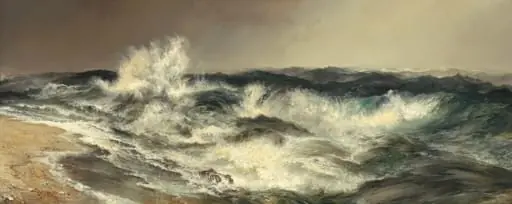
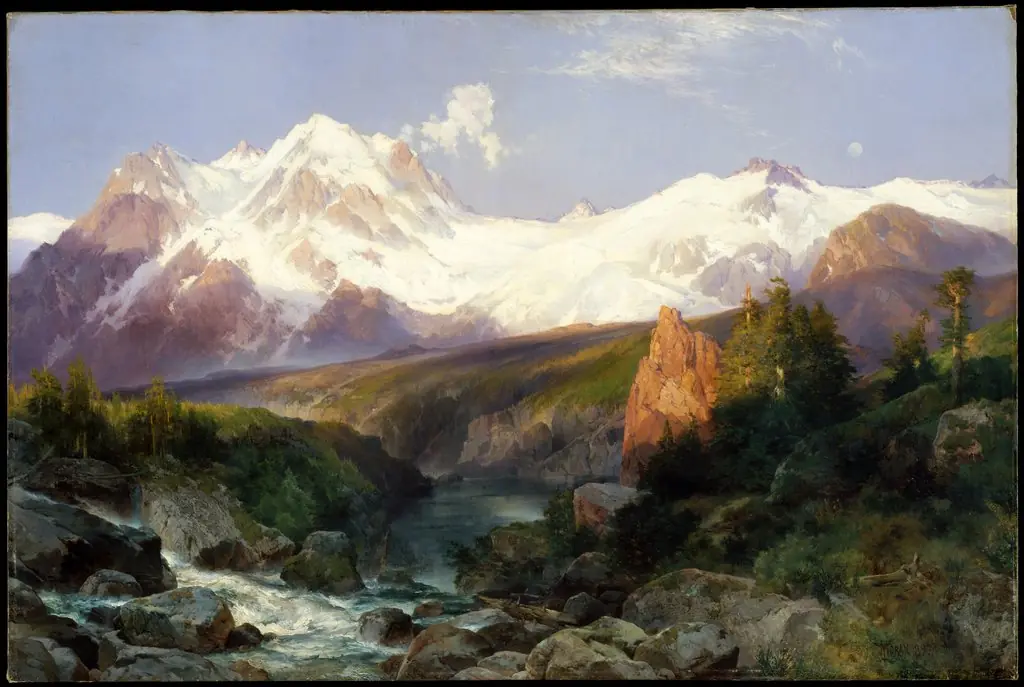
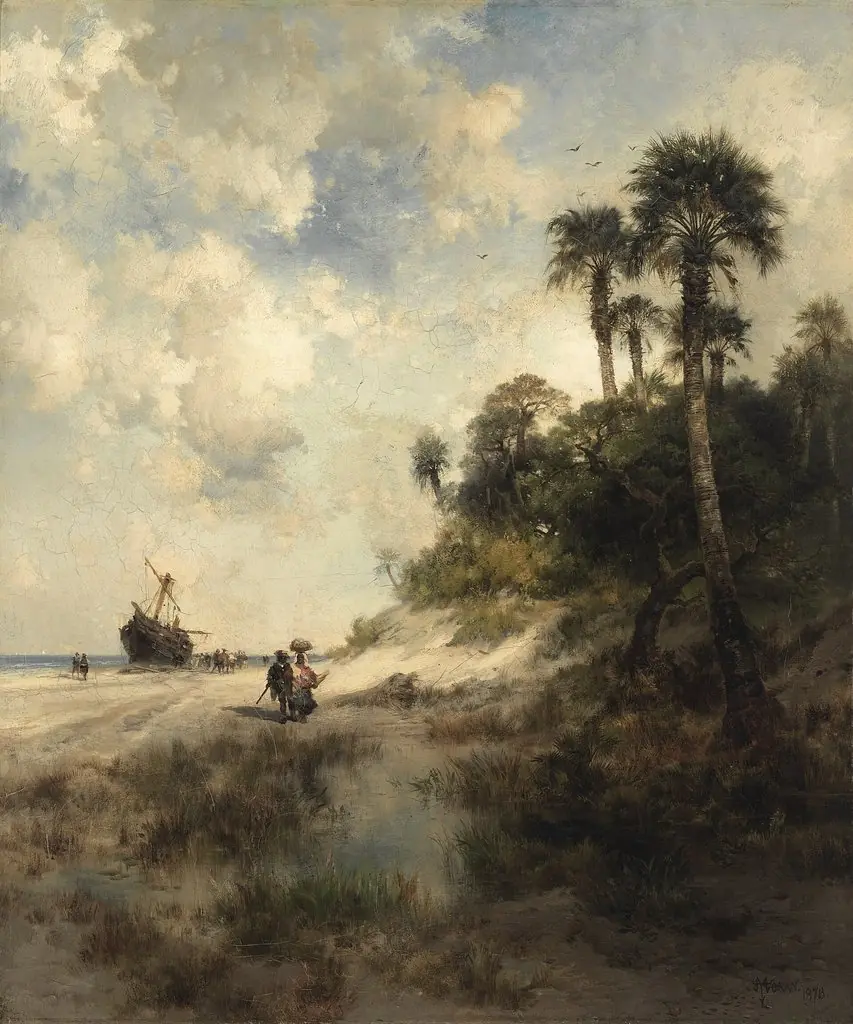
Thomas Moran (February 12, 1837 – August 25, 1926) was an American painter and printmaker of the Hudson River School in New York whose work often featured the Rocky Mountains.

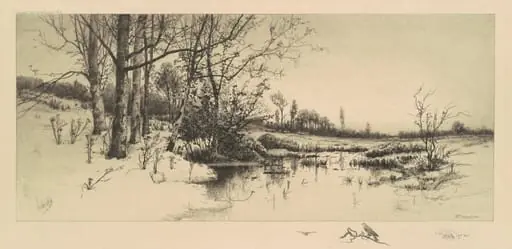 Robed in a Garment of Untrodden Snow
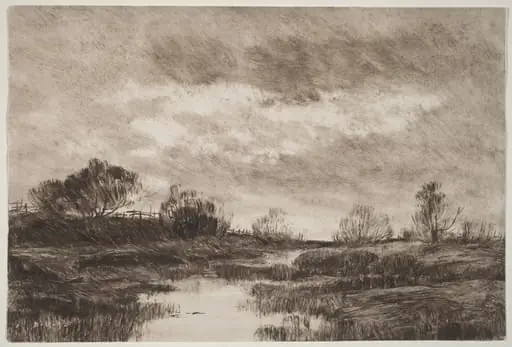 A Pastoral Landscape with a Stream
 A Sun-dappled Meadow by a River
 Shere Mill Pond (The Larger Plate)
 The Canal, Morning
 Canal Seen by Morning Light (Le canal: Effet du matin)
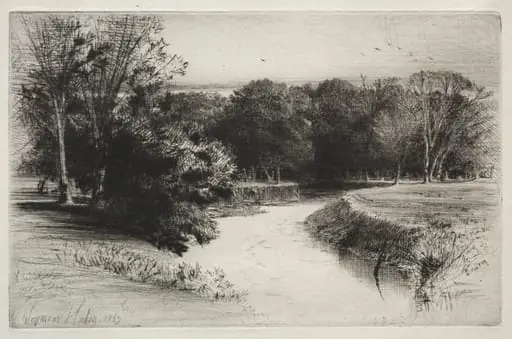 A Sunset in Ireland
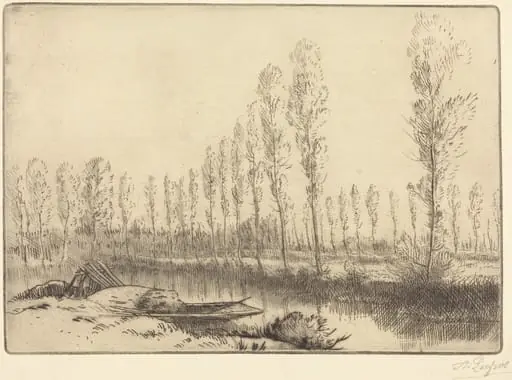 Poplars near Amiens (Pres d'Amiens, les tourbieres)
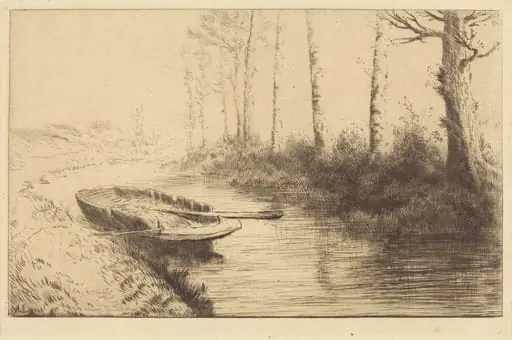 Canal Seen by Morning Light (Le canal: Effet du matin)
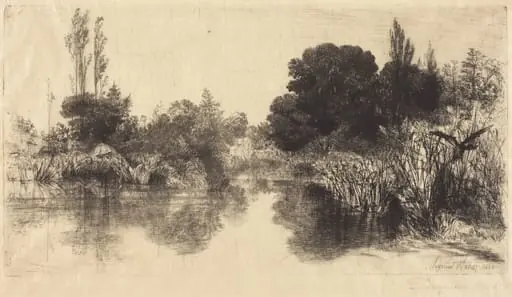 Shere Mill Pond (The Larger Plate)