Artwork
Morning
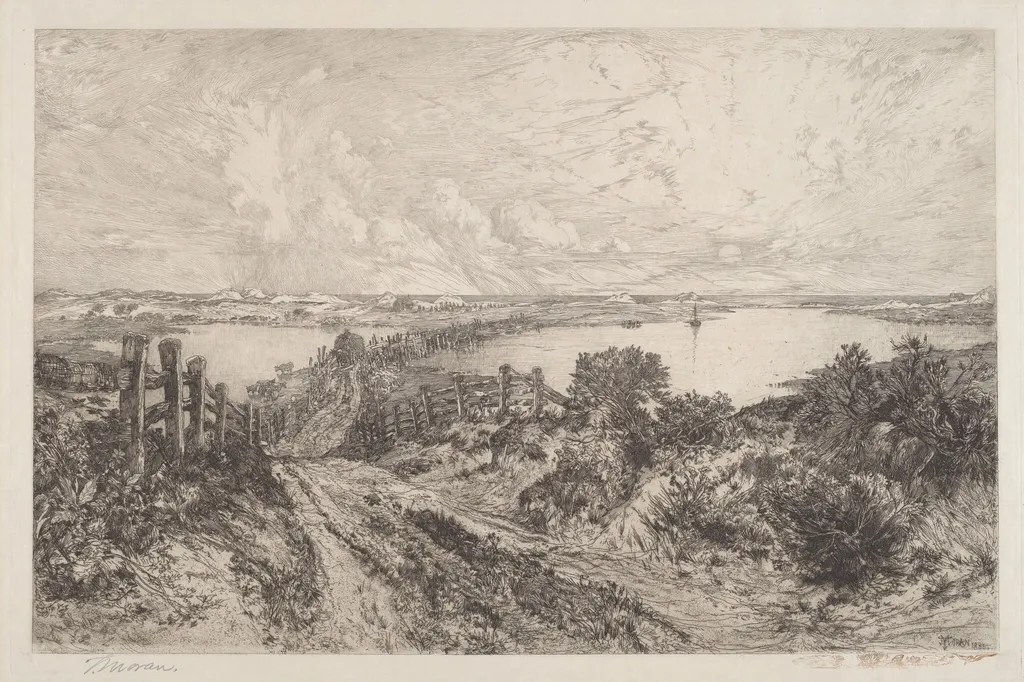
Morning is an ink print by the Impressionist artist Thomas Moran. It dates from 1886 and is held in the collection of the National Gallery of Art.
About this work
Overview
Though best known for his grand landscapes of the American West, this work turns toward a quiet coastal scene, reflecting a more intimate, atmospheric approach.
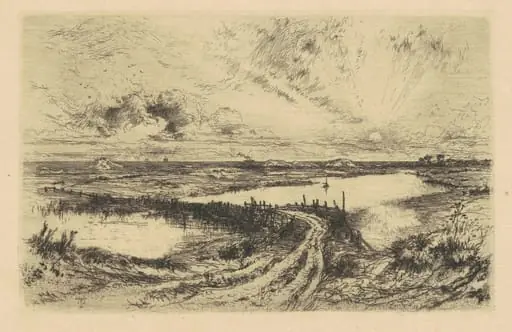
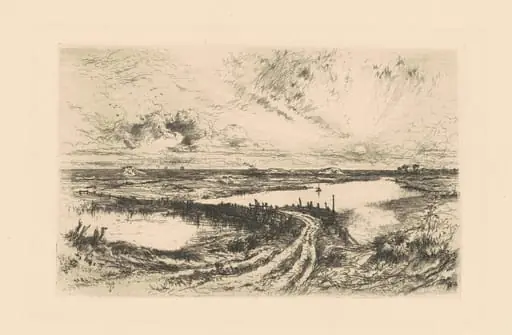
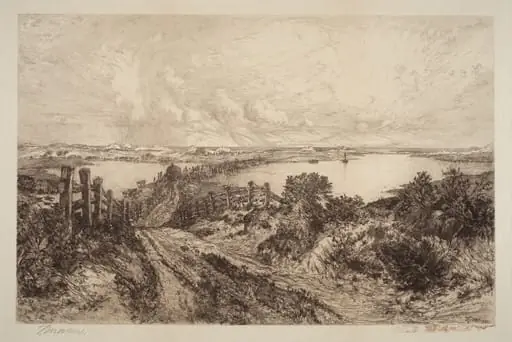
Created in 1886, *Morning* is a black-and-white etching by American artist Thomas Moran. Though best known for his grand landscapes of the American West, this work turns toward a quiet coastal scene, reflecting a more intimate, atmospheric approach. Executed with delicate lines and subtle tonal variations, the print captures a tranquil moment at daybreak, emphasizing mood over topographical precision.
Subject & Meaning
The scene depicts a modest shoreline where a weathered wooden fence marks the boundary between land and sea. Sparse vegetation clings to the dunes, while distant boats drift near the horizon, their forms barely defined. The soft, diffused light suggests the lingering presence of morning mist, evoking stillness and solitude. Rather than celebrating grandeur, the image invites contemplation of nature’s quiet rhythms.
Technique & Style
Moran employed etching to achieve a range of textures through controlled acid bites on a metal plate. His loose, sketch-like lines suggest movement in the clouds and water, while areas of dense hatching create depth without heavy shading. The absence of color heightens the focus on light and tone, aligning the work with the tonalist tradition that prioritized atmosphere over detailed realism.
History & Provenance
Moran, who began as an illustrator for *Scribner’s Monthly*, turned increasingly to printmaking in the 1880s, often working alongside his wife, Mary Nimmo Moran, also an accomplished etcher. *Morning* emerged during a period when he was exploring smaller-scale, personal subjects, distinct from his large-scale western landscapes. The print was likely produced for private collectors rather than mass publication.
Context
In the late 19th century, American artists increasingly turned to etching as a medium for expressive, non-commercial work. Moran’s coastal scenes reflected a broader interest in intimate naturalism, paralleling trends in European printmaking. Unlike his monumental western views, *Morning* aligns with a quieter, more introspective current in American art, influenced by changing tastes and the rise of the artist-printmaker.
Legacy
Though less celebrated than his western landscapes, *Morning* exemplifies Moran’s versatility and his commitment to printmaking as a serious artistic medium. The work contributes to the recognition of American etching as a vehicle for poetic observation, influencing later generations of printmakers who valued subtlety and atmosphere over grand narrative.
Artist & collection
Artist
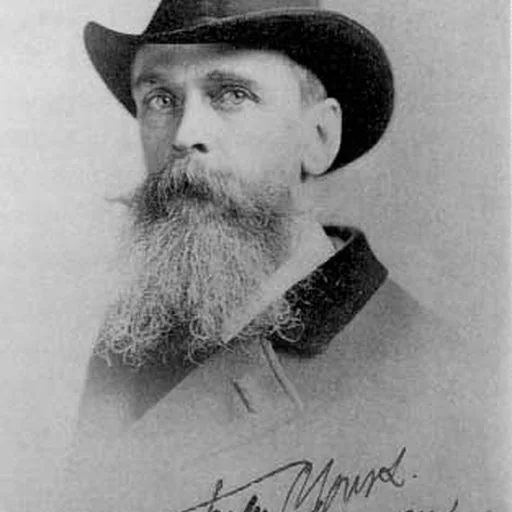
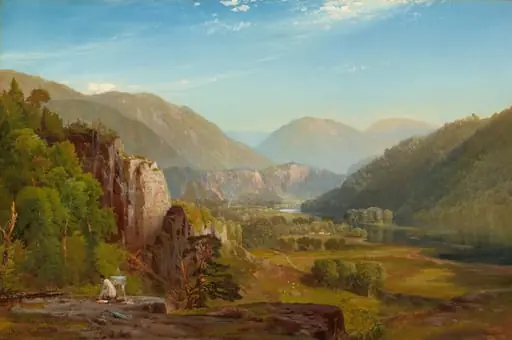
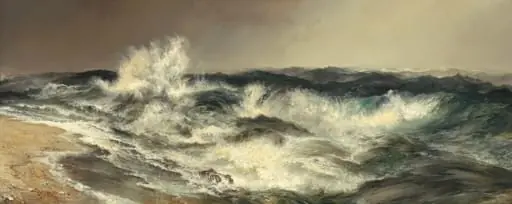
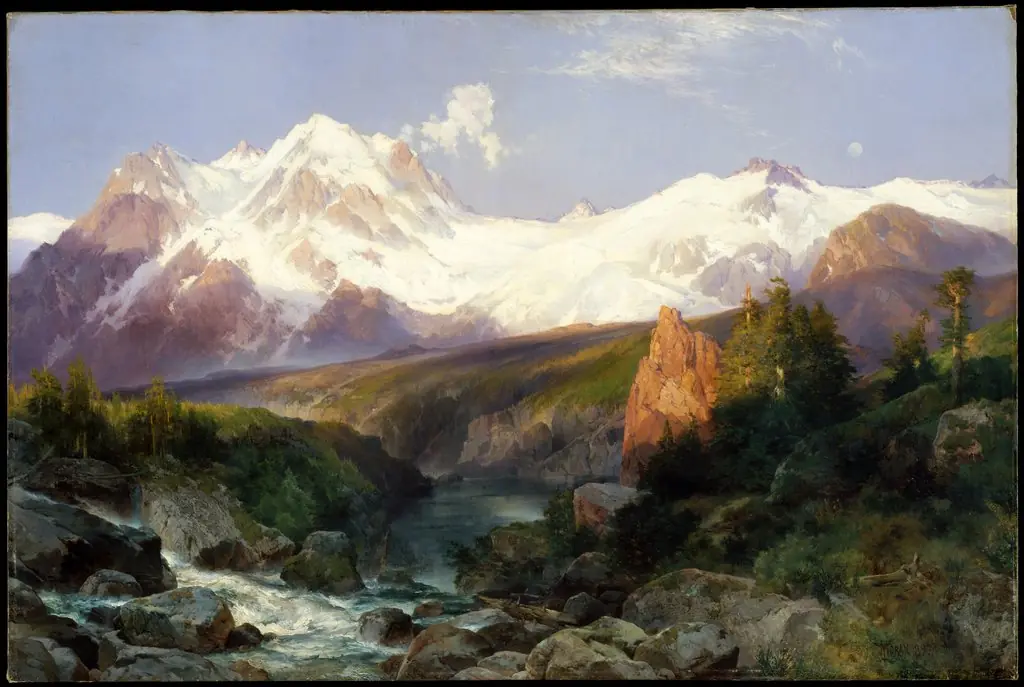
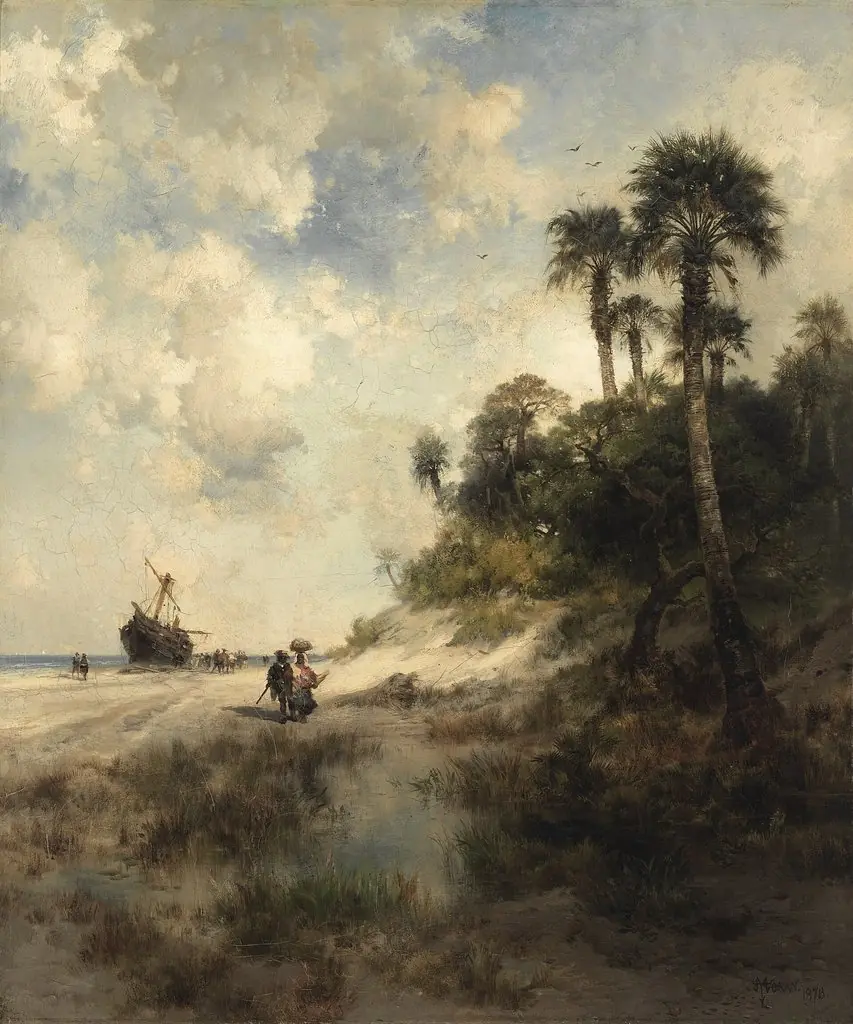
Thomas Moran (February 12, 1837 – August 25, 1926) was an American painter and printmaker of the Hudson River School in New York whose work often featured the Rocky Mountains.

 Sunrise—The Pond, Easthampton, Long Island
 Sunrise—The Pond, Easthampton, Long Island
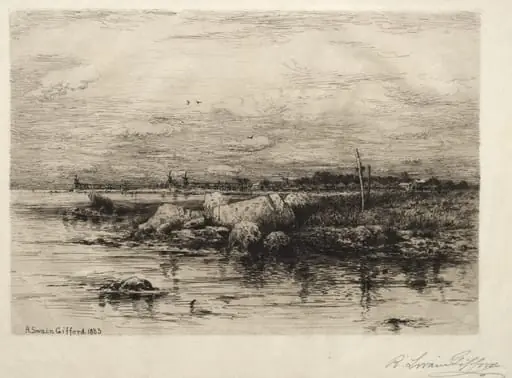 Mouth of the Apponaganasett River
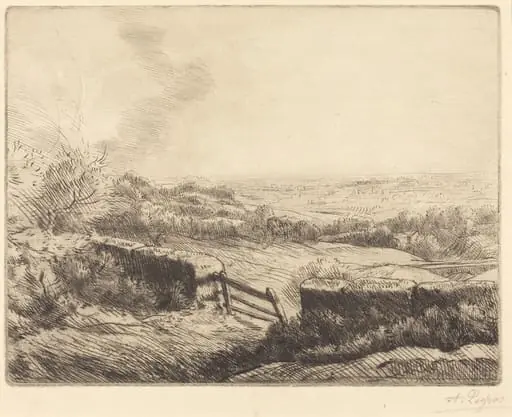 The Gate (L'entree du champ)
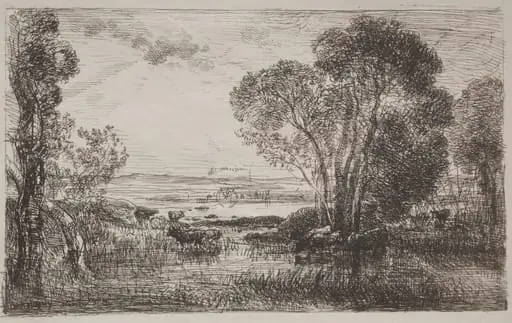 The Hydraulic Machine
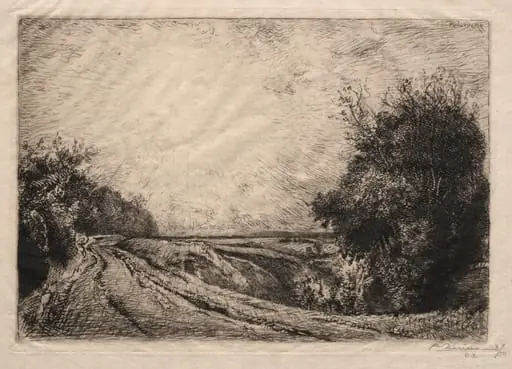 La Route de la Houssoye
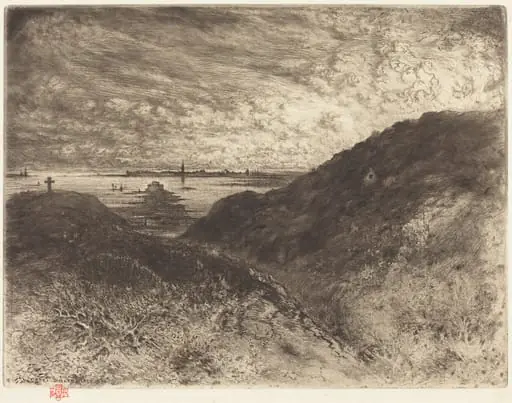 La Falaise: Baie de Saint-Malo (The Cliff: Saint-Malo Bay)
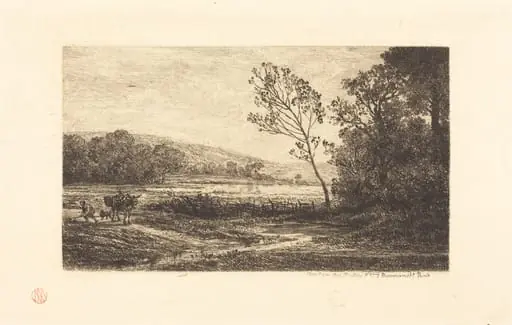 Autumn (L'Automne)
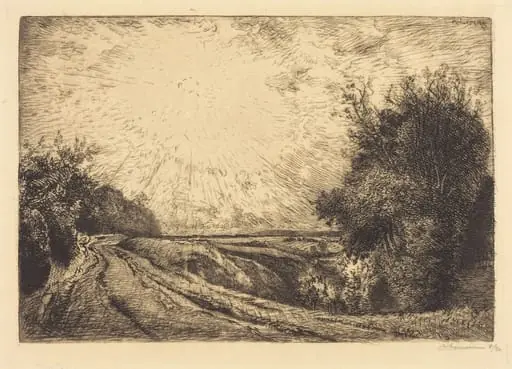 Route from La Houssoye, Crevecoeur-le-Grand (Route de La Houssoye, Crevecoeur)
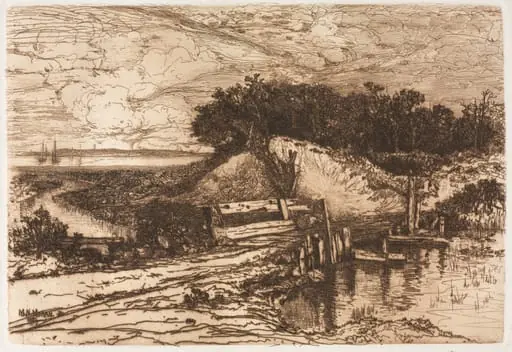 Gardiner's Bay, Long Island, seen from Fresh Pond
 Prospect (Le point de vue)
 Morning