Artwork
Autumn (L'Automne)
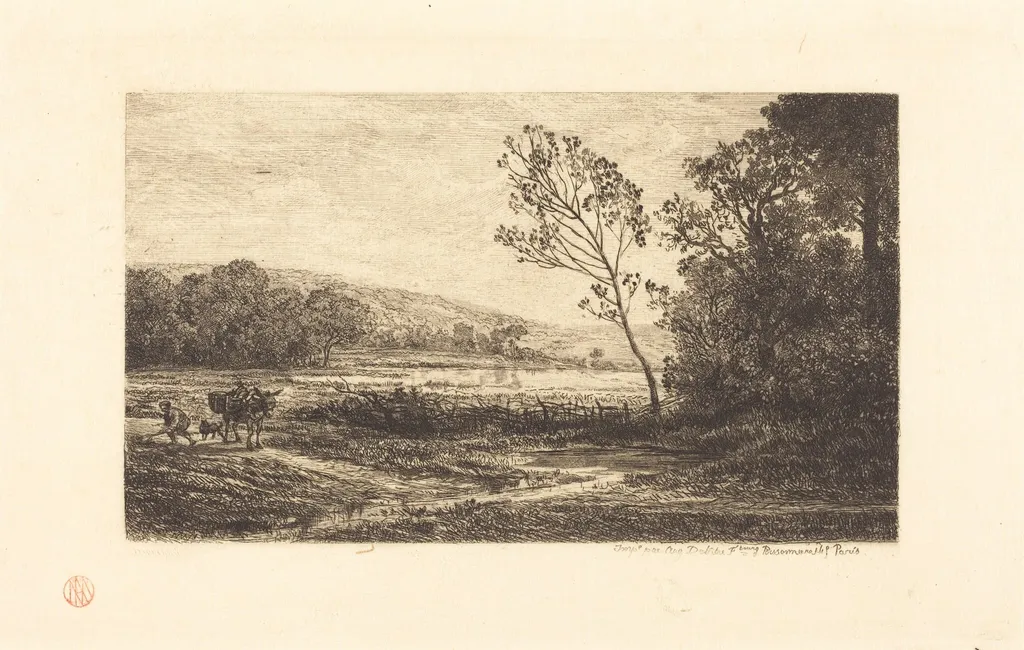
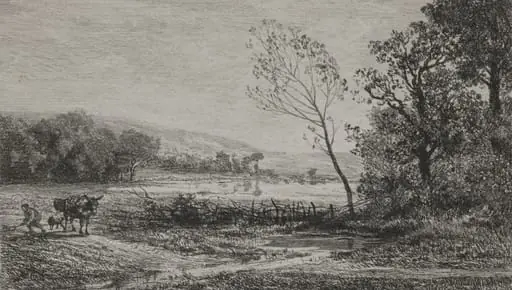
Autumn (L'Automne) is an ink print by the Romanticist artist Charles François Daubigny. It dates from 1848 and is held in the collection of the National Gallery of Art.
About this work
Overview
Created in 1848, *Autumn (L'Automne)* is an etching by French artist Charles‑François Daubigny. The work depicts a tranquil rural landscape, featuring a winding river, a solitary figure guiding a horse‑drawn cart, and a line of trees that rise toward a distant horizon. The composition conveys a calm, seasonal atmosphere typical of Daubigny’s focus on natural scenery.
Subject & Meaning
The image presents a quiet countryside during the autumn months, with a narrow path beside the water and a lone traveler moving a cart. Tall trees frame the scene, while a gentle slope leads to further foliage and a barely visible structure, suggesting a harmonious relationship between human activity and the surrounding landscape.
Technique & Style
Daubigny employed fine, delicate lines characteristic of 19th‑century etching to render light filtering through the canopy. The subtle gradations of tone create a soft, atmospheric quality, emphasizing the tranquil mood of the setting. This approach aligns with contemporary printmaking practices that sought to portray nature as serene and timeless.
History & Provenance
As a member of the Barbizon school, Daubigny frequently explored print media alongside his paintings, using both traditional etching and the newer cliché verre technique. *Autumn* reflects his early experimentation with these methods, predating his later influence on Impressionist landscape painting.
Artist & collection
Artist
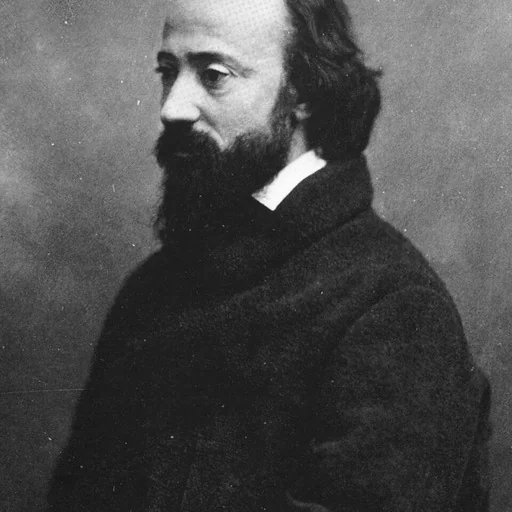
Charles-François Daubigny ( DOH-bin-yee, US: DOH-been-YEE, doh-BEEN-yee, French: ; 15 February 1817 – 19 February 1878) was a French painter, one of the members of the Barbizon school, and is considered an important precursor of…

 Trees by a River
 Richmond
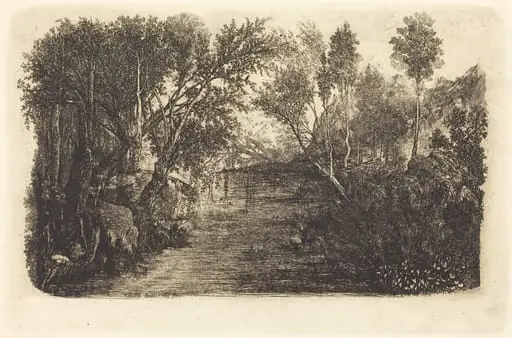 The Water's Course
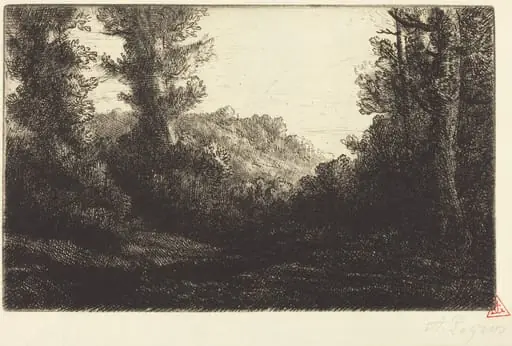 Edge of a Wood (Lisiere de bois)
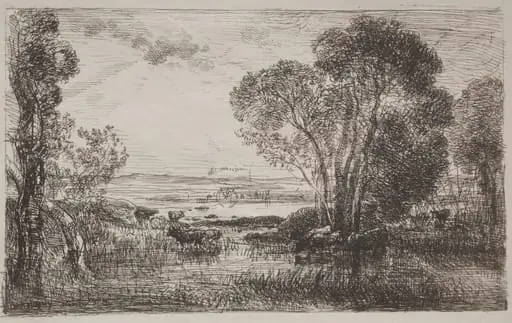 The Hydraulic Machine
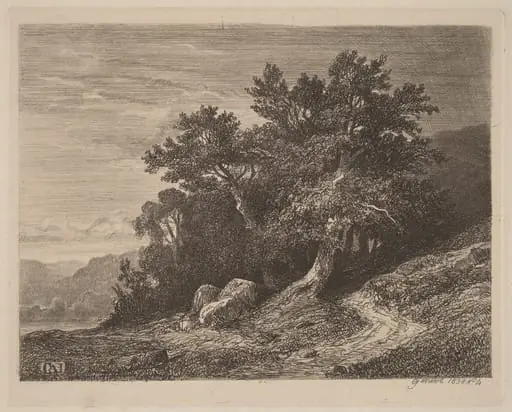 Ancient Trees on a Hillside
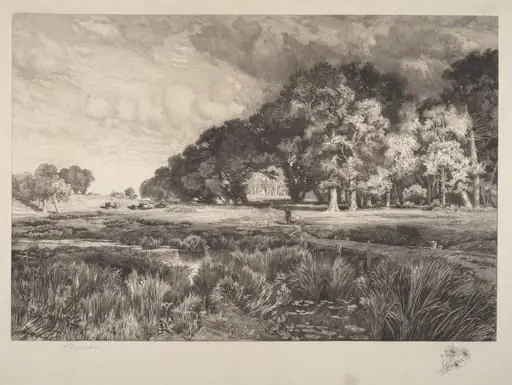 Long Island Landscape
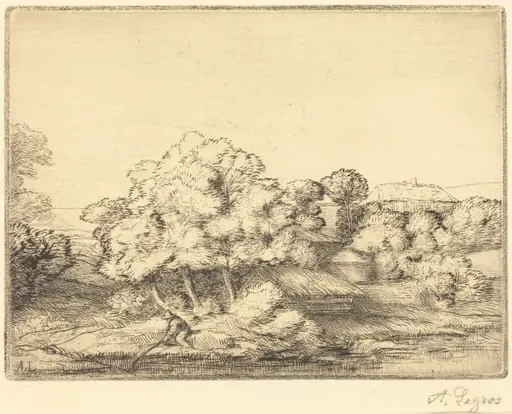 Hamlet near the Lake (Le hameau pres du lac)
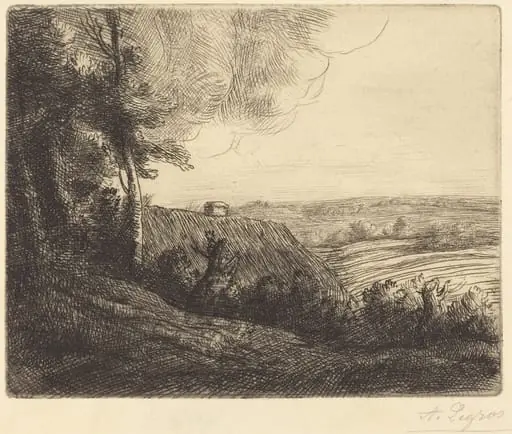 Landscape: Road to Horville (Paysage: Chemin d'Horville)
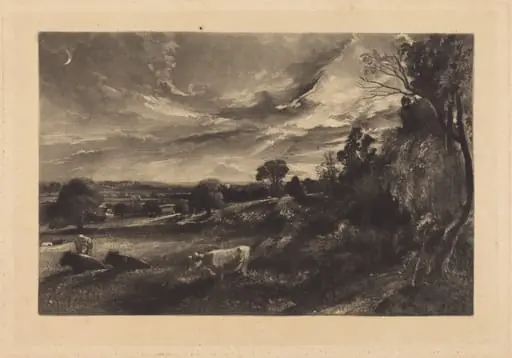 Summer Evening
 Landscape with Peat-bog; In the Marsh (Paysage des tourbieres; Dans les marais)
 Autumn