Artwork
Mountain of the Holy Cross
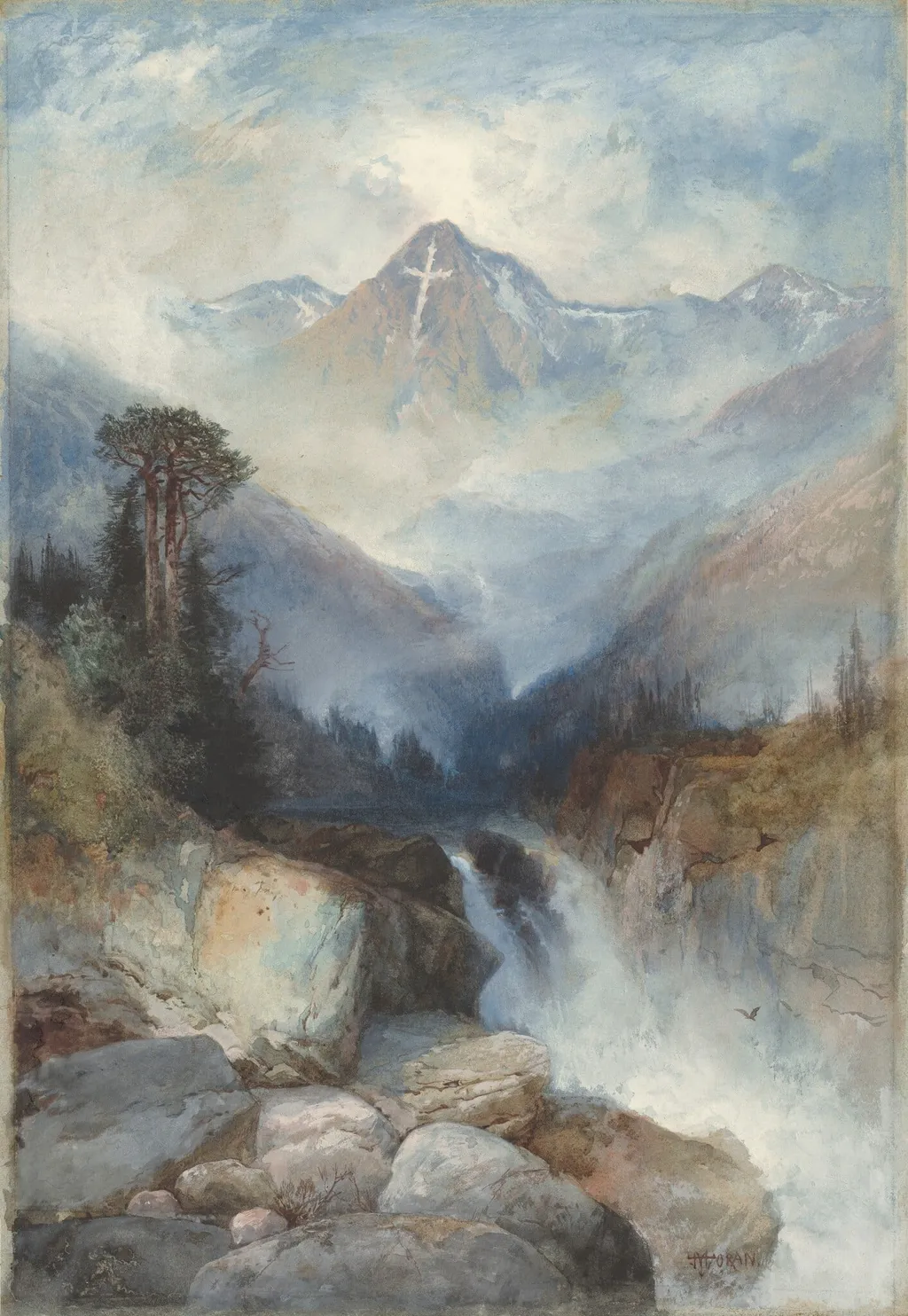
Mountain of the Holy Cross is a gouache drawing by the Impressionist artist Thomas Moran. It dates from 1890 and is held in the collection of the National Gallery of Art.
About this work
Overview
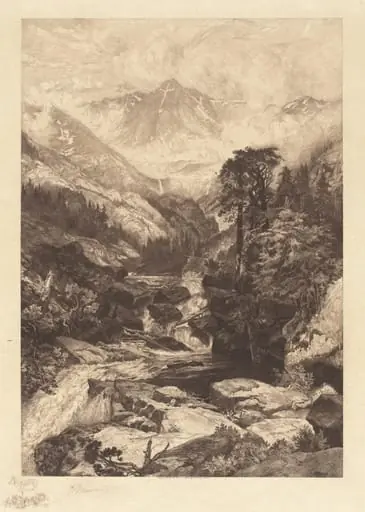
Created in 1890, *Mountain of the Holy Cross* is a drawing executed in watercolor, gouache, and graphite on blue laid paper. The work presents a mist‑shrouded valley of the Rocky Mountains, dominated by a distant peak whose summit suggests the outline of a cross. Soft, atmospheric tones of blue, gray and white convey a tranquil, almost ethereal landscape.
Subject & Meaning
The composition depicts a secluded mountain valley with a cascading waterfall, scattered trees, and rugged foreground rocks. The faint cross‑shaped formation on the summit has been interpreted as a reference to the sacred or symbolic significance that early explorers and settlers attributed to the mountain, reinforcing its reputation as a place of spiritual resonance.
Technique & Style
Moran employed a combination of watercolor washes, opaque gouache highlights, and graphite underdrawing to achieve depth and luminosity. The blue laid paper provides a cool undertone, while layered washes build atmospheric perspective. Delicate brushwork renders mist and foliage, and the contrast between transparent washes and the more solid gouache accentuates the illuminated peak.
History & Provenance
Its ownership record traces back to Moran’s studio, later entering a private collection before being acquired by the museum in the early 2000s.
Thomas Moran, an American artist linked to the Hudson River School, produced the drawing after several expeditions to the Rockies that informed his larger body of work. The piece reflects his ongoing interest in western scenery during the late nineteenth century. Its ownership record traces back to Moran’s studio, later entering a private collection before being acquired by the museum in the early 2000s.
Context
The drawing belongs to a period when American artists sought to document and celebrate the nation’s expanding frontier. Moran’s depictions of the Rockies contributed to popular interest in western travel and conservation, aligning with contemporary debates about wilderness preservation and the cultural mythmaking of the American West.
Own this work as a print
Artist & collection
Artist
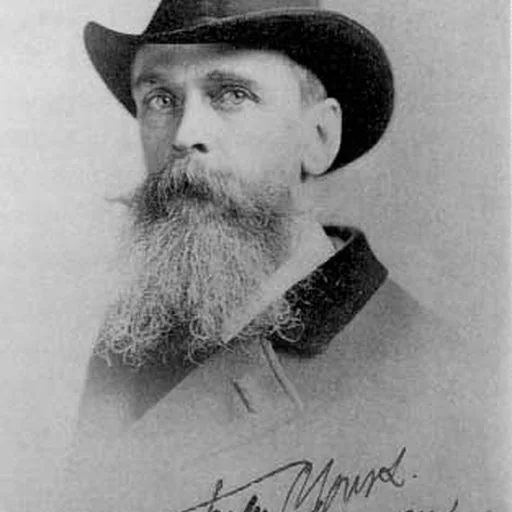
Thomas Moran (February 12, 1837 – August 25, 1926) was an American painter and printmaker of the Hudson River School in New York whose work often featured the Rocky Mountains.

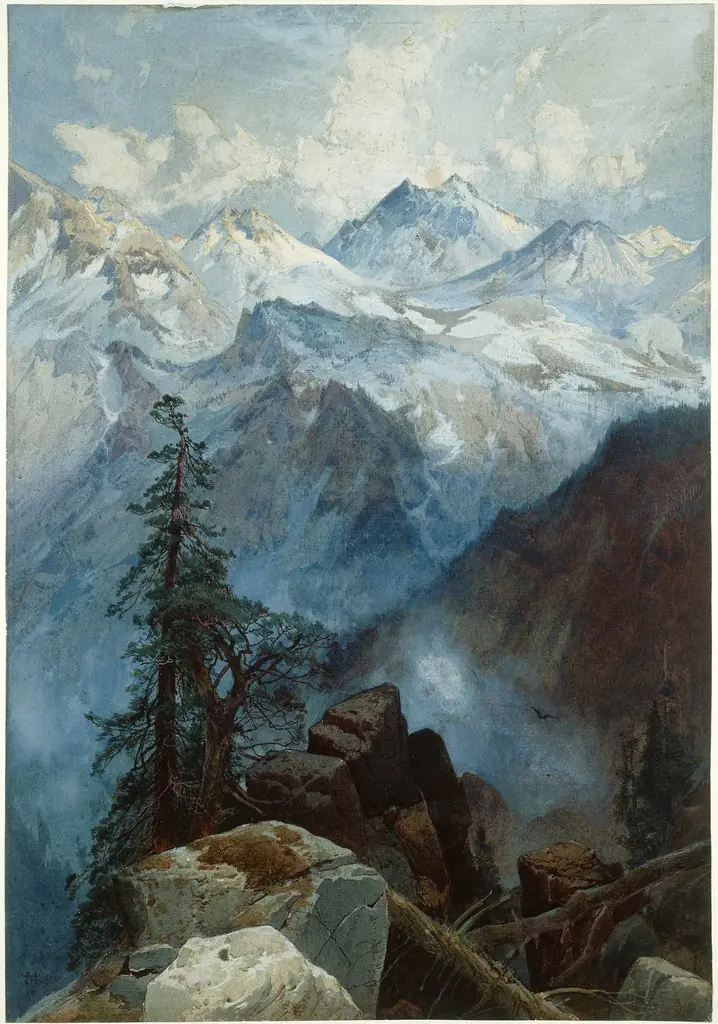 Summit of the Sierras
 Vorderer Gosausee against Dachstein
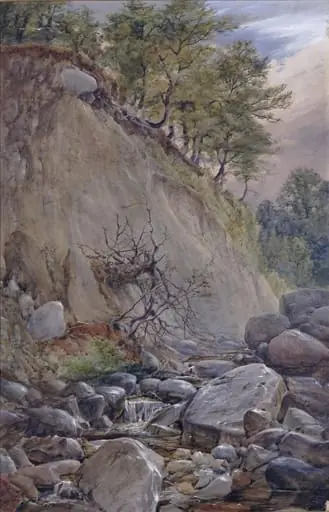 Bed of a mountain torrent, North Wales
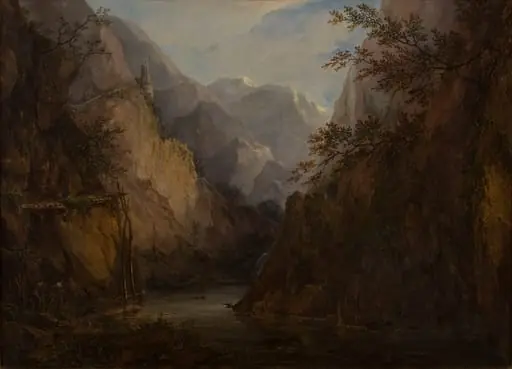 Norjalainen tunturimaisema
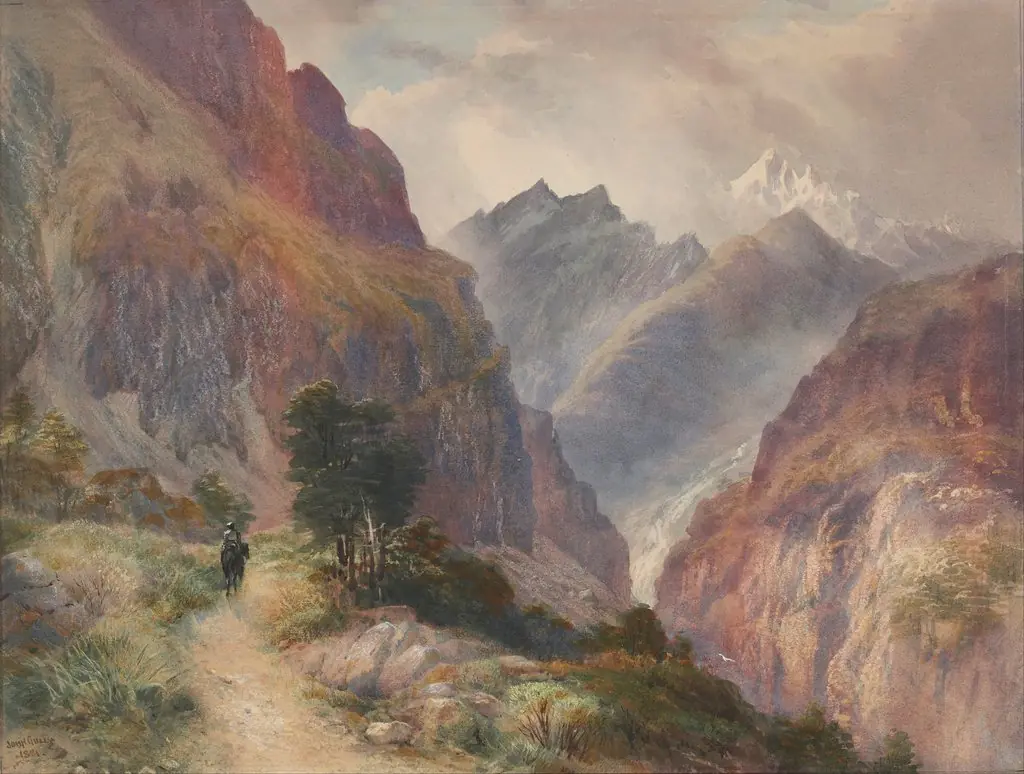 In the Southern Alps
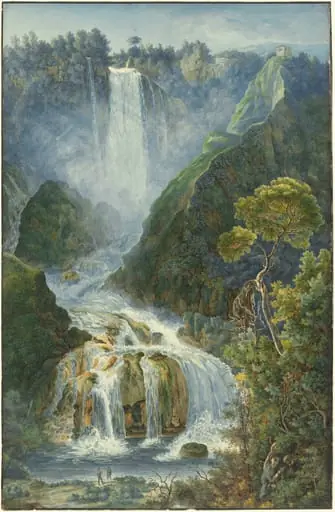 The Grand Waterfalls at Terni
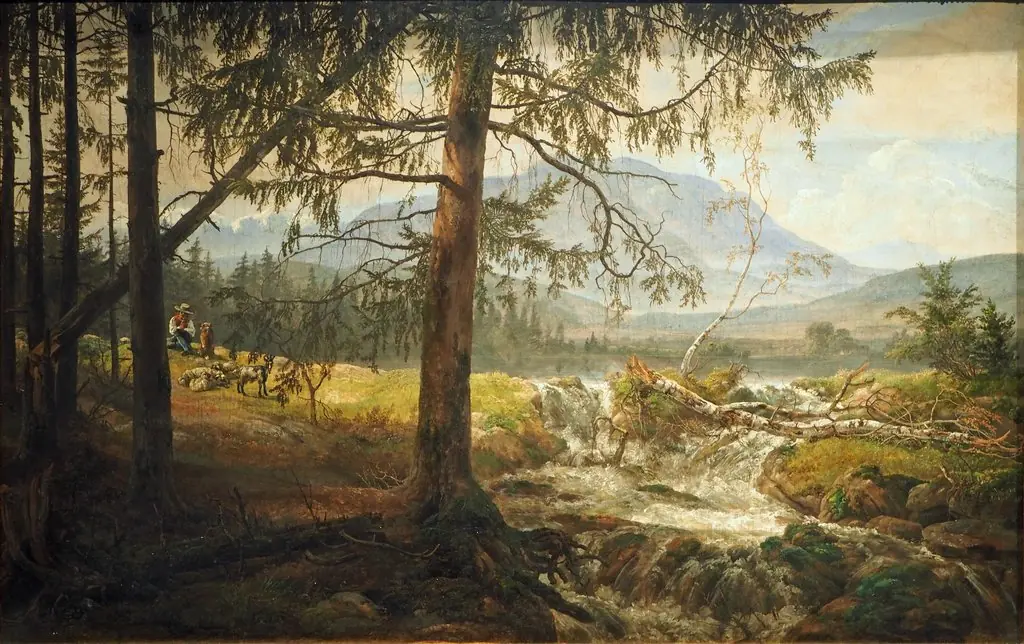 Nordic Landscape
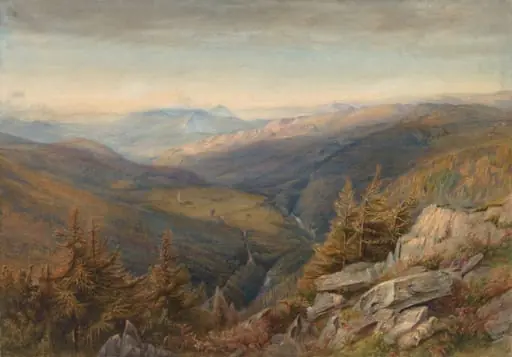 Mountain View
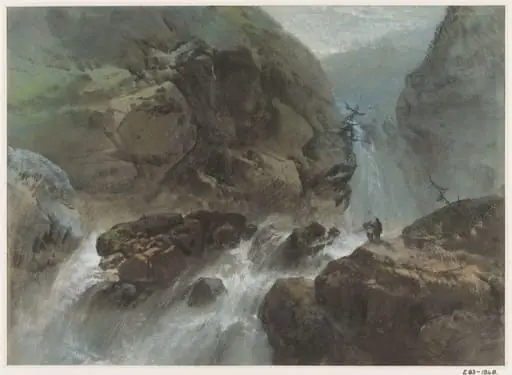 A Scottish waterfall
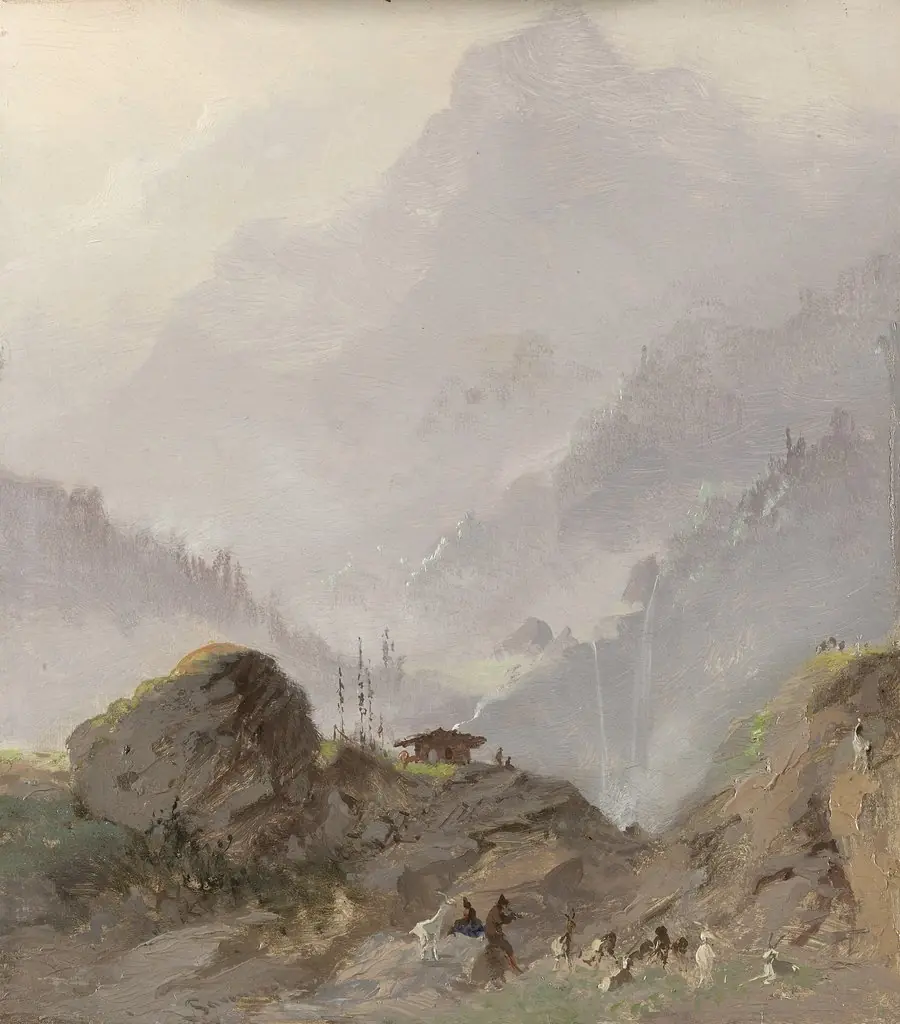 Alpine Landscape in Tyrol with Chamois Herd
 Mount Pyszna in the Tatra Mountains
 Mountain of the Holy Cross, Colorado