Artwork
Ruined Buildings near a River Bank
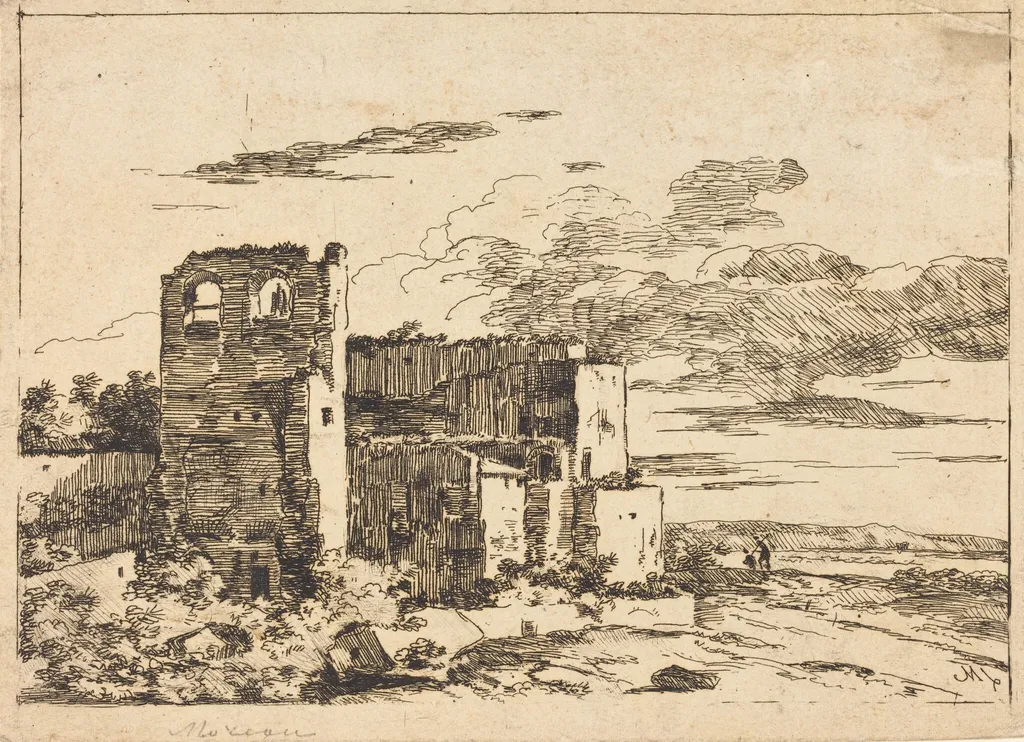
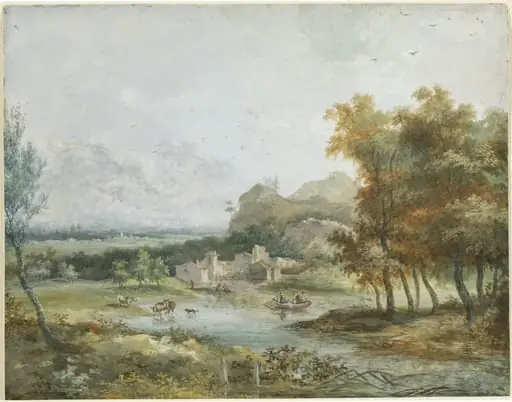
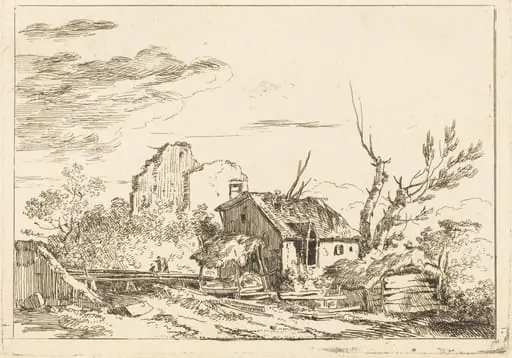
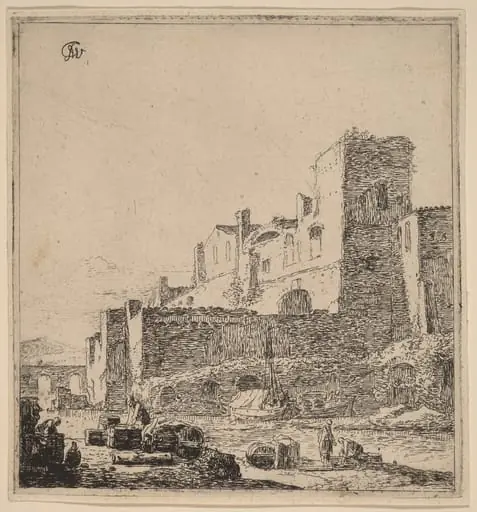
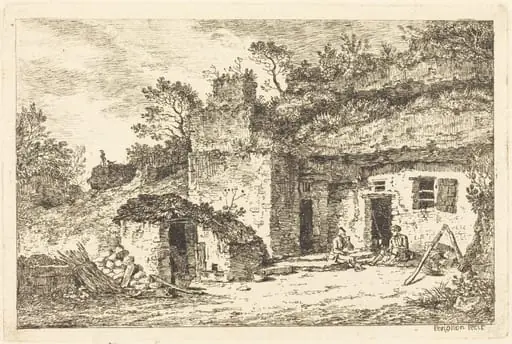
Ruined Buildings near a River Bank is an ink print by the Baroque artist Louis Gabriel Moreau the Elder. It dates from 1773 and is held in the collection of the National Gallery of Art.
About this work
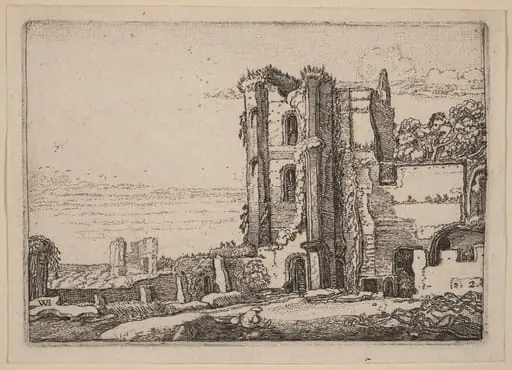
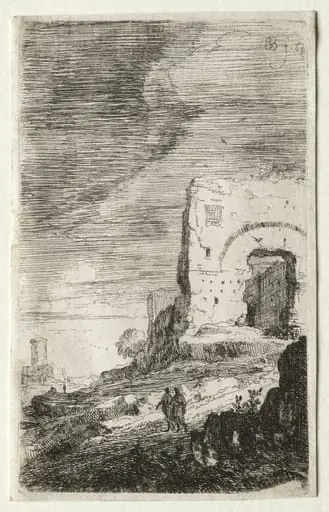
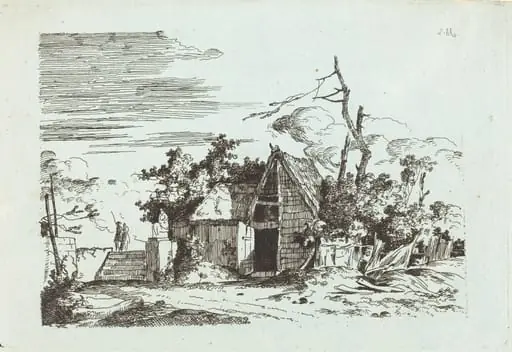
This etching shows crumbling brick walls and rooftops near a riverbank. The lines are sharp and scratchy. You can almost hear the water lapping below.
It’s an old print from 1770. Paper doesn’t stay perfect forever, and neither do buildings. The artist etched every crack and shadow himself, no second chances.
See it in person next time you’re in Washington.
Overview
Created in 1773 by Louis Gabriel Moreau the Elder, this etching captures a quiet riverside scene of decaying masonry. The work belongs to the printmaking tradition of late 18th-century France, where topographical accuracy and atmospheric detail were valued. Executed with fine, deliberate lines, the image conveys the passage of time through architectural ruin and natural setting.
Subject & Meaning
The composition centers on fragmented stone and brick structures, their forms softened by erosion and vegetation. A river flows beneath, implied by the angle of the bank and the absence of human figures. The scene evokes quiet decay rather than drama, suggesting contemplation of impermanence — a common theme in pre-Revolutionary French landscape prints.
Technique & Style
Moreau employed etching to render texture with precision: sharp, irregular lines define crumbling walls, while subtle hatching suggests shadow and moisture.
Moreau employed etching to render texture with precision: sharp, irregular lines define crumbling walls, while subtle hatching suggests shadow and moisture. The absence of wash or color emphasizes the monochrome interplay of light and surface. Each mark was incised directly into the plate, requiring careful control — errors could not be undone, lending the image a sense of deliberate, tactile craftsmanship.
History & Provenance
The print was produced in 1773 during Moreau’s active years as a topographical draftsman and printmaker. It likely circulated among collectors interested in architectural studies and rural scenes. While its early ownership is undocumented, surviving impressions are held in institutional collections, including those in Washington, D.C., where it remains accessible for study.
Context
In the decades before the French Revolution, artists increasingly turned to ruins as subjects, reflecting broader cultural interest in antiquity and the passage of time. Moreau’s work aligns with this trend, though his focus remains on modest, everyday decay rather than grand classical remnants. His prints served both documentary and aesthetic purposes, bridging surveying and art.
Legacy
Moreau’s etchings, including this one, contributed to the development of French topographical printmaking. Though not widely known today, his precise renderings of architectural fragments influenced later generations of artists documenting urban and rural change. The work endures as a quiet record of material transience, valued for its restraint and observational clarity.
Artist & collection