Artwork
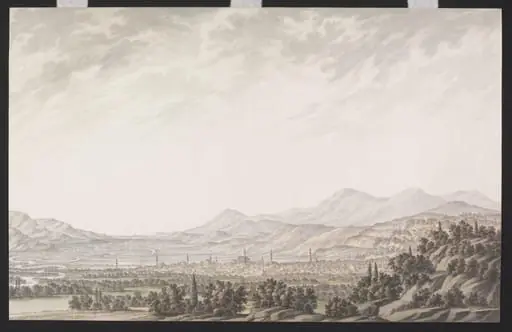
Panoramic View across a Terraced Park
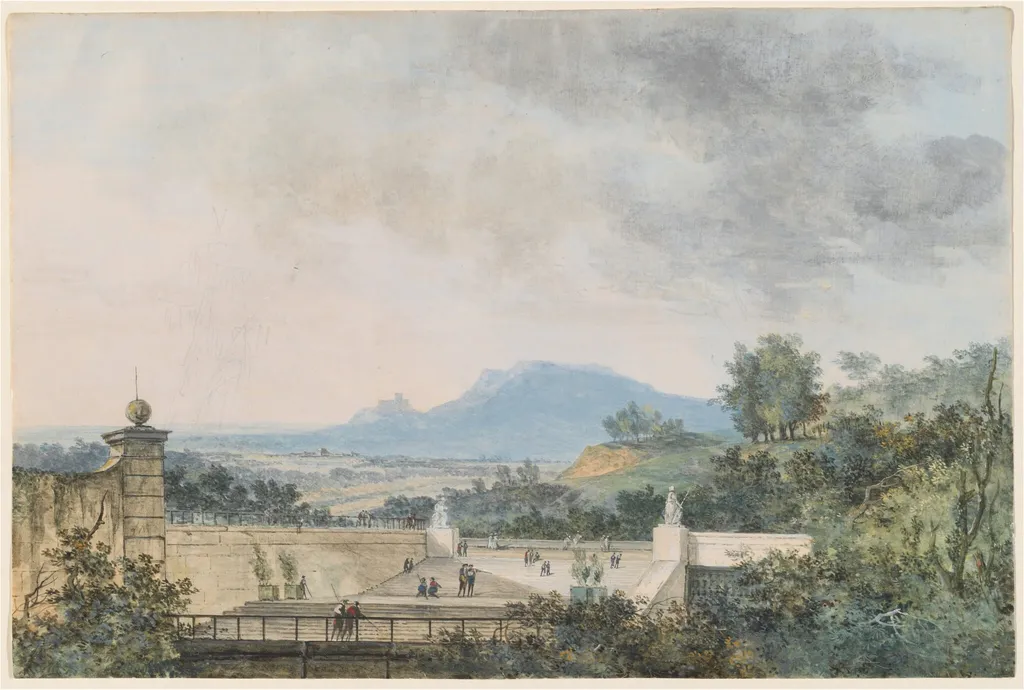
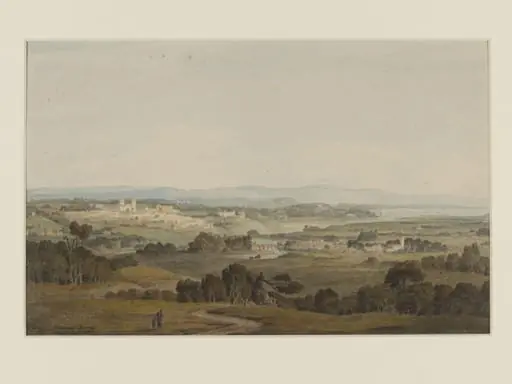
Panoramic View across a Terraced Park is a gouache drawing by the Romanticist artist Louis Gabriel Moreau the Elder. It dates from 1785 and is held in the collection of the National Gallery of Art.
About this work
Overview
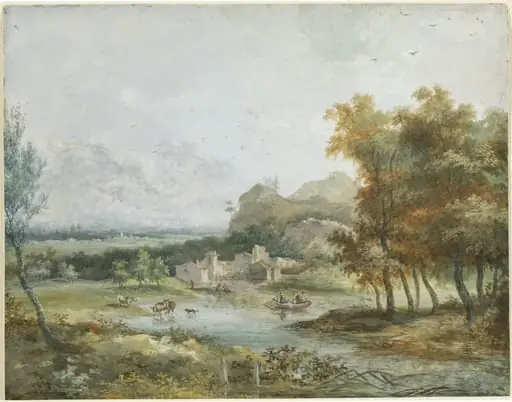
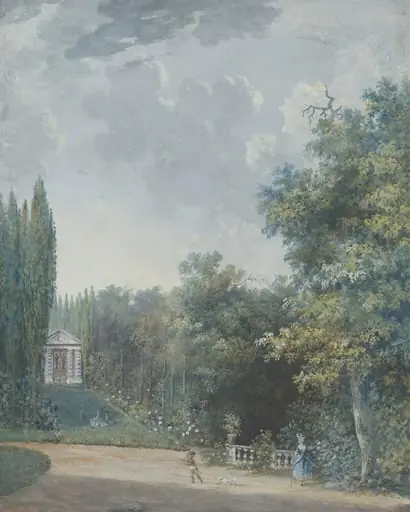
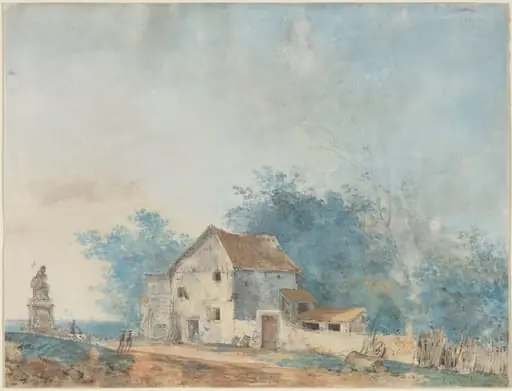
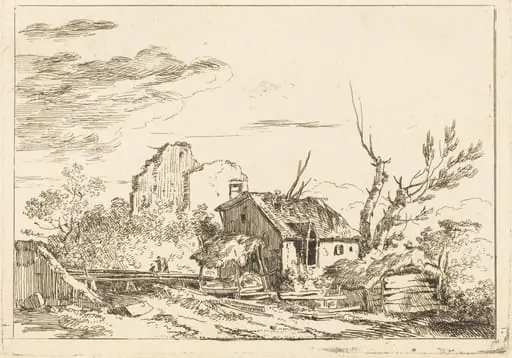
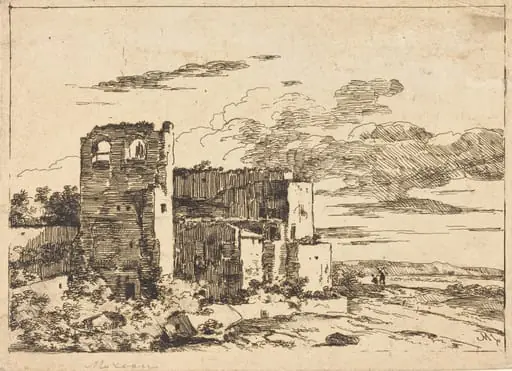
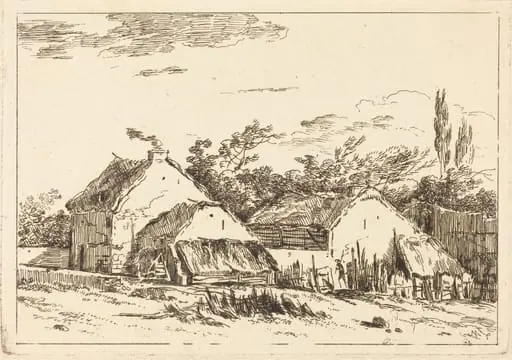
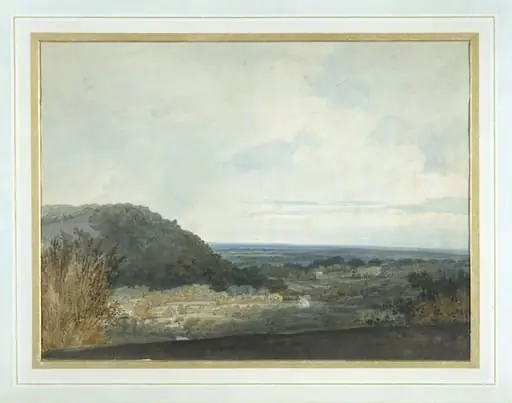
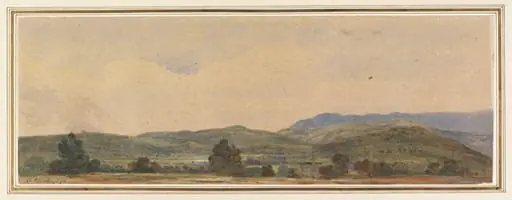
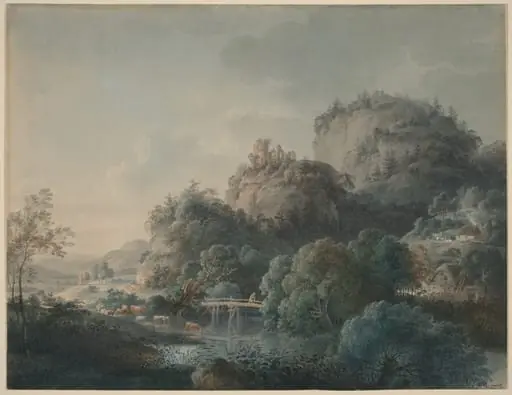
The composition captures a terraced park stretching into the distance, with winding paths, bridges, and a distant ruin.
Created in 1785 by Louis Gabriel Moreau the Elder, this drawing combines gouache and watercolor over graphite on wove paper to depict a broad, tranquil landscape. The composition captures a terraced park stretching into the distance, with winding paths, bridges, and a distant ruin. The palette is restrained, dominated by soft greens, pale blues, and muted grays, evoking a quiet, atmospheric mood characteristic of late 18th-century topographical art.
Subject & Meaning
The scene presents an idealized park landscape, blending natural beauty with human presence through figures strolling along paths and bridges. The ruin on the hill suggests a romanticized past, common in Enlightenment-era aesthetics that valued nature and historical memory. The absence of dramatic action or narrative focuses attention on serenity and contemplation, reflecting a cultural preference for calm, ordered landscapes.
Technique & Style
Moreau employed thin, layered washes of watercolor and subtle touches of gouache to build depth and luminosity. Graphite underdrawing guided the composition, while glazing techniques allowed colors to blend softly, enhancing the airy quality of the sky and foliage. The delicate handling of light and texture avoids sharp definition, favoring a hazy, atmospheric effect that invites quiet observation.
History & Provenance
The work originates from the late 18th century, a period when French artists increasingly documented landscapes for private collections and scholarly interest. Though specific ownership history is not documented, its medium and style align with the practices of topographical draftsmen who recorded estates and gardens for aristocratic patrons. It likely served as a record of a designed landscape rather than a commissioned portrait.
Context
This piece reflects the broader European trend of landscape appreciation during the Enlightenment, where gardens and parks were seen as expressions of reason and harmony. Similar works by contemporaries often depicted cultivated nature as a moral and aesthetic ideal. The inclusion of a ruin nods to the vogue for picturesque decay, linking the scene to literary and philosophical currents valuing time, memory, and nature’s quiet dominance.
Legacy
Moreau’s work contributes to a tradition of French watercolor drawing that emphasized subtlety over spectacle. While not widely known today, such drawings formed the foundation for later landscape studies and influenced the development of topographical art in the 19th century. Its restrained technique and quiet composition remain representative of a refined, observational approach to nature that valued nuance over grandeur.
Artist & collection