Artwork
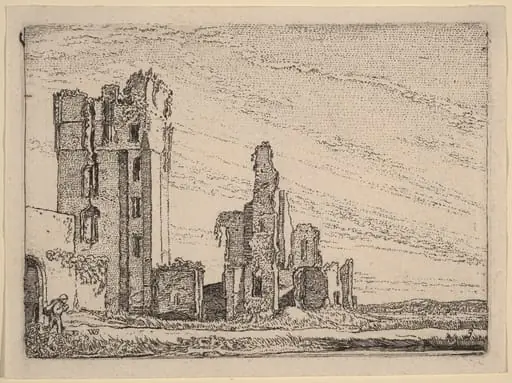
Ruined Tower Right of Center
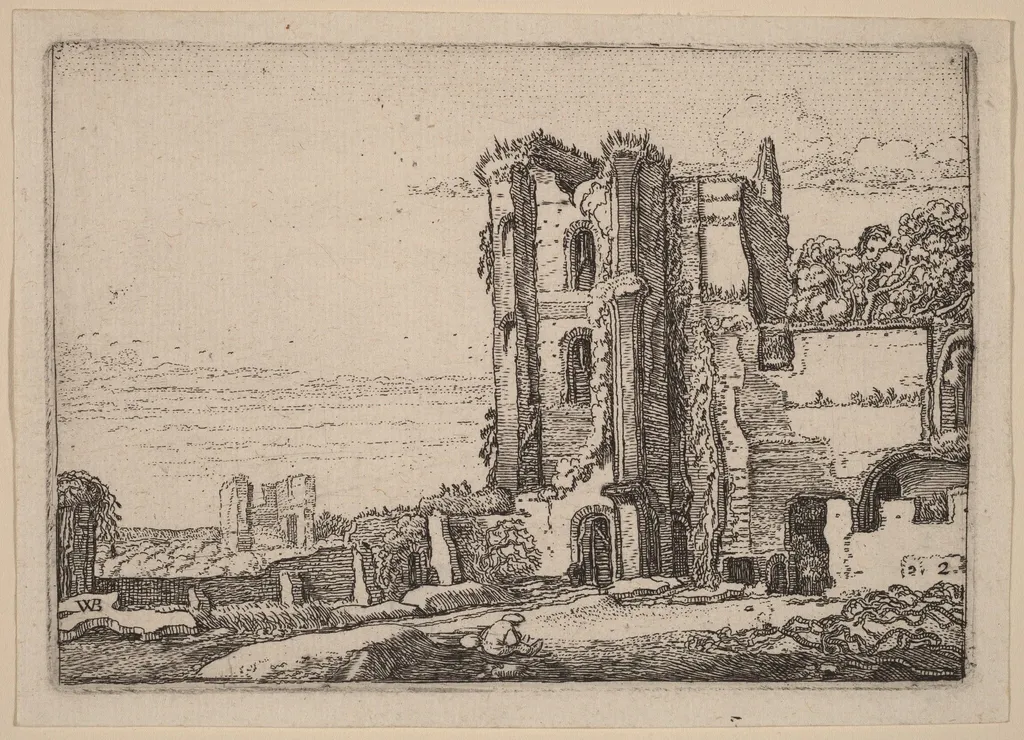
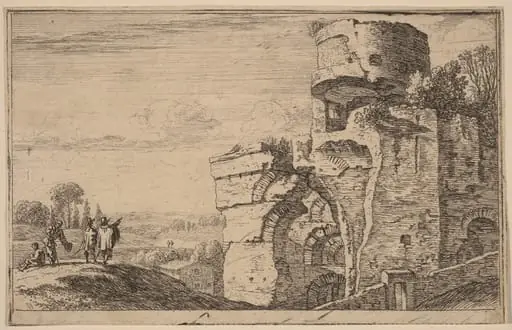
Ruined Tower Right of Center is an ink print by the Baroque artist Willem Buytewech. It dates from 1621 and is held in the collection of the National Gallery of Art.
About this work
Overview
It presents a decaying stone tower, its central section collapsed, surrounded by overgrown vegetation and rugged terrain.
Ruined Tower Right of Center is an etching by Willem Buytewech, dated 1621. It presents a decaying stone tower, its central section collapsed, surrounded by overgrown vegetation and rugged terrain. A winding path approaches the structure from the foreground, while smaller ruins and dense foliage frame the scene. The sky, lightly shaded with clouds, adds a quiet stillness to the composition, emphasizing the passage of time.
Subject & Meaning
The image centers on architectural decay, suggesting the erosion of human endeavor over time. The tower, once a symbol of strength or authority, now lies fragmented and reclaimed by nature. The absence of human figures enhances the sense of abandonment, inviting contemplation on impermanence. This theme resonates with early 17th-century Dutch reflections on transience and the moral weight of ruin.
Technique & Style
Buytewech employed fine, controlled lines typical of etching to render texture and depth. The crumbling masonry, tangled brush, and atmospheric sky are achieved through delicate hatching and varying line density. The composition avoids dramatic contrasts, favoring subdued tonal shifts that align with Northern European print traditions rather than the theatricality often associated with Baroque art elsewhere.
History & Provenance
Created in 1621, the work emerged during Buytewech’s active period in Rotterdam and The Hague, where he produced numerous landscapes and genre scenes. While the etching’s early ownership is undocumented, it reflects the growing Dutch interest in topographical and ruin imagery during the early Baroque era. Its survival in institutional collections attests to its enduring scholarly interest.
Context
In early 17th-century the Netherlands, depictions of ruins were not merely topographical but carried cultural and philosophical weight. Artists and patrons engaged with themes of decay as metaphors for the fleeting nature of power and wealth. Buytewech’s work aligns with this trend, distinguishing itself through quiet observation rather than overt moralizing.
Legacy
Though less widely known than his genre scenes, this etching contributed to the development of landscape printmaking in the Dutch Republic. Its restrained aesthetic influenced later artists who sought to evoke mood through subtle detail and naturalistic ruin. The work remains a quiet example of how early modern printmakers transformed observation into poetic reflection.
Artist & collection