Artwork
Utica
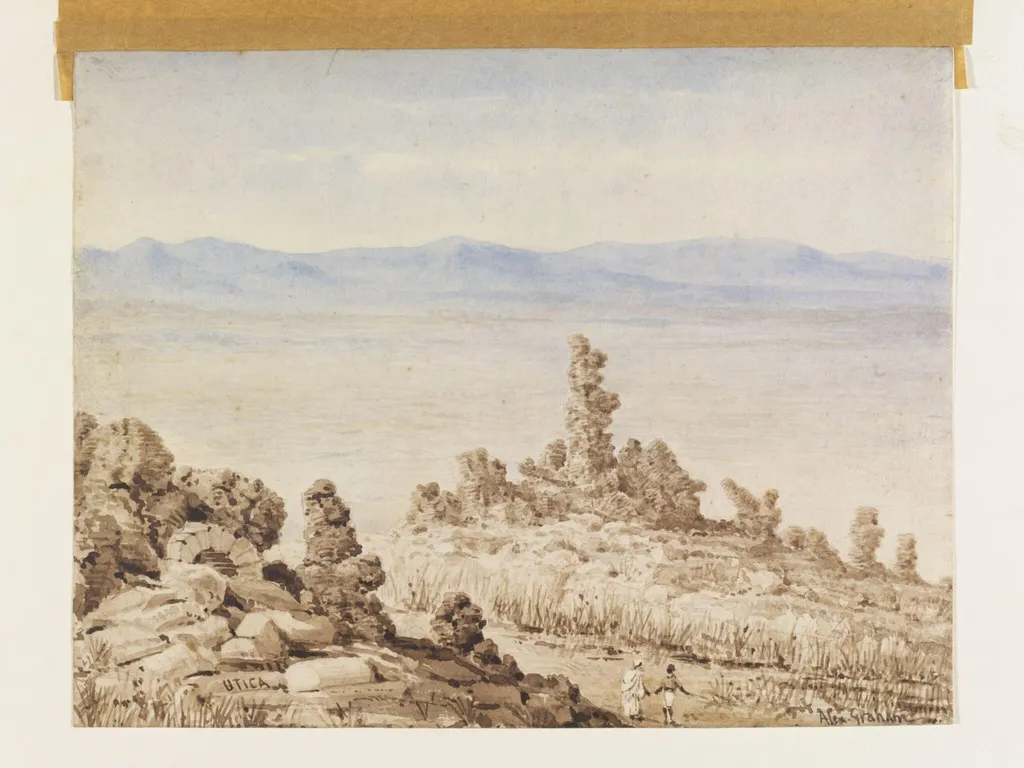
Utica is a watercolor work on paper by the Impressionist artist Alexander Graham. It dates from 1885 and is held in the collection of the Victoria and Albert Museum.
About this work
Overview
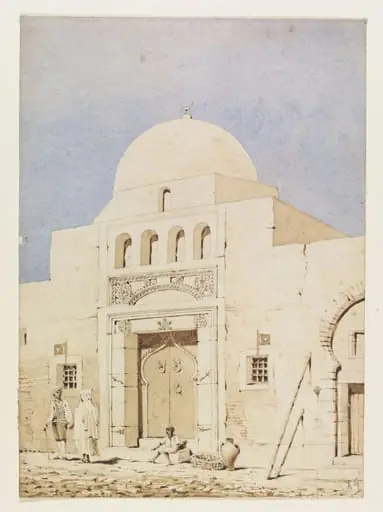
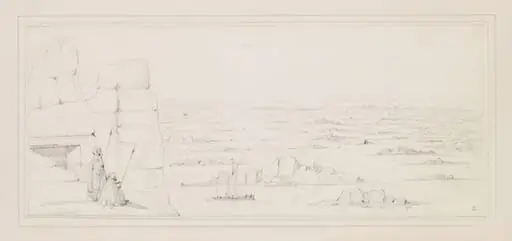
Utica is a watercolour by Alexander Graham, executed on paper and accompanied by a pencil sketch on its reverse. The sketch records the ruins of the three temples at Sbeitla in Tunisia and matches a plate published in the 1887 volume Travels in Tunisia, co‑authored by Graham and H.S. Ashbee.
Subject & Meaning
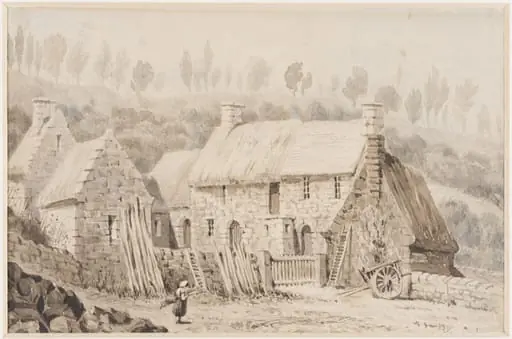
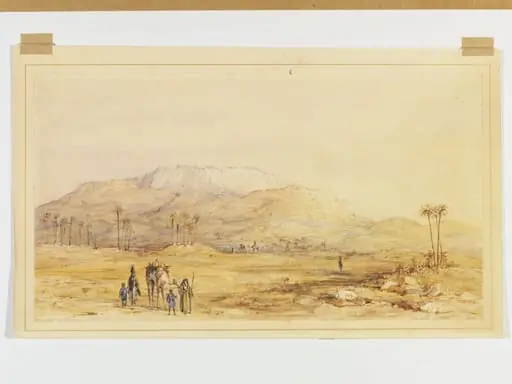
The painted surface presents a tranquil, mist‑laden landscape: a solitary figure walks along a rocky shoreline beneath a pale blue sky that merges with distant hills. Dry grass, scattered stones and a leafless sapling occupy the foreground, while the inscription "UTICA" on a stone in the lower left suggests a geographical reference.
Technique & Style
Graham employs delicate washes of watercolour to render atmospheric light and depth. Soft, muted tones convey a sense of distance, and the restrained palette enhances the dreamlike quality of the scene, while the reverse sketch demonstrates his interest in archaeological documentation.
History & Provenance
The work entered the market through the auction house Phillips, Son & Neale, where it was acquired in June 1972. A related Tunisian drawing by Graham resides in the Victoria and Albert Museum’s Department of Prints and Drawings, indicating the artist’s broader engagement with North African subjects.
Context
Created during a period when European artists frequently traveled to North Africa, the piece reflects contemporary fascination with the region’s antiquities. Graham’s inclusion of the Sbeitla temple sketch links the work to scholarly publications on Tunisian archaeology of the late nineteenth century.
Artist & collection
Artist
Alexander Graham loved to paint North African ruins and coastlines with watercolours and drawings around 1885.

 Cataracts of Nubia - Looking North
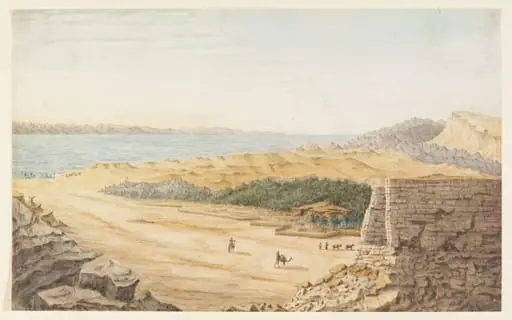 Ancient Ruins in the land of Edom above the bed of a valley and Arab Date gardens
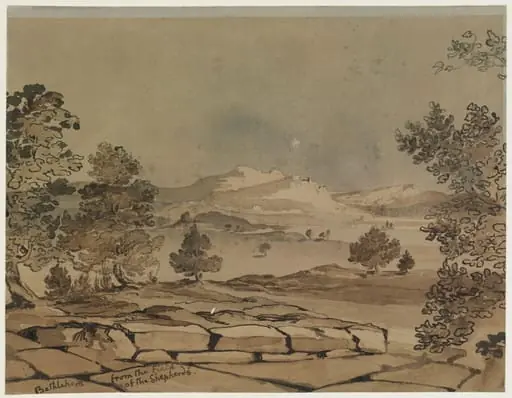 Bethlehem from the Field of the Shepherds
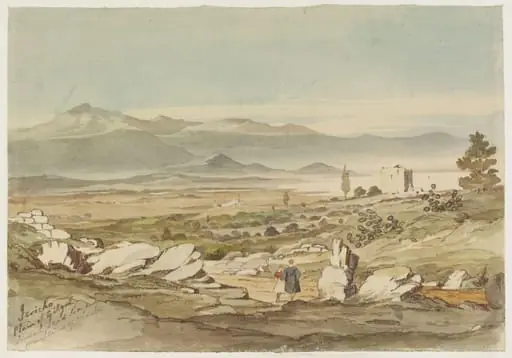 Jericho Plain of Gilgal, Jordan, Dead Sea, and Mountains of Moab
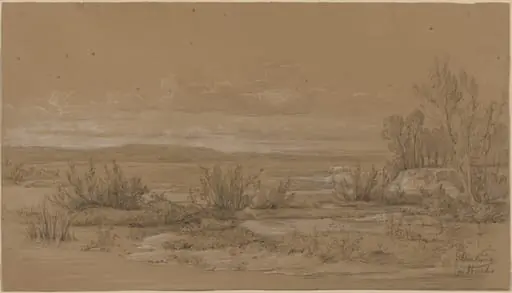 Landscape near Vourlis
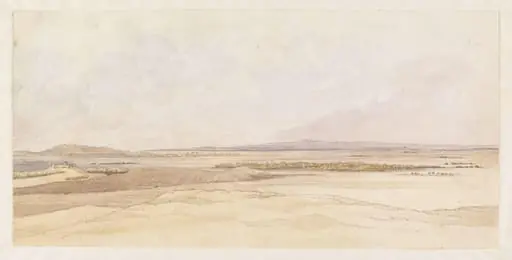 Tehran with the Cusr Kayar
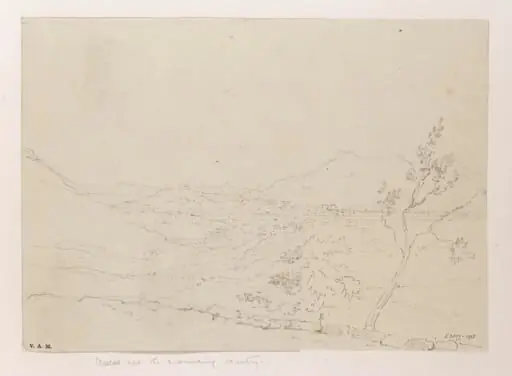 Macau, looking south-west along the peninsula
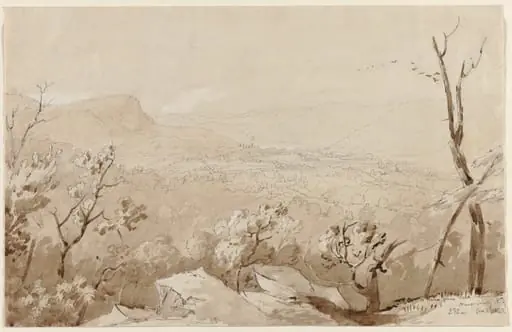 A View from Bald Mountain, Orange County, N.Y.
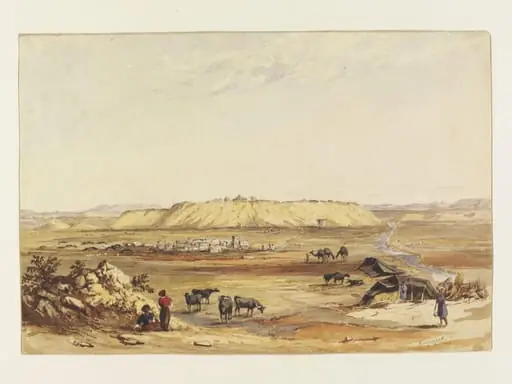 Kouyunjick
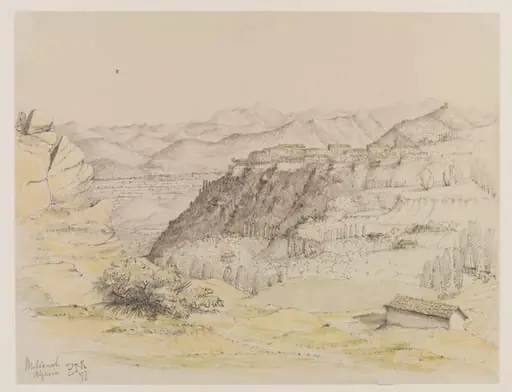 Milianah Algeria
 Pyramid of Abu Roash from the Village of Kerdassy
 The Barrier, Macao, from Crysilia's Bay