Artwork
Woman with Handwork outside a Fisherman’s Hut
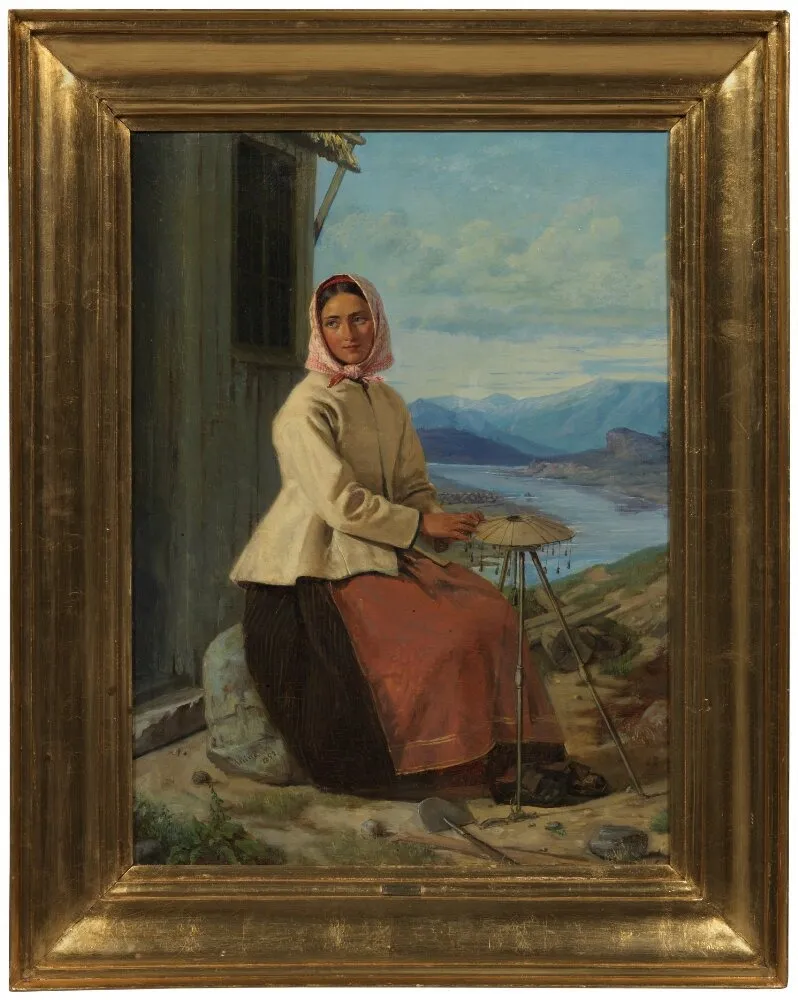
Woman with Handwork outside a Fisherman’s Hut is an oil painting by the Biedermeier artist Moritz Unna. It dates from 1852 and is held in the collection of the Nationalmuseum.
About this work
Overview
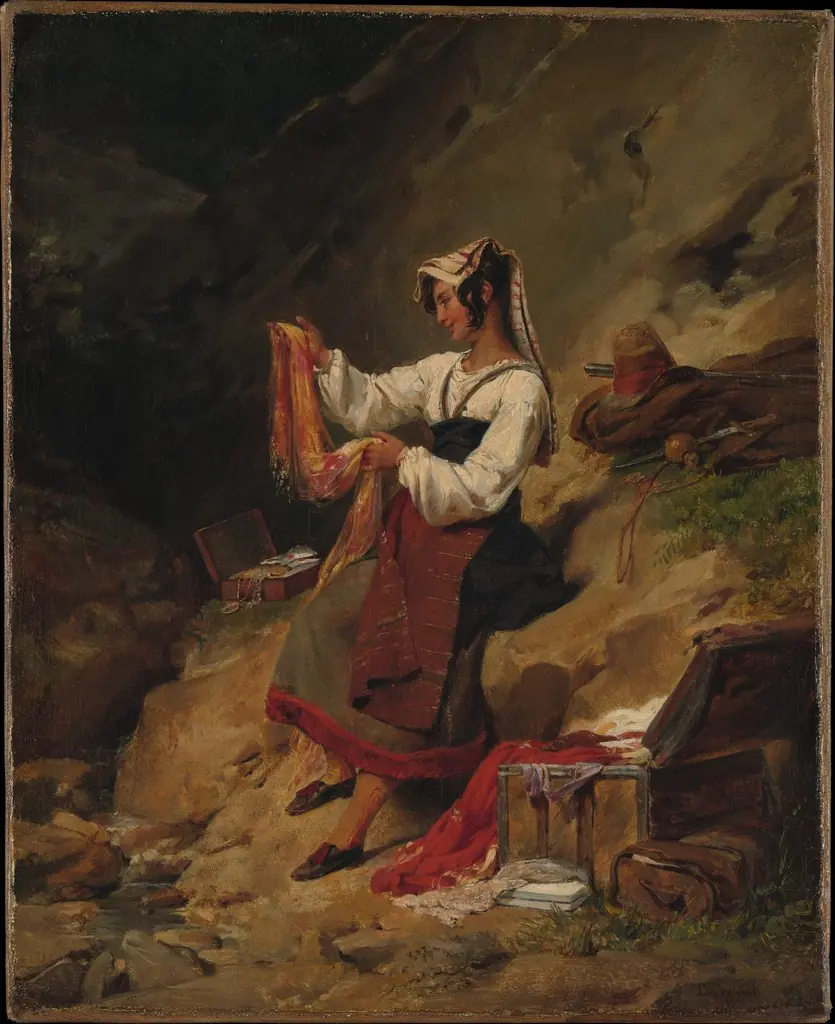
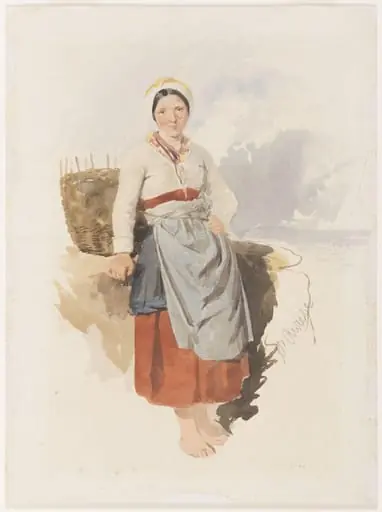
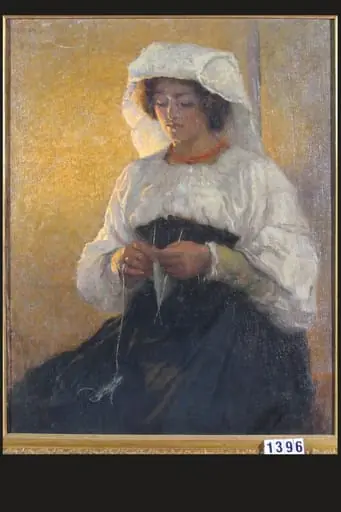
Created in 1852 by Moritz Unna, this oil painting depicts a solitary woman seated beside a modest fisher’s hut. The work is part of the collection of Sweden’s Nationalmuseum. The composition places the figure against a backdrop of sea and distant mountains, establishing a tranquil, open‑air setting.
Subject & Meaning
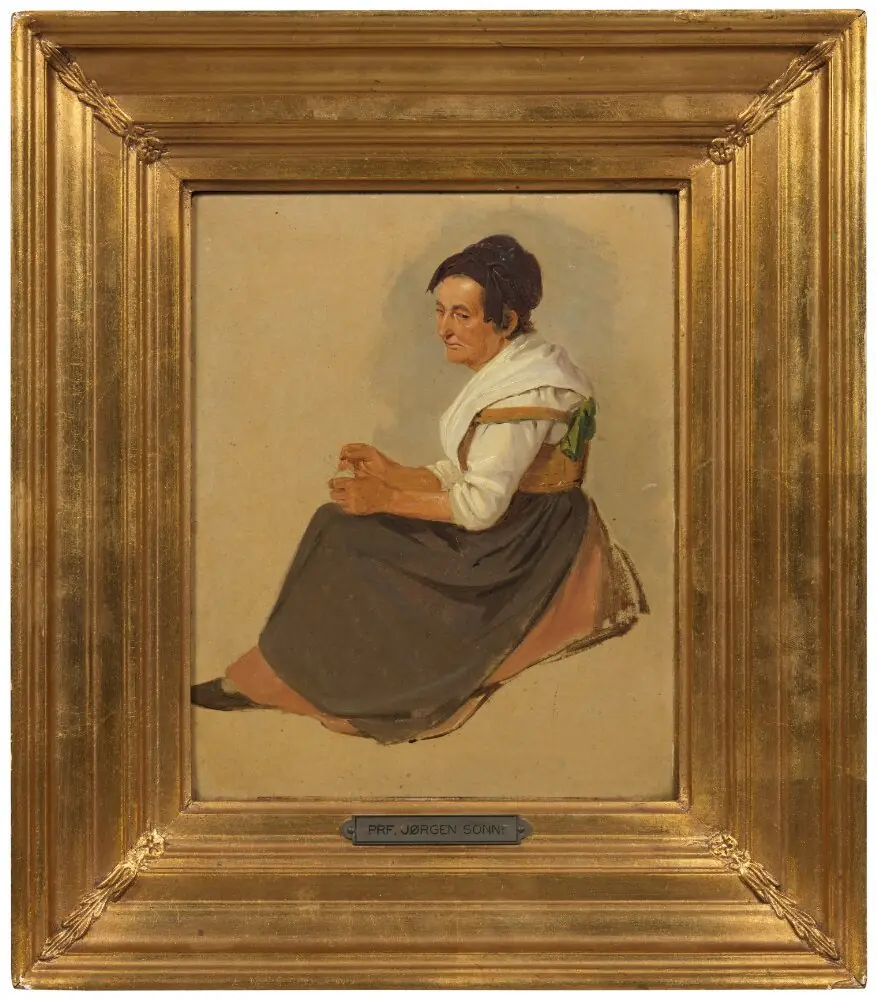
The central figure is a woman engaged in a manual craft—likely sewing or knitting—while positioned outdoors. Dressed in a white jacket, a red skirt, and a pink headscarf, she appears absorbed in her work, suggesting themes of domestic labor, patience, and the quiet rhythms of coastal life.
Technique & Style
Unna employs a warm palette that unifies the subject’s attire with the surrounding landscape, using soft brushwork to render the sea and hills. The handling of light creates a gentle glow on the figure, while the overall composition balances detail in the clothing with broader, atmospheric treatment of the background.
History & Provenance
The painting entered the Nationalmuseum’s holdings after its creation, though specific acquisition details are not recorded in the available sources. Since its inclusion, it has remained on public view, representing a mid‑19th‑century Swedish genre scene within the museum’s broader collection.
Context
Mid‑19th‑century Scandinavian art often emphasized everyday life and the natural environment. Unna’s choice to portray a working woman in a coastal setting reflects contemporary interest in regional identity and the dignity of ordinary labor, aligning the work with broader genre‑painting trends of the period.
Artist & collection