Artwork
H Beard Print Collection
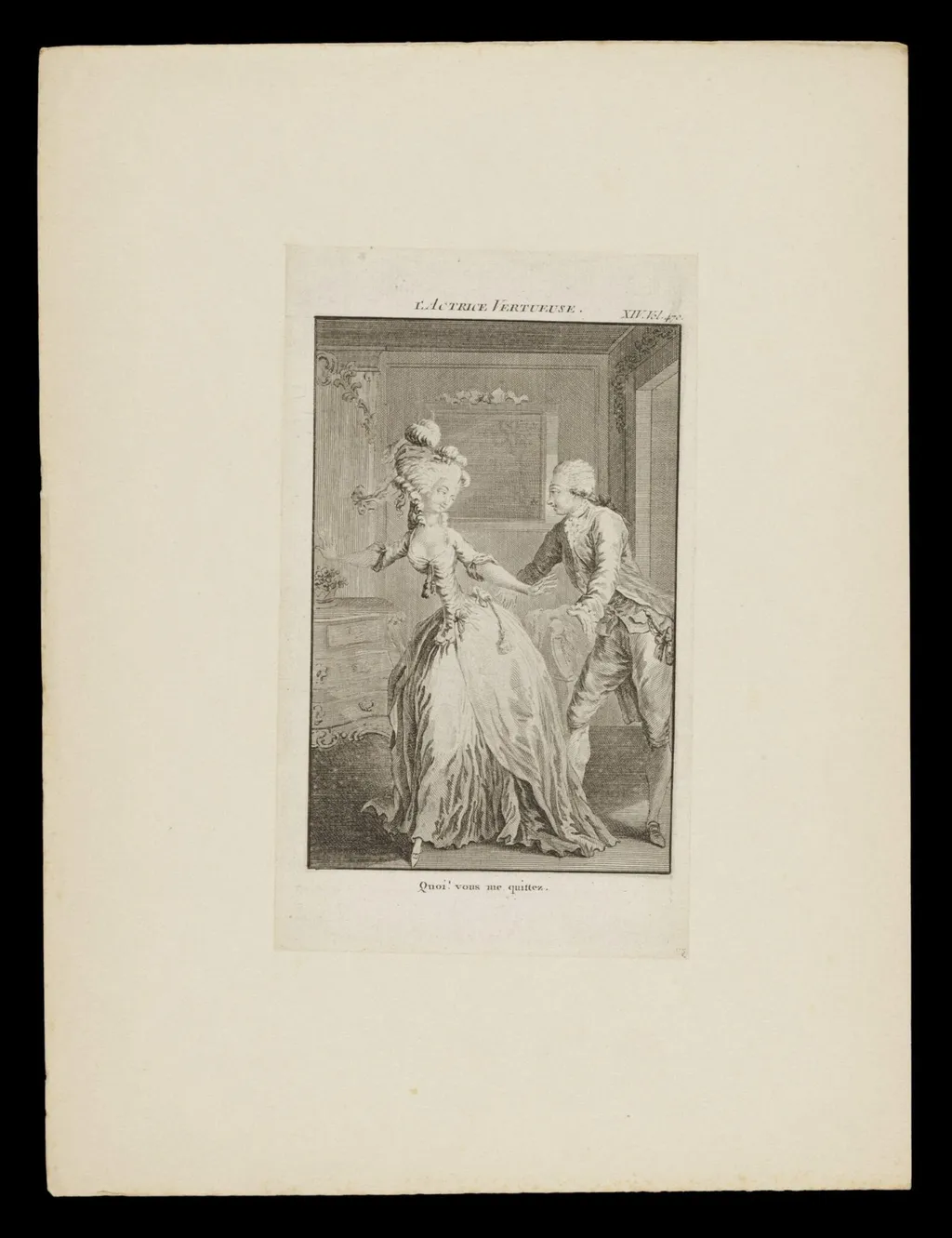
H Beard Print Collection is a print by the Romanticist artist Louis Binet. It is held in the collection of the Victoria and Albert Museum.
About this work
Overview
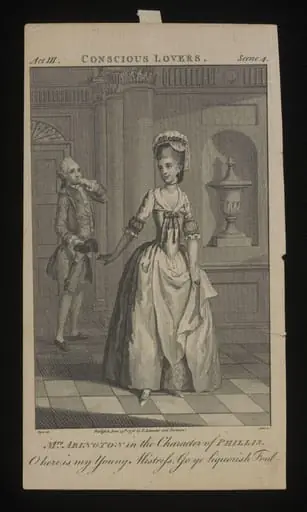
This print, titled 'L'actrice Vertueuse' and numbered XIV in Volume 470 of a French series, captures a moment of emotional tension between two figures.
This print, titled 'L'actrice Vertueuse' and numbered XIV in Volume 470 of a French series, captures a moment of emotional tension between two figures. It belongs to a larger collection of illustrated prints produced in the late 18th or early 19th century, likely intended for public consumption as narrative or moral commentary. The composition centers on a woman resisting a man’s attempt to detain her, framed by a caption that underscores the drama of departure.
Subject & Meaning
The scene portrays a woman decisively withdrawing from a man who seeks to prevent her departure. Her posture and expression convey distress and resolve, while his gesture suggests desperation or entreaty. The French caption, 'Quoi! vous me quittez' ('What! You are leaving me?'), frames the moment as a rupture in a personal relationship, possibly reflecting contemporary ideals of female autonomy or the consequences of broken social bonds.
Technique & Style
Executed in the line engraving tradition, the print uses fine, controlled strokes to define form and emotion. Facial expressions are subtly rendered, and clothing folds are detailed to suggest movement and texture. The composition is tightly focused, eliminating background distractions to heighten psychological intensity. This stylistic restraint aligns with popular French graphic narratives of the period, emphasizing clarity and emotional immediacy.
History & Provenance
The print is part of a serialized publication, likely distributed as a supplement to periodicals or as collectible engravings. Such series were common in France during the post-Revolutionary era, catering to a growing middle-class readership interested in moral tales and theatrical scenes. While the exact publisher is unconfirmed, the style and subject matter suggest association with artists like Louis Binet, known for similar narrative prints.
Context
Produced during a time of shifting gender roles and social norms, the image resonates with broader cultural debates about female agency and domestic conflict. Theatrical themes were frequently adapted into prints, mirroring popular stage dramas that explored virtue, betrayal, and emotional resilience. This print thus functions not merely as illustration but as a visual commentary on evolving societal expectations.
Legacy
Though not widely exhibited today, such prints contributed to the visual language of 19th-century French popular culture. They influenced later illustrated journalism and early comic sequences by demonstrating how emotion and narrative could be conveyed through static imagery. Their survival in private and institutional collections offers insight into the everyday visual consumption of the era.
Artist & collection


 H Beard Print Collection
 H Beard Print Collection
 Frontispiece for "La Reliure française"
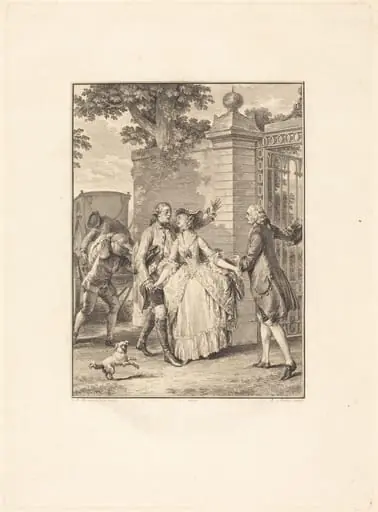 La confiance des belles âmes
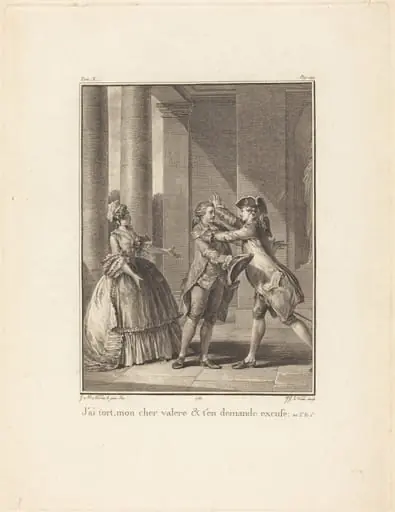 J'ai tort, mon cher Valère, et t'en demande excuse
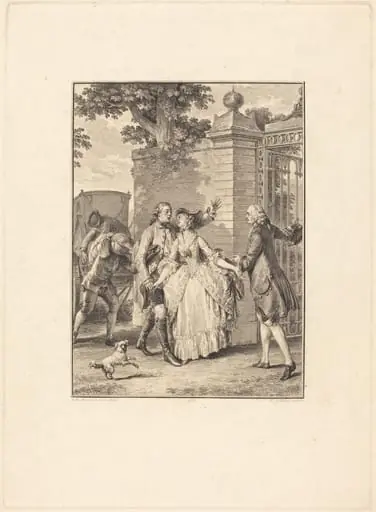 La confiance des belles âmes
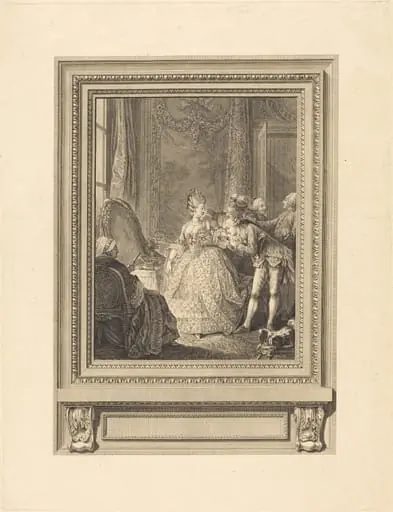 Le jour
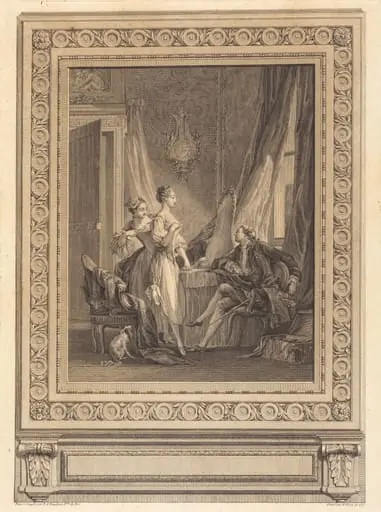 La toilette
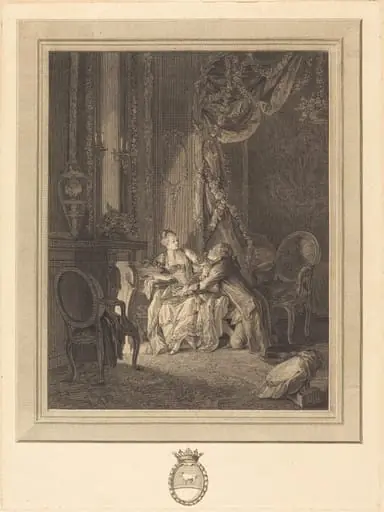 Le danger du tete-a-tete
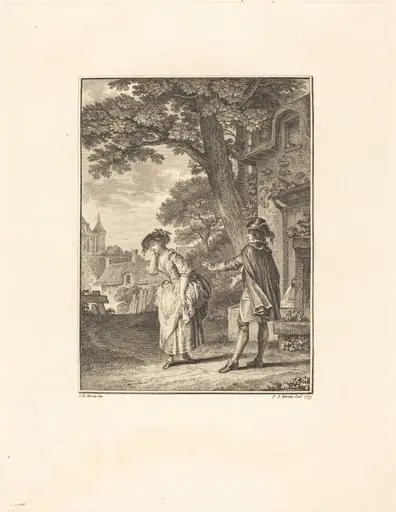 Le Devin du Village (Colette Weeping)
 H Beard Print Collection
 H Beard Print Collection