Artwork
History of the Corcoran Gallery of Art
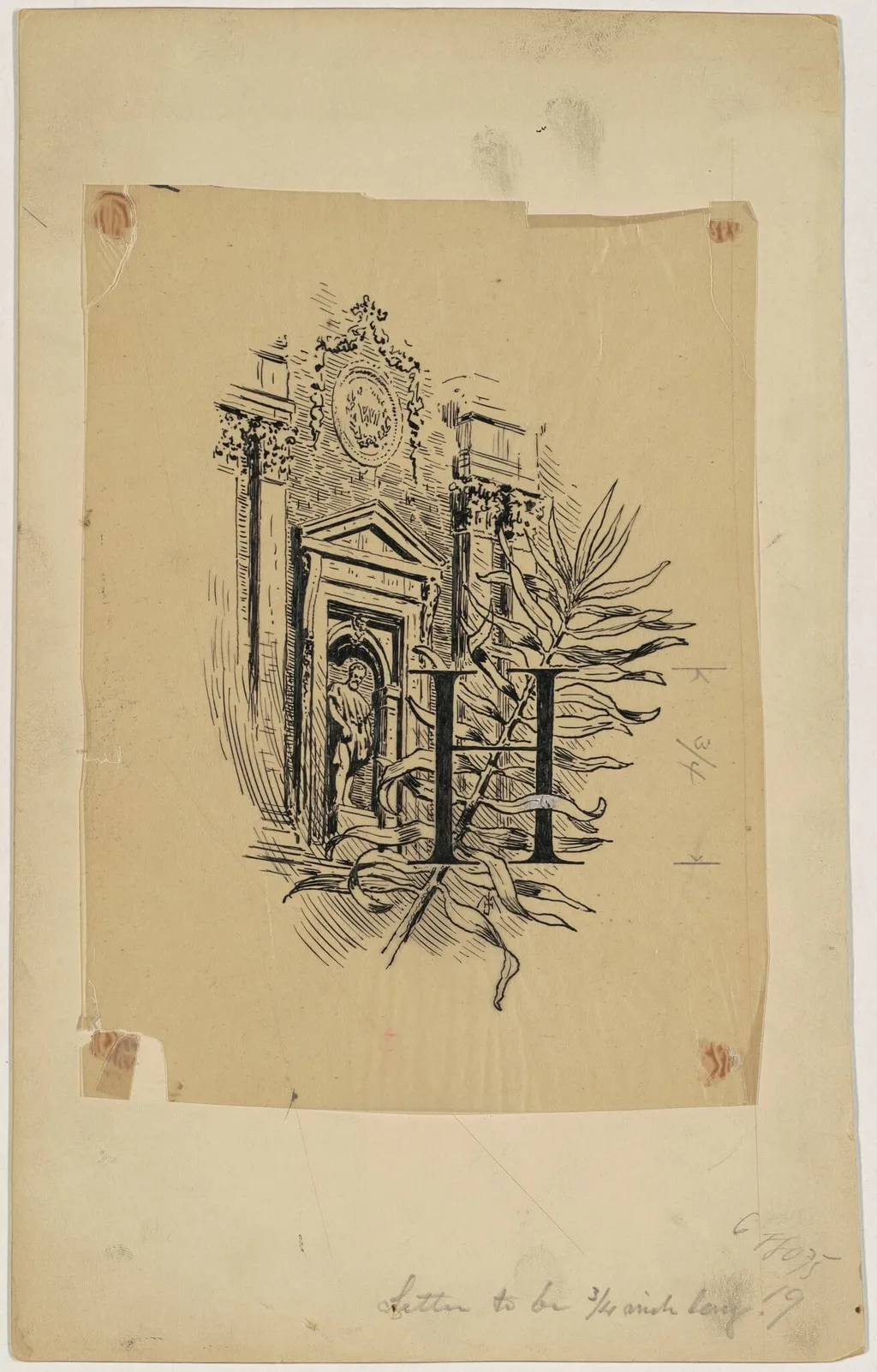
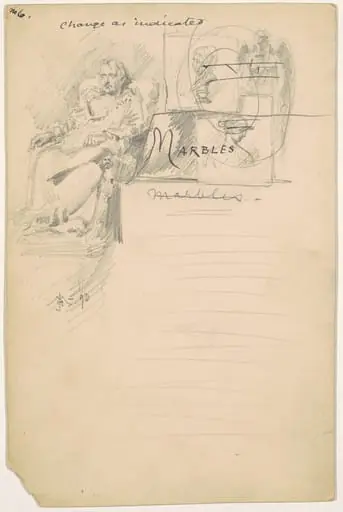
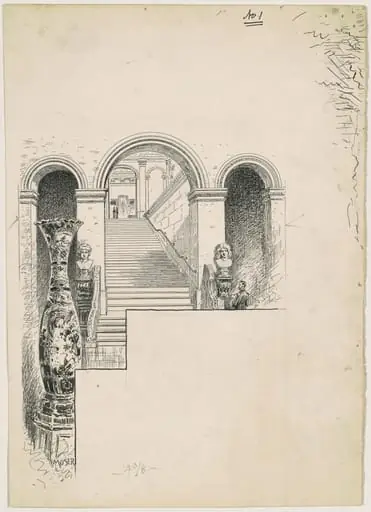
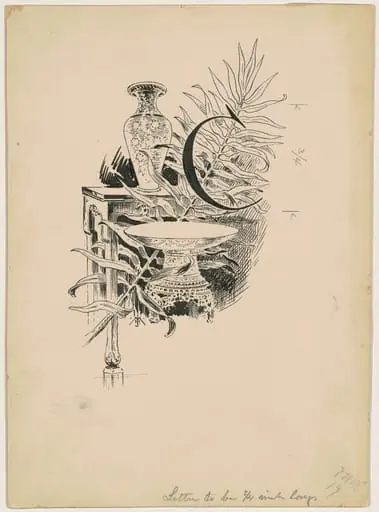
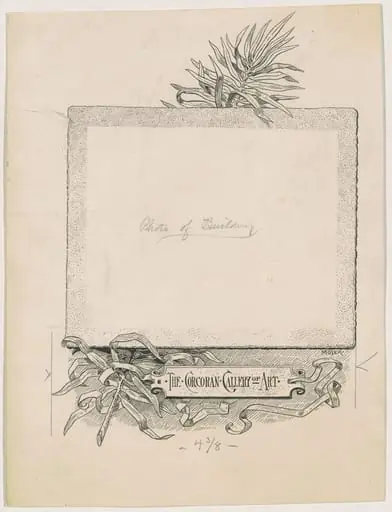
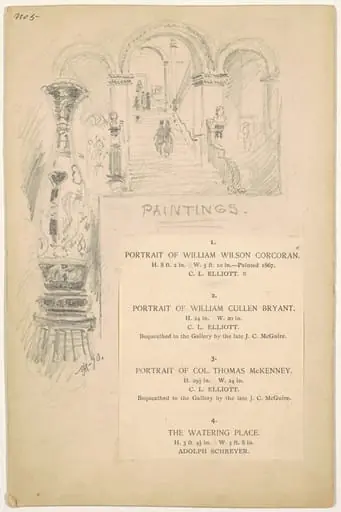
History of the Corcoran Gallery of Art is an ink drawing by the Impressionist artist James Henry Moser. It dates from 1890 and is held in the collection of the National Gallery of Art.
About this work
Overview
Executed in pen and black ink on tracing paper, the work is partially mounted on paperboard and bears visible repairs along its edges.
Created in 1890 by James Henry Moser, this ink drawing depicts the Corcoran Gallery of Art in its early years. Executed in pen and black ink on tracing paper, the work is partially mounted on paperboard and bears visible repairs along its edges. The composition captures the building’s vertical form with minimal detail, emphasizing structure over ornamentation, and reflects the artist’s interest in architectural documentation through rapid, expressive mark-making.
Subject & Meaning
The drawing centers on the Corcoran Gallery’s original building, its clock tower rising above a narrow facade. A solitary figure stands near the entrance, barely discernible in shadow, suggesting quiet solitude or the anonymity of institutional life. A gnarled, leafless tree wraps its roots around the building’s base, implying a relationship between nature and human creation—perhaps hinting at time’s slow encroachment on cultural institutions.
Technique & Style
Moser employed swift, sketchy lines to suggest form and depth, avoiding polished finish in favor of immediacy. Cross-hatching and varying line weight create subtle gradations of light and shadow, particularly around the building’s facade and the tree’s twisted roots. The use of tracing paper allowed for layered transparency, while the paper’s age and taped repairs reveal the work’s function as a working study rather than a finished piece.
History & Provenance
The drawing was made in 1890, during the gallery’s first decade of operation, likely as a preparatory study or personal record. Its fragile materials and visible mending suggest it was handled frequently, possibly used in lectures or archival contexts. No record of public exhibition exists, but its preservation within institutional collections indicates its value as a documentary artifact of the gallery’s early physical presence.
Context
At the time of its creation, the Corcoran Gallery was a newly established cultural institution in Washington, D.C., seeking to define its identity amid a growing national interest in public art. Moser’s focus on the building’s austere architecture—rather than its collections—reflects a period when physical space was as significant as the art within it, symbolizing the gallery’s role as a civic monument.
Legacy
Though not widely known outside archival circles, the drawing endures as a quiet testament to the Corcoran’s origins. Its unadorned depiction of the building, framed by a bare tree and a solitary figure, offers a contemplative counterpoint to later, more celebratory images of the institution. It remains a material trace of the gallery’s formative years, preserved through its physical wear and modest execution.
Artist & collection


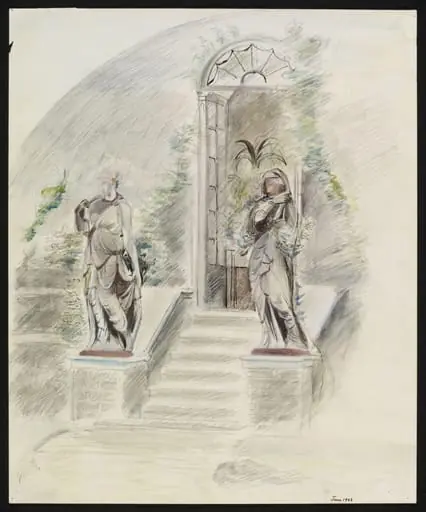 Grove House, Regent's Park
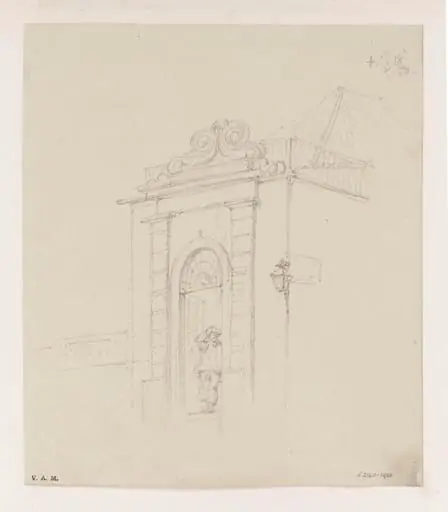 A figure in a doorway, Macau
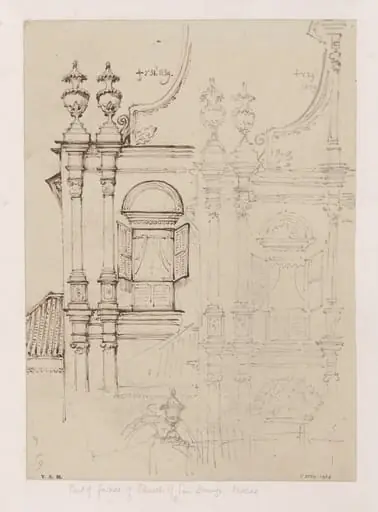 The church of S. Domingos, Macau
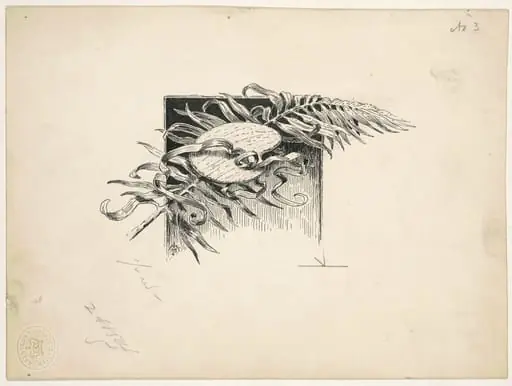 Palette
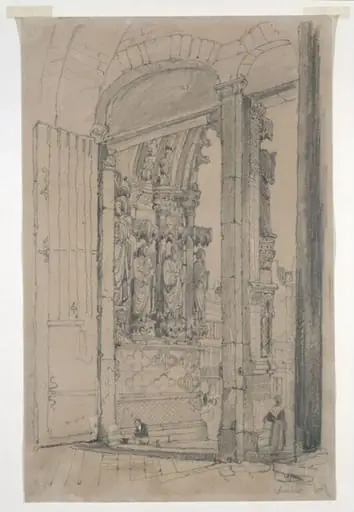 Amiens Cathedral
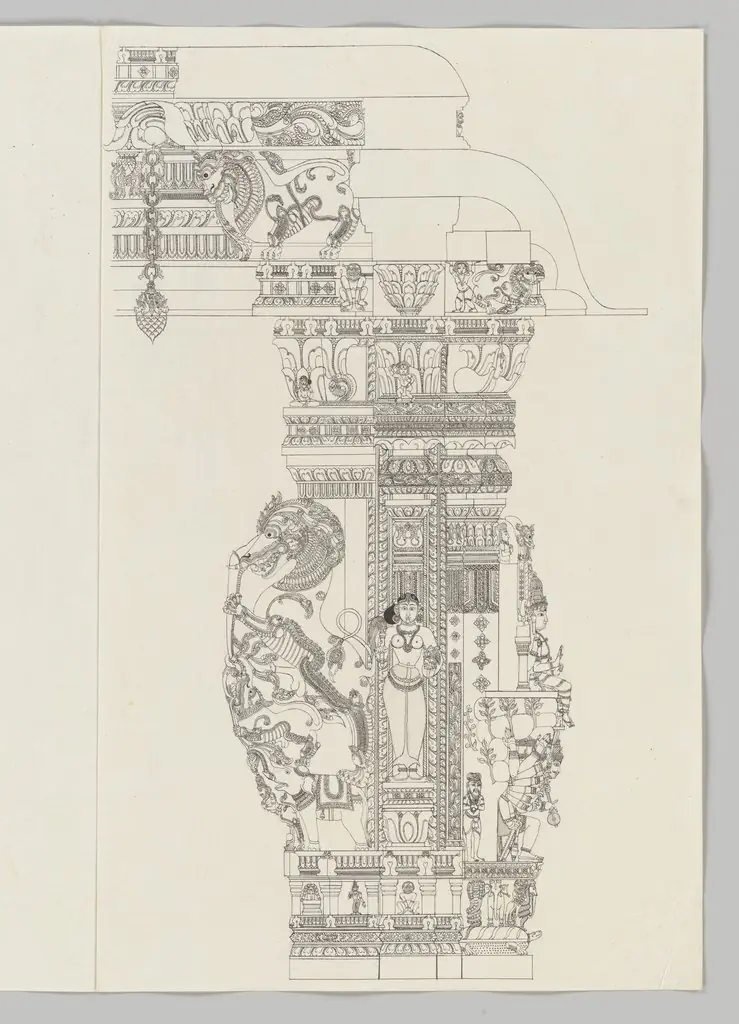 Shiva Ravananugrahamurti; woman holding a flywhisk; rearing yali
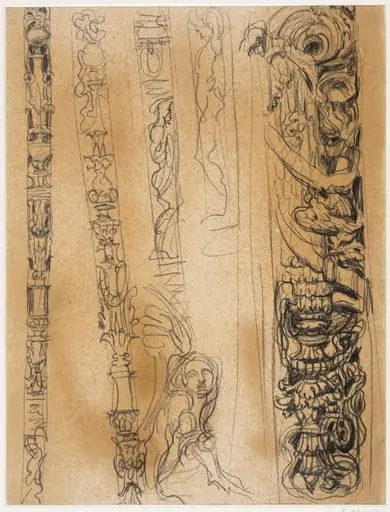 Study for Dorchester House
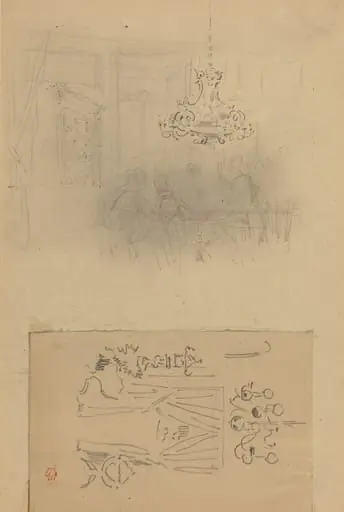 A Gathering in an Interior; A Curtained Doorway
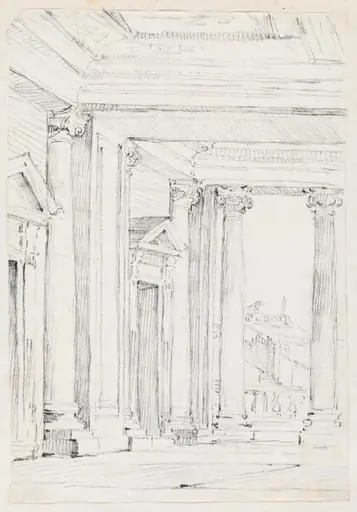 Portico of the Palazzo Nuovo, on the Campidoglio
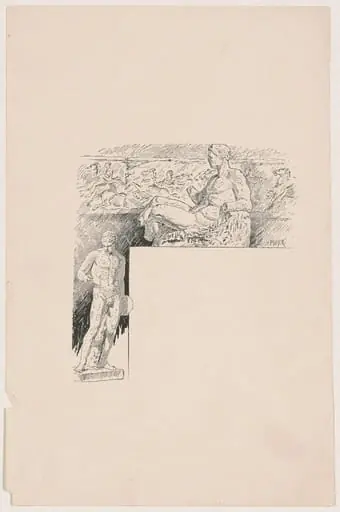 Casts from Antique Sculpture: The Parthenon