Artwork
Cloisonné
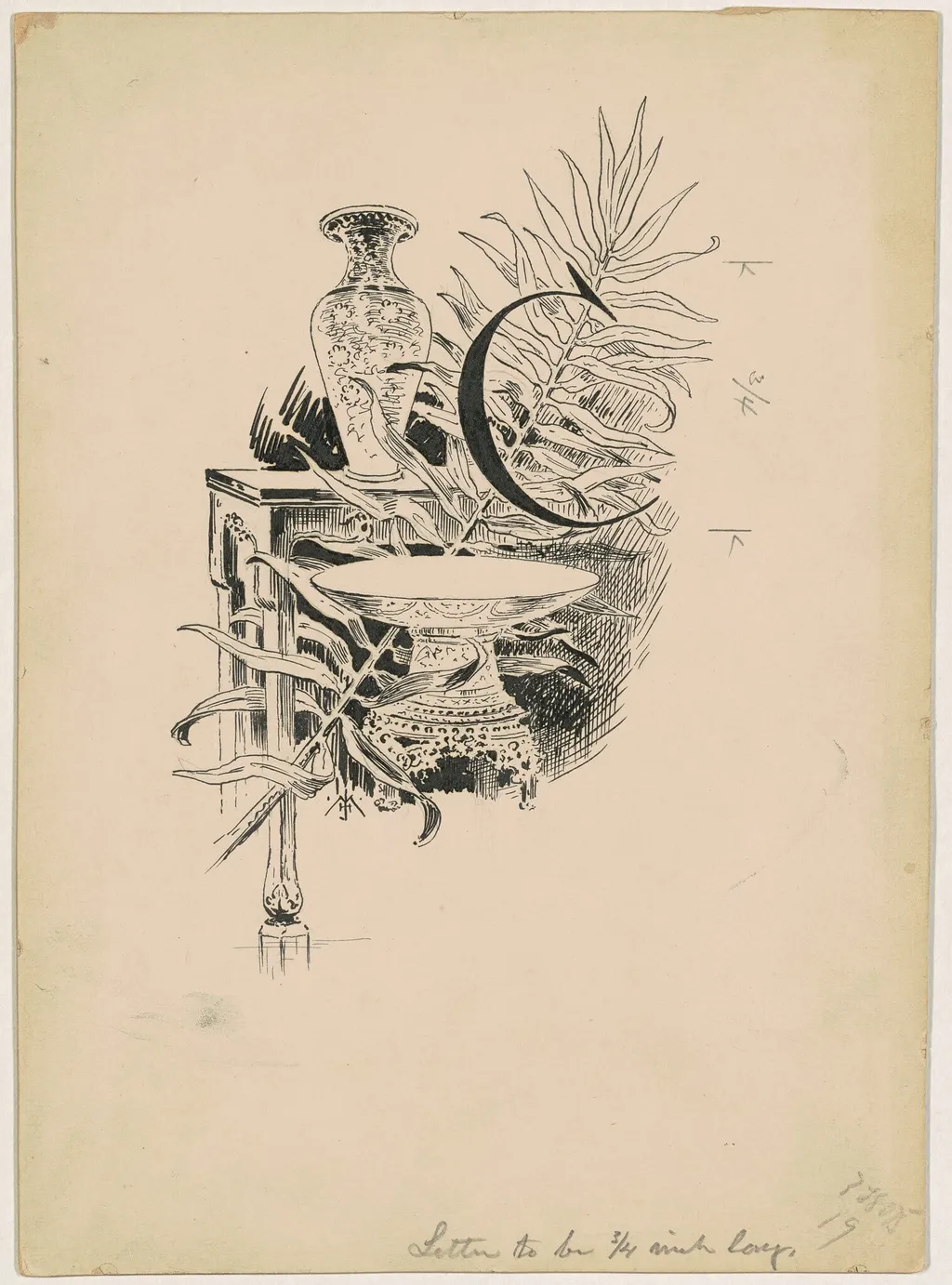
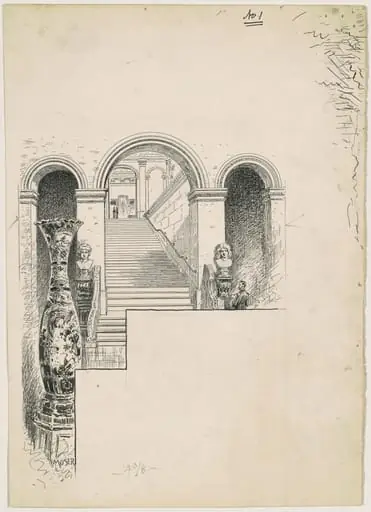
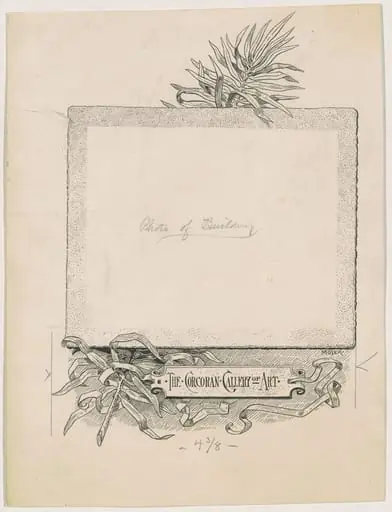
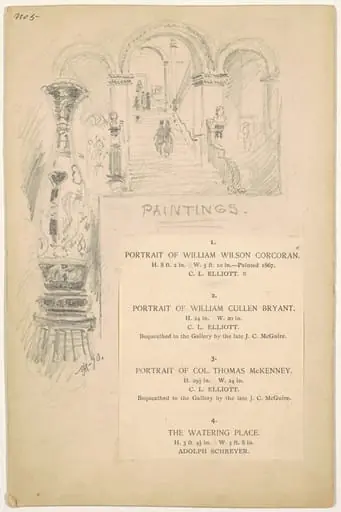
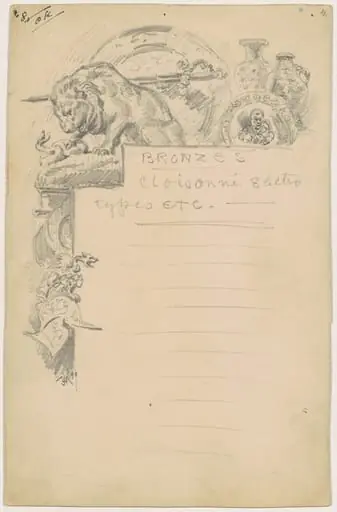
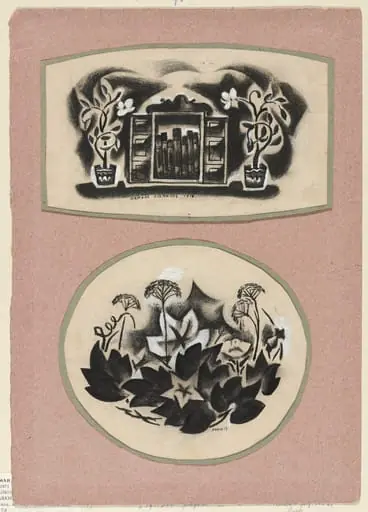
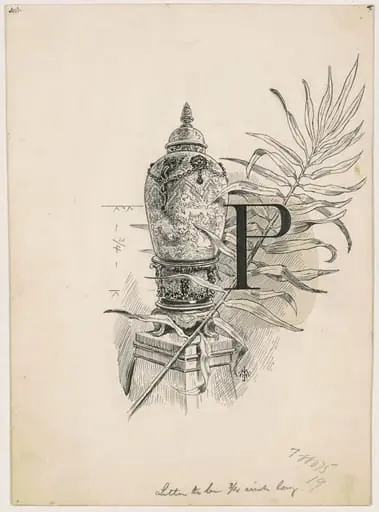
Cloisonné is an ink drawing by the Impressionist artist James Henry Moser. It dates from 1890 and is held in the collection of the National Gallery of Art.
About this work
Overview
The title, *Cloisonné*, references a decorative enamel technique, yet the image itself is unadorned and informal, contrasting with its elevated name.
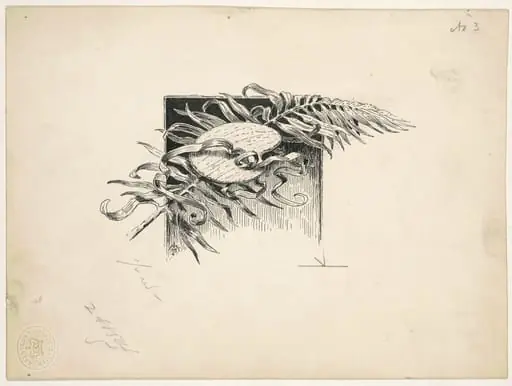
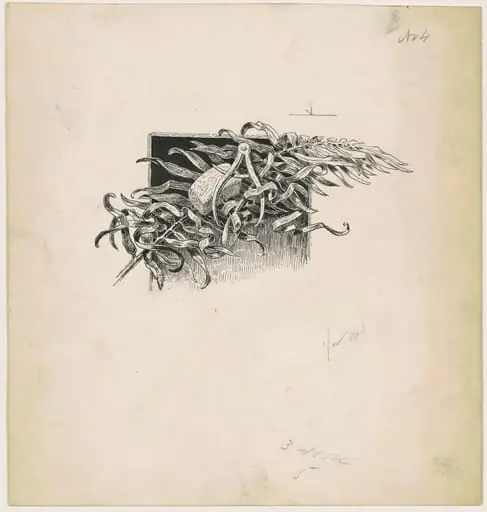
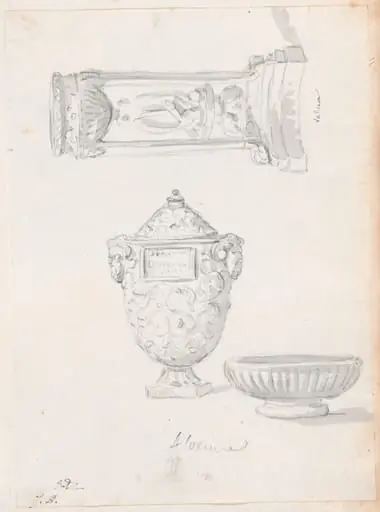
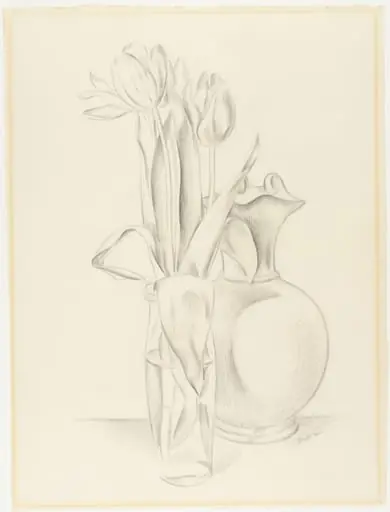
Created in 1890 by James Henry Moser, this drawing is executed in pen and black ink over graphite on paperboard. It depicts a modest still life arranged on a tabletop, rendered with rapid, uneven lines that suggest spontaneity rather than polished finish. The title, *Cloisonné*, references a decorative enamel technique, yet the image itself is unadorned and informal, contrasting with its elevated name.
Subject & Meaning
The composition includes a slender, ornate vase, a pitcher with a pronounced spout, and a potted plant featuring elongated, pointed leaves. These ordinary domestic objects are arranged without ceremony, suggesting an observational sketch rather than a formal composition. The title’s reference to cloisonné may imply an interest in surface detail or cultural motifs, though the drawing itself avoids ornamentation, focusing instead on form and structure.
Technique & Style
Moser employs cross-hatching to model volume and suggest texture, layering fine, intersecting lines to build shadow and solidity. The underlying graphite guides the pen strokes, which remain loose and gestural, preserving the immediacy of the sketch. Edges are deliberately imperfect, and contours are not fully resolved, reinforcing the sense of a working drawing rather than a finished piece.
History & Provenance
The work is attributed to James Henry Moser, an American artist active in the late 19th century, known for his drawings and illustrations. No documented exhibition or ownership history is widely recorded for this piece. Its survival as a standalone drawing suggests it may have been part of a private study or preparatory collection, reflecting the artist’s routine engagement with everyday forms.
Context
In the 1890s, American artists increasingly turned to intimate, unidealized subjects as part of a broader shift toward realism and direct observation. Moser’s sketch aligns with this trend, rejecting grandeur in favor of quiet, unembellished arrangements. The use of ink and graphite on paperboard was common among illustrators seeking speed and flexibility, making this work part of a practical, working tradition rather than a ceremonial one.
Legacy
Though not widely exhibited or reproduced, the drawing exemplifies the value of informal study in artistic practice. Its unpolished quality underscores the importance of sketching as a means of understanding form, light, and composition. Moser’s approach reflects a broader 19th-century emphasis on observation over idealization, preserving a moment of quiet, unmediated looking.
Artist & collection