Artwork
Choueifat: Tallet Al-Oumara
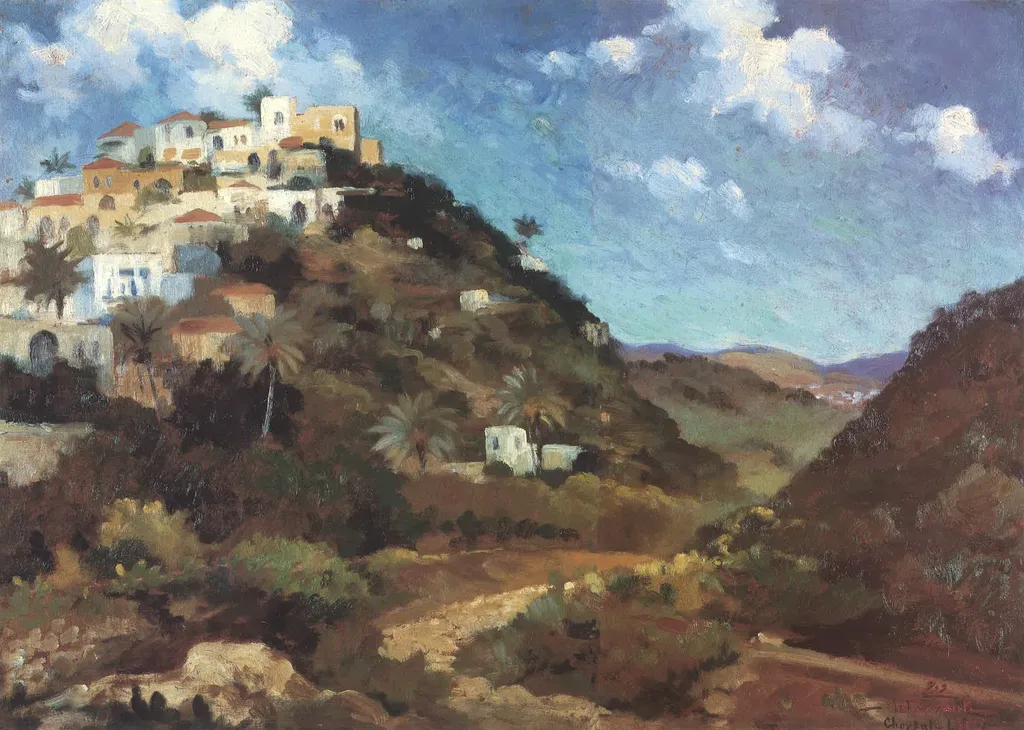
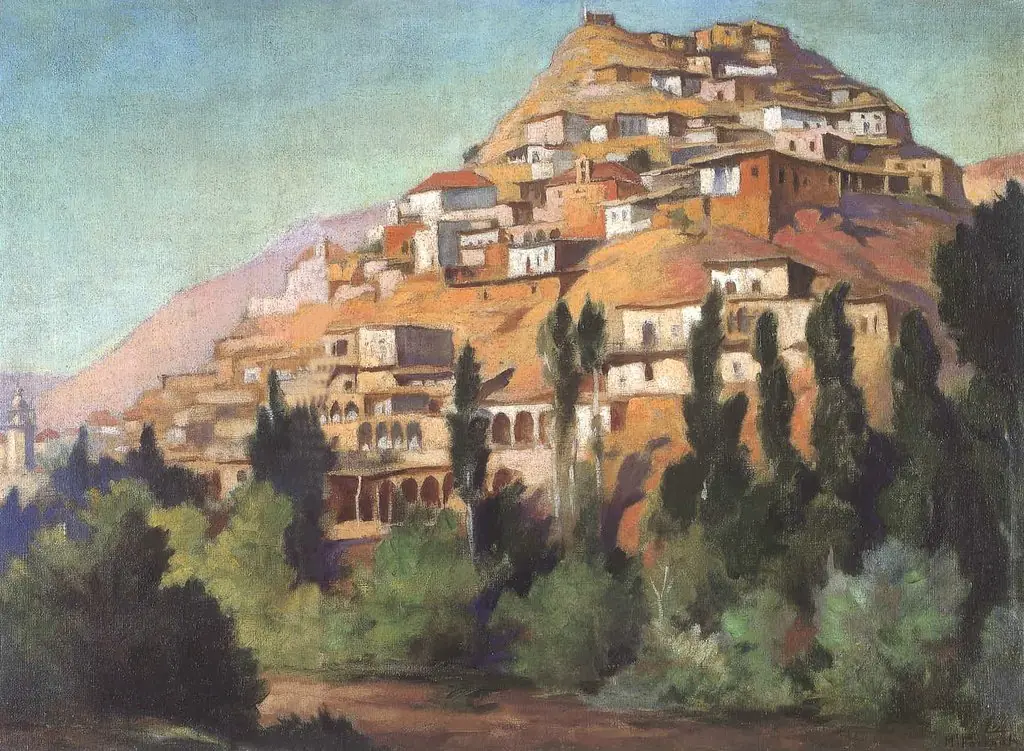
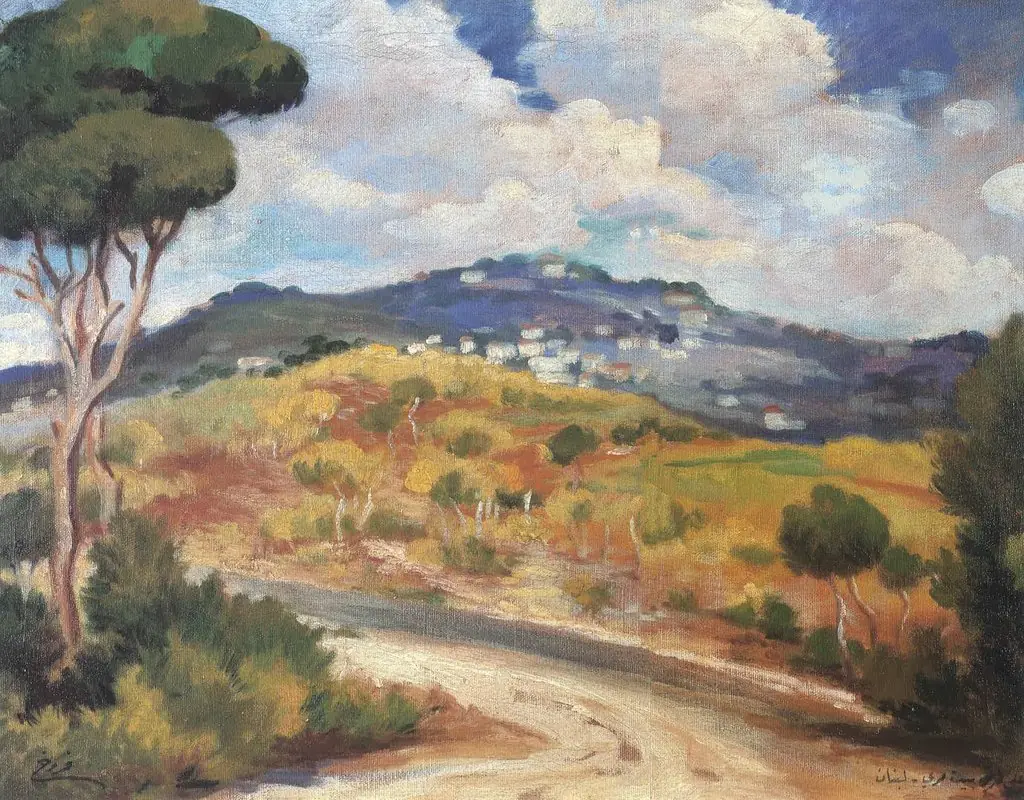
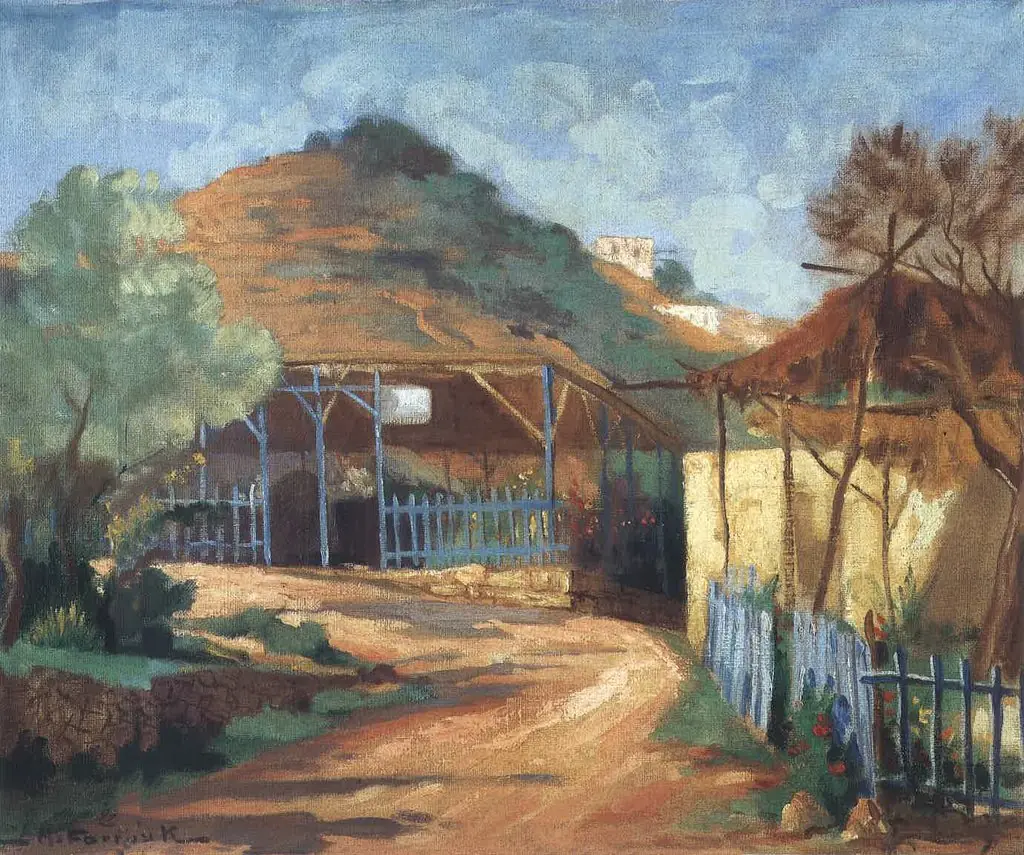
Choueifat: Tallet Al-Oumara is an oil painting by the Orientalist artist Moustafa Farroukh. It dates from 1939 and is held in the collection of the Sursock Museum.
About this work
Overview
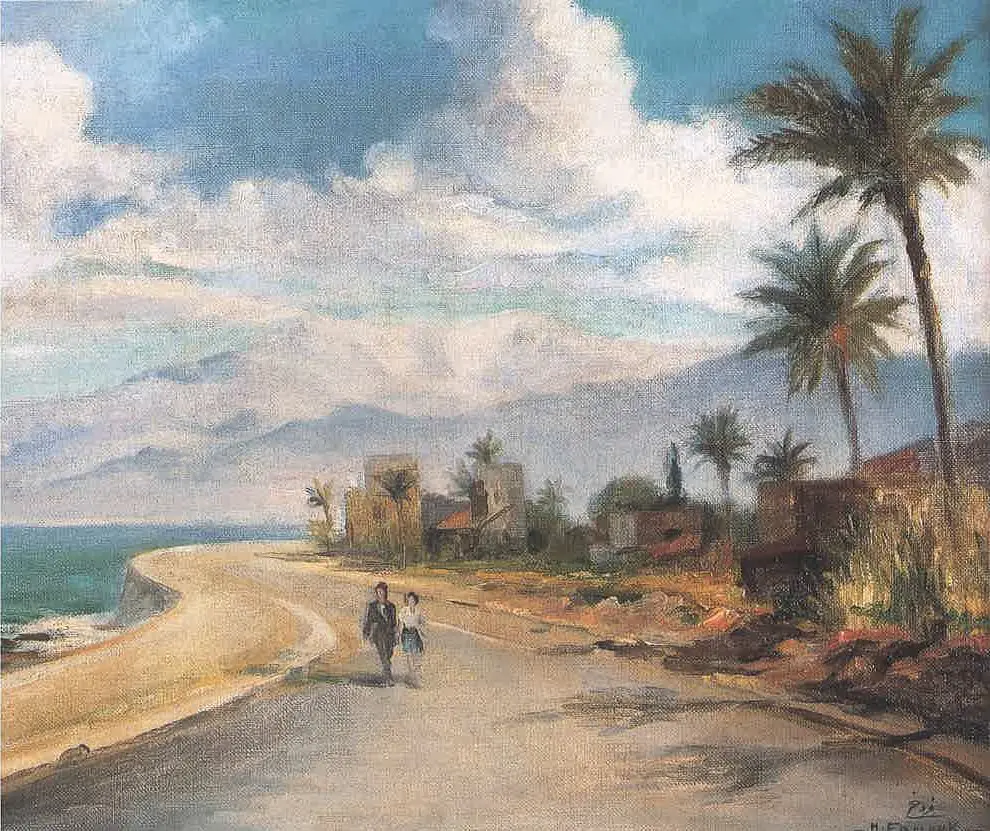
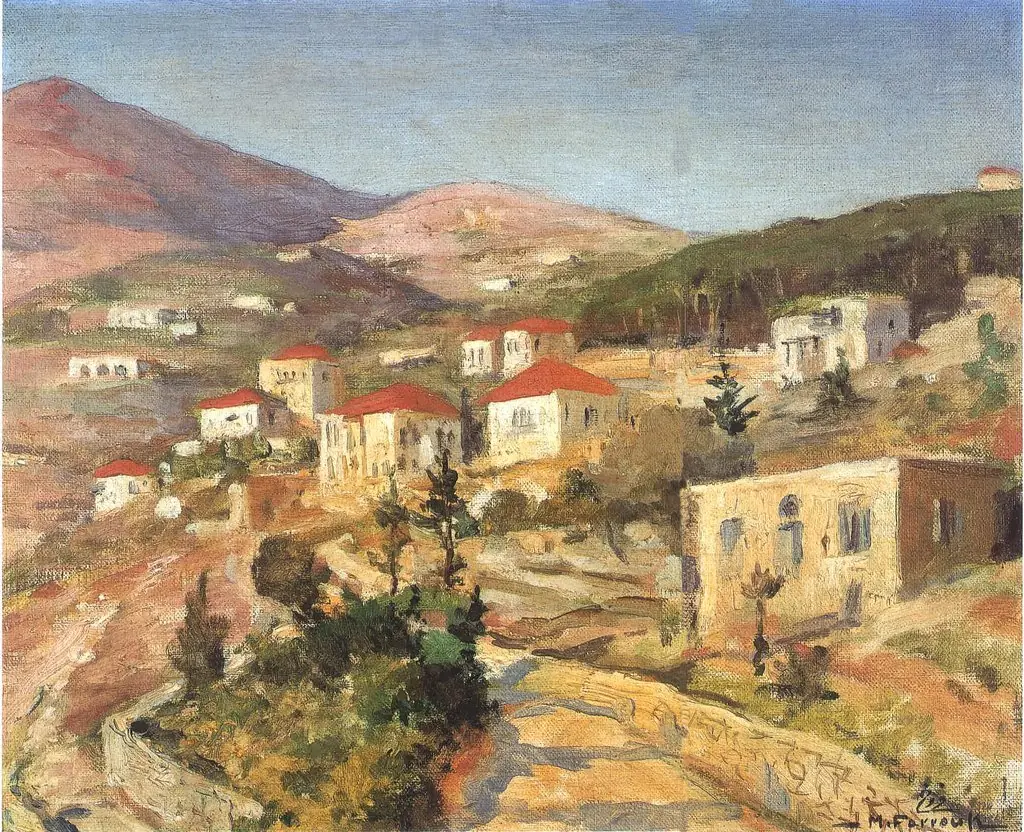
Choueifat: Tallet Al-Oumara, created circa 1939 by Lebanese artist Moustafa Farroukh, is a plywood painting depicting a serene hillside landscape of Choueifat.
Subject & Meaning
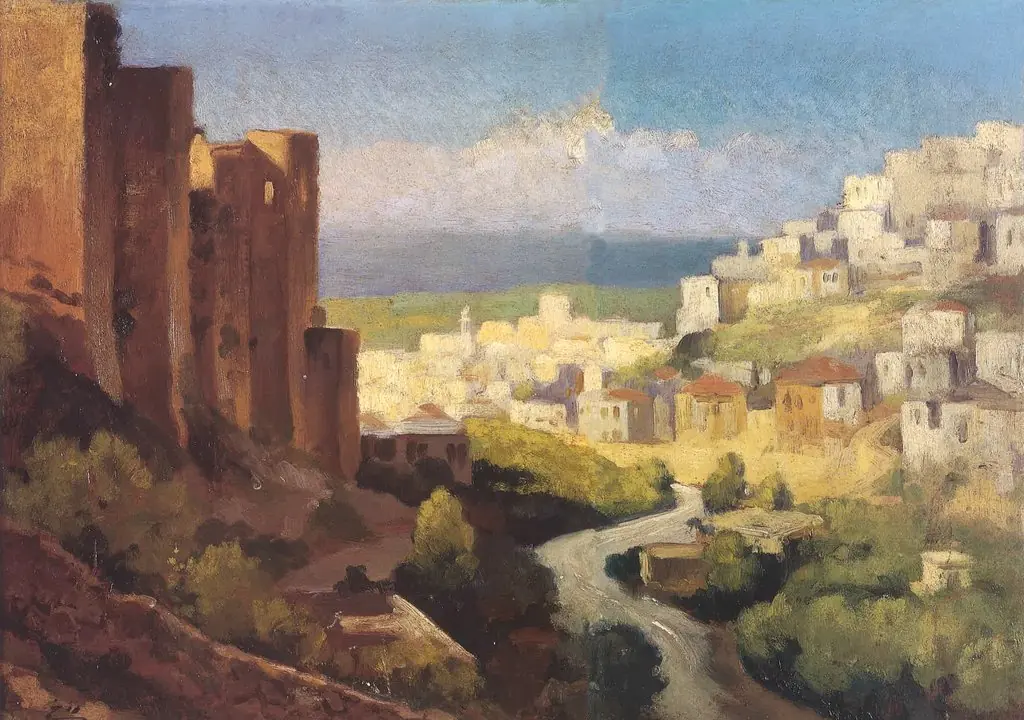
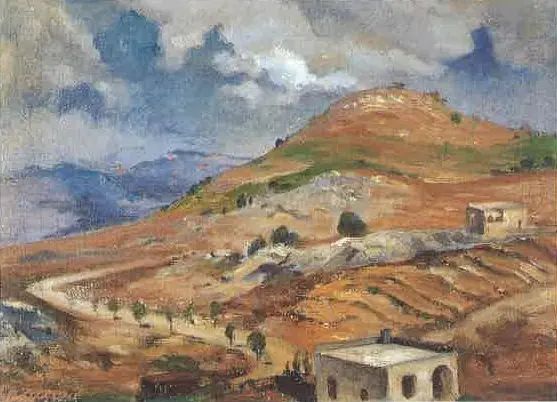
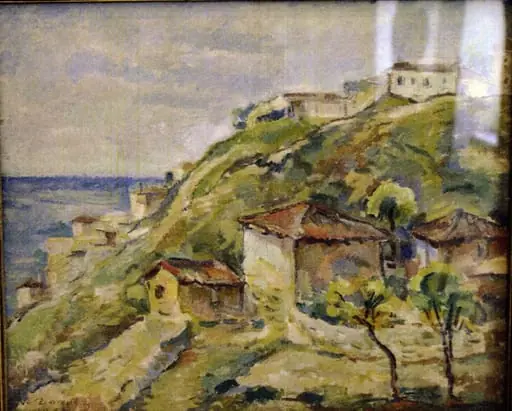
The work portrays a tranquil Lebanese landscape with palm trees, bushes, and clustered buildings featuring white and tan facades, some topped with red roofs, set against a blue sky with white clouds. A winding dirt path adds depth to the scene, evoking a sense of peacefulness.
Technique & Style
Farroukh's use of color and composition in this piece achieves a sense of depth and dimensionality. Characteristic of his style, the painting may also employ chiaroscuro, though this specific aspect is not explicitly highlighted in the work's primary description.
History & Provenance
Part of Moustafa Farroukh's extensive oeuvre of over 2,000 paintings, Choueifat: Tallet Al-Oumara is currently held in the Sursock Museum's collection. The artist was also a prolific writer, having published five books on art.
Context
This painting aligns with the Orientalist movement, a 19th- and early 20th-century artistic trend characterized by Western and Middle Eastern artists depicting Middle Eastern and North African subjects, often emphasizing exoticism and tranquility.
Legacy
As one of Lebanon's leading 20th-century painters, Farroukh's contributions to art extend beyond his paintings to his written works, influencing subsequent generations of artists and scholars.
Artist & collection
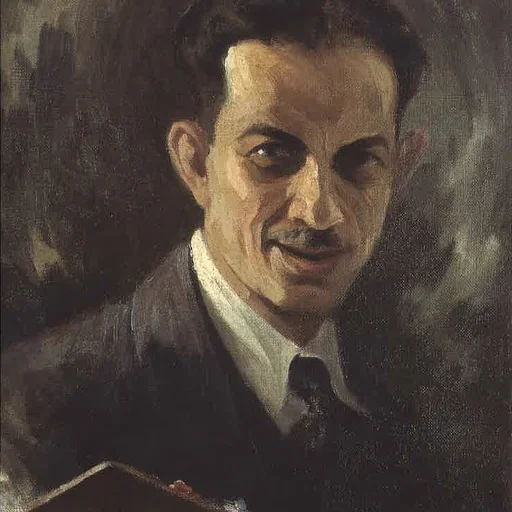
Artist
Moustafa Farroukh (Arabic: مصطفى فروخ; 1901 – 1957) was one of Lebanon's most prominent painters of the 20th century.