Artwork
Renaissance
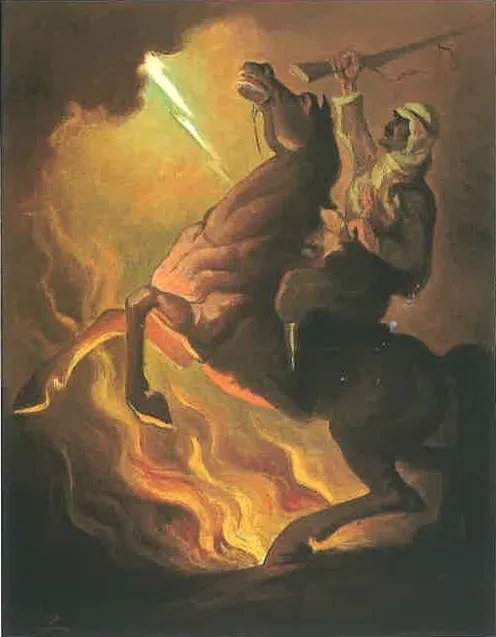
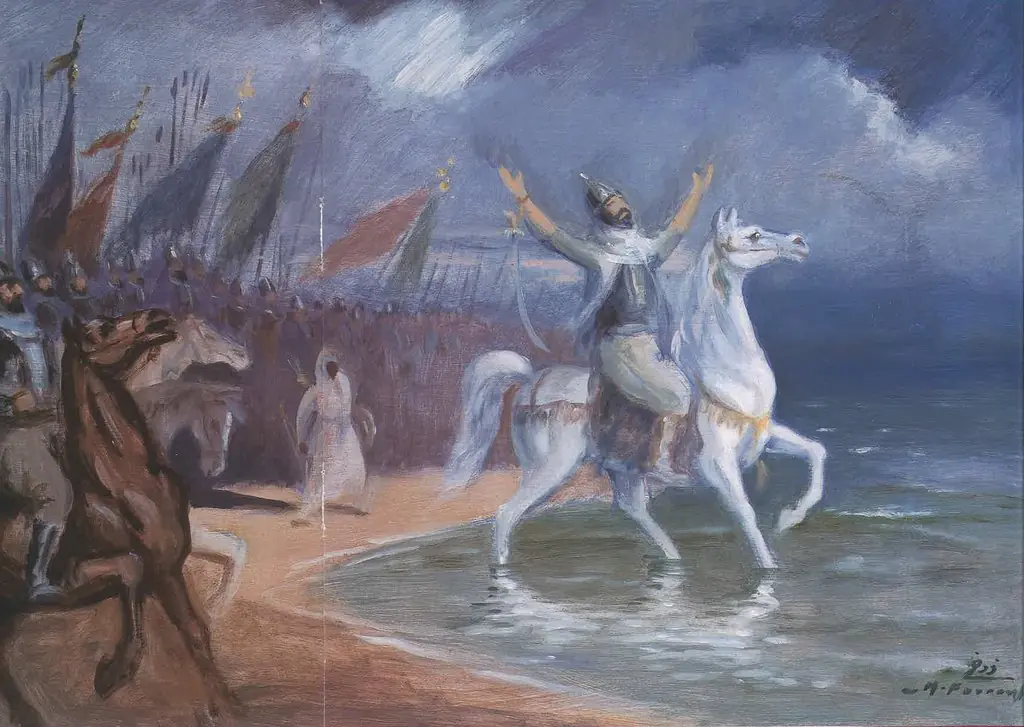
Renaissance is an oil painting by Moustafa Farroukh. It dates from 1939 and is held in the collection of the Sursock Museum.
About this work
Overview
Painted around 1939 by Lebanese artist Moustafa Farroukh, *Renaissance* is an oil-on-canvas work that blends symbolic imagery with dramatic composition.
Painted around 1939 by Lebanese artist Moustafa Farroukh, *Renaissance* is an oil-on-canvas work that blends symbolic imagery with dramatic composition. It resides in the Sursock Museum’s collection and reflects Farroukh’s engagement with both regional identity and European artistic traditions. Though titled with reference to a historical period, the painting’s content is not a literal revival but a stylized, emotionally charged scene rooted in contemporary sensibilities.
Subject & Meaning
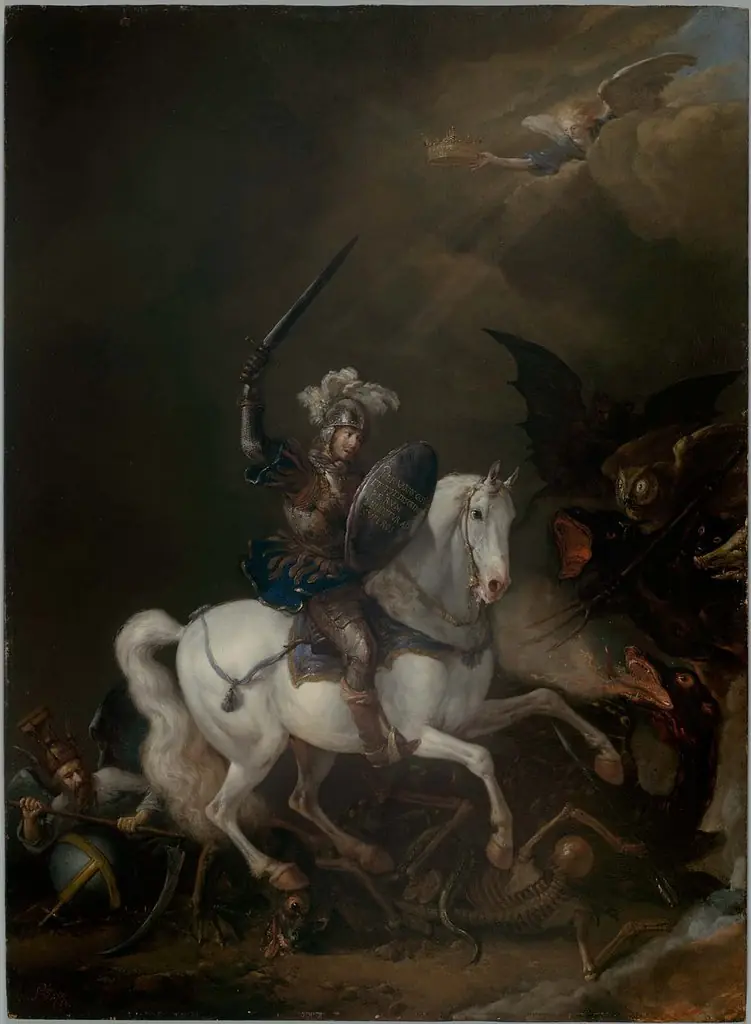
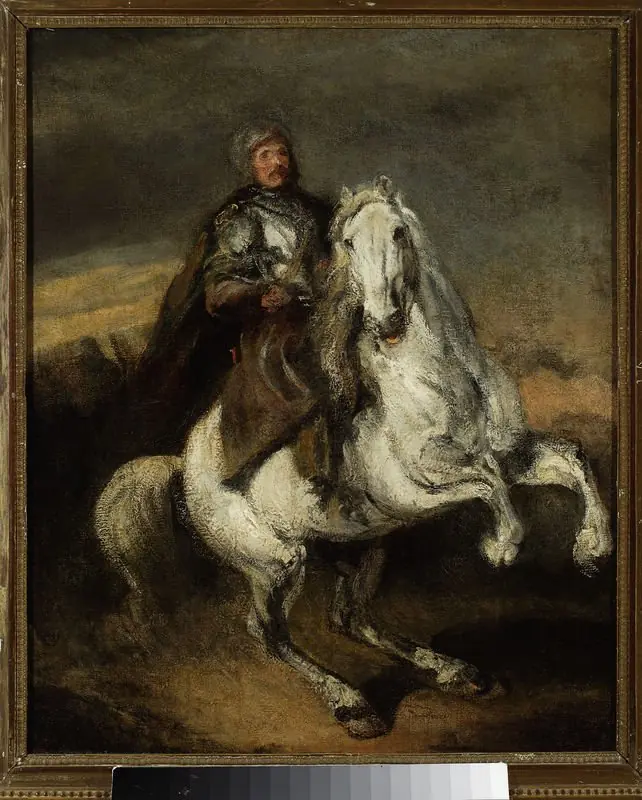
The painting presents a silhouetted jockey atop a rearing Arabian horse, sword raised, against a stormy sky streaked with fire and lightning. The figures are rendered as bold forms against a luminous, chaotic backdrop, suggesting conflict or transcendence. The horse, a symbol of nobility in Middle Eastern culture, and the warrior-like rider evoke mythic or allegorical themes, possibly reflecting inner struggle, resilience, or the tension between tradition and modernity.
Technique & Style
Farroukh employs chiaroscuro to heighten emotional intensity, contrasting deep shadows with vivid highlights that define the horse and rider. The brushwork is expressive yet controlled, with thick impasto in the flames and smoother gradients in the clouds. Color is used symbolically rather than naturally—fiery oranges and reds dominate, while the figures remain in near-black silhouette, emphasizing their monumental presence against the elemental forces surrounding them.
History & Provenance
Created during Farroukh’s most active period, *Renaissance* was produced alongside over two thousand other works and several written publications. It entered the Sursock Museum’s collection in the mid-20th century, where it remains part of its core holdings of modern Lebanese art. The painting’s survival and preservation reflect its recognition as a significant example of early 20th-century Lebanese modernism, though little documentation exists regarding its initial exhibition or reception.
Context
Farroukh painted *Renaissance* during a time of cultural redefinition in Lebanon, as artists sought to articulate a national identity distinct from colonial influences. While drawing on European techniques like chiaroscuro and Romantic drama, he infused them with local symbols—the Arabian horse, desert landscapes, and mythic archetypes—to create a visual language that was both cosmopolitan and rooted in regional experience.
Legacy
Though not widely reproduced outside Lebanon, *Renaissance* is regarded within Lebanese art history as a pivotal work that expanded the possibilities of figurative painting in the region. Farroukh’s synthesis of Western stylistic methods with indigenous motifs influenced later generations of artists seeking to balance global aesthetics with local narratives, cementing his role as a foundational figure in modern Lebanese art.
Artist & collection
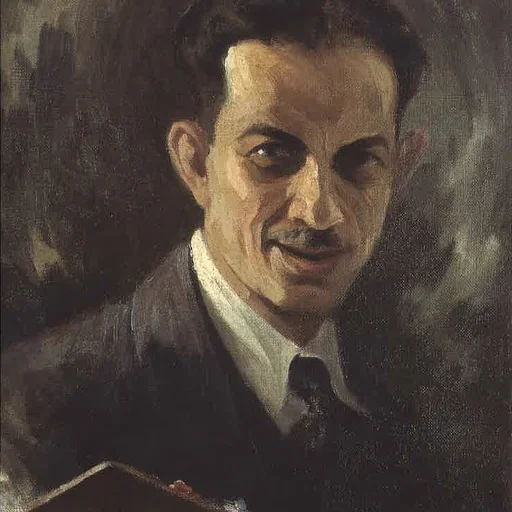
Artist
Moustafa Farroukh (Arabic: مصطفى فروخ; 1901 – 1957) was one of Lebanon's most prominent painters of the 20th century.