Artwork
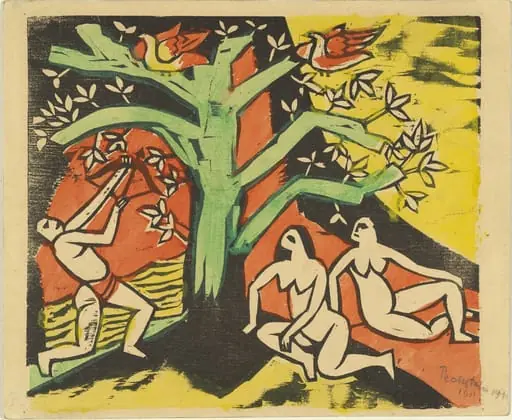
Finding of Moses (Auffindung des Moses)
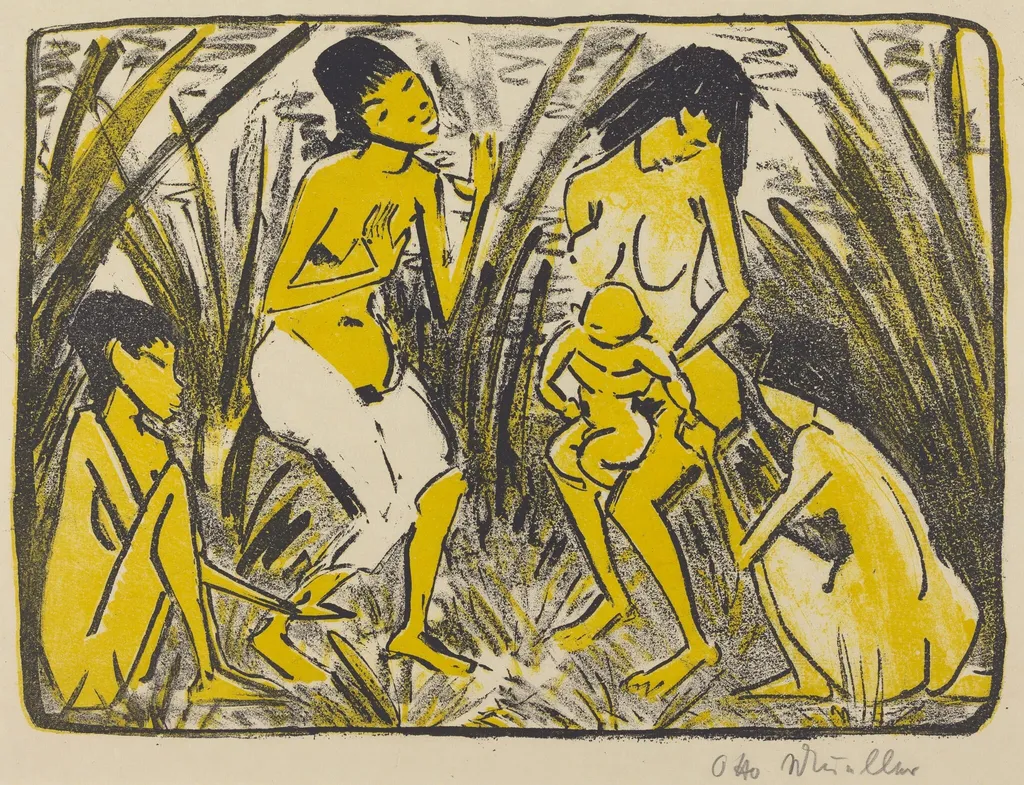
Finding of Moses (Auffindung des Moses) is an ink print by Otto Mueller. It dates from 1920 and is held in the collection of the National Gallery of Art.
About this work
Overview
Finding of Moses (Auffindung des Moses) is a lithograph created by Otto Mueller around 1920, utilizing black and yellow inks on wove paper. Associated with the Die Brücke expressionist movement, this print exemplifies the group's characteristic expressive style.
Subject & Meaning
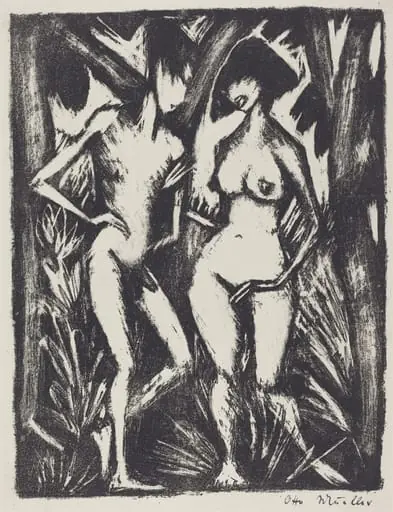
The work depicts a biblical scene, interpreted with restraint yet emotional depth. Three nude figures are set in a wooded area: a woman holding a baby (Moses) on the right, and a man nearby with raised arms, suggesting a moment of discovery.
Technique & Style
Mueller employed bold forms and simplified composition, hallmarks of Die Brücke. The print features thick black lines for tall trees, yellow shading, and rough edges, combining to create a striking visual effect. The medium of lithography allowed for expressive, bold color application.
History & Provenance
Created circa 1920 by Otto Mueller, a key figure in Die Brücke and noted for his printmaking and figural works. Specific provenance details are not provided.
Context
Part of the early 20th-century expressionist movement in Germany, Finding of Moses reflects the era's emphasis on emotional intensity and simplification of form. Mueller's use of lithography also highlights the period's experimentation with print techniques.
Legacy
As a work by a prominent Die Brücke artist, Finding of Moses contributes to the movement's legacy in expressing intense emotion through simplified, bold artistic forms. Its impact lies within the broader context of early 20th-century German expressionism.
Own this work as a print
Artist & collection

Artist
Otto Mueller (16 October 1874 – 24 September 1930) was a German painter and printmaker of the Die Brücke expressionist movement.

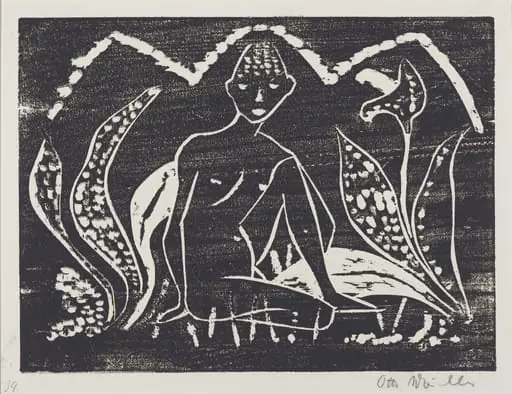
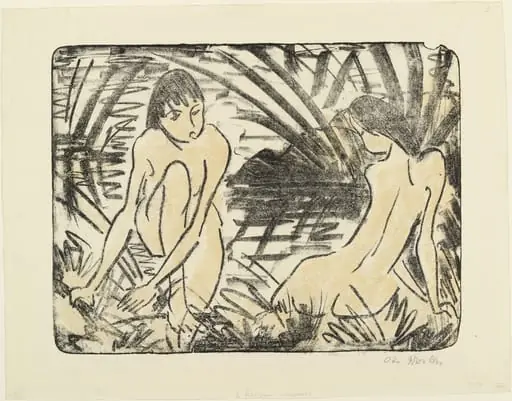 Untitled
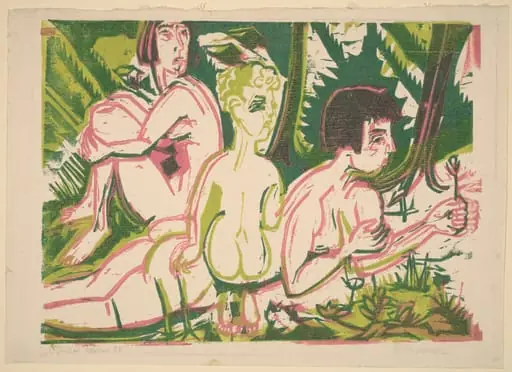 Nude Women with a Child in the Forest
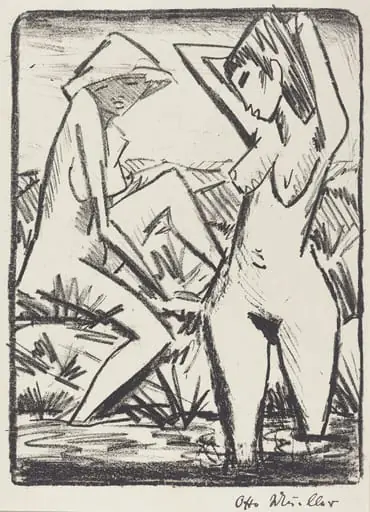 Standing Girl in Water and the Other Sitting on Shore (Im Wasser stehendes und am Ufer sitzendes Madchen mit Hut)
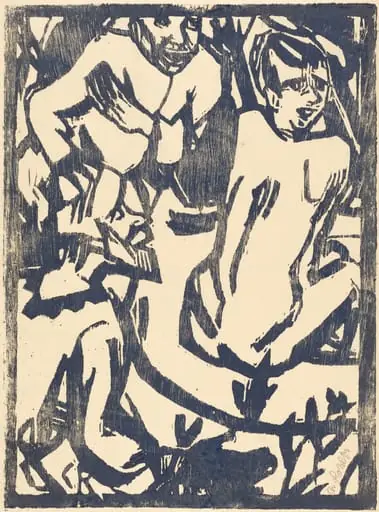 Susanna and the Elders
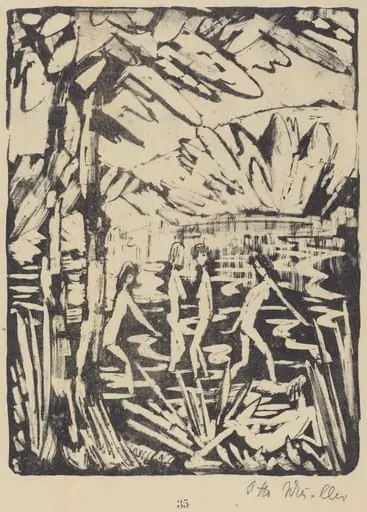 Five Girls at a Forest Pond (Funf Madchen am Waldteich)
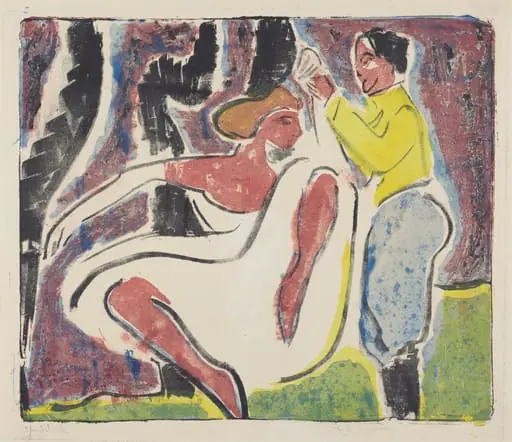 Russian Dancers
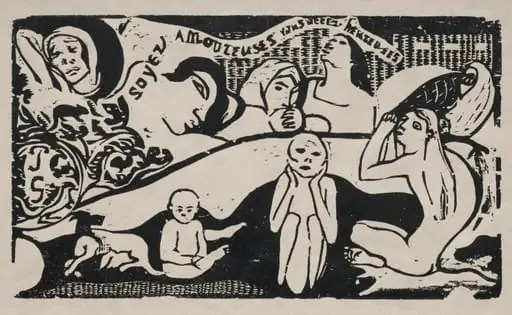 Be in Love and You Will Be Happy
 Woman in the Bathtub
 Three Girls in front of a Mirror (Drei Madchen vor dem Speigel)
 Begrüssung (Greeting)
 Women Bathing
 Untitled