Artwork
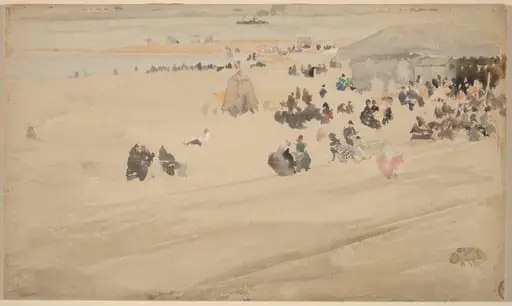
Weymouth Bay, Victory Day Celebrations
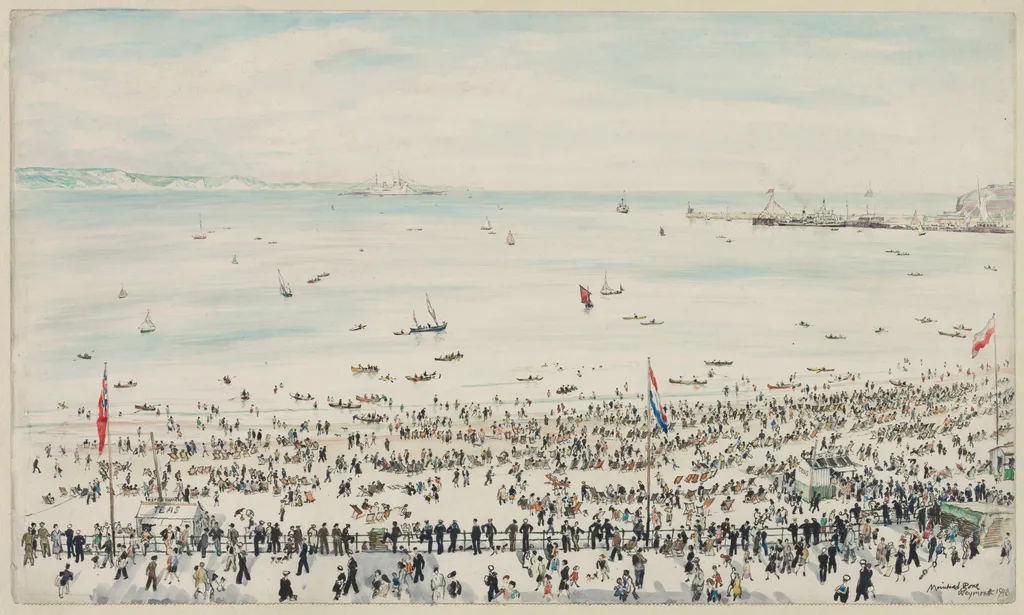
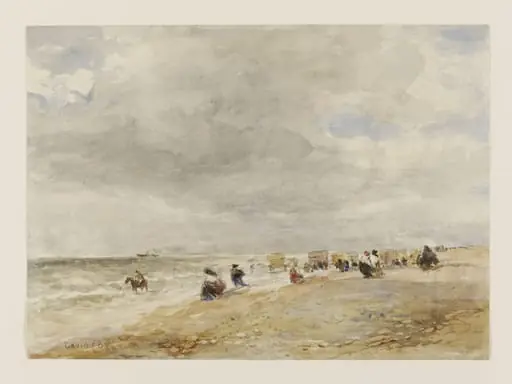
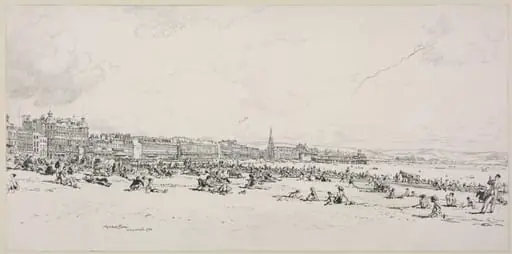
Weymouth Bay, Victory Day Celebrations is a drawing by Muirhead Bone. It dates from 1946 and is held in the collection of the Cleveland Museum of Art.
About this work
Paintings like this one show crowds by the sea. Colorful flags and happy people fill the beach. A ship’s smoke rises in the background.
Bone painted this in 1946. He’d seen two world wars and now showed relief. The bright colors feel alive, not like wartime gray.
To see more British art from the 20th century, look up the Cleveland Museum of Art.
Overview
Created in 1946, this drawing by Sir Muirhead Bone captures the atmosphere of Weymouth Bay on the first anniversary of Victory in Europe Day. As a veteran war artist appointed during World War I and reappointed in 1939, Bone recorded civilian life as much as combat. Here, he turns his focus to public celebration, documenting a moment of collective release after years of conflict.
Subject & Meaning
Flags flutter above the crowd, and a distant ship emits a thin plume of smoke, suggesting naval presence and continuity.
The scene depicts a dense gathering of civilians along the shore, engaged in quiet revelry rather than overt festivity. Flags flutter above the crowd, and a distant ship emits a thin plume of smoke, suggesting naval presence and continuity. The absence of military uniforms and the emphasis on ordinary attire signal a return to peacetime normalcy, framing the moment as one of subdued but profound relief.
Technique & Style
Bone rendered the scene in ink and watercolor with restrained brushwork, favoring clarity over dramatic flourish. The palette introduces muted reds, blues, and greens—brighter than wartime documentation but still grounded in realism. Figures are suggested with economical lines, allowing the composition to emphasize scale and collective presence rather than individual detail.
History & Provenance
Muirhead Bone was the first official British war artist, appointed in 1916. He continued documenting the home front and military life through both world wars. This work was produced shortly after the end of hostilities, part of a series commissioned to record the transition from war to peace. The drawing entered public collections in the decades following its creation, preserved as a record of postwar civilian experience.
Context
In 1946, Britain was still under rationing and economic strain, yet public gatherings like this one reflected a cultural need to acknowledge victory. Unlike official propaganda, Bone’s work avoided triumphalism, instead focusing on quiet communal joy. His perspective as a witness to two global conflicts lent the scene an authenticity absent from more idealized portrayals of the era.
Legacy
Bone’s drawings from this period remain among the most direct visual records of Britain’s postwar emotional landscape. His restrained approach influenced later documentary artists seeking to capture everyday resilience. While not widely exhibited today, this work endures in institutional collections as a quiet testament to the transition from war to peace.
Own this work as a print
Artist & collection
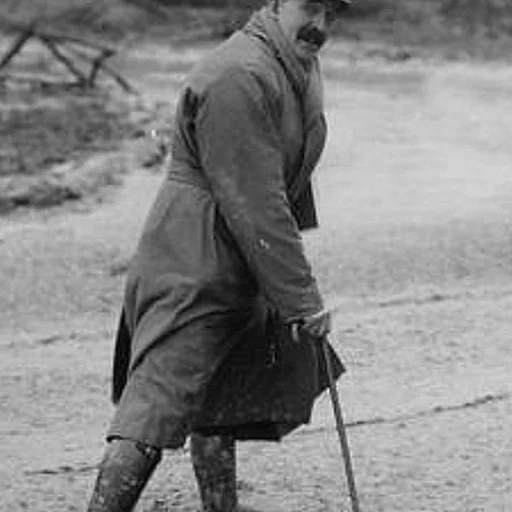
Artist
Sir Muirhead Bone (23 March 1876 – 21 October 1953) was a Scottish etcher and watercolourist who became known for his depiction of industrial and architectural subjects and his work as a war artist in both the First and Second World Wars.