Artwork
Railway Sheds, Marseilles
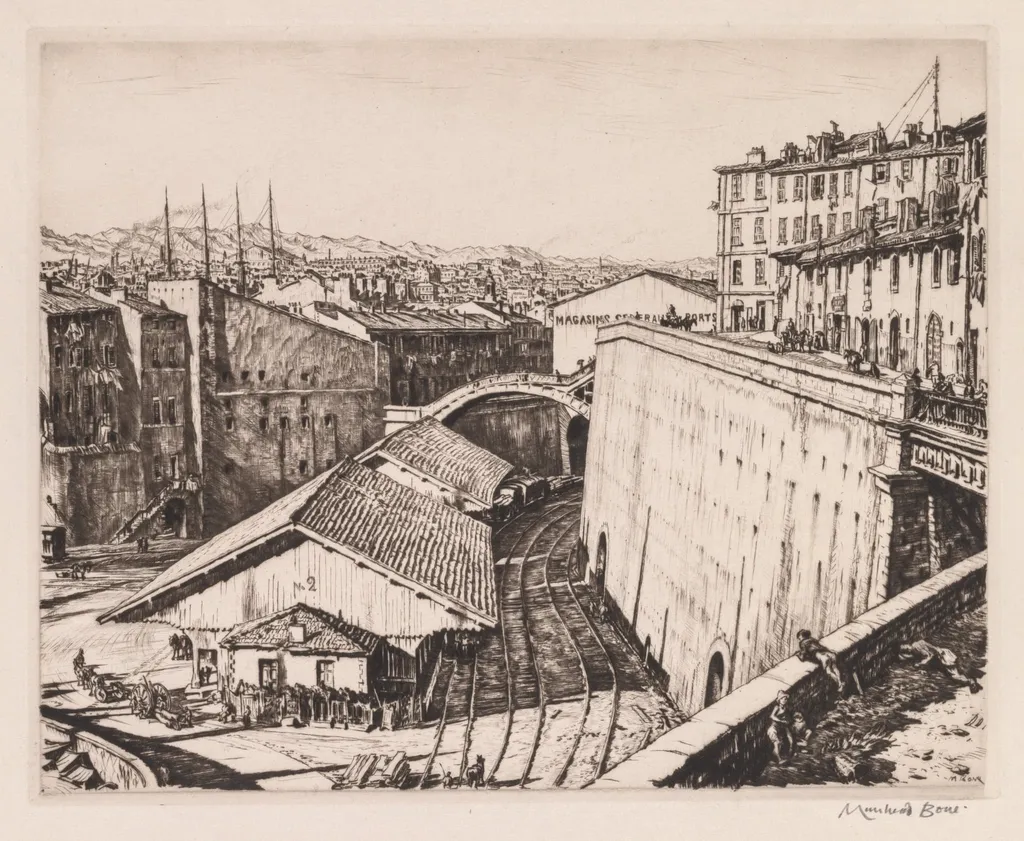
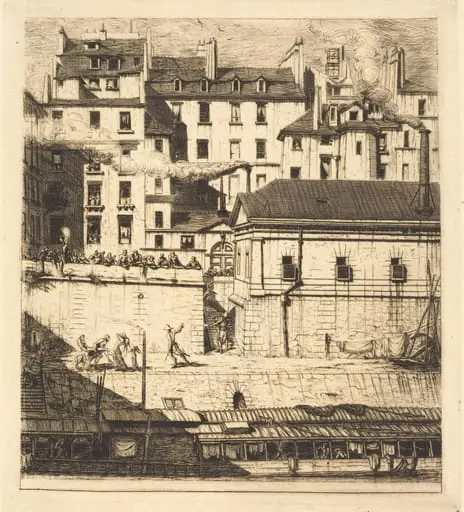
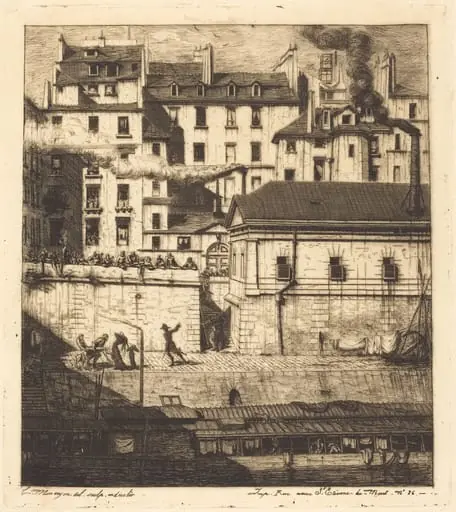
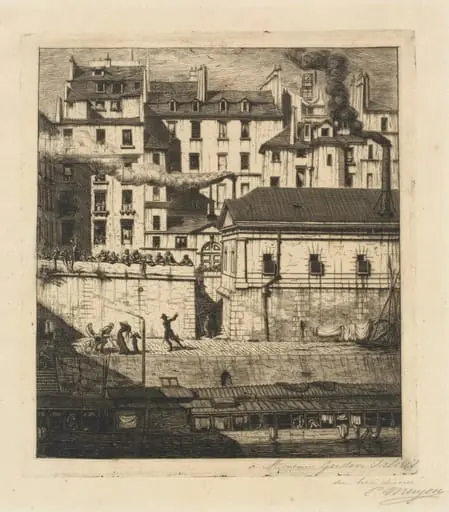
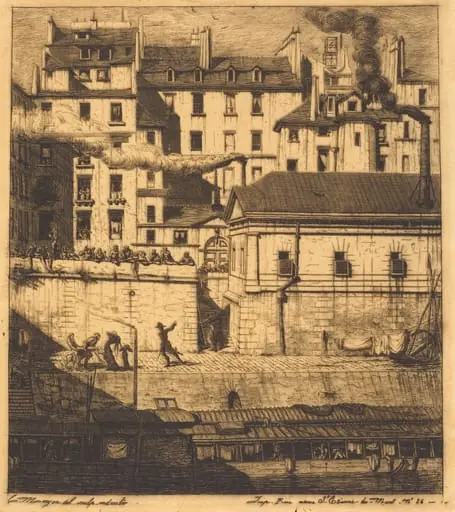
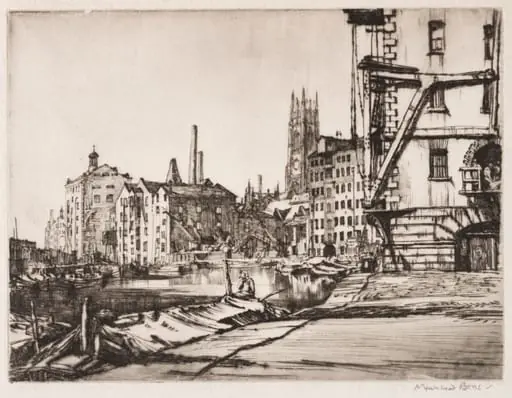
Railway Sheds, Marseilles is a print by Muirhead Bone. It dates from 1937 and is held in the collection of the Cleveland Museum of Art.
About this work
Overview
This print belongs to The Cleveland Museum of Art’s collection and exemplifies his sustained interest in the aesthetic of machinery and urban infrastructure.
Created in 1937, *Railway Sheds, Marseilles* is an etching by Scottish artist Muirhead Bone, capturing the industrial architecture of southern France. Bone, recognized for his precise rendering of built environments, turned his attention to the functional structures of modern transit systems. This print belongs to The Cleveland Museum of Art’s collection and exemplifies his sustained interest in the aesthetic of machinery and urban infrastructure.
Subject & Meaning
The subject is a cluster of railway sheds in Marseilles, their repetitive forms and heavy timber frames suggesting the scale and rhythm of industrial labor. Bone avoids romanticizing the scene; instead, he presents the sheds as quiet, enduring elements of the city’s infrastructure. The composition emphasizes order and function, reflecting a mid-20th century fascination with the quiet dignity of mechanical environments.
Technique & Style
Bone employed etching to achieve fine linear detail and tonal variation, using incised lines to define the wooden beams, roof trusses, and shadowed recesses of the sheds. His style is restrained, avoiding dramatic contrasts in favor of subtle gradations. The precision of his hand reveals his training in architectural draftsmanship, while the absence of human figures reinforces the autonomy of the structures themselves.
History & Provenance
The print was made during a period of extensive European travel by Bone, who documented industrial sites across the continent. It entered The Cleveland Museum of Art’s collection in the mid-20th century, likely through acquisition or donation. Its presence in the museum underscores the institution’s interest in 20th-century printmaking and documentary art rooted in real-world observation.
Context
In the 1930s, artists across Europe revisited industrial subjects as symbols of modernity and societal change. Bone’s work aligned with the Etching Revival’s emphasis on craftsmanship and observational realism, distinguishing itself from abstraction or expressionism. His focus on transport infrastructure reflected broader cultural attention to the networks that enabled commerce and mobility in an increasingly connected world.
Legacy
Bone’s prints, including this one, contributed to a broader recognition of etching as a medium for documenting the modern landscape. While not widely exhibited today, his body of work remains a reference for artists and historians interested in the intersection of architecture, industry, and printmaking. His approach influenced later generations who sought to portray infrastructure with clarity and restraint.
Artist & collection
Artist
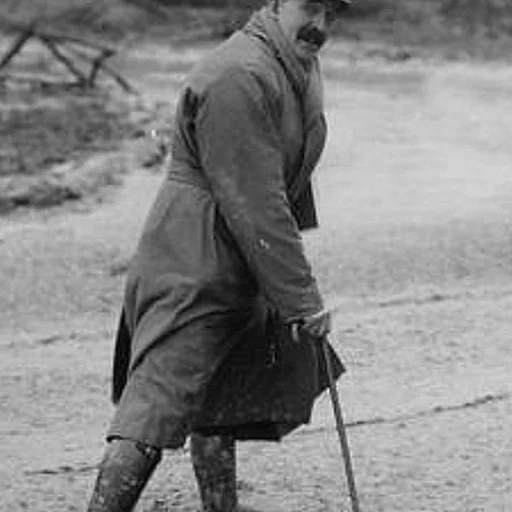
Sir Muirhead Bone (23 March 1876 – 21 October 1953) was a Scottish etcher and watercolourist who became known for his depiction of industrial and architectural subjects and his work as a war artist in both the First and Second World Wars.