Artwork
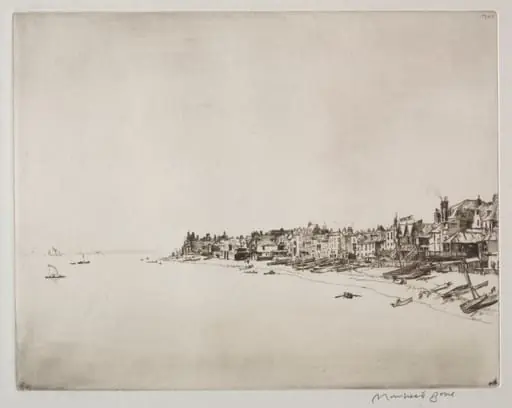
Yarmouth, Isle of Wight
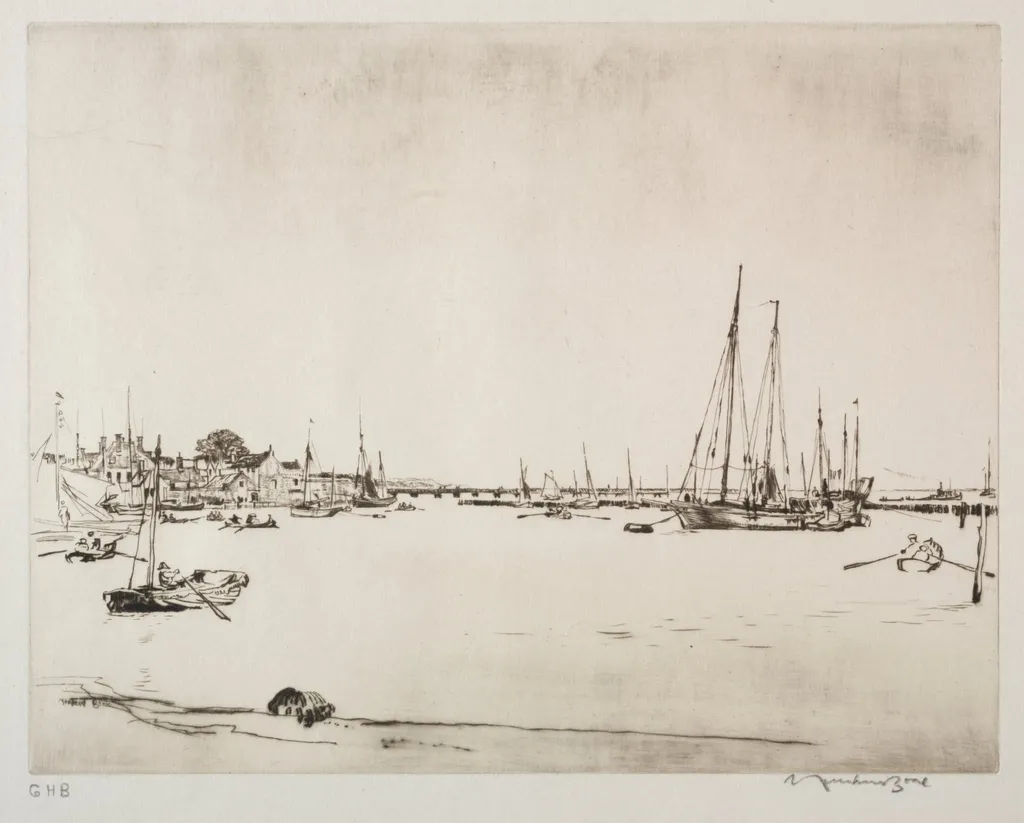
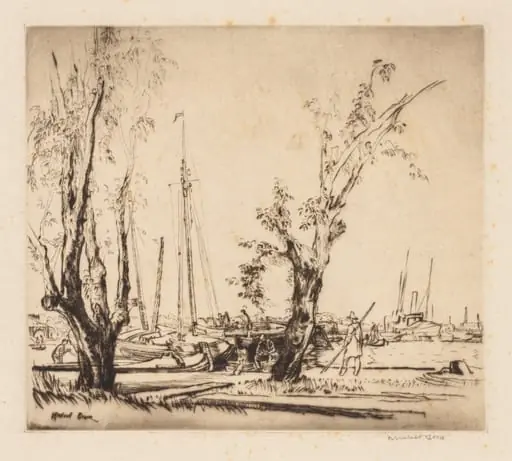
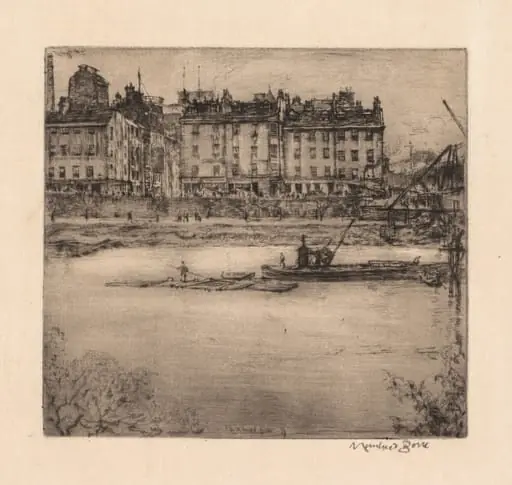
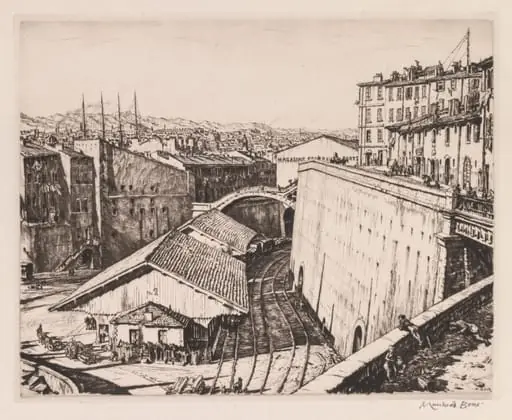
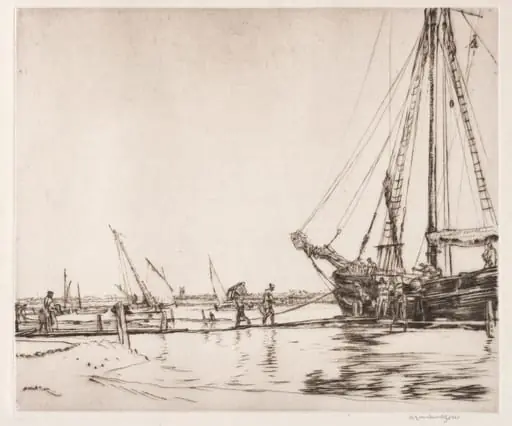
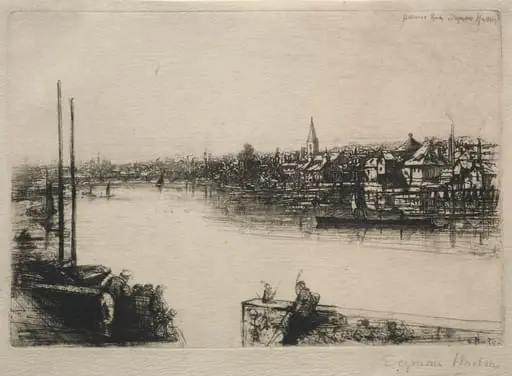
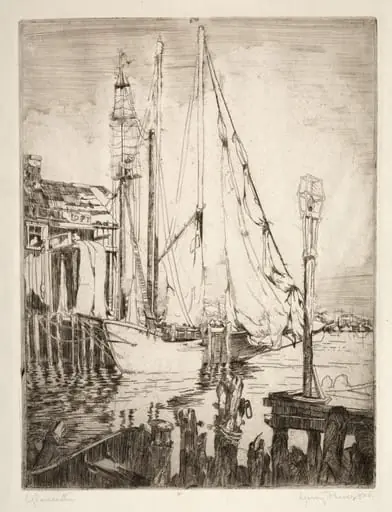
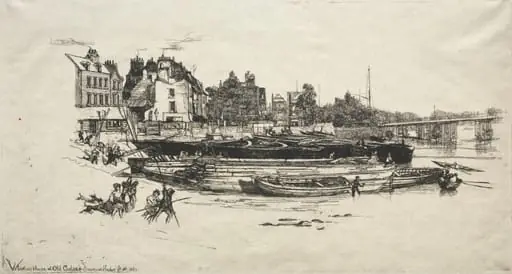
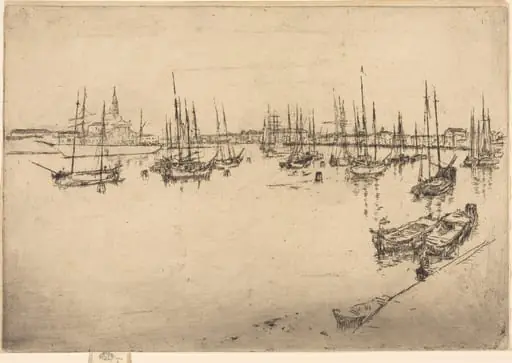
Yarmouth, Isle of Wight is a print by Muirhead Bone. It dates from 1924 and is held in the collection of the Cleveland Museum of Art.
About this work
Overview
Created circa 1924, *Yarmouth, Isle of Wight* is an etching by Scottish artist Muirhead Bone. The print depicts the coastal town’s built environment with precise line work, exemplifying Bone’s long‑standing interest in architecture and industrial scenery. It is part of the Cleveland Museum of Art’s permanent collection.
Subject & Meaning
The image concentrates on the structural elements of Yarmouth, emphasizing the relationship between sea‑facing buildings and their surrounding landscape. By foregrounding the town’s architecture, Bone underscores the permanence of human‑made forms amid a mutable coastal setting, a concern that recurs throughout his oeuvre.
Technique & Style
Bone employed traditional intaglio methods, using fine, controlled lines to render texture and depth. The etching demonstrates the meticulous draftsmanship characteristic of the late Etching Revival, a period when artists revived the medium’s capacity for detailed, tonal representation before its commercial decline in the late 1920s.
History & Provenance
Muirhead Bone, noted for his wartime sketches as an official artist in both World Wars, produced this work during a peacetime phase focused on civilian architecture. The print entered the Cleveland Museum of Art’s collection through acquisition in the mid‑20th century, where it remains on view.
Context
The piece reflects Bone’s broader engagement with industrial and architectural subjects, a theme that defined his career from early watercolors to later war commissions. Positioned within the Etching Revival, the work illustrates the period’s emphasis on technical skill and documentary precision, marking a transition before the market’s downturn for such prints.
Own this work as a print
Artist & collection
Artist
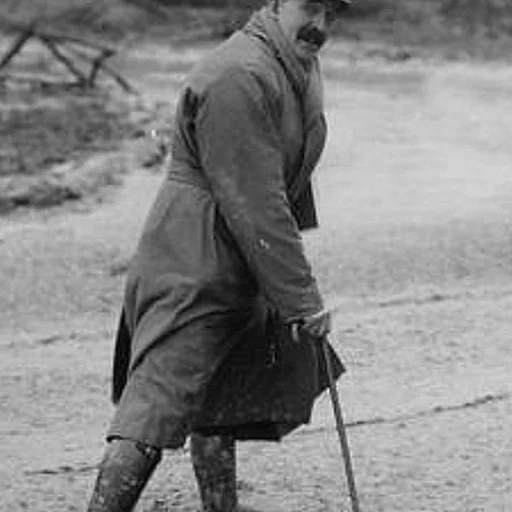
Sir Muirhead Bone (23 March 1876 – 21 October 1953) was a Scottish etcher and watercolourist who became known for his depiction of industrial and architectural subjects and his work as a war artist in both the First and Second World Wars.