Artwork
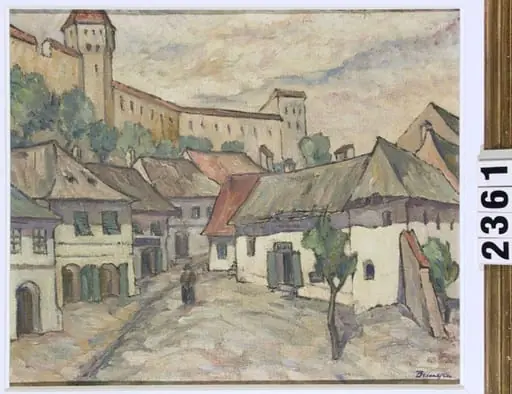
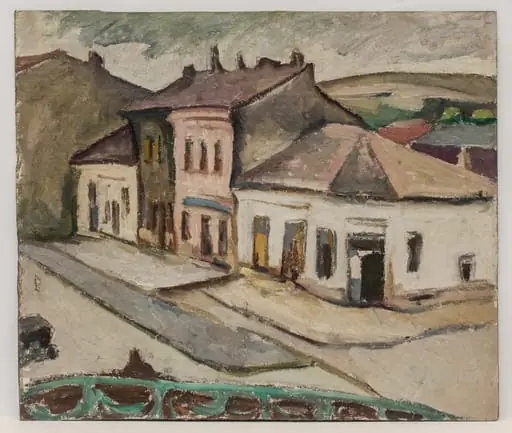
Peisaj de pe strada Turzii
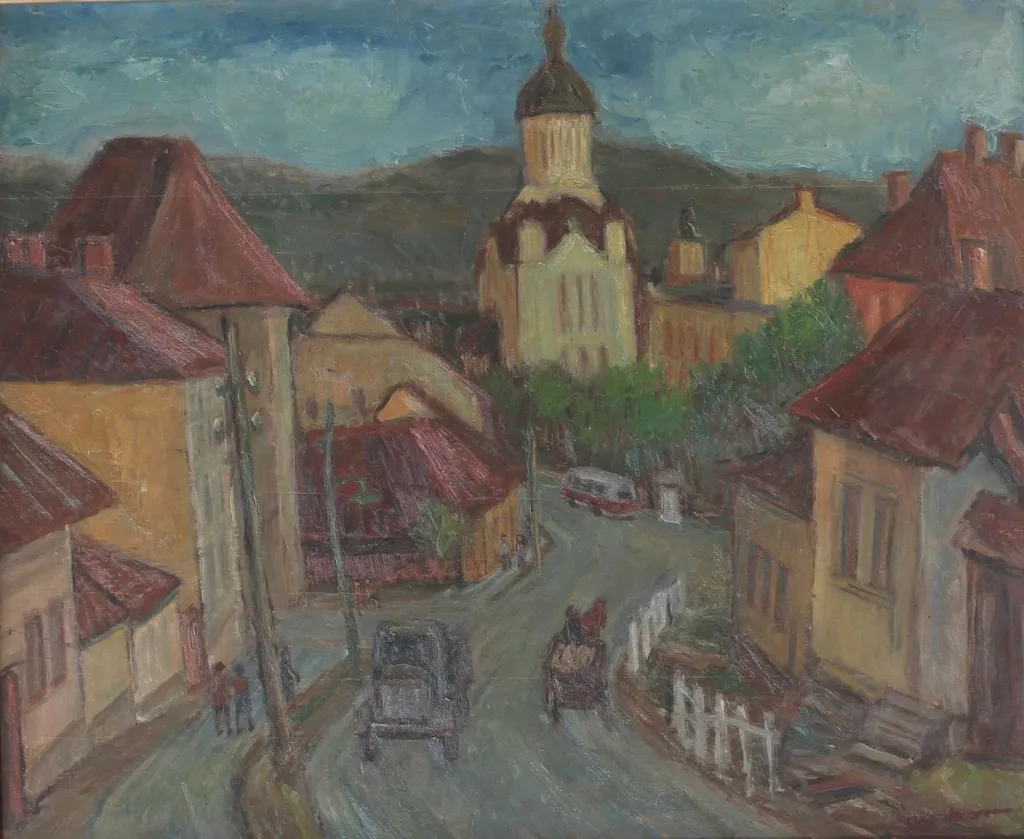
Peisaj de pe strada Turzii is an unspecified painting by Coriolan Munteanu. It dates from 1950 and is held in the collection of the Museum of Art Cluj-Napoca.
About this work
Overview
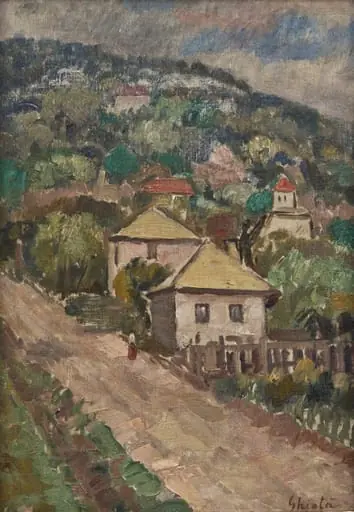
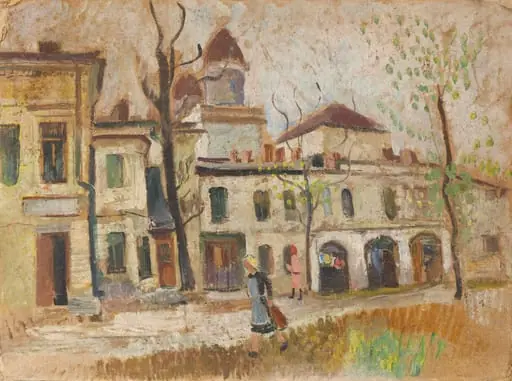
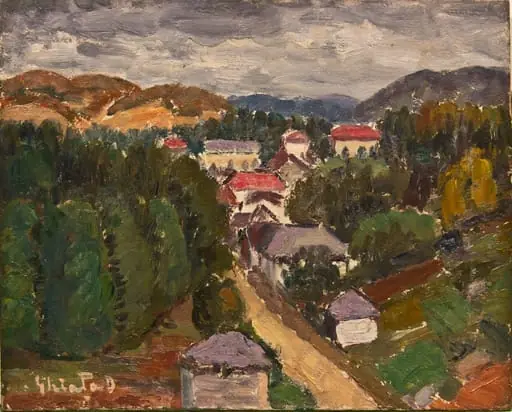
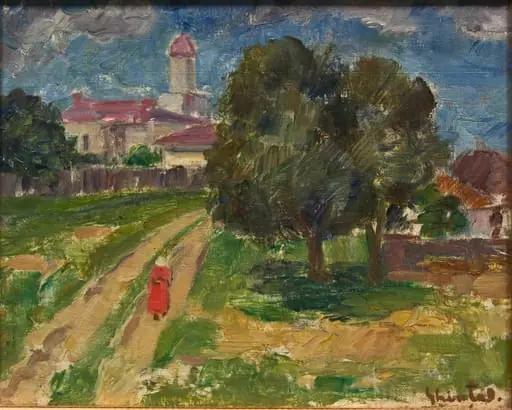
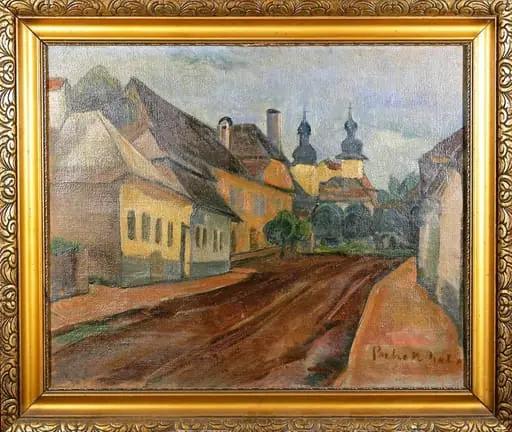
Created in 1950 by Romanian painter Coriolan Munteanu, “Peisaj de pe strada Turzii” is an oil on canvas that resides in the Museum of Ethnography. The work depicts a tranquil urban scene, centered on a gently curving street lined with modest buildings and capped by a darker‑roofed structure in the distance.
Subject & Meaning
The composition captures a quiet moment in a small town, emphasizing the rhythm of everyday life. The winding street draws the eye inward, while the varied roof colors suggest a community of differing yet harmonious dwellings, inviting contemplation of the simple, unhurried pace of mid‑century Romanian towns.
Technique & Style
Munteanu employs a palette of earthy ochres, muted greens, and occasional reds, creating a calm atmosphere. Brushwork is loose and expressive, giving texture to façades and the street surface. The handling of light and shadow is subtle, allowing forms to emerge without sharp delineation, reinforcing the painting’s meditative tone.
History & Provenance
The canvas entered the Museum of Ethnography’s collection shortly after its completion, becoming part of the institution’s effort to document regional visual culture. Its presence in the museum underscores the work’s relevance to the study of Romanian urban environments during the post‑war period.
Context
Produced in the early years of the communist era, the painting reflects a period when artists often turned to local scenes to explore national identity. Munteanu’s focus on an ordinary street aligns with broader trends in Eastern European art that favored realistic yet lyrical depictions of everyday settings.
Artist & collection
Artist
Coriolan Munteanu painted quiet streets and landscapes around Turda, Romania, in the mid-20th century.