Artwork
Peisaj din Baia Mare
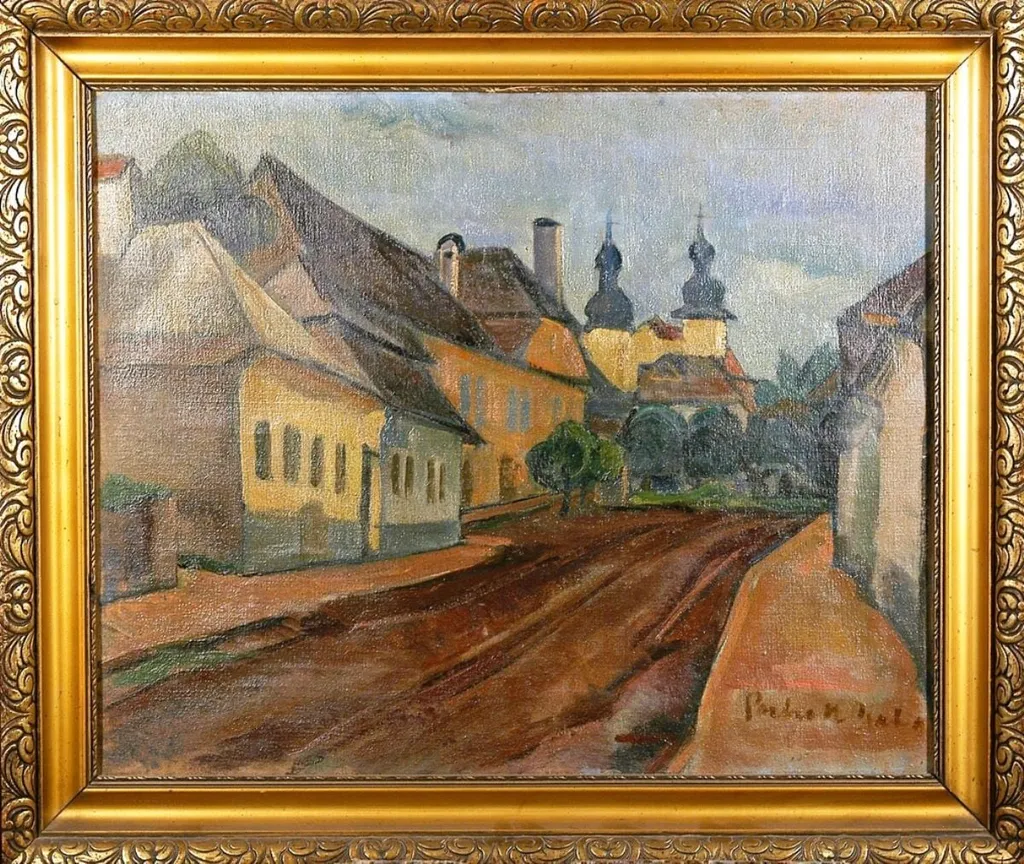
Peisaj din Baia Mare is an unspecified painting by Vilmos Perlrott-Csaba. It dates from 1950 and is held in the collection of the Țării Crișurilor Museum. Vilmos Perlrott‑Csaba’s landscape, dated around 1950, depicts a tranquil village scene in Baia Mare.
About this work
Overview
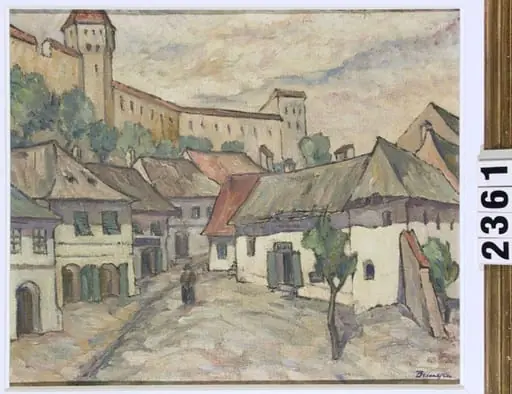
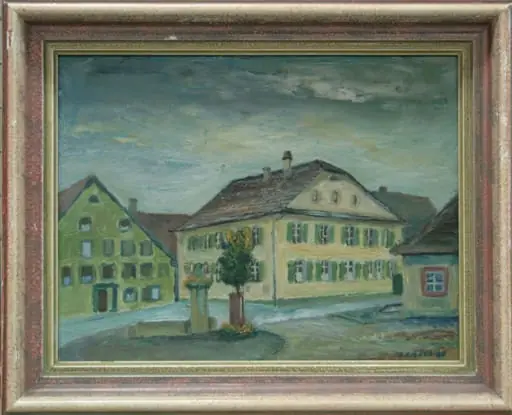
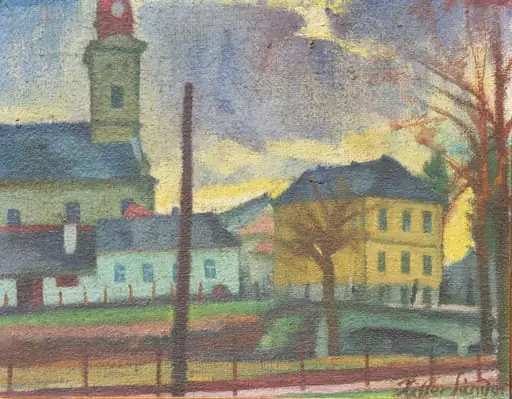
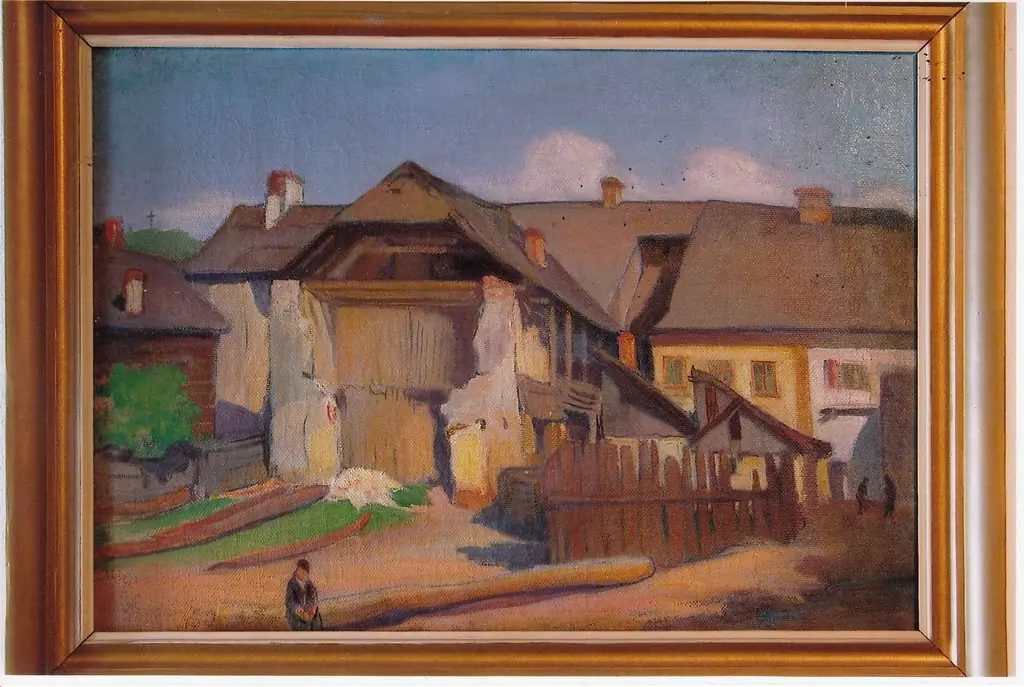
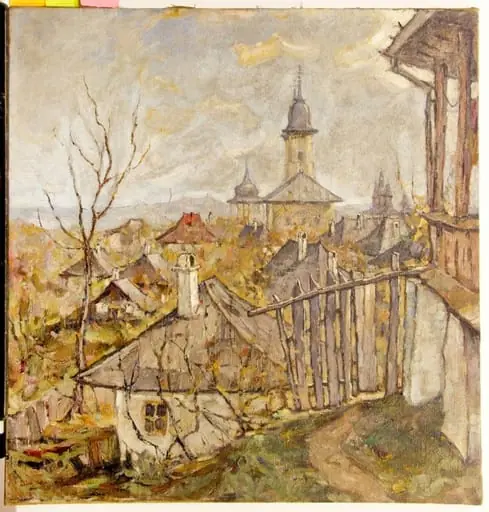
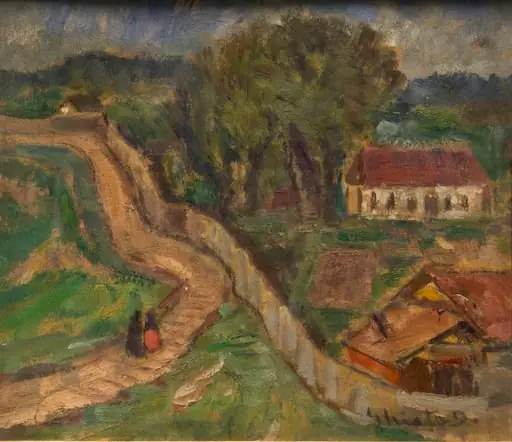
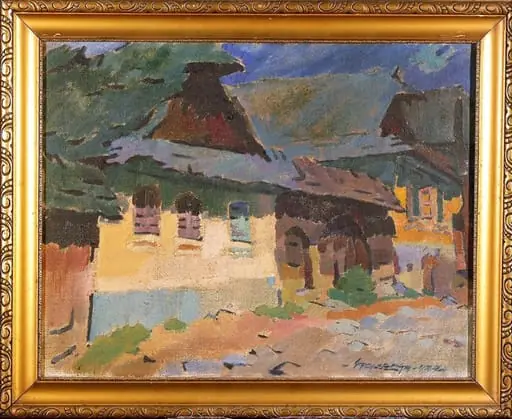
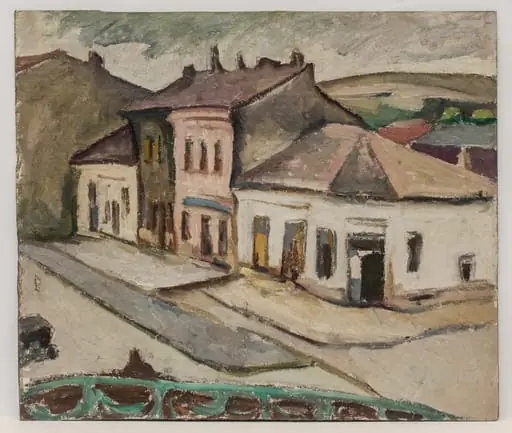
Vilmos Perlrott‑Csaba’s landscape, dated around 1950, depicts a tranquil village scene in Baia Mare. The composition centers on a narrow, unpaved street flanked by modest houses with sloping roofs, their façades rendered in muted yellows and browns. A modest church with twin spires rises in the background beneath a pale sky, completing the quiet, rural atmosphere.
Subject & Meaning
The work captures everyday life in a small Romanian settlement, emphasizing the simplicity of the built environment and the close relationship between architecture and the surrounding landscape. The modest scale of the houses and the distant church suggest a community grounded in tradition, while the open sky conveys a sense of openness and continuity beyond the village limits.
Technique & Style
Perlrott‑Csaba employs a loose, rapid brushwork that creates a textured, almost tactile surface. The paint is applied in relatively thin layers, allowing the underlying tones to show through, while the occasional thicker strokes add a subtle impasto effect that enhances the sense of depth and materiality. The overall palette is restrained, favoring warm earth tones.
History & Provenance
Created circa 1950, the painting entered the collection of the Museum of Ethnography, where it remains on display. The artist’s signature appears in the lower corner, though it is faint and difficult to decipher without close inspection. The work reflects the post‑war period’s interest in regional scenes and folk architecture.
Artist & collection
Artist
Vilmos Perlrott-Csaba painted landscapes of Baia Mare, a town in Romania where artists gathered in the early 1900s.