Artwork
Old Mill, Salt Pans, Guernsey
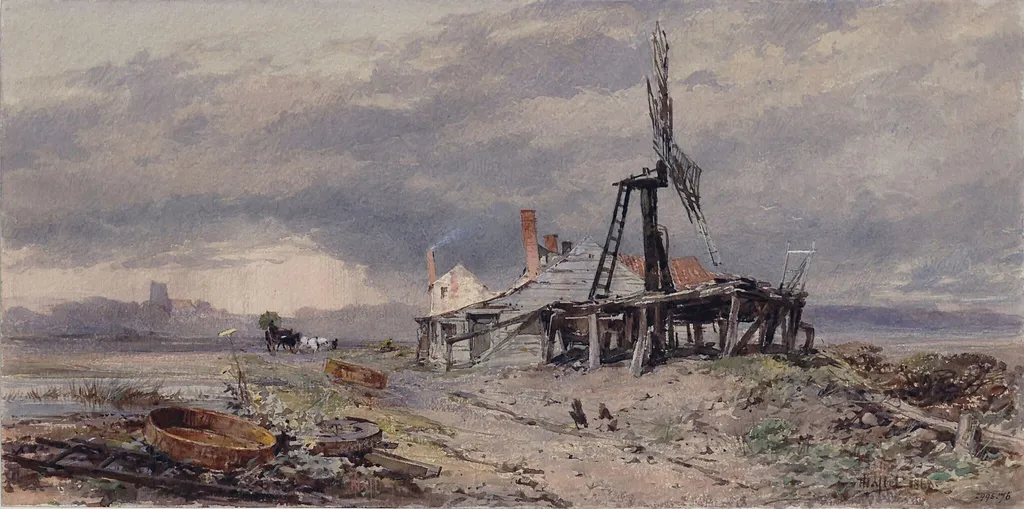
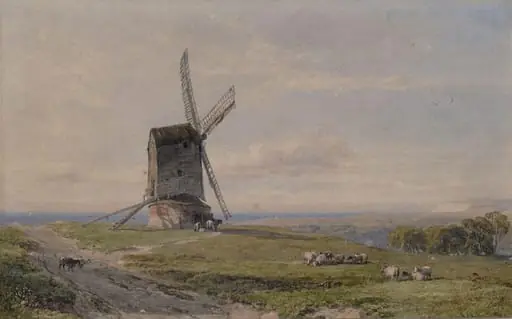
Old Mill, Salt Pans, Guernsey is a watercolor work on paper by the Impressionist artist Paul Jacob Naftel. It dates from 1868 and is held in the collection of the Victoria and Albert Museum. This watercolour depicts a derelict windmill on the coast of Guernsey, surrounded by barren sand and quiet rural activity.
About this work
Overview
This watercolour depicts a derelict windmill on the coast of Guernsey, surrounded by barren sand and quiet rural activity.
This watercolour depicts a derelict windmill on the coast of Guernsey, surrounded by barren sand and quiet rural activity. The scene is rendered in subdued tones of gray, brown, and muted green, with no dramatic focal point. The artist signed and dated the work, indicating a deliberate record of place and moment. The composition emphasizes decay and stillness, avoiding idealization in favor of observed reality.
Subject & Meaning
The painting centers on a crumbling windmill, its sail askew and beams exposed, symbolizing abandonment and the passage of time. A capsized boat and a horse-drawn cart suggest human presence, yet the figures are distant and minor, reinforcing isolation. The landscape conveys quiet endurance — nature reclaims human structures, and labor continues without ceremony. There is no narrative climax, only the weight of everyday life in a remote coastal setting.
Technique & Style
Loose, rapid brushwork defines the sky and sandy terrain, capturing fleeting light and atmospheric texture rather than precise detail. The watercolour medium allows for translucent layers, enhancing the sense of damp air and overcast conditions. Edges are softened, forms simplified, and color applied with economy. This approach reflects a shift toward direct observation, prioritizing mood over polished finish, a hallmark of mid-19th-century landscape practice.
History & Provenance
The work originates from Guernsey, one of the Channel Islands, where artists increasingly traveled in the 1800s seeking unspoiled coastal scenes. Signed and dated, it likely belonged to the artist’s personal collection or was sold locally. Its survival suggests modest circulation, possibly among regional collectors. No major institutional records or exhibition histories are documented, indicating it remained outside the mainstream art market of the time.
Context
Created during a period when British artists turned to rural and coastal subjects, this work aligns with the broader trend of plein air sketching. Though not part of the Impressionist movement, it shares an interest in transient effects and ordinary life. Unlike academic traditions, it avoids mythological or heroic themes, instead valuing the quiet dignity of working landscapes — a precursor to later realist and impressionist approaches.
Legacy
The painting stands as a quiet example of 19th-century observational art, reflecting a growing interest in authenticity over idealization. While not widely exhibited or studied, it contributes to the understanding of regional watercolour practices in the Channel Islands. Its unembellished depiction of decay and labor offers a subtle counterpoint to more celebrated landscapes of the era, preserving a moment of rural resilience.
Artist & collection
Artist
Paul Jacob Naftel painted delicate watercolors of Guernsey’s landscape and daily life in the 1860s.

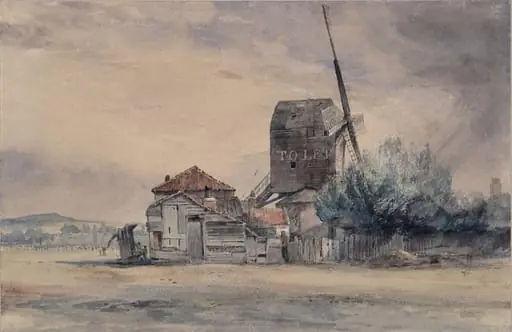 Windmill, Blackheath
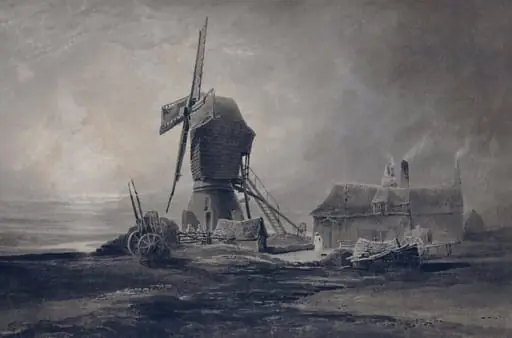 Old Windmill on Windmill Hill, Gateshead
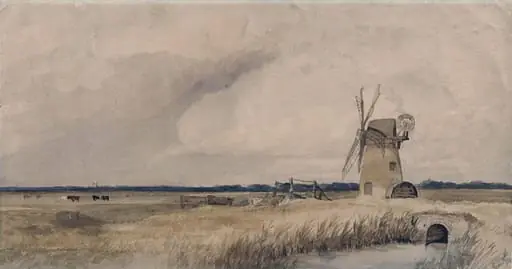 Landscape with windmill, stream and cattle
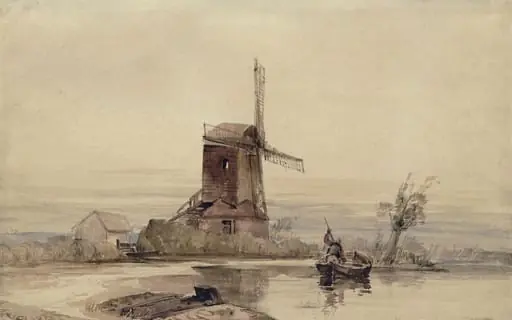 Old windmill by the side of a river, in the foreground a man in a boat
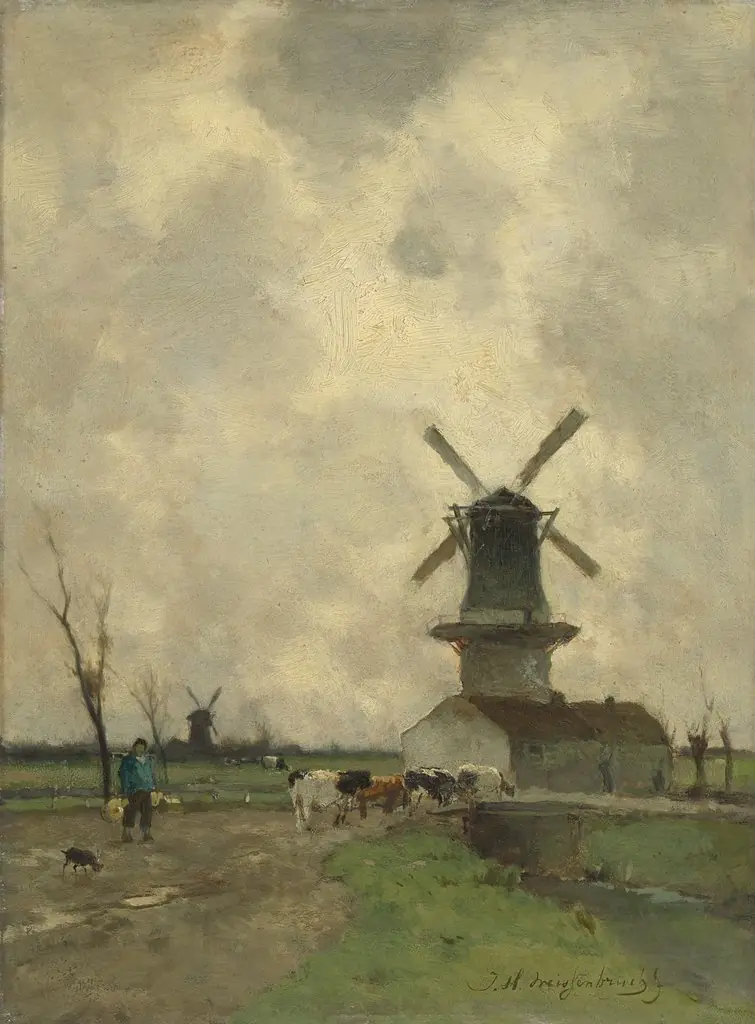 The mill
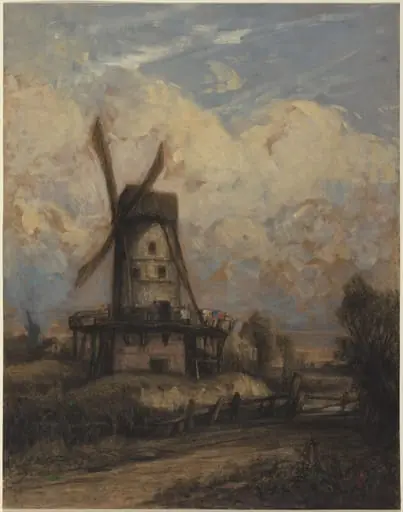 A Windmill against a Cloudy Sky
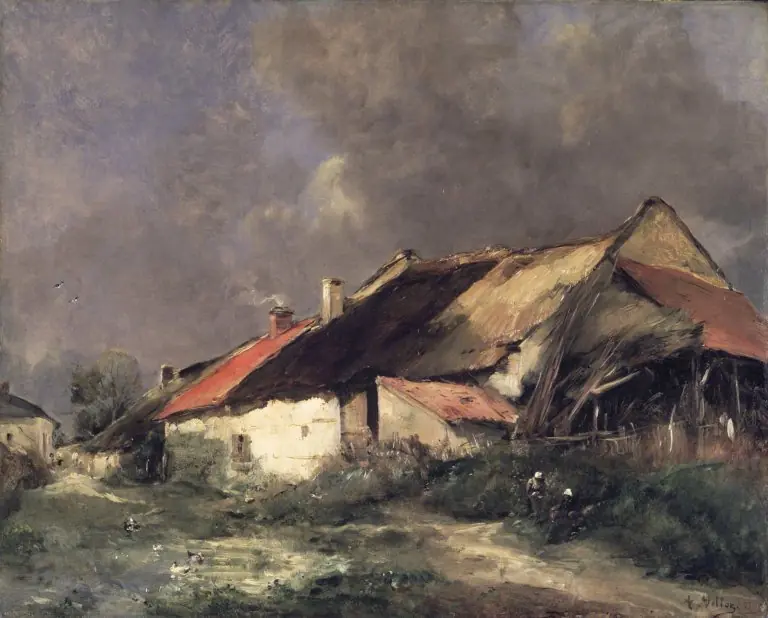 After the Storm
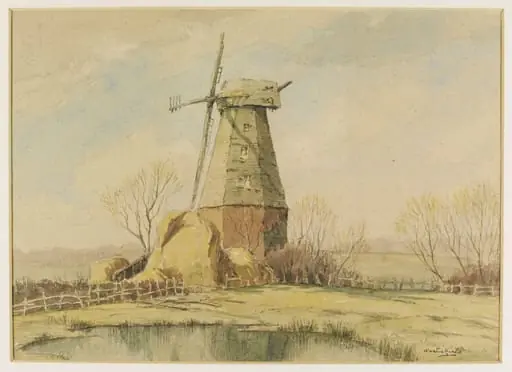 The Mill, Biddenden
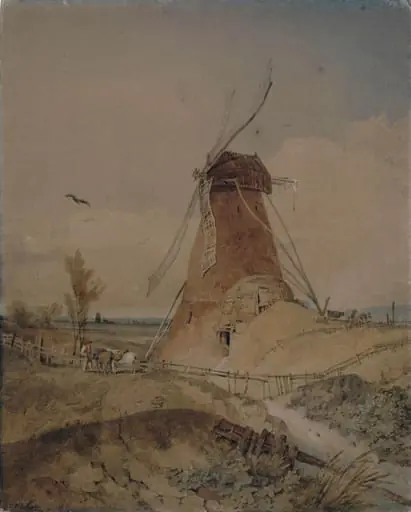 Windmill, Lincolnshire
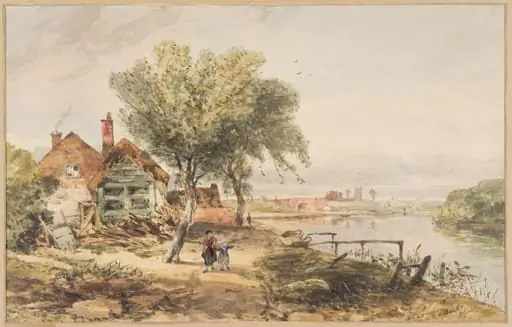 View on the Thames near Sonning
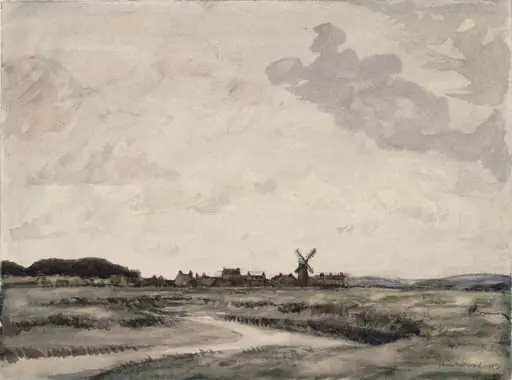 Landscape with Windmill
 Old Windmill, near Eastbourne