Artwork
Peisaj
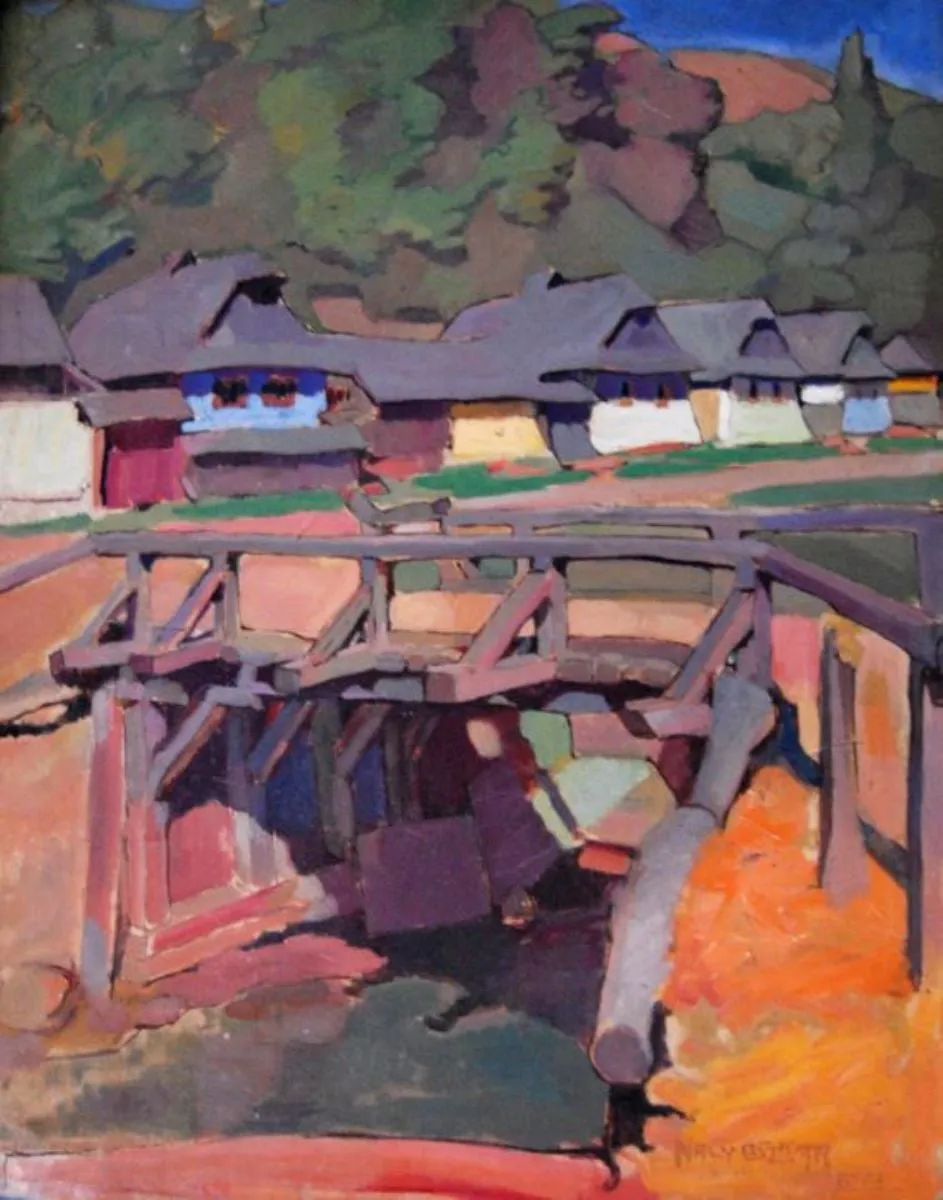
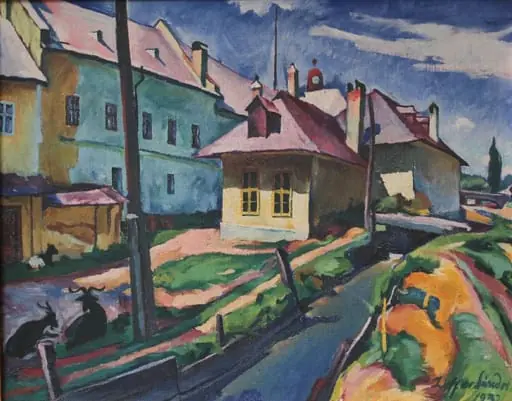
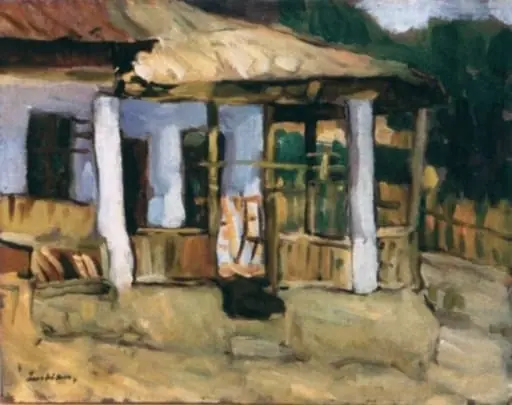
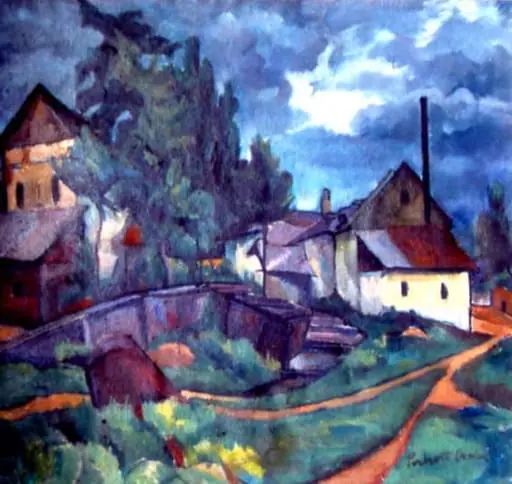
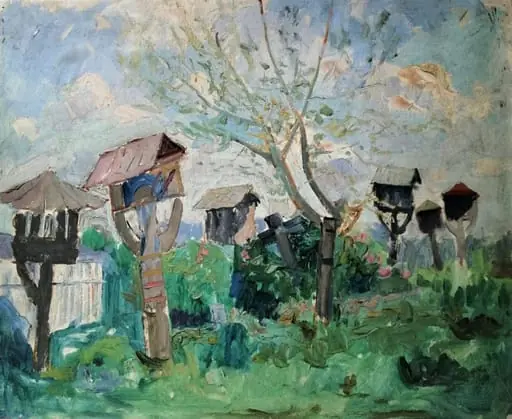
Peisaj is a print by Oszkár Nagy. It dates from 1910 and is held in the collection of the Octavian Goga Memorial Museum.
About this work
Overview
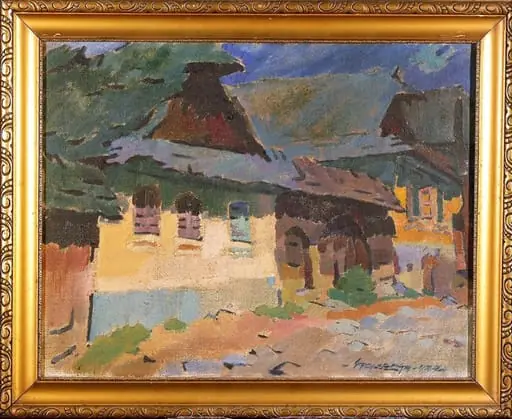
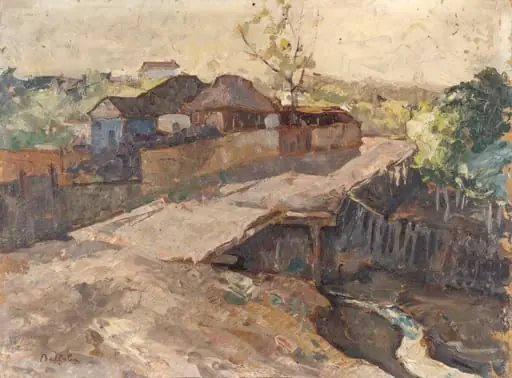
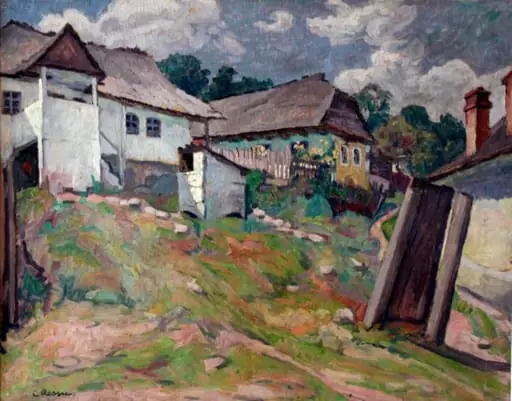
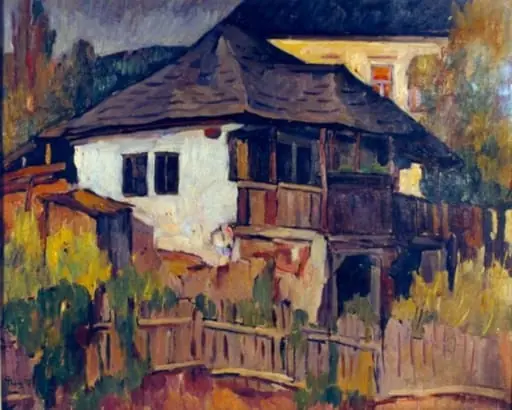
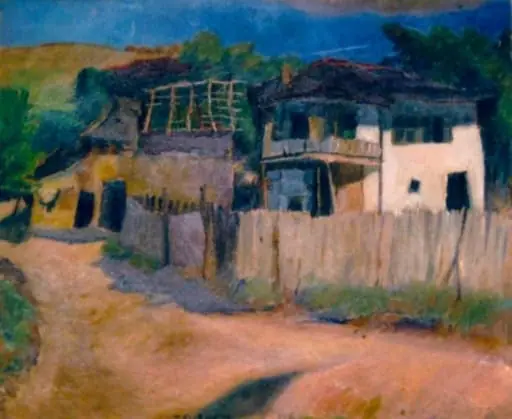
Created in 1910 by Hungarian artist Oszkár Nagy, Peisaj is a painted landscape depicting a rural village scene. The work is part of the collection at the Museum of Ethnography. Its raw, unrefined surface and unconventional color application distinguish it from academic traditions of the time, reflecting a more immediate, expressive approach to depicting everyday rural life.
Subject & Meaning
The flattened houses and muted tones evoke a sense of timelessness, not as a romanticized idyll but as a grounded observation of peasant existence.
The scene portrays a modest village with simple dwellings and a wooden cart resting on a dirt path. The absence of human figures emphasizes solitude and quiet labor. The cart, a tool of rural economy, anchors the composition, suggesting cycles of work and movement. The flattened houses and muted tones evoke a sense of timelessness, not as a romanticized idyll but as a grounded observation of peasant existence.
Technique & Style
Nagy applied paint thickly and unevenly, particularly on the cart’s wheels and the ground, creating a textured, almost sculptural surface. Colors—red, green, purple—are layered without blending, producing a tactile, fragmented quality. Shadows are dense and abrupt, and architectural forms are simplified into flat planes, rejecting perspective in favor of emotional resonance and material presence.
History & Provenance
Peisaj entered the Museum of Ethnography’s collection shortly after its creation, likely acquired as part of efforts to document Hungarian folk culture. Its preservation within an ethnographic institution, rather than a fine arts gallery, reflects early 20th-century interest in art as cultural record. The work has remained in the museum’s holdings since, with no documented public exhibitions until the late 20th century.
Context
Painted during a period of rising national consciousness in Hungary, Peisaj aligns with broader movements seeking to define a distinct cultural identity through depictions of rural life. While urban artists often idealized the countryside, Nagy’s approach is unembellished, emphasizing material reality over sentiment. This places the work in dialogue with emerging modernist tendencies that valued authenticity over polish.
Legacy
Peisaj stands as an early example of Hungarian modernist painting that prioritized expressive technique over conventional representation. Its rough surfaces and deliberate asymmetry influenced later artists exploring folk motifs with abstraction. Though not widely known outside Hungary, it remains a significant artifact in understanding how rural life was visually reimagined during the nation’s cultural redefinition.