Artwork
中林竹渓筆 夏秋山水図屏風|Summer and Autumn Landscapes
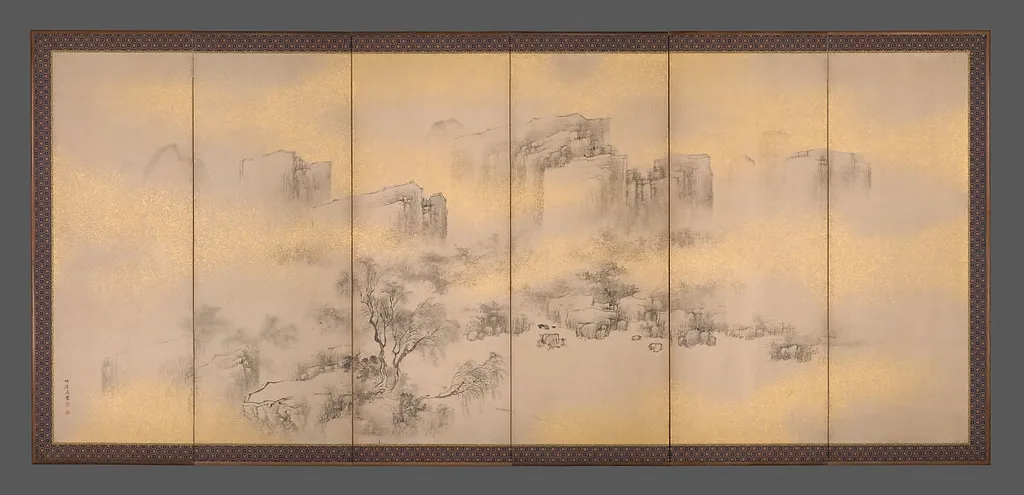
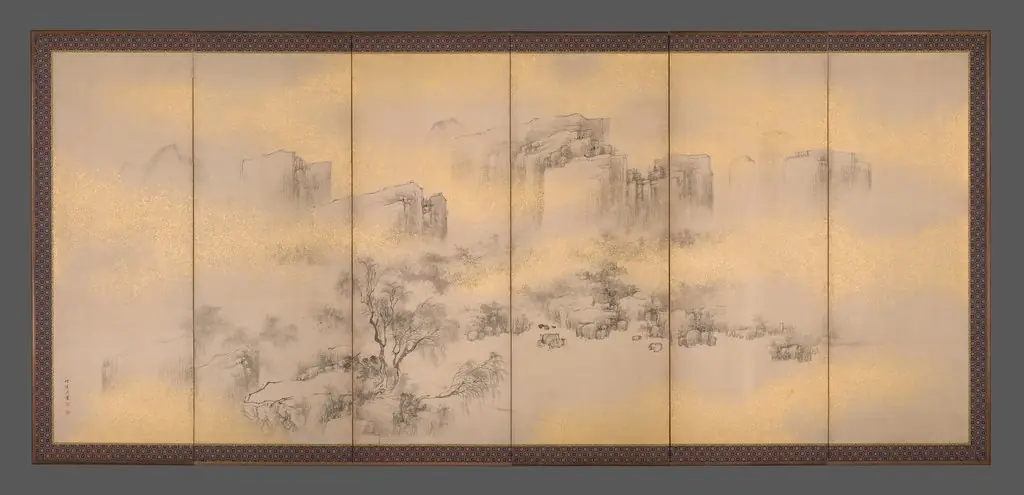
中林竹渓筆 夏秋山水図屏風|Summer and Autumn Landscapes is an ink painting by the Nihonga artist Nakabayashi Chikkei. It dates from 1850 and is held in the collection of the Metropolitan Museum of Art.
About this work
Overview
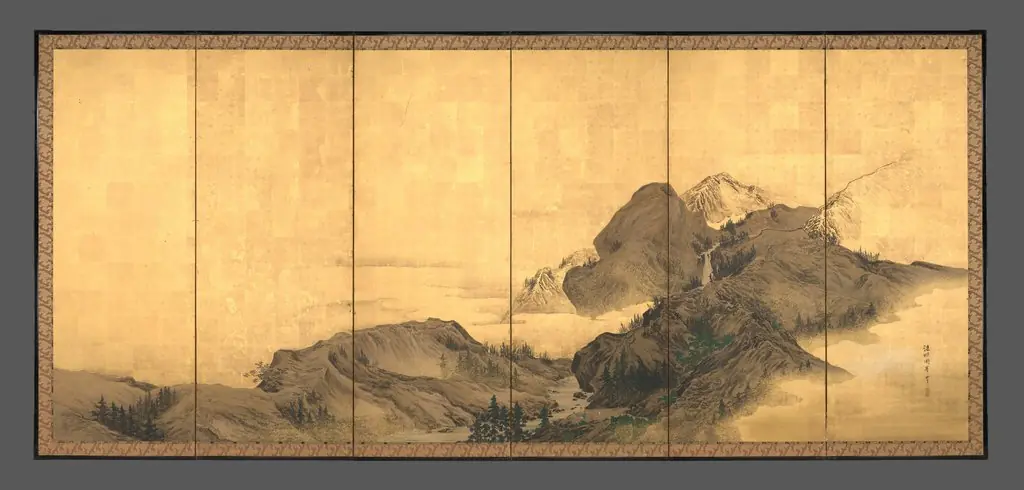
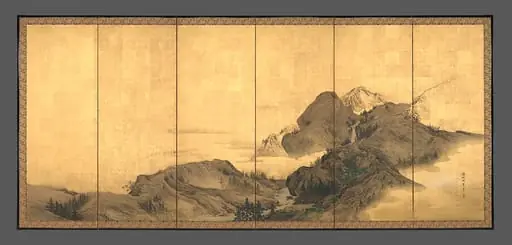
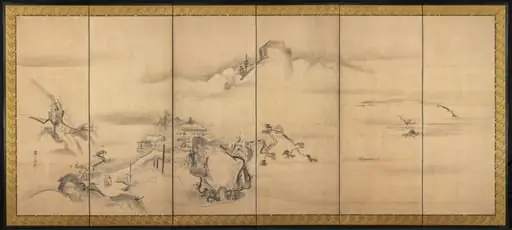
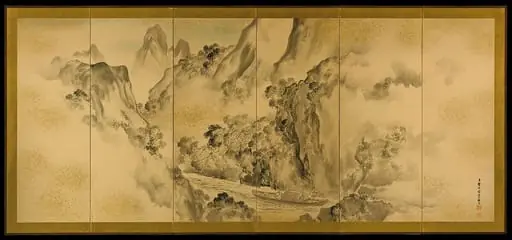
Created in 1850 by Nakabayashi Chikkei, this work consists of two six‑panel folding screens painted with ink, color and gold flecks on paper. The panels together present an extended landscape that is now part of the collection of the Metropolitan Museum of Art.
Subject & Meaning
The screens depict a tranquil, mist‑filled countryside where gentle hills recede into the distance, punctuated by sparse trees and modest structures nestled in valleys. The composition suggests a seasonal transition, evoking the quiet atmosphere of late summer moving toward autumn, and invites contemplation of nature’s subtle changes.
Technique & Style
Chikkei employs delicate, layered brushwork to render atmospheric depth, using thin ink lines that build shadow through successive washes. A restrained palette of pale greens, greys and beiges creates a foggy ambience, while occasional gold flecks catch light, adding a fleeting brilliance to the otherwise muted scene.
History & Provenance
The pair of screens was produced during the late Edo period and entered the Metropolitan Museum of Art’s collection in the twentieth century, where they have been displayed as representative examples of Japanese folding‑screen painting from the mid‑nineteenth century.
Context
Folding screens (byōbu) were commonly used as decorative partitions in Japanese interiors, often illustrating idealized landscapes. Chikkei’s work aligns with this tradition, reflecting the period’s aesthetic preference for understated elegance and the poetic representation of seasonal landscapes.
Artist & collection