Artwork
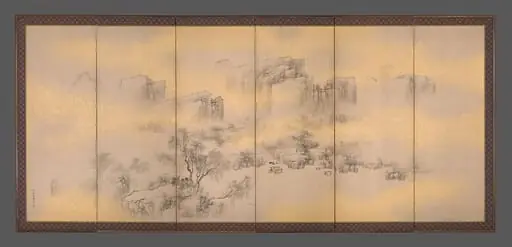
塩川文麟筆 登峨眉山図屏風|The Poet Li Bo's Visit to Mount Emei
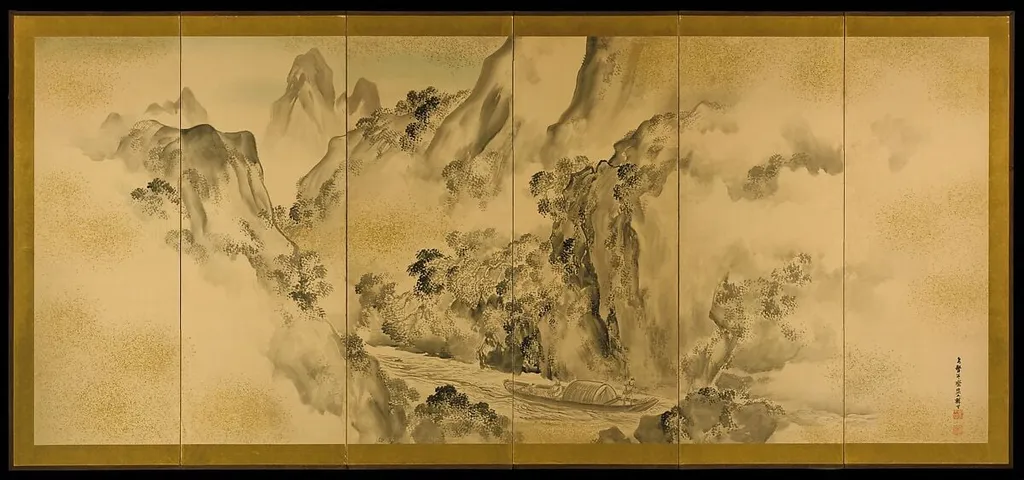
塩川文麟筆 登峨眉山図屏風|The Poet Li Bo's Visit to Mount Emei is an ink painting by the Impressionist artist Shiokawa Bunrin. It dates from 1875 and is held in the collection of the Metropolitan Museum of Art.
About this work
Overview
Executed in ink and gold on paper, the work belongs to the Japanese literati painting style, blending naturalistic elements with symbolic restraint.
Created in 1875 by Shiokawa Bunrin, this pair of six-panel folding screens presents a landscape inspired by classical Chinese poetic tradition. Executed in ink and gold on paper, the work belongs to the Japanese literati painting style, blending naturalistic elements with symbolic restraint. It is part of the collection at The Metropolitan Museum of Art, where it reflects 19th-century Japanese engagement with Chinese literary themes.
Subject & Meaning
The scene alludes to the legendary poet Li Bai’s journey to Mount Emei, a site associated with spiritual retreat and poetic inspiration in Chinese literature. Rather than depicting the poet explicitly, the composition evokes his presence through an empty boat drifting along a quiet river, suggesting solitude and contemplation. The mountains, shrouded in mist and muted tones, convey a sense of transcendence, aligning with Daoist ideals of harmony with nature.
Technique & Style
Shiokawa employed delicate ink washes to model distant peaks and dense foliage, using subtle gradations to suggest depth. Gold leaf accents highlight tree branches and rock contours, adding luminosity without overpowering the restrained palette. The composition follows a traditional horizontal format, with the river guiding the viewer’s gaze across both screens. Brushwork is precise yet fluid, characteristic of literati aesthetics that prioritize expressive economy over detail.
History & Provenance
The screens were completed in the final decades of the Edo period, a time when Japanese artists increasingly looked to Chinese literary models for inspiration. Shiokawa Bunrin, active in Kyoto, was part of a circle of scholars and painters who revived classical themes through refined ink techniques. The work entered The Metropolitan Museum of Art’s collection in the 20th century, likely through private acquisition or donation, reflecting growing Western interest in East Asian literati art.
Context
In 19th-century Japan, the study of Chinese poetry and painting remained a hallmark of elite cultural education. Artists like Shiokawa responded to this tradition by creating works that honored Chinese subjects while adapting them to Japanese materials and sensibilities. This screen pair reflects a broader trend among Kyoto-based painters who sought to preserve scholarly aesthetics amid rapid modernization and Western influence.
Legacy
Shiokawa’s screens exemplify the enduring appeal of Chinese-inspired landscape painting in late Edo Japan. Though not widely known outside specialist circles, the work contributes to understanding how traditional forms persisted into the modern era. Its quiet composition and poetic allusion continue to inform contemporary interpretations of Japanese ink painting as a medium for introspection and cultural memory.
Artist & collection

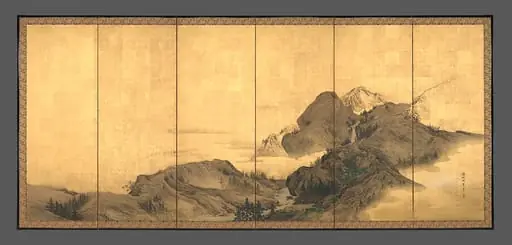 森周峰筆 楼閣山水図屏風|Landscape with Pavilion
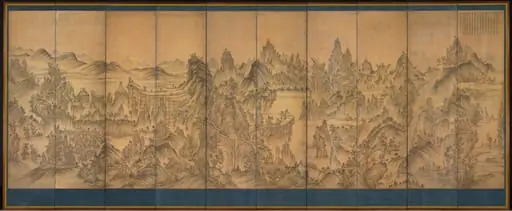 Seven Jeweled Mountain
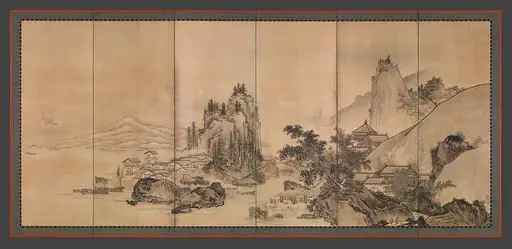 雲谷等顔筆 四季山水図屏風|Landscape of the Four Seasons
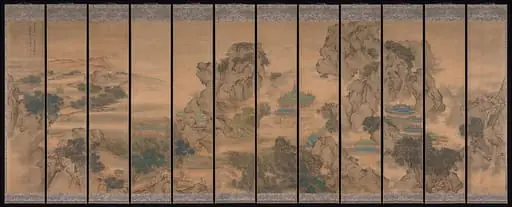 清 袁江 九成宮圖 屏|The Palace of Nine Perfections
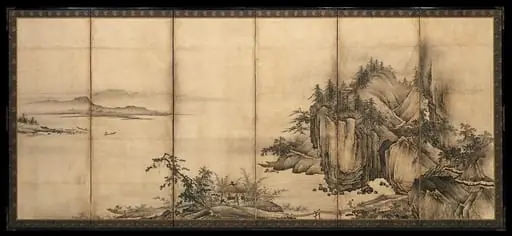 Untitled
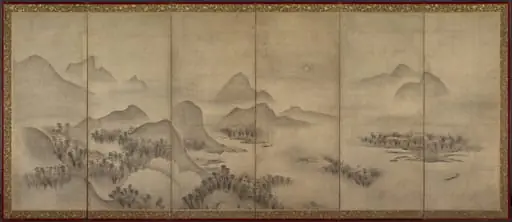 Moonlit Landscape (one of a pair)
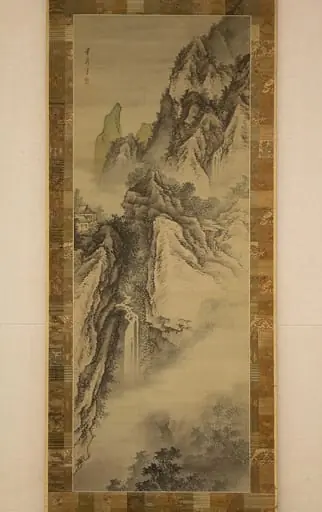 Untitled
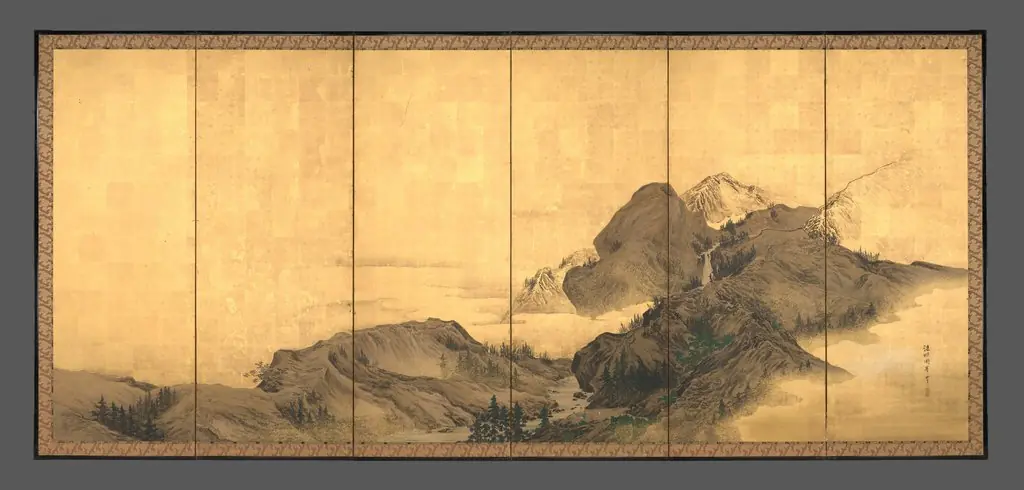 Landscape with Pavilion
 中林竹渓筆 夏秋山水図屏風|Summer and Autumn Landscapes
 明 鍾禮 觀瀑圖 軸|Li Bai gazing at the waterfall on Mount Lu