Artwork
森周峰筆 楼閣山水図屏風|Landscape with Pavilion
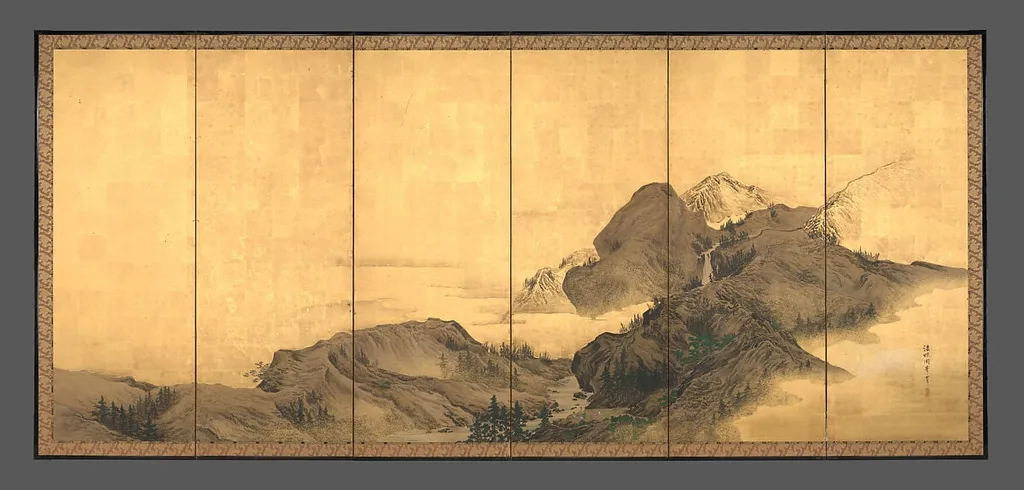
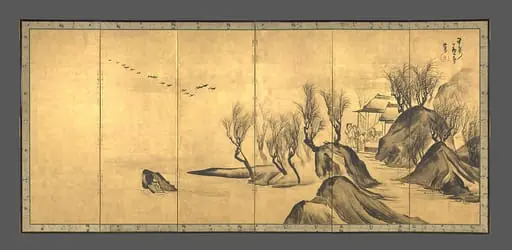
森周峰筆 楼閣山水図屏風|Landscape with Pavilion is an ink painting by the Romanticist artist Mori Shūhō. It dates from 1816 and is held in the collection of the Metropolitan Museum of Art.
About this work
Overview
The work exemplifies the Edo-period tradition of ink-wash landscape painting, emphasizing quietude and spatial harmony over dramatic effect.
Created in 1816 by Mori Shūhō, this pair of six-panel folding screens depicts a tranquil mountain landscape rendered in ink, subtle color, and gold accents on paper. The composition spans both screens seamlessly, presenting a serene, undulating terrain with minimal sky. The work exemplifies the Edo-period tradition of ink-wash landscape painting, emphasizing quietude and spatial harmony over dramatic effect.
Subject & Meaning
The scene centers on a modest pavilion nestled among gentle hills, its placement deliberate yet unobtrusive. Rather than asserting human presence, the structure blends into the natural topography, suggesting harmony between architecture and landscape. The absence of figures and the muted sky reinforce a contemplative mood, evoking ideals of retreat and solitude valued in literati culture.
Technique & Style
Mori employed fine, layered brushwork to model forms without sharp outlines, creating soft transitions between landforms. Subtle washes of brown and green establish depth, while delicate gold flecks and thin applications of gold leaf add luminosity without ostentation. The technique reflects a refined ink-wash tradition, prioritizing texture and atmospheric nuance over bold contrasts or vivid detail.
History & Provenance
The screens entered the collection of The Metropolitan Museum of Art as part of a broader acquisition of Japanese decorative arts in the early 20th century. While specific earlier ownership records are limited, the work aligns with the output of Kyoto-based artists active in the early 1800s who drew from Chinese-inspired literati aesthetics and local Japanese landscape conventions.
Context
Produced during the late Edo period, the screens reflect a cultural preference for restrained, introspective art among educated elites. Though influenced by Chinese ink painting traditions, Mori’s approach adapts these forms to Japanese sensibilities, favoring subdued palettes and intimate scale over grandeur. Such screens often adorned private study rooms, serving as objects of quiet contemplation.
Legacy
Mori Shūhō’s work contributes to the enduring legacy of Edo-period ink landscapes that balanced technical precision with poetic restraint. Though not widely known outside specialist circles, this pair exemplifies how Japanese artists reinterpreted classical models to express personal and cultural ideals of harmony, stillness, and natural order.
Artist & collection

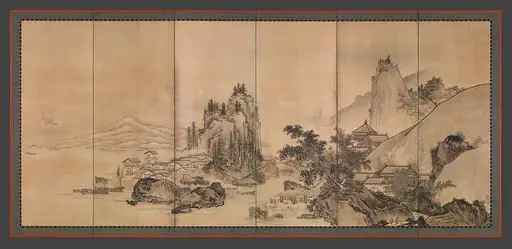 雲谷等顔筆 四季山水図屏風|Landscape of the Four Seasons
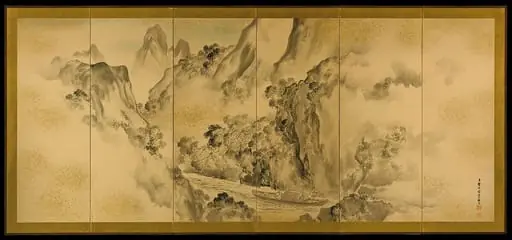 塩川文麟筆 登峨眉山図屏風|The Poet Li Bo's Visit to Mount Emei
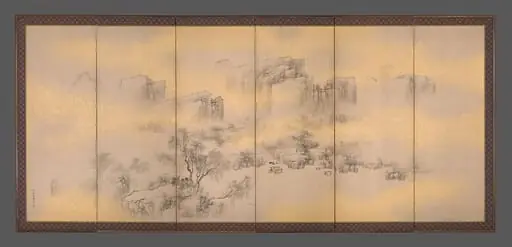 中林竹渓筆 夏秋山水図屏風|Summer and Autumn Landscapes
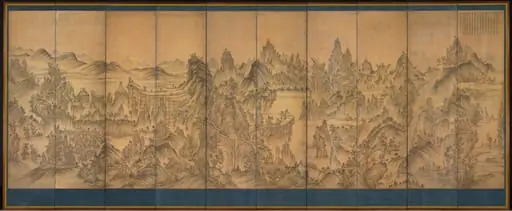 Seven Jeweled Mountain
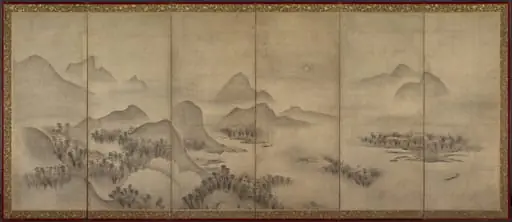 Moonlit Landscape (one of a pair)
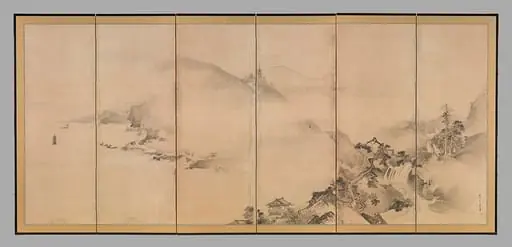 四季山水図屏風|Landscapes of the Four Seasons
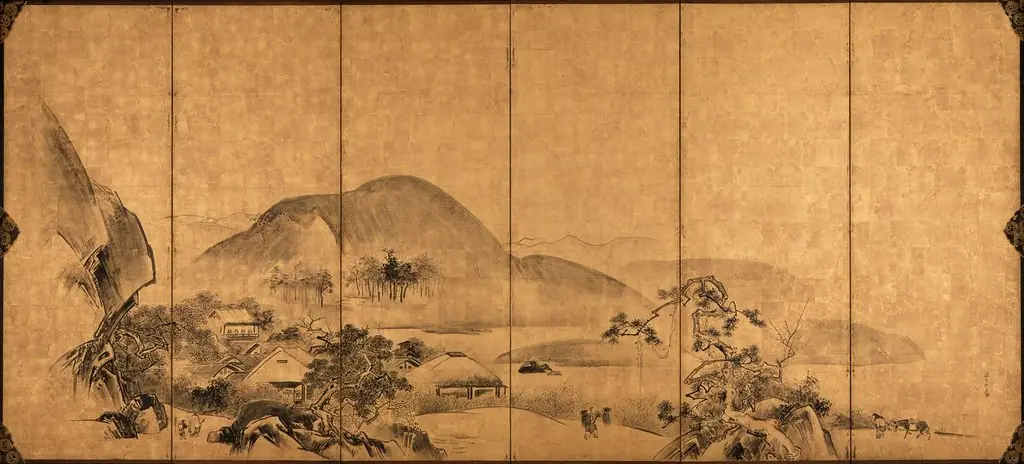 Landscape
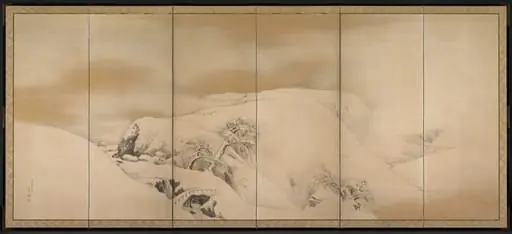 Winter Day
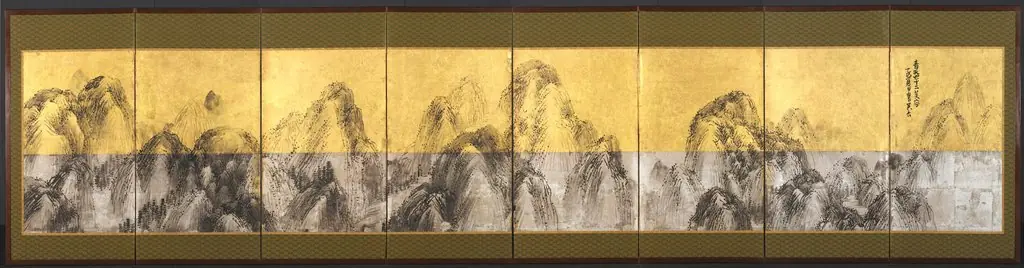 Seventy-two Peaks Against the Blue Sky
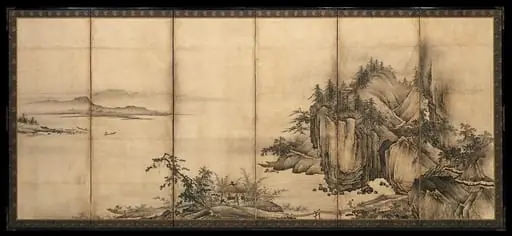 Untitled
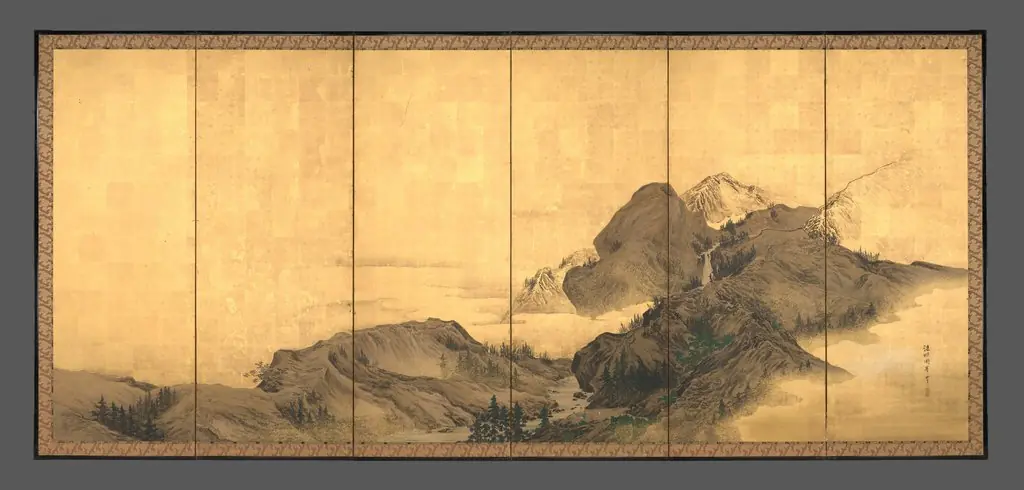 Landscape with Pavilion
 山水唐人物図屏風|Landscapes with the Chinese Literati Su Shi and Tao Qian