Artwork
The Madonna and Child Enthroned, Adored by Two Saints
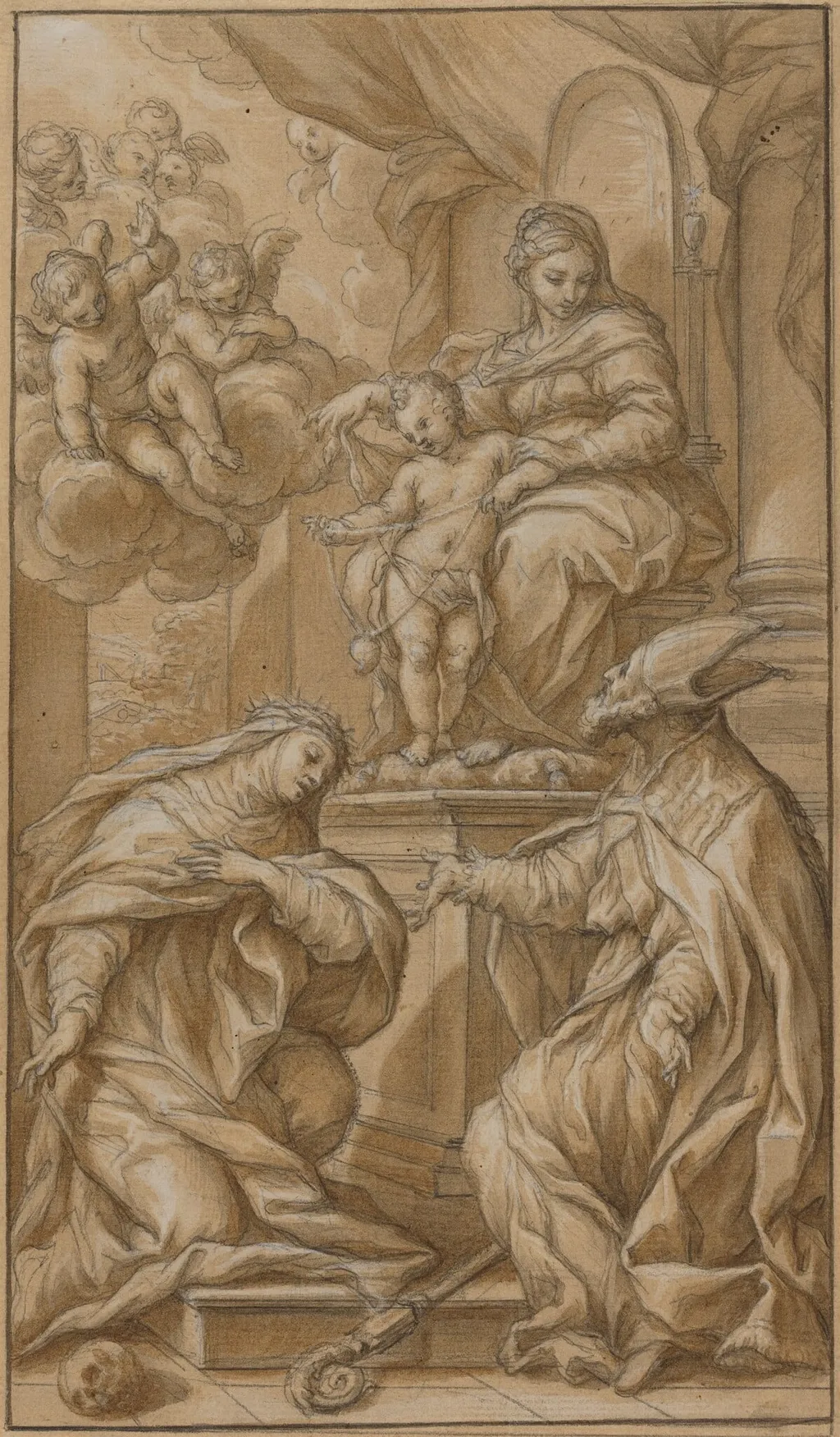
The Madonna and Child Enthroned, Adored by Two Saints is an ink drawing by the Baroque artist Giuseppe Nicola Nasini. It dates from 1709 and is held in the collection of the National Gallery of Art.
About this work
The painting is called The Madonna and Child Enthroned, Adored by Two Saints.
It was made by Giuseppe Nicola Nasini in 1709.
The artist used a mix of pen, brown ink, and brown washes to create the image, which is a characteristic of the Baroque style.
You can learn more about this style at the National Gallery of Art, Washington.
Overview
The work titled *Madonna and Child Enthroned, Adored by Two Saints* is a devotional drawing executed around 1709 by the Italian artist Giuseppe Nicola Nasini. Rendered on tinted laid paper, the composition presents the Virgin Mary seated on a throne with the infant Christ, flanked by two reverent saints. The piece reflects the religious iconography typical of early‑18th‑century Catholic art.
Technique & Style
Nasini employed a combination of pen work, brown ink, and brown washes, building the forms with layered tonalities. Over a foundation of black chalk, he heightened selected areas with white to model light and volume. The use of washes and chiaroscuro aligns the drawing with Baroque visual strategies, emphasizing dramatic contrast and a sense of immediacy within the intimate devotional scene.
Subject & Meaning
The central figures—Mary and the Christ child—are positioned on an elaborate throne, signifying their divine authority. The two accompanying saints, rendered in adoration, serve as intercessors, guiding the viewer’s reverence toward the holy duo. The composition underscores themes of maternal devotion, the incarnation, and the role of saints as mediators in Catholic theology.
History & Provenance
Created circa 1709, the drawing belongs to Nasini’s mature period, when he was active in the Tuscan artistic circles. Though specific ownership records are limited, the work has been catalogued among his religious drawings and is presently held in a public collection, where it contributes to the broader understanding of Nasini’s output and the devotional practices of his era.
Artist & collection


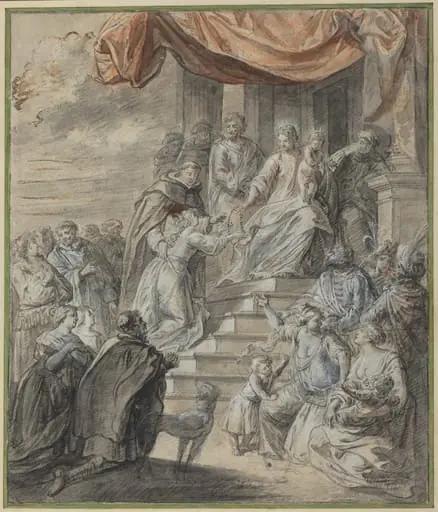 Madonna and Child with Rosary and Saint
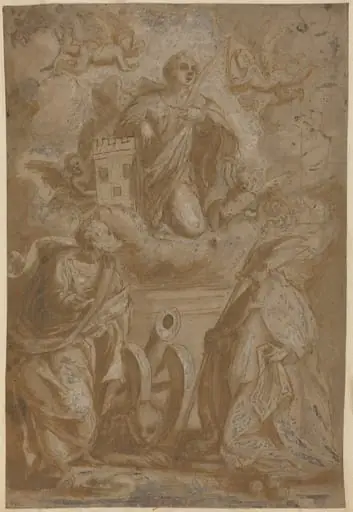 Saint Barbara in Glory with Saints Nicholas and Jerome
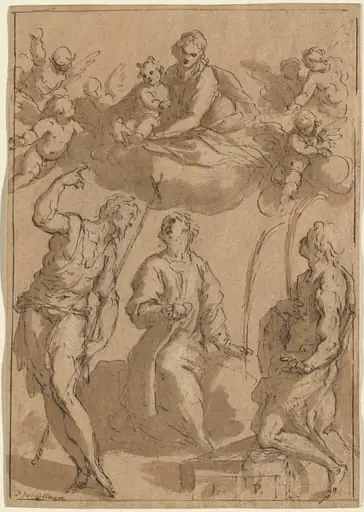 Madonna and Child in Glory with Saints John the Baptist, Stephen, and Lawrence
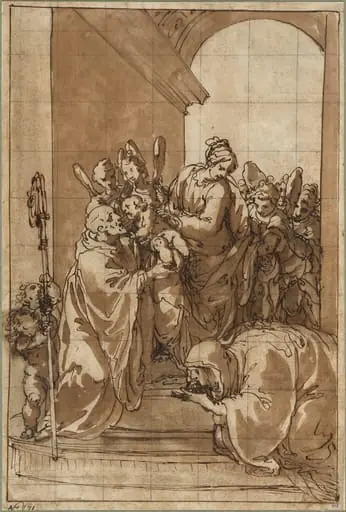 Madonna and Child with Angels, Saint Benedict, and Saint Scholastica
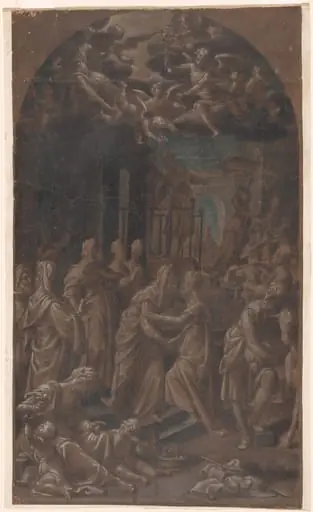 The Visitation
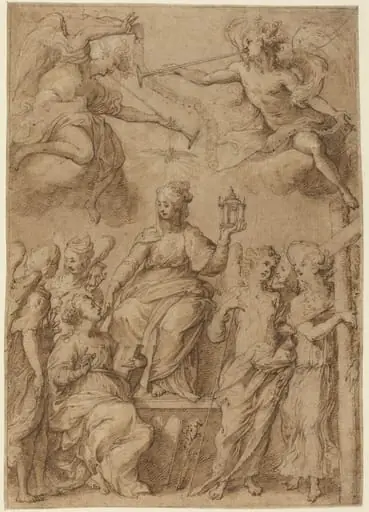 Ecclesia Surrounded by Angels Holding the Instruments of the Passion
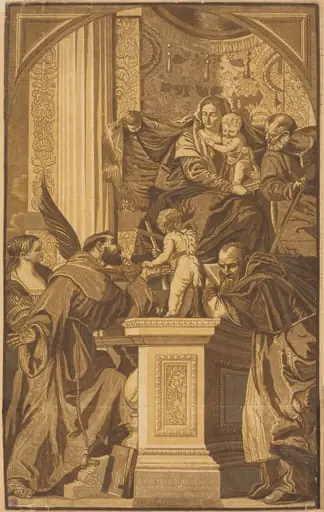 Holy Family and Four Saints
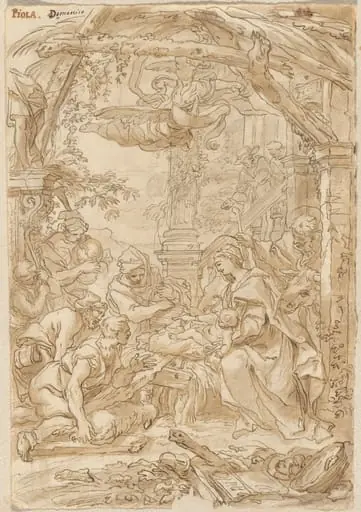 The Adoration of the Shepherds
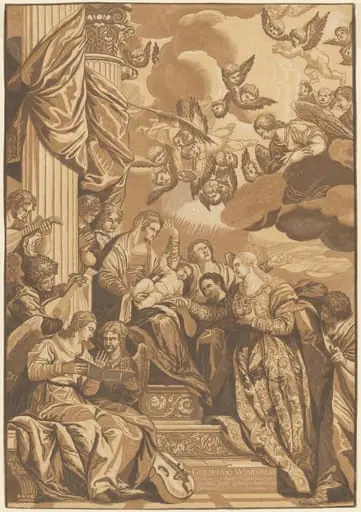 Mystic Marriage of St. Catherine
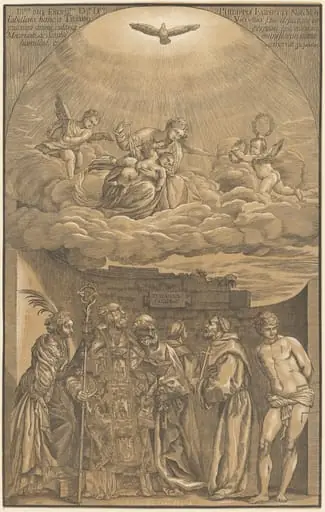 The Virgin and Child in the Clouds with Six Saints
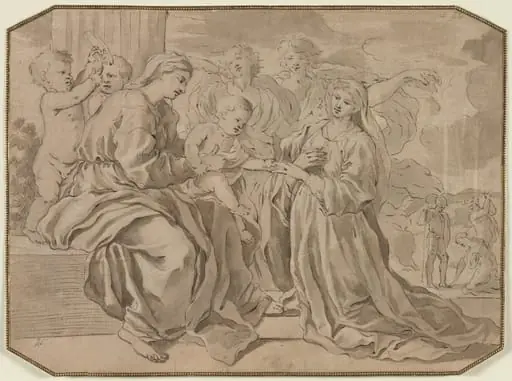 Mystic Marriage of St. Catherine
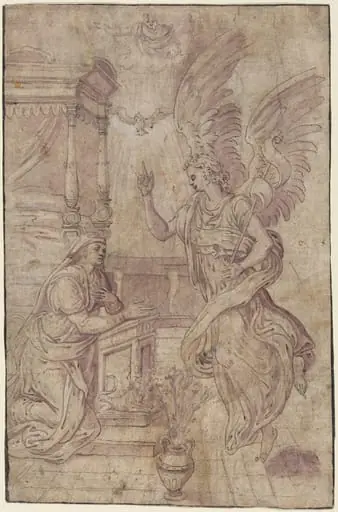 The Annunciation