Artwork
Ecclesia Surrounded by Angels Holding the Instruments of the Passion
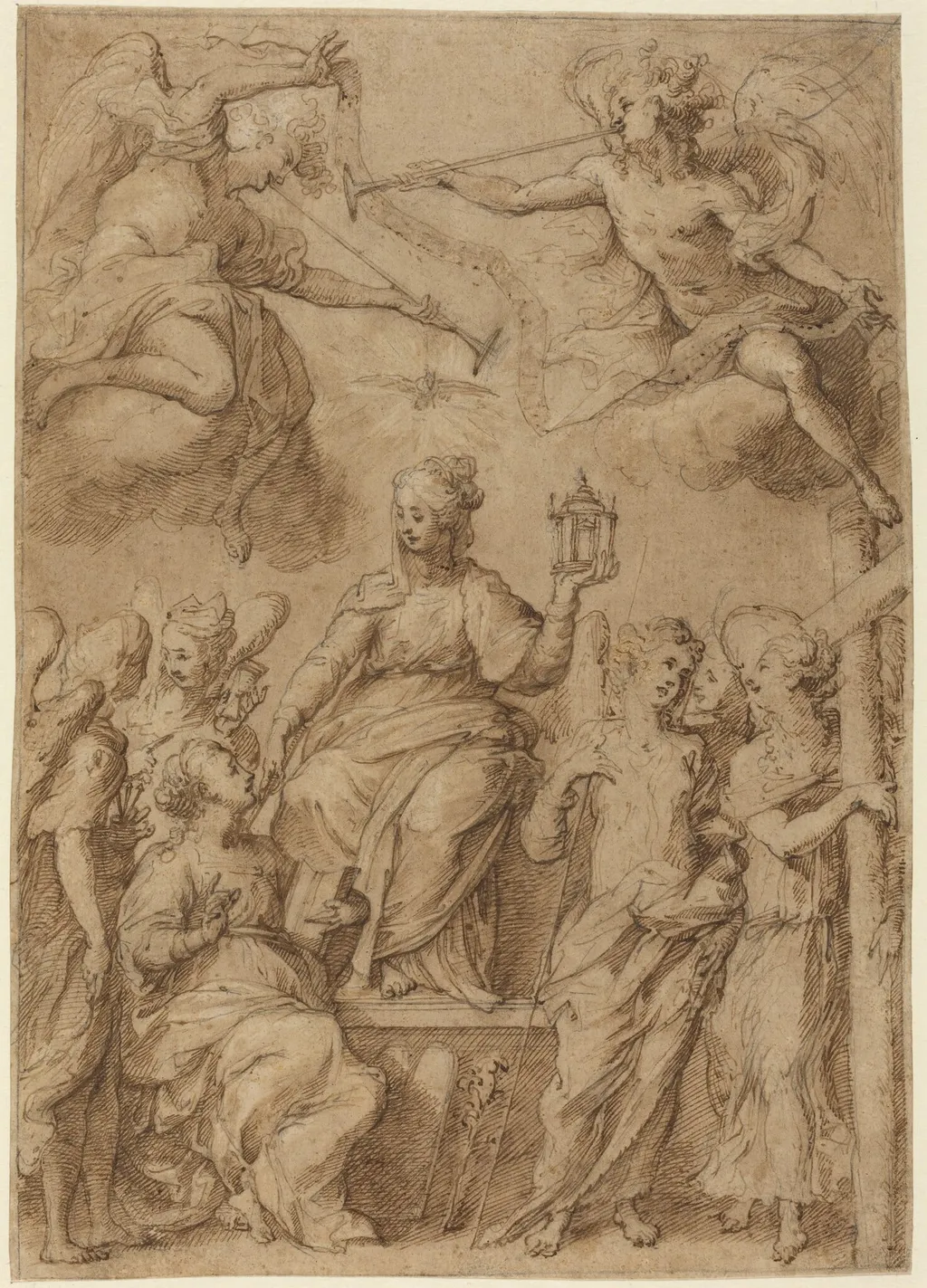
Ecclesia Surrounded by Angels Holding the Instruments of the Passion is a chalk drawing by the Renaissance artist Bernardo Strozzi. It dates from 1613 and is held in the collection of the National Gallery of Art.
About this work
Overview
Created in 1613 by Bernardo Strozzi, this drawing employs pen and brown ink over black chalk, with white highlights applied on laid paper.
Created in 1613 by Bernardo Strozzi, this drawing employs pen and brown ink over black chalk, with white highlights applied on laid paper. Strozzi, an Italian artist active in Genoa and later Venice, was known for his expressive draftsmanship and religious themes. The work captures a symbolic vision of Ecclesia, the personified Church, surrounded by angels bearing the tools of Christ’s suffering. Its intimate scale and intricate line work reflect the artist’s skill in translating spiritual concepts into drawn form.
Subject & Meaning
The central figure represents Ecclesia, the Church, depicted as a serene woman seated on a rocky base, holding a small lantern. Around her, angels gather, each bearing instruments of the Passion—cross, nails, crown of thorns, and sponge. The lantern’s quiet glow contrasts with the agitation of the surrounding figures, suggesting the Church as a steady source of divine light amid suffering and turmoil. The composition transforms theological symbolism into a visual meditation on faith’s endurance.
Technique & Style
Strozzi builds form through layered, scratchy pen strokes and dense cross-hatching, using black chalk for foundational shadows and white heightening to suggest luminosity. The texture of the paper interacts with the ink, enhancing the tactile quality of the scene. Angels are rendered with energetic, swirling lines that convey motion and tension, while Ecclesia’s stillness is emphasized by smoother contours and minimal detail. The contrast between dynamic movement and calm centrality defines the drawing’s emotional rhythm.
History & Provenance
The drawing dates from Strozzi’s early career, likely produced during his time in Genoa before his move to Venice. It reflects his engagement with Counter-Reformation iconography and the devotional imagery favored by religious patrons. Though its early ownership is undocumented, it entered a major collection by the 19th century and has since been studied as a key example of his graphic work. Its preservation in good condition allows close examination of his preparatory methods.
Context
In early 17th-century Italy, religious drawings like this served both as studies for larger works and as independent devotional objects. Strozzi’s approach aligns with the Counter-Reformation’s emphasis on emotional engagement with sacred narratives. While Venetian painting favored color and atmosphere, his drawings reveal a northern European influence in their linear precision and introspective tone, bridging regional styles during a period of artistic transition.
Legacy
This drawing illustrates Strozzi’s ability to convey complex theological ideas through intimate, hand-drawn forms. Though less known than his paintings, his graphic works influenced later Baroque draftsmen in northern Italy. Its careful balance of symbolism and tactile execution remains a reference for understanding how religious themes were explored outside monumental altarpieces, offering insight into the private devotional practices of the era.
Artist & collection
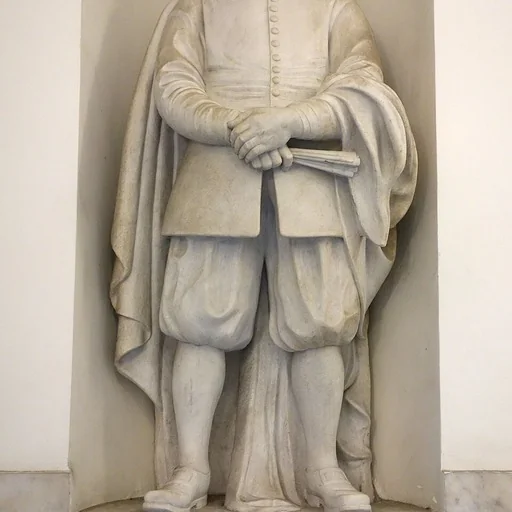
Artist
Bernardo Strozzi, named il Cappuccino and il Prete Genovese (c. 1581 – 2 August 1644), was an Italian Baroque artist who was a painter and engraver. A canvas and fresco artist, his wide subject range included history,…

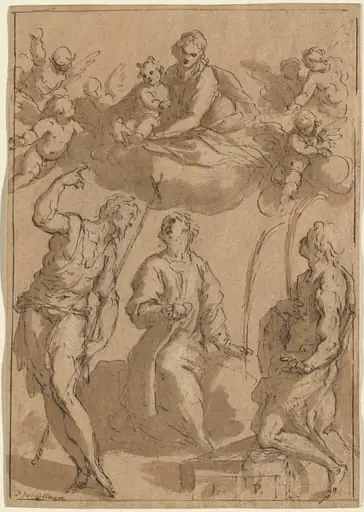 Madonna and Child in Glory with Saints John the Baptist, Stephen, and Lawrence
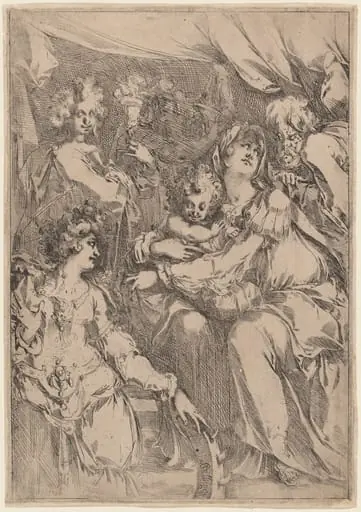 The Holy Family with Saint Catherine, Saint John the Evangelist, and an Angel
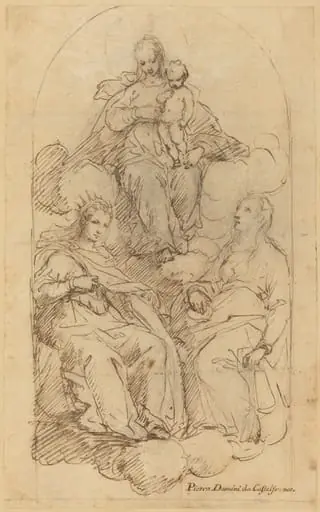 The Virgin and Child Adored by Saint Catherine and Another Female Saint
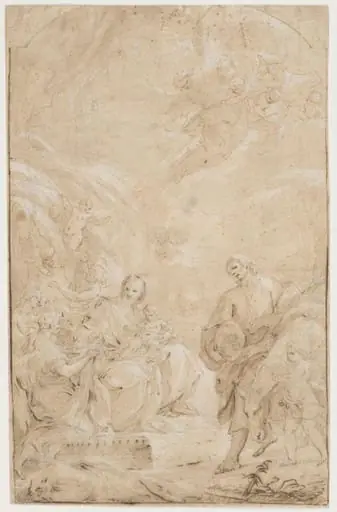 Untitled
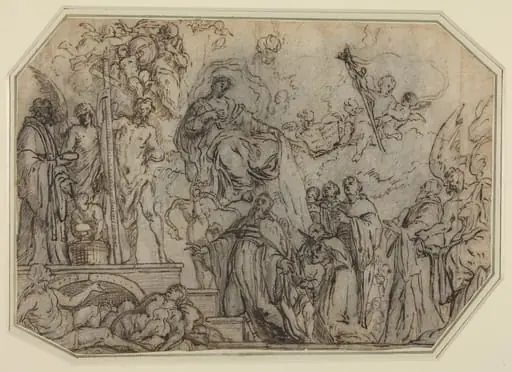 The Trinity and the Virgin Appearing to Ecclesiastics
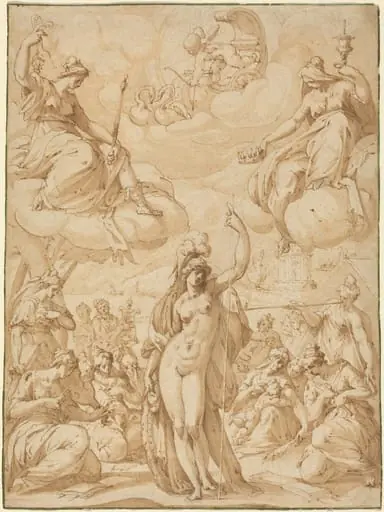 Allegory of Minerva as the Head of the Muses
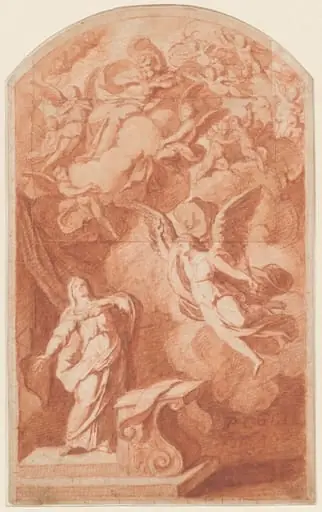 The Annunciation
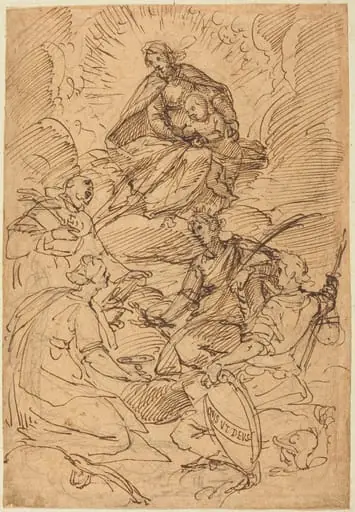 The Madonna and Child in Glory Adored by Saints
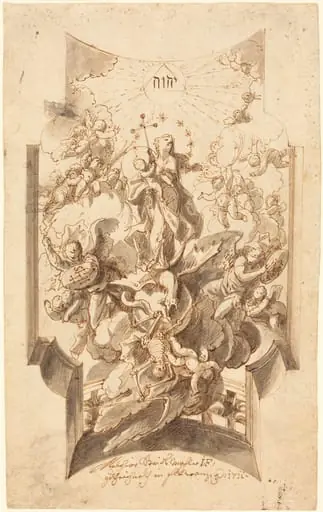 The Immaculate Conception
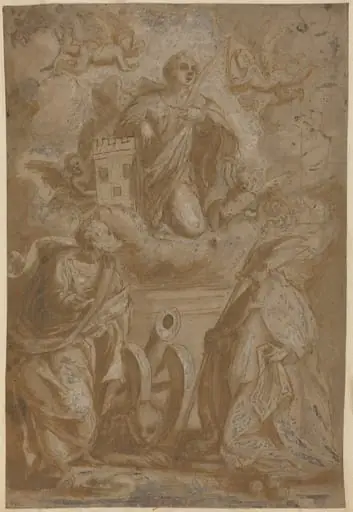 Saint Barbara in Glory with Saints Nicholas and Jerome
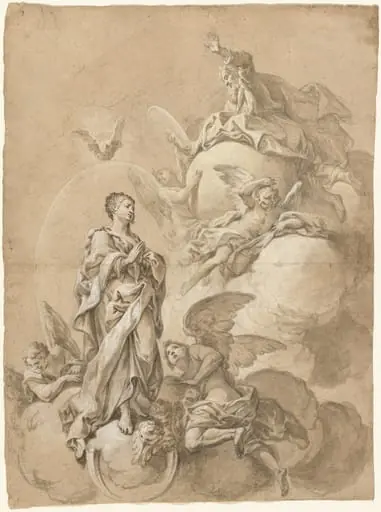 Vision of the Immaculate Conception
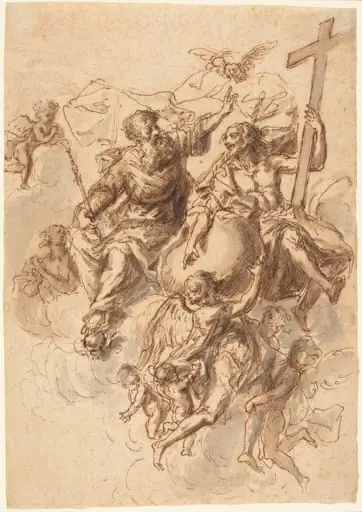 The Trinity Surrounded by Angels