Artwork
Madonna and Child in Glory with Saints John the Baptist, Stephen, and Lawrence
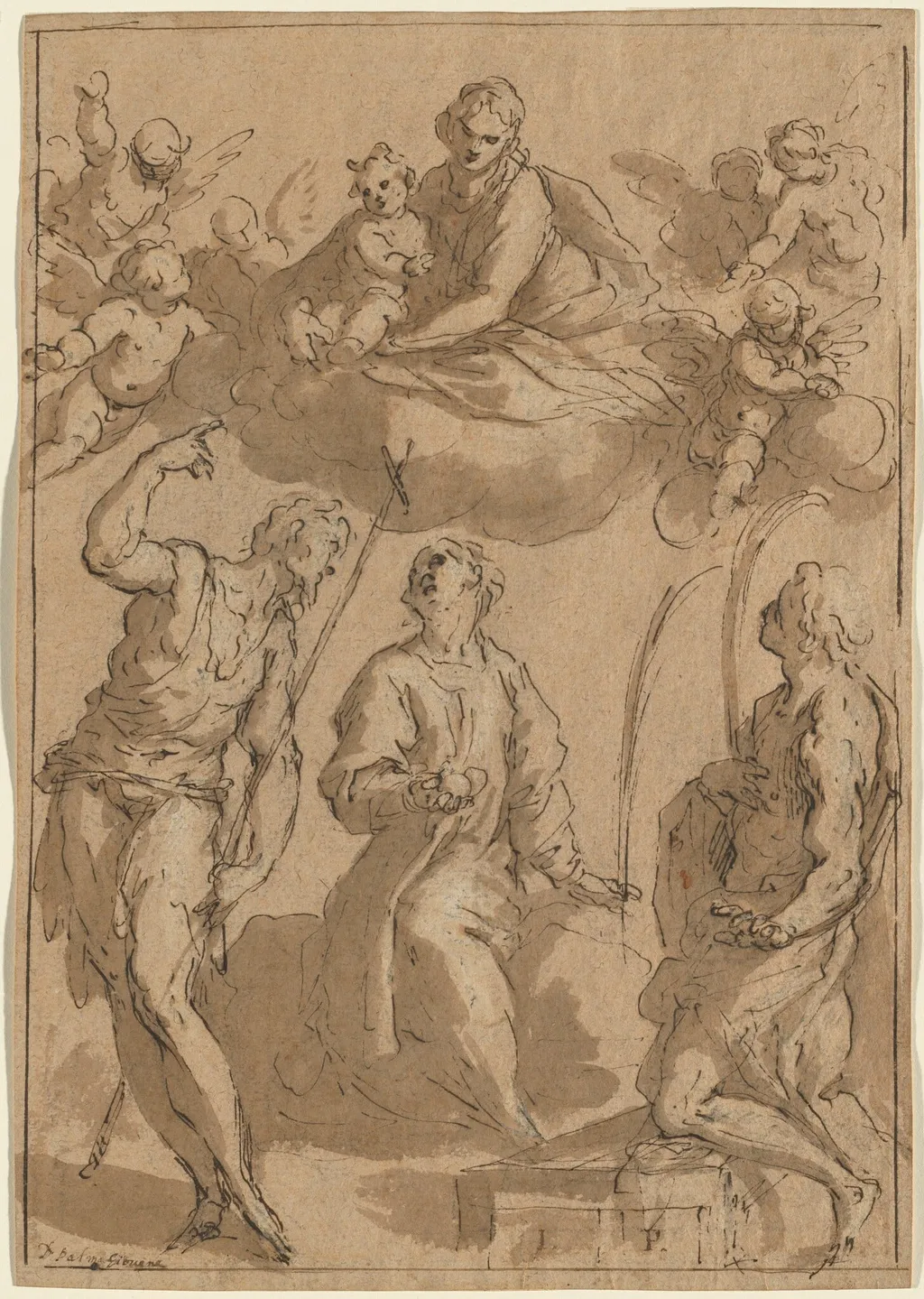
Madonna and Child in Glory with Saints John the Baptist, Stephen, and Lawrence is a chalk drawing by the Baroque artist Jacopo Palma il Giovane. It dates from 1624 and is held in the collection of the National Gallery of Art.
About this work
Overview
Created in 1624 by the Venetian artist Jacopo Palma il Giovane, this drawing presents a devotional scene in which the Virgin Mary and the infant Jesus hover above a rocky landscape, accompanied by three saints—John the Baptist, Stephen, and Lawrence. The composition is rendered on light brown, oatmeal‑colored paper, giving the work a warm, muted ground.
Subject & Meaning
The central figure of the Madonna cradling the Child conveys a celestial intercession, while the surrounding saints embody distinct aspects of Christian piety: John the Baptist with his cross, Stephen holding a stone symbolising his martyrdom, and Lawrence with a book indicating his role as a deacon and teacher. Their kneeling or standing postures suggest reverence toward the divine pair.
Technique & Style
Palma il Giovane employed pen and brown ink, enhanced with a brown wash applied over black chalk, and added white highlights to accentuate folds and facial features. The drawing’s loose, rapid lines and varied shading create a sense of movement and texture, while the overall tonal harmony lends a subdued, almost ethereal atmosphere characteristic of early Baroque draftsmanship.
History & Provenance
The work originates from the early 17th‑century Venetian workshop of Palma il Giovane, a prolific follower of the late Renaissance tradition who adapted to Baroque sensibilities. It remains a study rather than a finished painting, reflecting the artist’s preparatory process for larger altarpieces. Its ownership history prior to the present collection is not documented in surviving records.
Context
During the 1620s, Venetian artists increasingly embraced dramatic lighting and emotive compositions, hallmarks of the Baroque movement. Palma il Giovane’s drawing illustrates this shift, merging the compositional clarity of the High Renaissance with the heightened spirituality and dynamic gesture that would dominate Catholic art in the Counter‑Reformation era.
Artist & collection


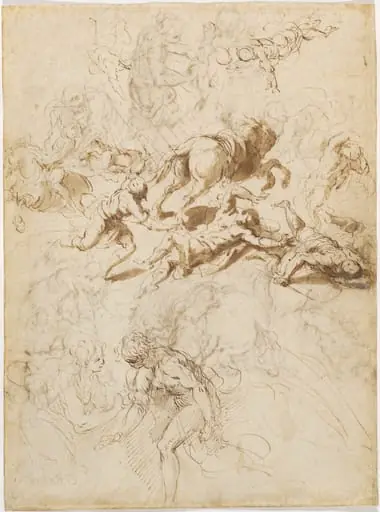
![Nude Man Seen from Behind [verso], by Jacopo Palma il Giovane](https://artifactworldgallery.com/img/jacopo-palma-il-giovane--nude-man-seen-from-behind-verso--2de266ff199c839b-w320.webp)
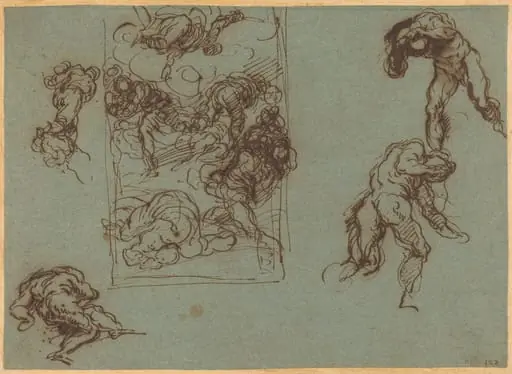
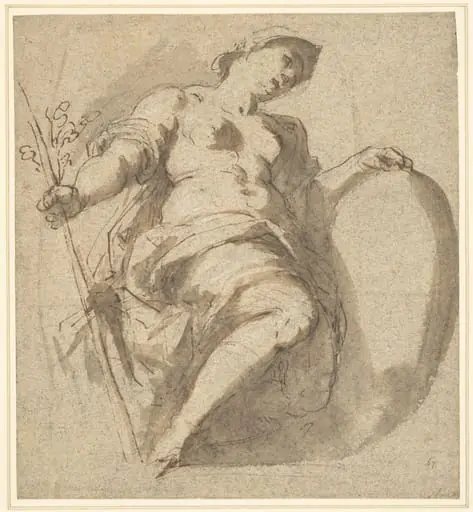
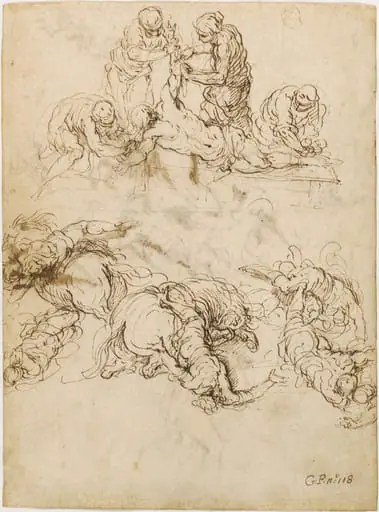
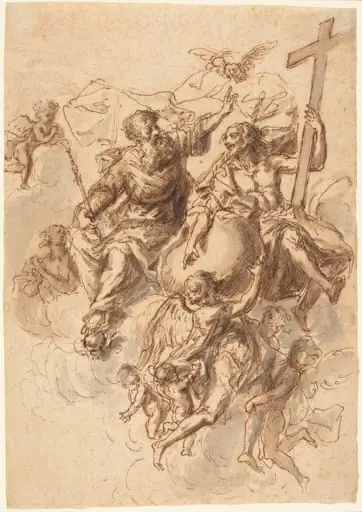 The Trinity Surrounded by Angels
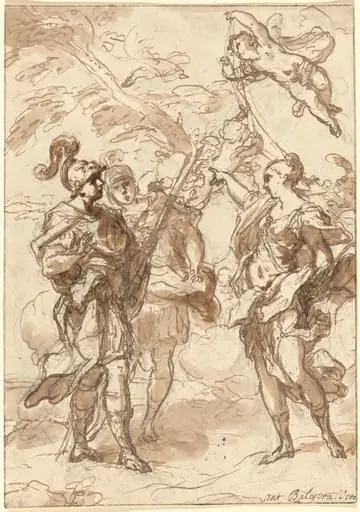 Venus as a Huntress Appearing to Aeneas and Achates
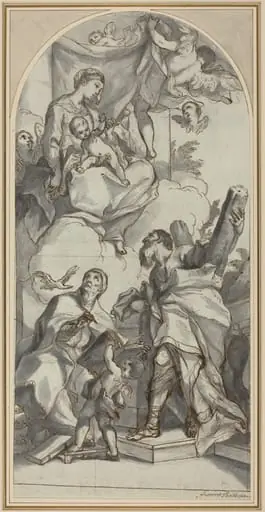 The Madonna and Child in Glory with Saints Gregory the Great and Andrew
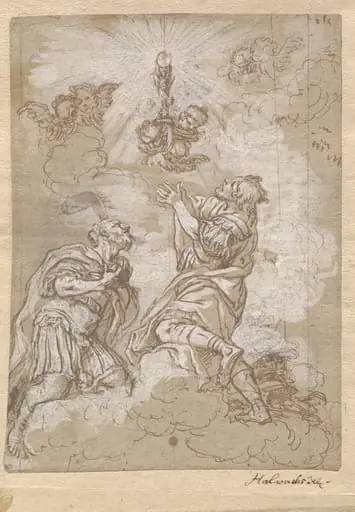 Two Soldier Saints Adoring the Host
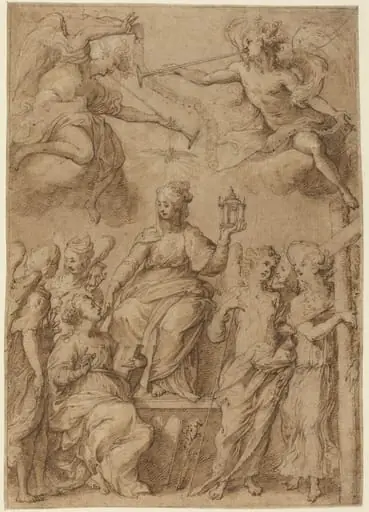 Ecclesia Surrounded by Angels Holding the Instruments of the Passion
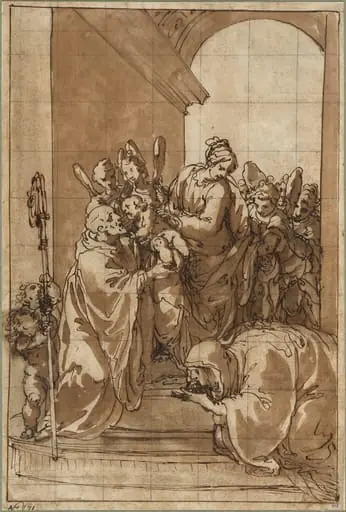 Madonna and Child with Angels, Saint Benedict, and Saint Scholastica
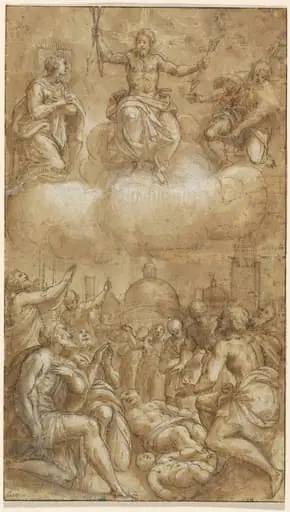 Plague Victims Pleading for Help from Christ, the Virgin, and Saint Roch
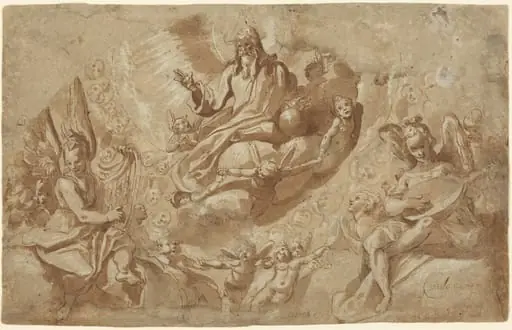 God the Father and Angels on Clouds
 Virgin of the Immaculate Conception
 The Madonna and Child in Glory Adored by Saints