Artwork
Portrait of a Man and Portrait of a Woman (pair)
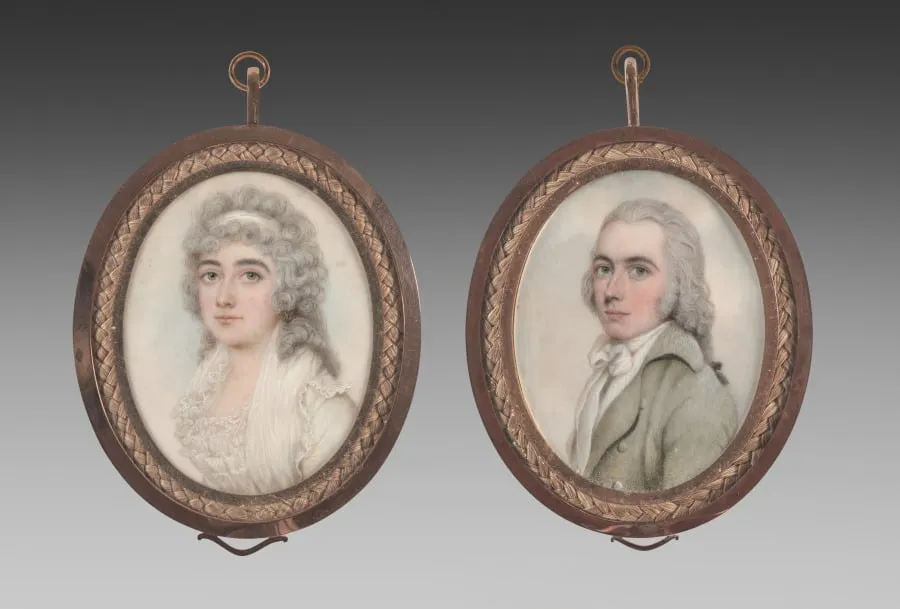
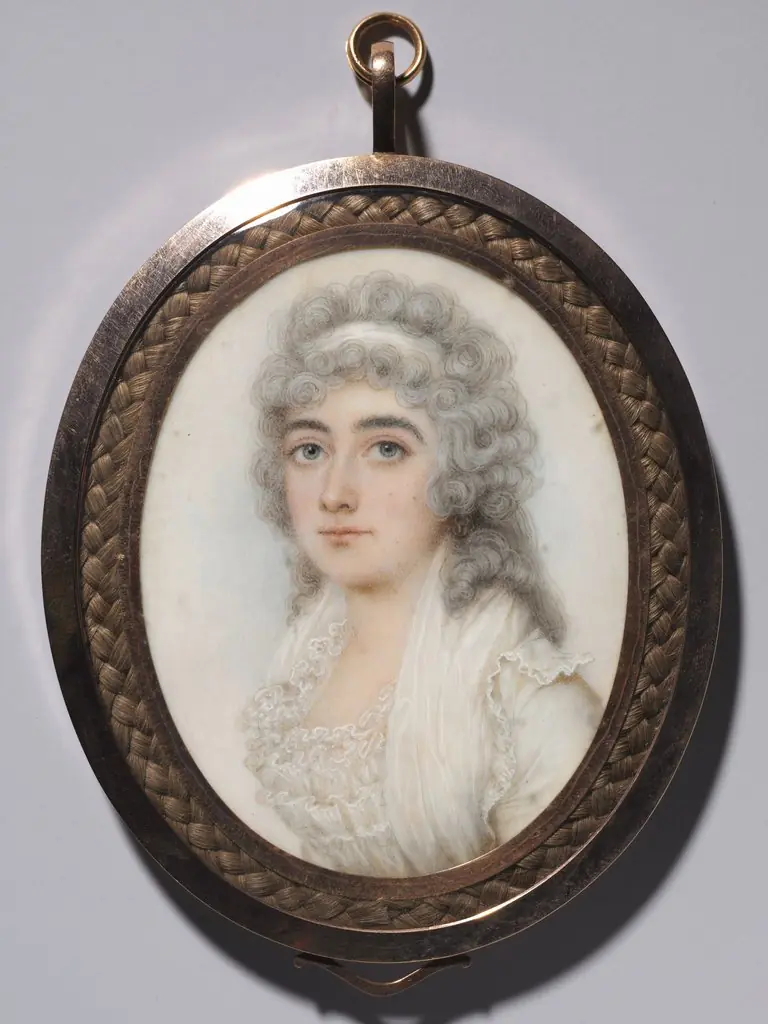
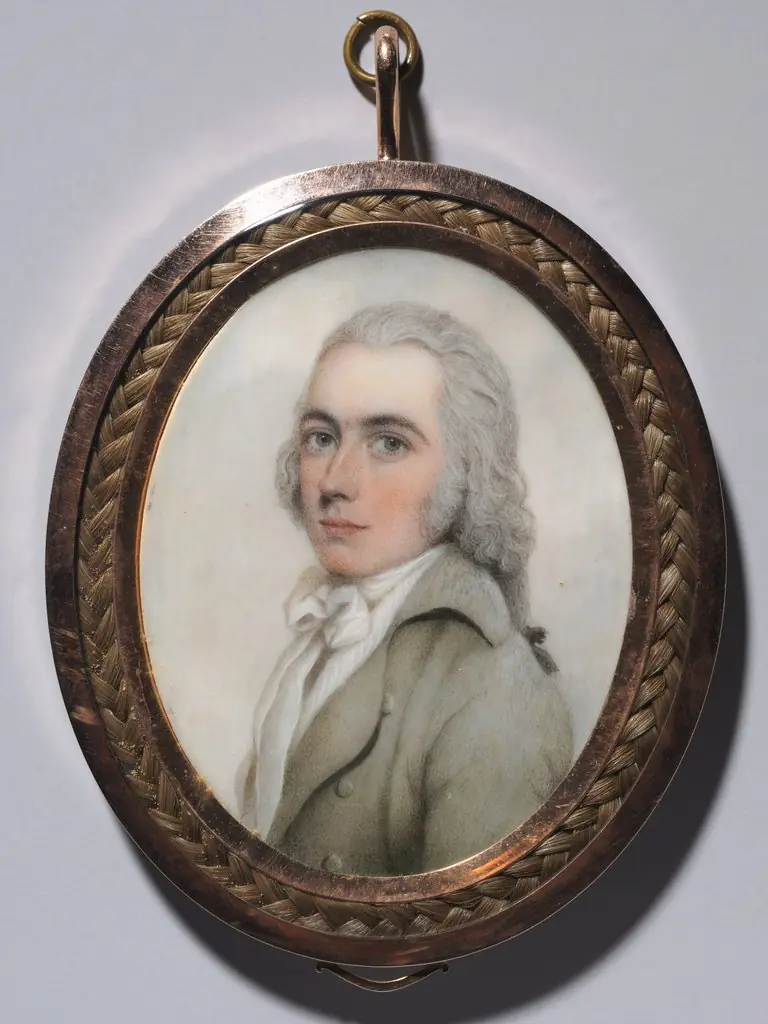
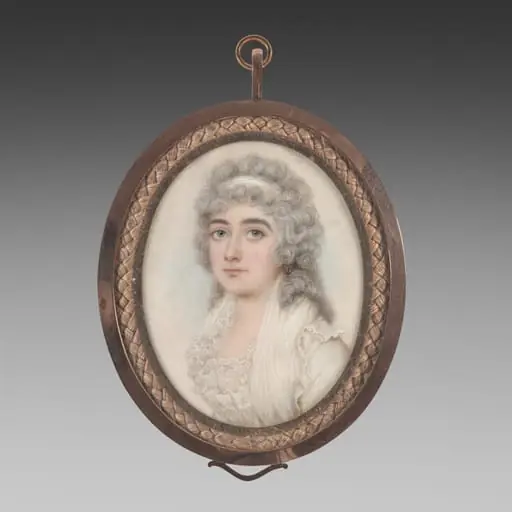
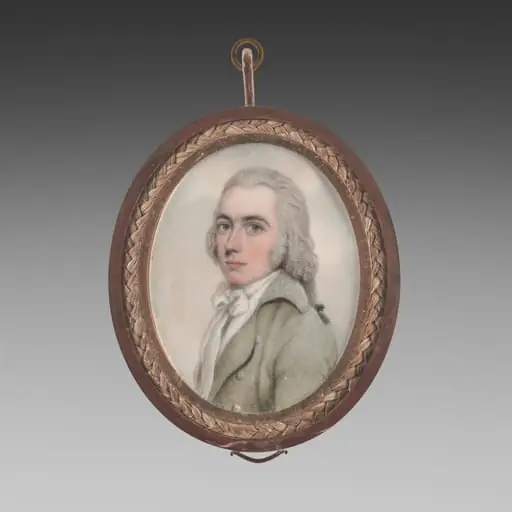
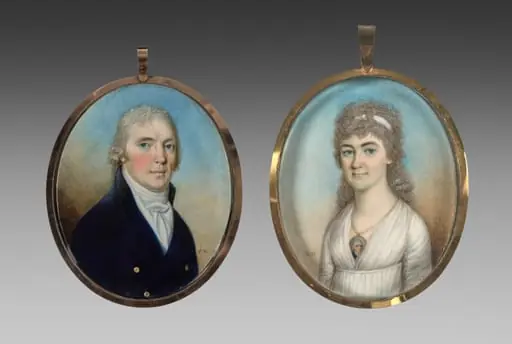
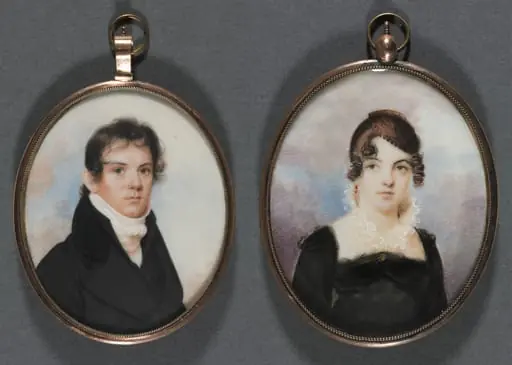
Portrait of a Man and Portrait of a Woman (pair) is an unspecified portrait miniature by the British Romanticist artist Nathaniel Plimer. It dates from 1795 and is held in the collection of the Cleveland Museum of Art. These two miniature portraits, dated circa 1795, depict an unidentified man and woman in matching oval frames.
About this work
Overview
Each figure is rendered with fine detail against a pale, nearly neutral background, emphasizing the subjects’ features while minimizing environmental context.
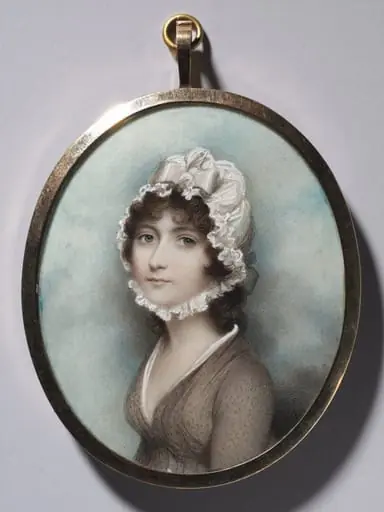
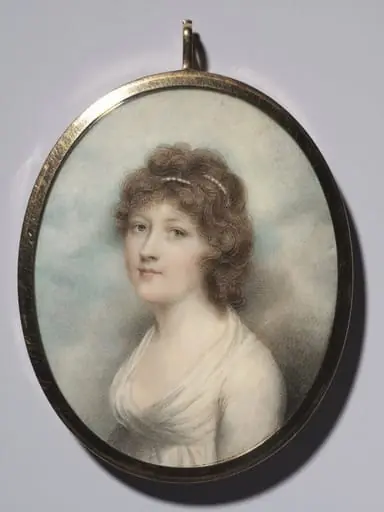
These two miniature portraits, dated circa 1795, depict an unidentified man and woman in matching oval frames. Executed in watercolor on ivory, they were designed as intimate personal keepsakes rather than public displays. Each figure is rendered with fine detail against a pale, nearly neutral background, emphasizing the subjects’ features while minimizing environmental context. Their size suggests they were meant to be held or carried, reflecting the era’s tradition of keeping loved ones close in portable form.
Subject & Meaning
The man wears powdered hair tied with a dark bow, a white cravat, and a greenish-gray coat, typical of late 18th-century British male fashion. The woman’s powdered curls are adorned with a white ribbon bandeau and pearls, her gown layered with ruffles and a fichu draped over the shoulders. Though their identities remain unknown, their paired presentation and matching frames imply a close relationship—possibly marital—though such miniatures were sometimes separated after the owner’s death.
Technique & Style
Nathaniel Plimer employed meticulous stippling to model facial contours and render fine details like eyelashes and skin texture. Tiny dots of paint build subtle gradations of shadow, creating a soft, lifelike quality without harsh lines. The ivory ground remains partially visible, enhancing luminosity, while faint blue tones near the heads suggest ambient light. This technique, precise yet delicate, avoids overt realism in favor of a gentle, almost ethereal presence.
History & Provenance
Both miniatures date to around 1795, a period when powdered wigs and ruffled muslin gowns were standard in British upper-class portraiture. The frames, contemporary with the paintings, indicate they were commissioned as a matched pair. Though often kept together by families, such miniatures were frequently dispersed after inheritance or marriage. Their survival as a pair is uncommon, offering rare insight into the original intent of their commission.
Context
In late 18th-century Britain, portrait miniatures served as private tokens of affection, often exchanged between lovers or family members. Fashionable dress, powdered hair, and delicate accessories reflected social status and adherence to contemporary norms. These portraits align with broader trends in British portraiture, where intimacy and refinement replaced grandeur. Their small scale and personal function contrast sharply with large-scale oil paintings intended for public display.
Legacy
Plimer’s use of stippling influenced later miniature painters seeking naturalistic skin tones without brushstroke visibility. These works exemplify the technical mastery required in the genre, where precision was paramount within a tiny format. While largely overlooked in broader art histories, such miniatures remain vital records of personal identity and material culture in Georgian England, preserving the quiet dignity of everyday elite life.
Artist & collection