Artwork
Sculpture 1 (Plastik 1)
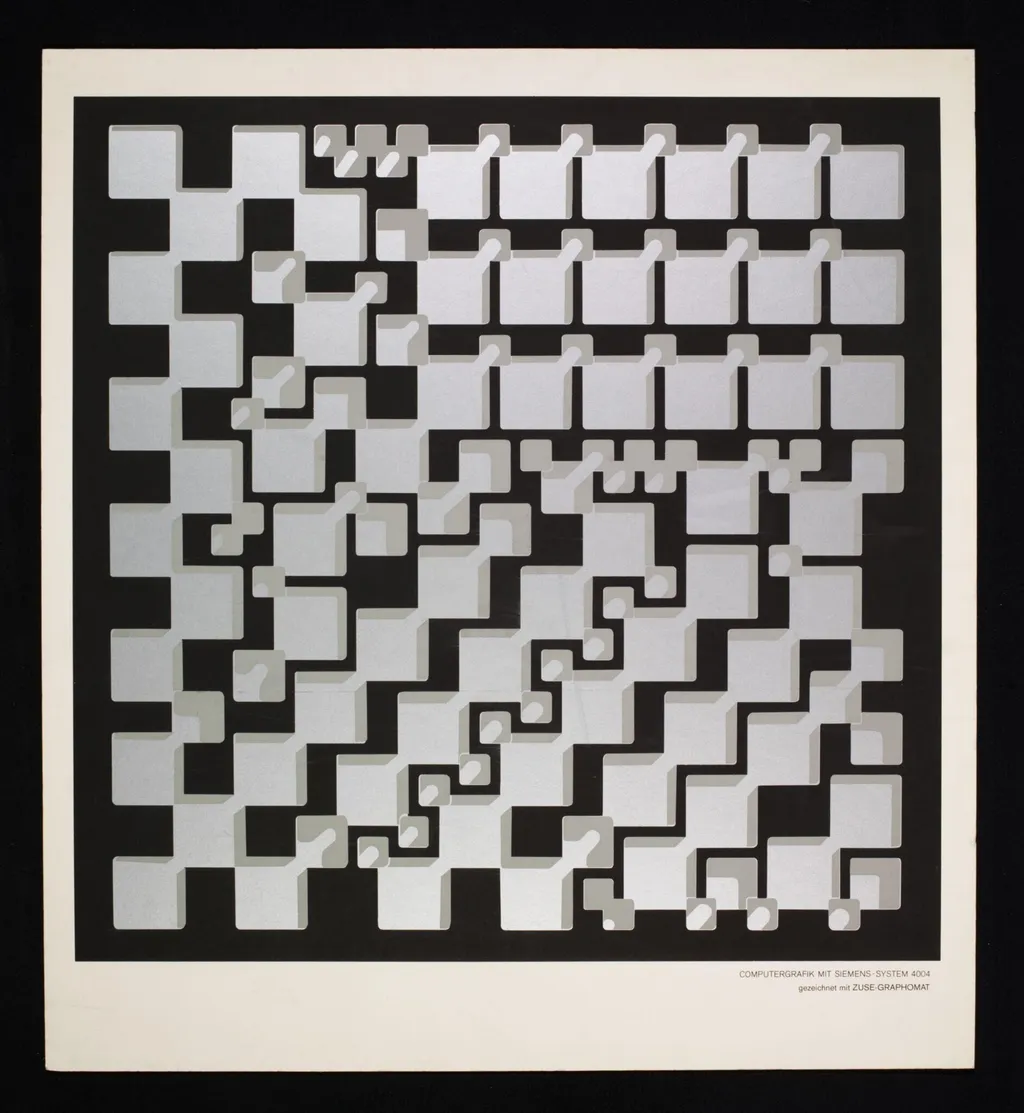
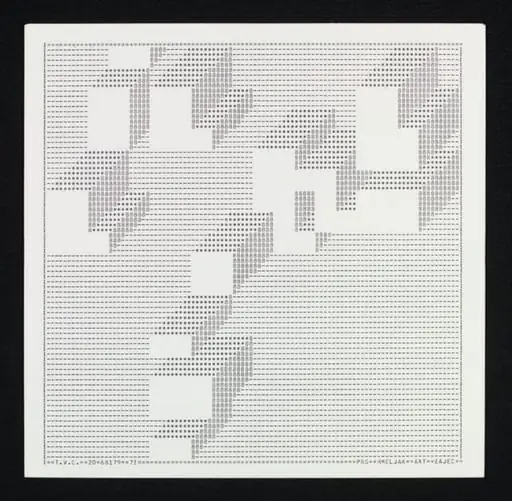
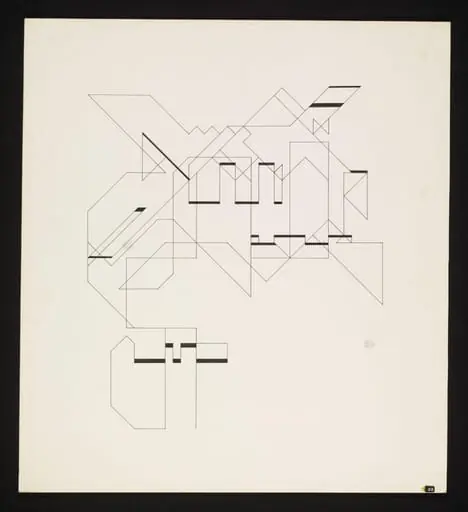
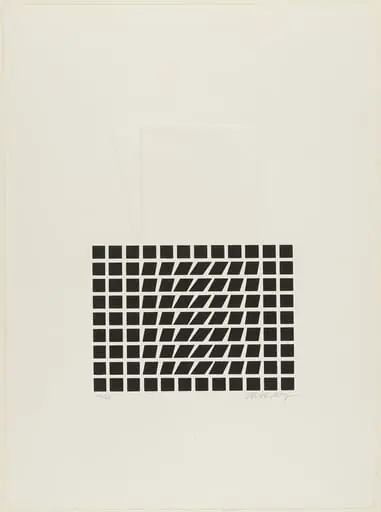
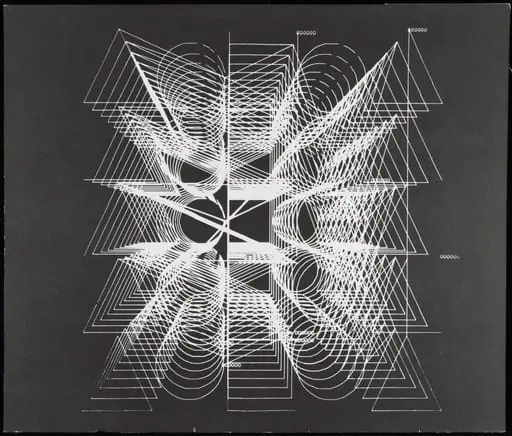
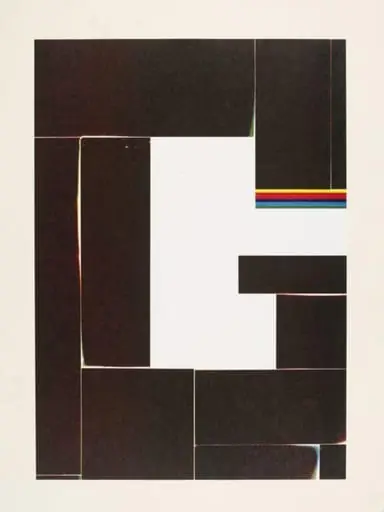
Sculpture 1 (Plastik 1) is a print by Georg Nees. It dates from 1966 and is held in the collection of the Victoria and Albert Museum.
About this work
Overview
His work emerged from technical experimentation at Siemens, where he utilized a Zuse Graphomat plotting machine driven by algorithmic instructions.
Georg Nees, a German mathematician and software engineer, pioneered the use of computers to generate visual art in the mid-1960s. His work emerged from technical experimentation at Siemens, where he utilized a Zuse Graphomat plotting machine driven by algorithmic instructions. This screenprint originates from a three-dimensional sculpture created through computer-controlled milling, marking one of the earliest instances of algorithmic art translated into physical and printed form.
Subject & Meaning
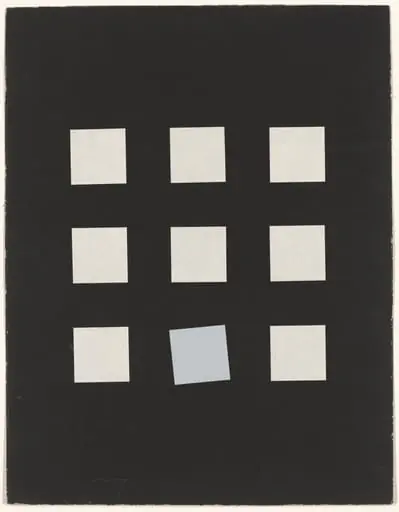
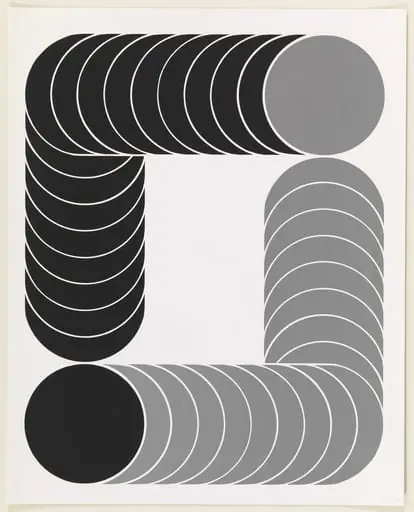
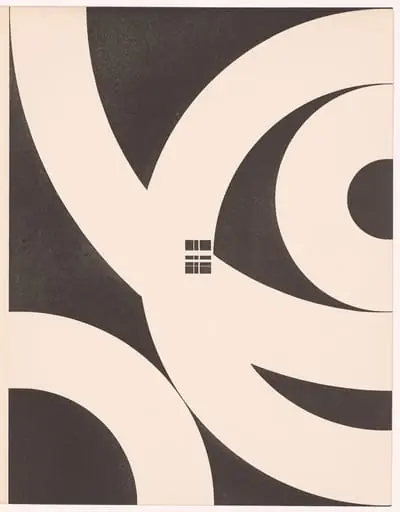
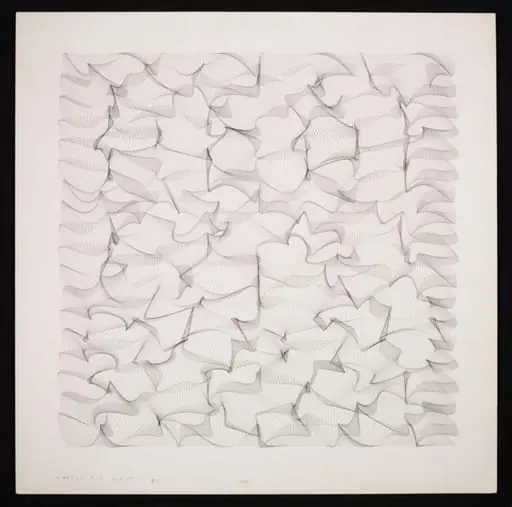
The work presents an arrangement of rectangular volumes whose dimensions are determined by random number sequences generated by a computer. Rather than expressing narrative or emotion, the piece explores structure, variation, and systematic chance. The forms reflect an interest in order emerging from programmed randomness, challenging traditional notions of artistic intention and manual control in favor of computational processes as creative agents.
Technique & Style
Nees programmed an ALGOL-based system to calculate spatial parameters for a sculpture, which was then milled from wood using an automated machine. The screenprint reproduces the sculpture’s geometry through layered ink, translating three-dimensional data into a flat, graphic composition. The style is minimalist and geometric, emphasizing precision and repetition, with subtle irregularities introduced by the randomization algorithm that distinguish it from purely symmetrical designs.
History & Provenance
The original wooden sculpture was produced in 1968 and exhibited at the Venice Biennale in 1969. The screenprint was made afterward as a derivative record of the machine-generated form. Nees’s early exhibitions, including his 1965 show at the Technische Hochschule Stuttgart, established him as a foundational figure in computer art. His 1969 doctoral thesis on generative computer graphics further institutionalized his approach within academic and artistic discourse.
Context
Nees’s work arose during a period when computers were beginning to be explored beyond calculation and engineering—into aesthetics and design. His collaboration with philosopher Max Bense placed his practice within the broader framework of information theory and cybernetics. While contemporaries in Europe and the U.S. experimented with analog or hand-drawn computer graphics, Nees’s reliance on algorithmic generation and mechanical fabrication set his work apart as a rigorous, systems-based approach.
Legacy
Nees’s integration of programming, randomness, and machine fabrication laid groundwork for later developments in generative art and digital fabrication. His insistence on the computer as a legitimate medium for artistic production influenced subsequent generations of artists working with code and automation. The screenprint serves as both a document and an autonomous work, preserving the logic of its origin while existing independently as a printed artifact.
Artist & collection

Artist
Georg Nees was a German academic who was a pioneer of computer art and generative graphics.