Artwork
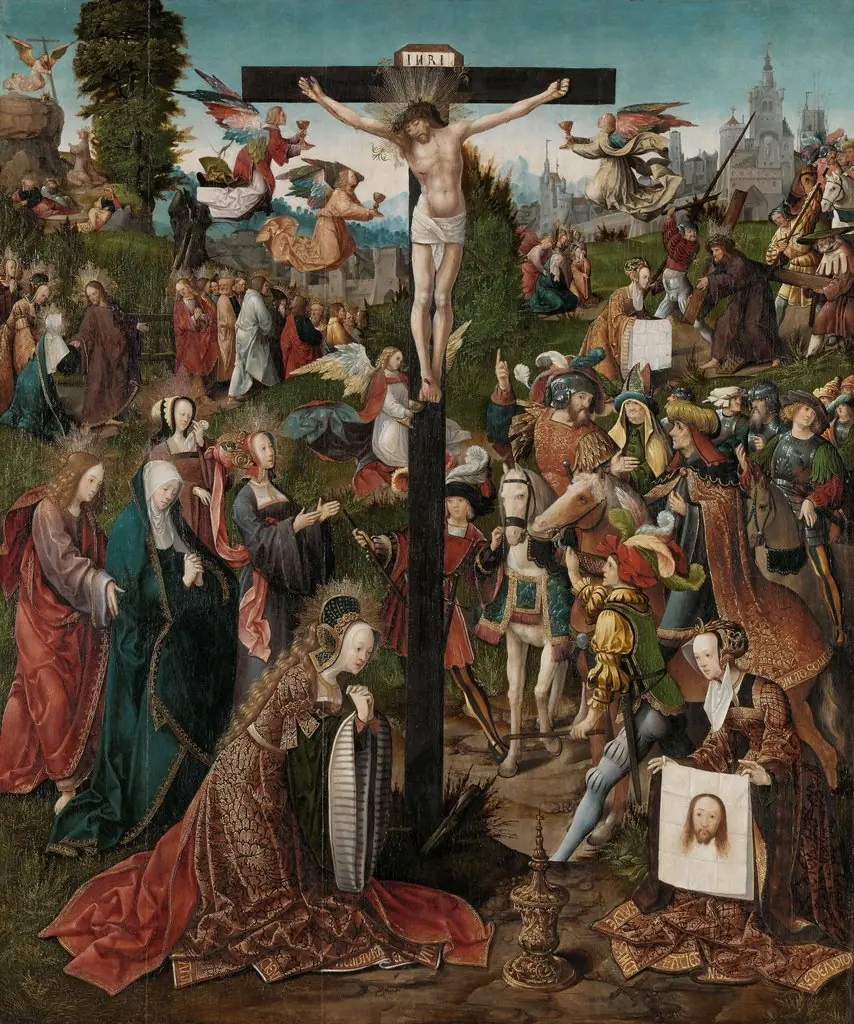
The Crucifixion and Scenes from the Life of Saint John the Baptist
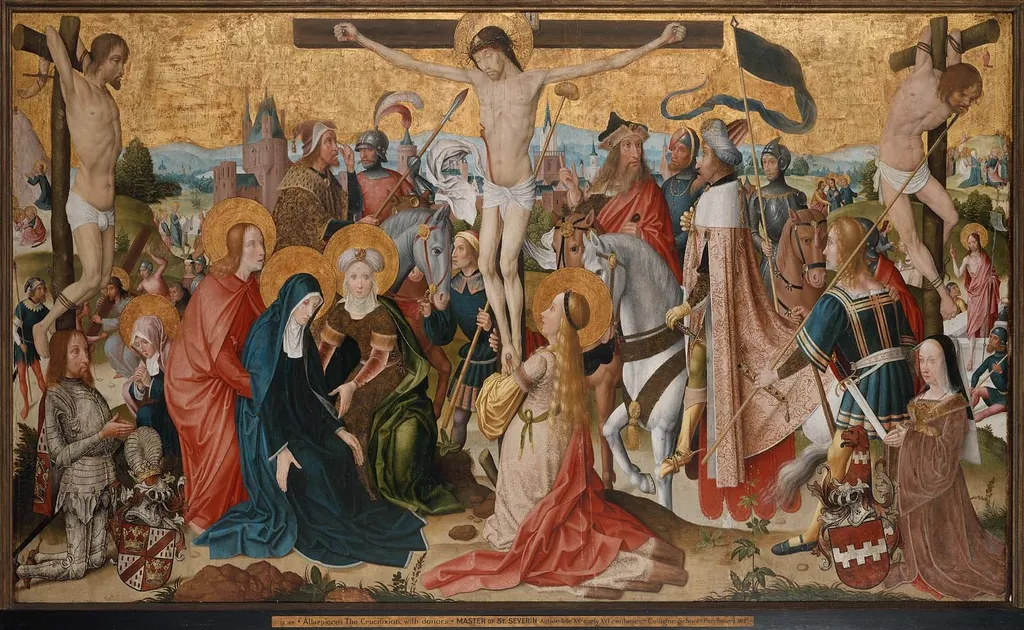
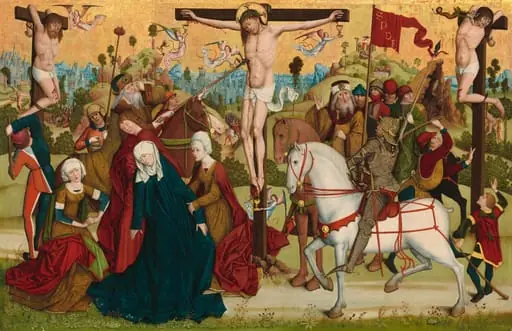
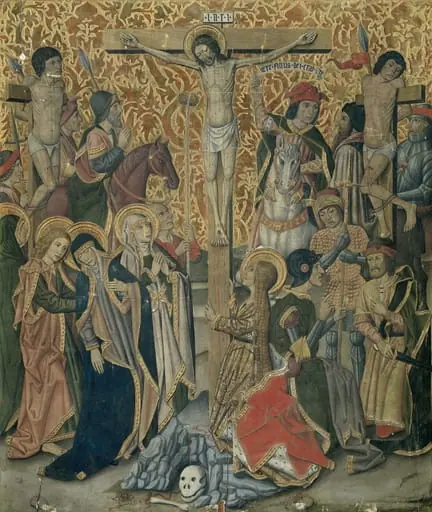
The Crucifixion and Scenes from the Life of Saint John the Baptist is an oil painting by the Northern Renaissance artist Master of Saint Severin. It dates from 1496 and is held in the collection of the Museum of Fine Arts Boston.
About this work
Overview
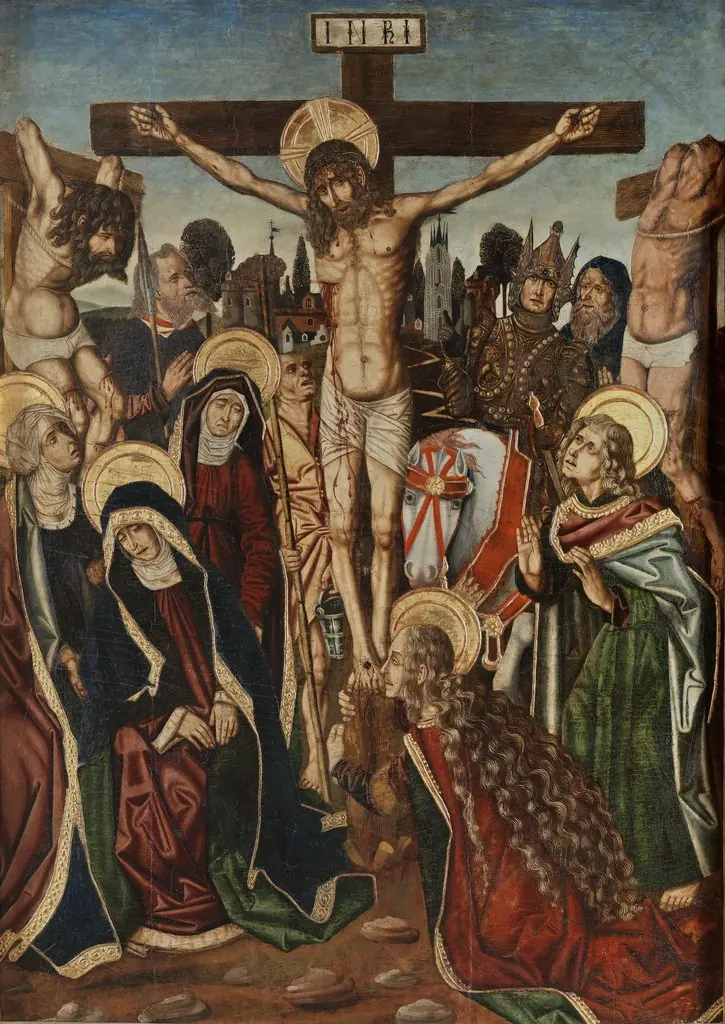
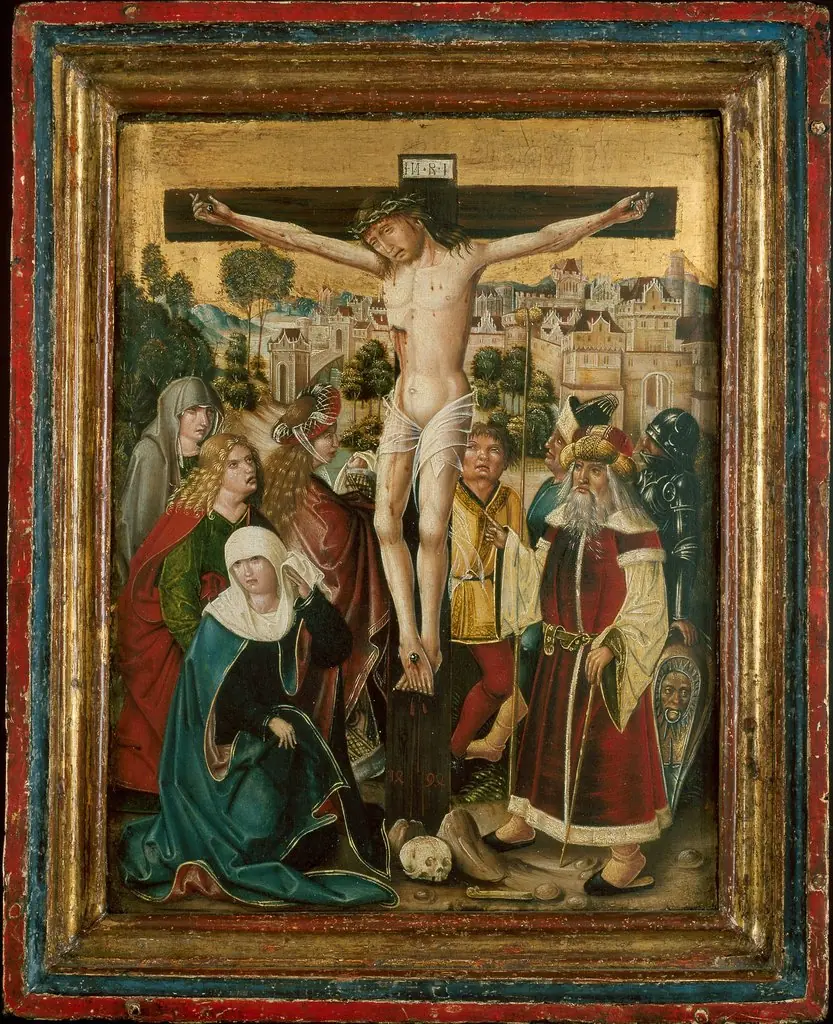
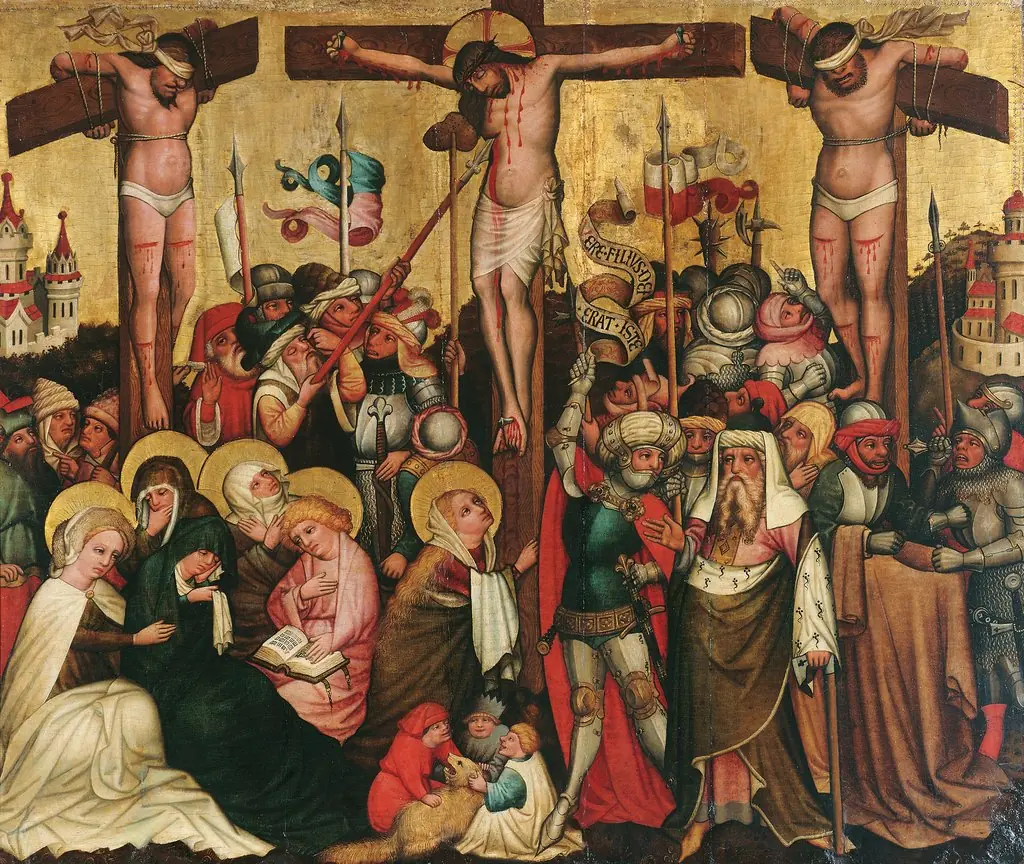
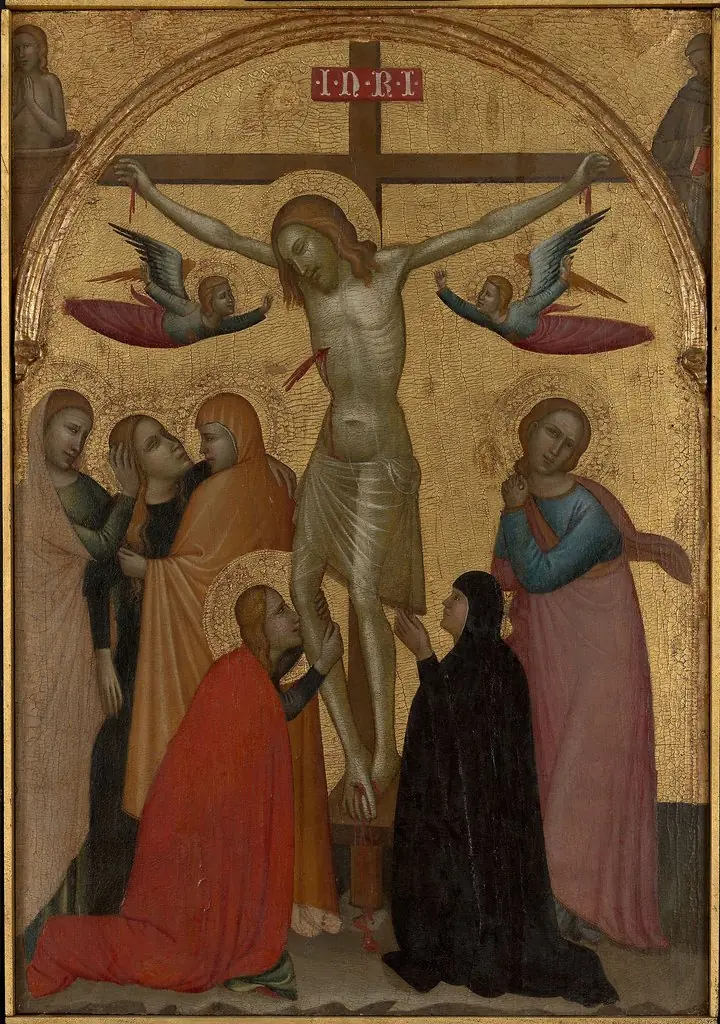
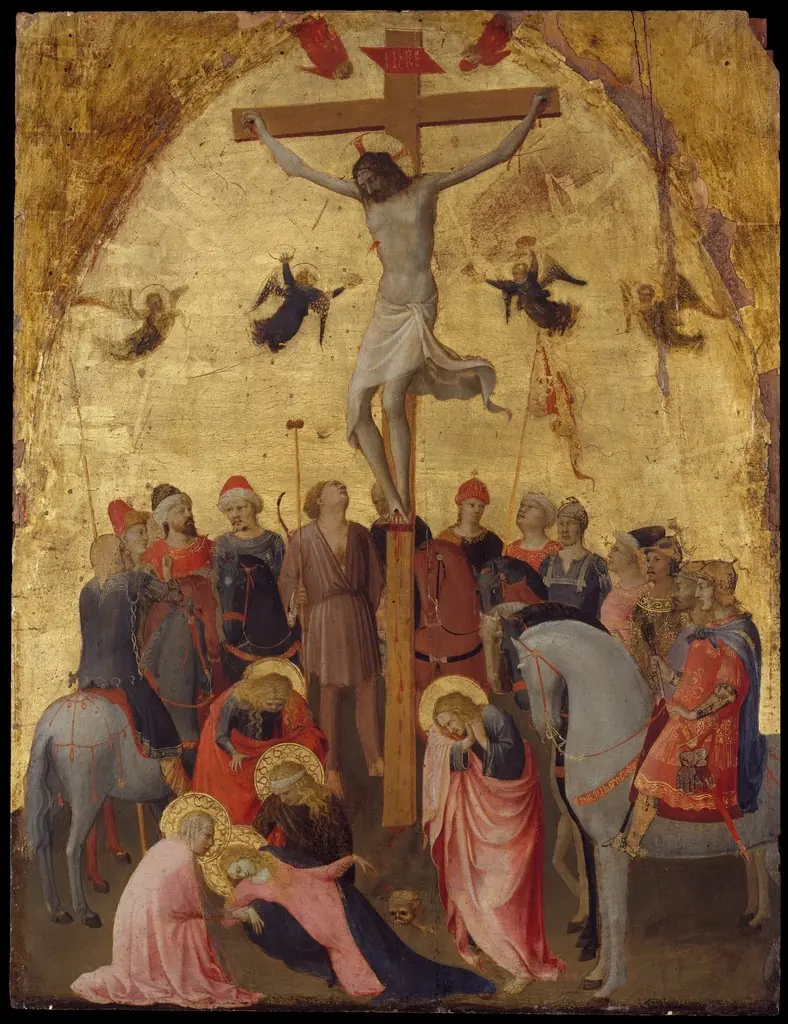
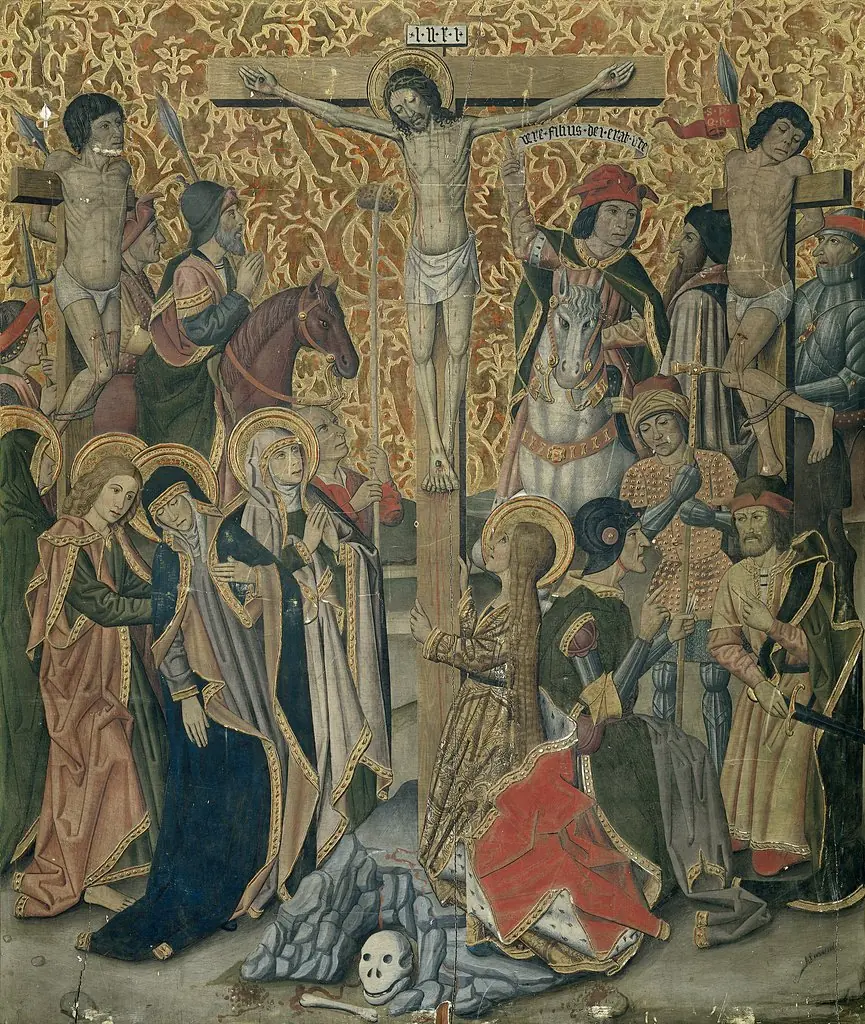
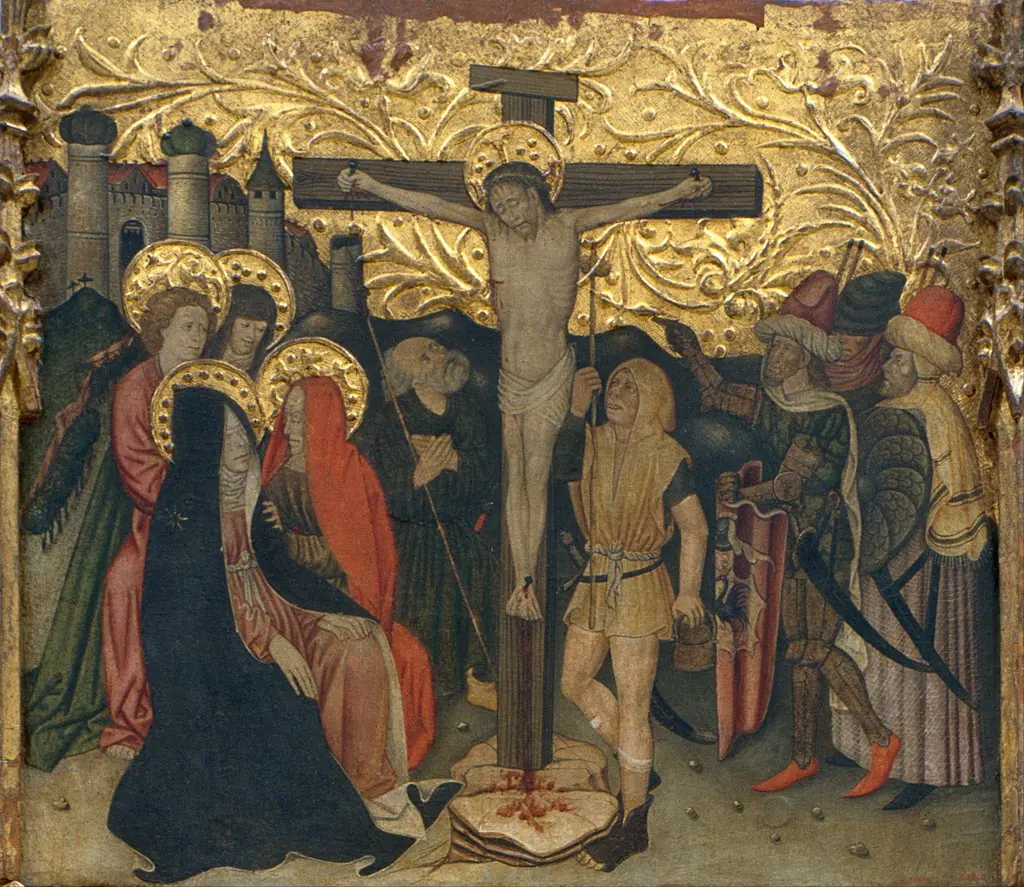
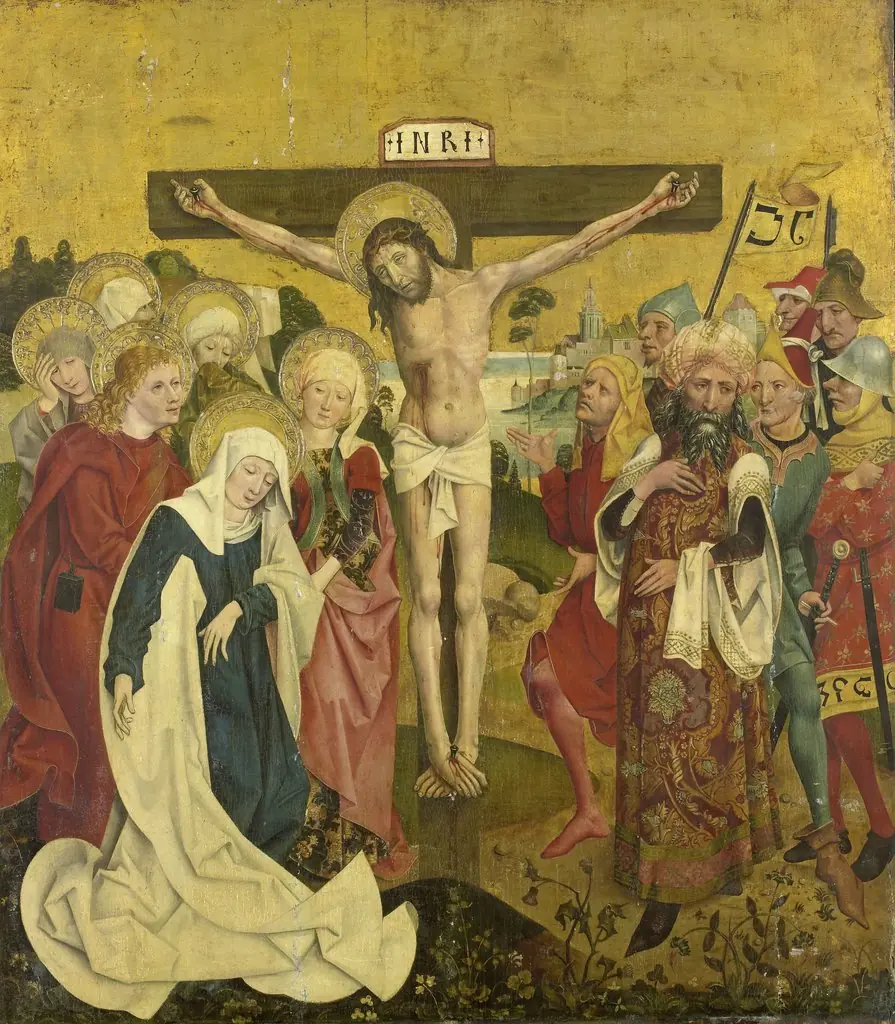
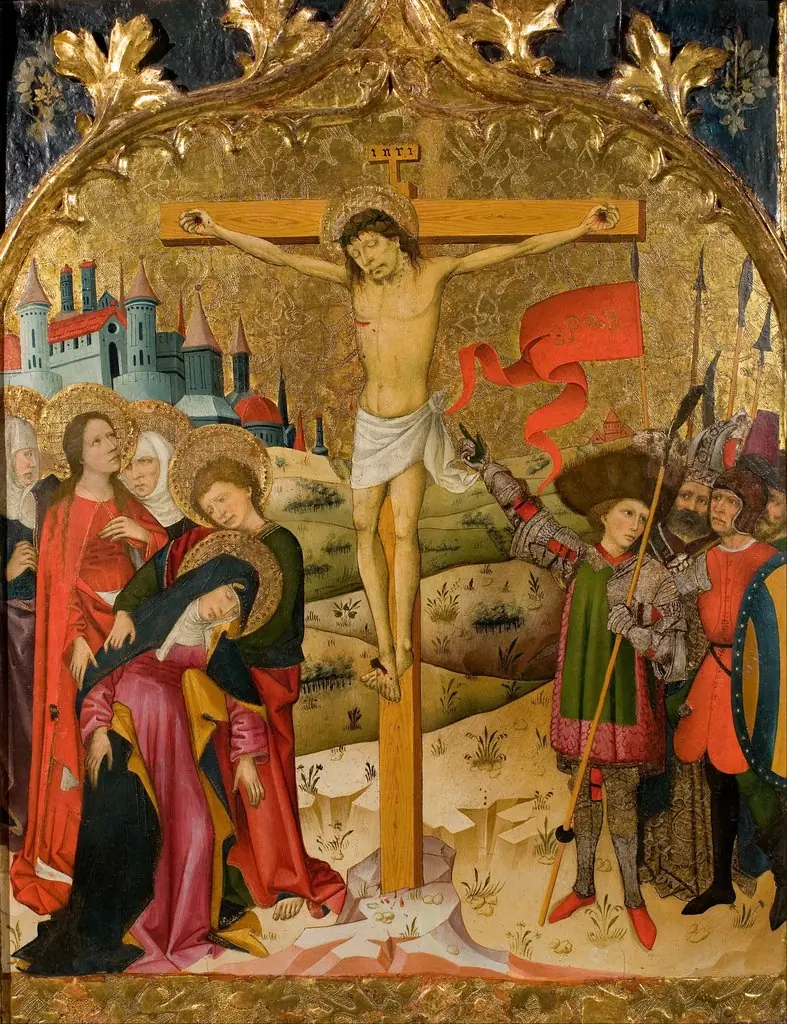
Created in 1496 by the anonymous Master of Saint Severin, this oil on canvas presents a densely populated biblical tableau. The central focus is the crucifixion of a nude figure, surrounded by a varied crowd of onlookers, soldiers, and a distant village. The work is part of the collection of the Museum of Fine Arts in Boston.
Subject & Meaning
The composition intertwines the Passion of Christ with episodes from the life of Saint John the Baptist, reflecting medieval devotional practices that linked the two saints. Figures display a range of emotional responses—kneeling, grieving, or observing—suggesting a meditation on sacrifice, redemption, and the prophetic role of John.
Technique & Style
Executed in oil, the painting employs a luminous gold‑leaf ground that intensifies the saturated reds and blues of the garments. Halos rendered in bright gold encircle select heads, while the calm, detailed facial expressions convey a restrained narrative. Layered glazing creates depth, particularly in the distant town and the atmospheric sky.
History & Provenance
The work has been documented since the late 15th century as a product of the Master of Saint Severin, an artist active in the French‑Flemish border region. It entered the Museum of Fine Arts, Boston, through acquisition in the early 20th century, where it has remained on public display.
Context
The painting reflects the transitional period between late Gothic sensibilities and emerging Renaissance naturalism in Northern Europe. Its crowded composition and emphasis on individual expression align with contemporary devotional panels intended for private contemplation or liturgical use.
Artist & collection